talk-data.com talk-data.com

Topic

SAS

statistical_software analytics data_management

296

tagged

Activity Trend

8 peak/qtr
2020-Q1 2026-Q1

Activities

296 activities · Newest first

IBM Power System E980: Technical Overview and Introduction

This IBM® Redpaper™ publication provides a broad understanding of a new architecture of the IBM Power System E980 (9080-M9S) server that supports IBM AIX®, IBM i, and Linux operating systems (OSes). The objective of this paper is to introduce the major innovative Power E980 offerings and relevant functions: The IBM POWER9™ processor, which is available at frequencies of 3.55 - 4.0 GHz. Significantly strengthened cores and larger caches. Supports up to 64 TB memory. Integrated I/O subsystem and hot-pluggable Peripheral Component Interconnect Express (PCIe) Gen4 slots, double the bandwidth of Gen3 I/O slots. Supports EXP12SX and ESP24SX external disk drawers, which have 12 Gb SAS interfaces and double the existing EXP24S drawer bandwidth. New IBM EnergyScale™ technology offers new variable processor frequency modes that provide a significant performance boost beyond the static nominal frequency. This publication is for professionals who want to acquire a better understanding of IBM Power Systems™ products. The intended audience includes the following roles: Clients Sales and marketing professionals Technical support professionals IBM Business Partners Independent software vendors (ISVs) This paper expands the current set of IBM Power Systems documentation by providing a desktop reference that offers a detailed technical description of the Power E980 server. This paper does not replace the current marketing materials and configuration tools. It is intended as an extra source of information that, together with existing sources, can be used to enhance your knowledge of IBM server solutions.

Summary

Data transformation is a key activity for all of the organizational roles that interact with data. Because of its importance and outsized impact on what is possible for downstream data consumers it is critical that everyone is able to collaborate seamlessly. SQLMesh was designed as a unifying tool that is simple to work with but powerful enough for large-scale transformations and complex projects. In this episode Toby Mao explains how it works, the importance of automatic column-level lineage tracking, and how you can start using it today.

Announcements

Hello and welcome to the Data Engineering Podcast, the show about modern data management RudderStack helps you build a customer data platform on your warehouse or data lake. Instead of trapping data in a black box, they enable you to easily collect customer data from the entire stack and build an identity graph on your warehouse, giving you full visibility and control. Their SDKs make event streaming from any app or website easy, and their extensive library of integrations enable you to automatically send data to hundreds of downstream tools. Sign up free at dataengineeringpodcast.com/rudderstack- Your host is Tobias Macey and today I'm interviewing Toby Mao about SQLMesh, an open source DataOps framework designed to scale data transformations with ease of collaboration and validation built in

Interview

Introduction How did you get involved in the area of data management? Can you describe what SQLMesh is and the story behind it?

DataOps is a term that has been co-opted and overloaded. What are the concepts that you are trying to convey with that term in the context of SQLMesh?

What are the rough edges in existing toolchains/workflows that you are trying to address with SQLMesh?

How do those rough edges impact the productivity and effectiveness of teams using those

Can you describe how SQLMesh is implemented?

How have the design and goals evolved since you first started working on it?

What are the lessons that you have learned from dbt which have informed the design and functionality of SQLMesh? For teams who have already invested in dbt, what is the migration path from or integration with dbt? You have some built-in integration with/awareness of orchestrators (currently Airflow). What are the benefits of making the transformation tool aware of the orchestrator? What do you see as the potential benefits of integration with e.g. data-diff? What are the second-order benefits of using a tool such as SQLMesh that addresses the more mechanical aspects of managing transformation workfows and the associated dependency chains? What are the most interesting, innovative, or unexpected ways that you have seen SQLMesh used? What are the most interesting, unexpected, or challenging lessons that you have learned while working on SQLMesh? When is SQLMesh the wrong choice? What do you have planned for the future of SQLMesh?

Contact Info

tobymao on GitHub @captaintobs on Twitter Website

Parting Question

From your perspective, what is the biggest gap in the tooling or technology for data management today?

Closing Announcements

Thank you for listening! Don't forget to check out our other shows. Podcast.init covers the Python language, its community, and the innovative ways it is being used. The Machine Learning Podcast helps you go from idea to production with machine learning. Visit the site to subscribe to the show, sign up for the mailing list, and read the show notes. If you've learned something or tried out a project from the show then tell us about it! Email [email protected]) with your story. To help other people find the show please leave a review on Apple Podcasts and tell your friends and co-workers

Links

SQLMesh Tobiko Data SAS AirBnB Minerva SQLGlot Cron AST == Abstract Syntax Tree Pandas Terraform dbt

Podcast Episode

SQLFluff

Podcast.init Episode

The intro and outro music is from The Hug by The Freak Fandango Orc

Building Regression Models with SAS

Advance your skills in building predictive models with SAS! Building Regression Models with SAS: A Guide for Data Scientists teaches data scientists, statisticians, and other analysts who use SAS to train regression models for prediction with large, complex data. Each chapter focuses on a particular model and includes a high-level overview, followed by basic concepts, essential syntax, and examples using new procedures in both SAS/STAT and SAS Viya. By emphasizing introductory examples and interpretation of output, this book provides readers with a clear understanding of how to build the following types of models: general linear models quantile regression models logistic regression models generalized linear models generalized additive models proportional hazards regression models tree models models based on multivariate adaptive regression splines Building Regression Models with SAS is an essential guide to learning about a variety of models that provide interpretability as well as predictive performance.

Visual Data Insights Using SAS ODS Graphics: A Guide to Communication-Effective Data Visualization

SAS ODS graphics users will learn in this book how to visually understand and communicate the significance of data to deliver images for quick and easy insight, with precise numbers. Many charts or plots require the viewer to run the eye from a bar end or plot point to some point on an axis, and then to interpolate between tick marks to estimate the value. Some design choices can lead to wrong conclusions or mistaken impressions. Graphic software relies on defaults to deliver something if you make a minimal effort, but that something is not likely to be exactly what you want. Visual Data Insights Using SAS ODS Graphics provides examples using experience-based design principles. It presents examples of bar charts, pie charts, and trend lines or time series plots, the graph types commonly used in business, other organizations, and the media for visual insight into data. Newer graphs are also included: dot plots, needle plots, waterfall charts, butterflycharts, heat maps, bubble plots, step plots, high-low plots, and donut charts. In addition, there are basic tools of statistics: scatter plots, box plots, histograms, fit and confidence plots, and distributions. Author LeRoy Bessler introduces unique creations, including sparsely annotated time series, maximally informative bar charts, better box plots, histograms based on interesting atypical rationales, and much more. The examples use SAS sample data sets as input. Any SAS user can experiment with the code presented to see what else is possible, or adapt it to repurpose the design and apply it with a customized version of that code. What You’ll Learn Create graphs that are easily and quickly interpreted, and without ambiguity Supply precise data values that are correct on the graph and correctly associated with the graphic visual elements Take advantage of widely applicable (but not necessarily available elsewhere) design examples Avoid bad practices that are encouraged by poor examples elsewhere Get past sub-optimal designs and results that are built into software defaults Take advantage of less familiar capabilities available in the software Who This Book Is For SAS software users who want to understand their data and/or visually deliver their results

An Introduction to Creating Standardized Clinical Trial Data with SAS

An indispensable guide for statistical programmers in the pharmaceutical industry. Statistical programmers in the pharmaceutical industry need to create standardized clinical data using rules created and governed by the Clinical Data Interchange Standards Consortium (CDISC). This book introduces the basic concepts, pharmaceutical industry knowledge, and SAS programming practices that every programmer needs to know to comply with regulatory requirements. Step-by-step, you will learn how data should be structured at each stage of the process from annotating electronic Case Report Forms (eCRFs) and defining the relationship between SDTM and ADaM, to understanding how to generate a Define-XML file to transmit metadata. Filled with clear explanations and example code, this book focuses only on the essential information that entry-level programmers need to succeed.

IBM FlashSystem 5200 Product Guide

This IBM® Redbooks® Product Guide publication describes the IBM FlashSystem® 5200 solution, which is a next-generation IBM FlashSystem control enclosure. It is an NVMe end-to-end platform that is targeted at the entry and midrange market and delivers the full capabilities of IBM FlashCore® technology. It also provides a rich set of software-defined storage (SDS) features that are delivered by IBM Spectrum® Virtualize, including the following features: Data reduction and deduplication Dynamic tiering Thin provisioning Snapshots Cloning Replication Data copy services Transparent Cloud Tiering IBM HyperSwap® including 3-site replication for high availability (HA) Scale-out and scale-up configurations further enhance capacity and throughput for better availability. The IBM FlashSystem 5200 is a high-performance storage solution that is based on a revolutionary 1U form factor. It consists of 12 NVMe Flash Devices in a 1U storage enclosure drawer with full redundant canister components and no single point of failure. It is designed for businesses of all sizes, including small, remote, branch offices and regional clients. It is a smarter, self-optimizing solution that requires less management, which enables organizations to overcome their storage challenges. Flash has come of age and price point reductions mean that lower parts of the storage market are seeing the value of moving over to flash and NVMe--based solutions. The IBM FlashSystem 5200 advances this transition by providing incredibly dense tiers of flash in a more affordable package. With the benefit of IBM FlashCore Module compression and new QLC flash-based technology becoming available, a compelling argument exists to move away from Nearline SAS storage and on to NVMe. With the release of IBM FlashSystem 5200 Software V8.4, extra functions and features are available, including support for new Distributed RAID1 (DRAID1) features, GUI enhancements, Redirect-on-write for Data Reduction Pool (DRP) snapshots, and 3-site replication capabilities. This book is aimed at pre-sales and post-sales technical support and marketing and storage administrators.

Migrating Complex SAS Processes to Databricks - Case Study

Many federal agencies use SAS software for critical operational data processes. While SAS has historically been a leader in analytics, it has often been used by data analysts for ETL purposes as well. However, modern data science demands on ever-increasing volumes and types of data require a shift to modern, cloud architectures and data management tools and paradigms for ETL/ELT. In this presentation, we will provide a case study at Centers for Medicare and Medicaid Services (CMS) detailing the approach and results of migrating a large, complex legacy SAS process to modern, open-source/open-standard technology - Spark SQL & Databricks – to produce results ~75% faster without reliance on proprietary constructs of the SAS language, with more scalability, and in a manner that can more easily ingest old rules and better govern the inclusion of new rules and data definitions. Significant technical and business benefits derived from this modernization effort are described in this session.

Connect with us: Website: https://databricks.com Facebook: https://www.facebook.com/databricksinc Twitter: https://twitter.com/databricks LinkedIn: https://www.linkedin.com/company/data... Instagram: https://www.instagram.com/databricksinc/

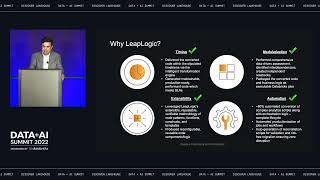
How AARP Services, Inc. automated SAS transformation to Databricks using LeapLogic

While SAS has been a standard in analytics and data science use cases, it is not cloud-native and does not scale well. Join us to learn how AARP automated the conversion of hundreds of complex data processing, model scoring, and campaign workloads to Databricks using LeapLogic, an intelligent code transformation accelerator that can transform any and all legacy ETL, analytics, data warehouse and Hadoop to modern data platforms.

In this session experts from AARP and Impetus will share about collaborating with Databricks and how they were able to: • Automate modernization of SAS marketing analytics based on coding best practices • Establish a rich library of Spark and Python equivalent functions on Databricks with the same capabilities as SAS procedures, DATA step operations, macros, and functions • Leverage Databricks-native services like Delta Live Tables to implement waterfall techniques for campaign execution and simplify pipeline monitoring

Connect with us: Website: https://databricks.com Facebook: https://www.facebook.com/databricksinc Twitter: https://twitter.com/databricks LinkedIn: https://www.linkedin.com/company/data... Instagram: https://www.instagram.com/databricksinc/

Advanced SQL with SAS

This book introduces advanced techniques for using PROC SQL in SAS. If you are a SAS programmer, analyst, or student who has mastered the basics of working with SQL, Advanced SQL with SAS® will help take your skills to the next level. Filled with practical examples with detailed explanations, this book demonstrates how to improve performance and speed for large data sets. Although the book addresses advanced topics, it is designed to progress from the simple and manageable to the complex and sophisticated. In addition to numerous tuning techniques, this book also touches on implicit and explicit pass-throughs, presents alternative SAS grid- and cloud-based processing environments, and compares SAS programming languages and approaches including FedSQL, CAS, DS2, and hash programming. Other topics include: Missing values and data quality with audit trails “Blind spots” like how missing values can affect even the simplest calculations and table joins SAS macro language and SAS macro programs SAS functions Integrity constraints SAS Dictionaries SAS Compute Server

Tree-Based Machine Learning Methods in SAS Viya

Discover how to build decision trees using SAS Viya ! Tree-Based Machine Learning Methods in SAS Viya covers everything from using a single tree to more advanced bagging and boosting ensemble methods. The book includes discussions of tree-structured predictive models and the methodology for growing, pruning, and assessing decision trees, forests, and gradient boosted trees. Each chapter introduces a new data concern and then walks you through tweaking the modeling approach, modifying the properties, and changing the hyperparameters, thus building an effective tree-based machine learning model. Along the way, you will gain experience making decision trees, forests, and gradient boosted trees that work for you. By the end of this book, you will know how to: build tree-structured models, including classification trees and regression trees. build tree-based ensemble models, including forest and gradient boosting. run isolation forest and Poisson and Tweedy gradient boosted regression tree models. implement open source in SAS and SAS in open source. use decision trees for exploratory data analysis, dimension reduction, and missing value imputation.

Text as Data

Text As Data: Combining qualitative and quantitative algorithms within the SAS system for accurate, effective and understandable text analytics The need for powerful, accurate and increasingly automatic text analysis software in modern information technology has dramatically increased. Fields as diverse as financial management, fraud and cybercrime prevention, Pharmaceutical R&D, social media marketing, customer care, and health services are implementing more comprehensive text-inclusive, analytics strategies. Text as Data: Computational Methods of Understanding Written Expression Using SAS presents an overview of text analytics and the critical role SAS software plays in combining linguistic and quantitative algorithms in the evolution of this dynamic field. Drawing on over two decades of experience in text analytics, authors Barry deVille and Gurpreet Singh Bawa examine the evolution of text mining and cloud-based solutions, and the development of SAS Visual Text Analytics. By integrating quantitative data and textual analysis with advanced computer learning principles, the authors demonstrate the combined advantages of SAS compared to standard approaches, and show how approaching text as qualitative data within a quantitative analytics framework produces more detailed, accurate, and explanatory results. Understand the role of linguistics, machine learning, and multiple data sources in the text analytics workflow Understand how a range of quantitative algorithms and data representations reflect contextual effects to shape meaning and understanding Access online data and code repositories, videos, tutorials, and case studies Learn how SAS extends quantitative algorithms to produce expanded text analytics capabilities Redefine text in terms of data for more accurate analysis This book offers a thorough introduction to the framework and dynamics of text analytics—and the underlying principles at work—and provides an in-depth examination of the interplay between qualitative-linguistic and quantitative, data-driven aspects of data analysis. The treatment begins with a discussion on expression parsing and detection and provides insight into the core principles and practices of text parsing, theme, and topic detection. It includes advanced topics such as contextual effects in numeric and textual data manipulation, fine-tuning text meaning and disambiguation. As the first resource to leverage the power of SAS for text analytics, Text as Data is an essential resource for SAS users and data scientists in any industry or academic application.

Interactive Reports in SAS® Visual Analytics

Elevate your reports with more user control and interactive elements Want to create exciting, user-friendly visualizations to bring greater intelligence to your organization? By mastering the full power of SAS Visual Analytics, you can add features that will enhance your reports and bring more depth and insight to your data. Interactive Reports in SAS Visual Analytics: Advanced Features and Customization is for experienced users who want to harness the advanced functionality of Visual Analytics on SAS Viya to create visualizations or augment existing reports. The book is full of real-world examples and step-by-step instructions to help you unlock the full potential of your reports. In this book, you will learn how to create interactive URL links to external websites use parameters to give the viewer more control add custom graphs and maps execute SAS code using SAS Viya jobs and more!

IBM TS4500 R7 Tape Library Guide

The IBM® TS4500 (TS4500) tape library is a next-generation tape solution that offers higher storage density and better integrated management than previous solutions. This IBM Redbooks® publication gives you a close-up view of the new IBM TS4500 tape library. In the TS4500, IBM delivers the density that today's and tomorrow's data growth requires. It has the cost-effectiveness and the manageability to grow with business data needs, while you preserve investments in IBM tape library products. Now, you can achieve a low cost per terabyte (TB) and a high TB density per square foot because the TS4500 can store up to 11 petabytes (PB) of uncompressed data in a single frame library or scale up to 2 PB per square foot to over 350 PB. The TS4500 offers the following benefits: High availability: Dual active accessors with integrated service bays reduce inactive service space by 40%. The Elastic Capacity option can be used to eliminate inactive service space. Flexibility to grow: The TS4500 library can grow from the right side and the left side of the first L frame because models can be placed in any active position. Increased capacity: The TS4500 can grow from a single L frame up to another 17 expansion frames with a capacity of over 23,000 cartridges. High-density (HD) generation 1 frames from the TS3500 library can be redeployed in a TS4500. Capacity on demand (CoD): CoD is supported through entry-level, intermediate, and base-capacity configurations. Advanced Library Management System (ALMS): ALMS supports dynamic storage management, which enables users to create and change logical libraries and configure any drive for any logical library. Support for IBM TS1160 while also supporting TS1155, TS1150, and TS1140 tape drive: The TS1160 gives organizations an easy way to deliver fast access to data, improve security, and provide long-term retention, all at a lower cost than disk solutions. The TS1160 offers high-performance, flexible data storage with support for data encryption. Also, this enhanced fifth-generation drive can help protect investments in tape automation by offering compatibility with existing automation. The TS1160 Tape Drive Model 60E delivers a dual 10 Gb or 25 Gb Ethernet host attachment interface that is optimized for cloud-based and hyperscale environments. The TS1160 Tape Drive Model 60F delivers a native data rate of 400 MBps, the same load/ready, locate speeds, and access times as the TS1155, and includes dual-port 16 Gb Fibre Channel support. Support of the IBM Linear Tape-Open (LTO) Ultrium 8 tape drive: The LTO Ultrium 8 offering represents significant improvements in capacity, performance, and reliability over the previous generation, LTO Ultrium 7, while still protecting your investment in the previous technology. Support of LTO 8 Type M cartridge (m8): The LTO Program introduced a new capability with LTO-8 drives. The ability of the LTO-8 drive to write 9 TB on a brand new LTO-7 cartridge instead of 6 TB as specified by the LTO-7 format. Such a cartridge is called an LTO-7 initialized LTO-8 Type M cartridge. Integrated TS7700 back-end Fibre Channel (FC) switches are available. Up to four library-managed encryption (LME) key paths per logical library are available. This book describes the TS4500 components, feature codes, specifications, supported tape drives, encryption, new integrated management console (IMC), command-line interface (CLI), and REST over SCSI (RoS) to obtain status information about library components. October 2020 - Added support for the 3592 model 60S tape drive that provides a dual-port 12 Gb SAS (Serial Attached SCSI) interface for host attachment.

Implementation Guide for IBM Elastic Storage System 3000

This IBM® Redbooks publication introduces and describes the IBM Elastic Storage® Server 3000 (ESS 3000) as a scalable, high-performance data and file management solution. The solution is built on proven IBM Spectrum® Scale technology, formerly IBM General Parallel File System (IBM GPFS). IBM Elastic Storage System 3000 is an all-Flash array platform. This storage platform uses NVMe-attached drives in ESS 3000 to provide significant performance improvements as compared to SAS-attached flash drives. This book provides a technical overview of the ESS 3000 solution and helps you to plan the installation of the environment. We also explain the use cases where we believe it fits best. Our goal is to position this book as the starting point document for customers that would use ESS 3000 as part of their IBM Spectrum Scale setups. This book is targeted toward technical professionals (consultants, technical support staff, IT Architects, and IT Specialists) who are responsible for delivering cost-effective storage solutions with ESS 3000.

JMP for Mixed Models

Discover the power of mixed models with JMP and JMP Pro. Mixed models are now the mainstream method of choice for analyzing experimental data. Why? They are arguably the most straightforward and powerful way to handle correlated observations in designed experiments. Reaching well beyond standard linear models, mixed models enable you to make accurate and precise inferences about your experiments and to gain deeper understanding of sources of signal and noise in the system under study. Well-formed fixed and random effects generalize well and help you make the best data-driven decisions. JMP for Mixed Models brings together two of the strongest traditions in SAS software: mixed models and JMP. JMP’s groundbreaking philosophy of tight integration of statistics with dynamic graphics is an ideal milieu within which to learn and apply mixed models, also known as hierarchical linear or multilevel models. If you are a scientist or engineer, the methods described herein can revolutionize how you analyze experimental data without the need to write code. Inside you’ll find a rich collection of examples and a step-by-step approach to mixed model mastery. Topics include: Learning how to appropriately recognize, set up, and interpret fixed and random effects Extending analysis of variance (ANOVA) and linear regression to numerous mixed model designs Understanding how degrees of freedom work using Skeleton ANOVA Analyzing randomized block, split-plot, longitudinal, and repeated measures designs Introducing more advanced methods such as spatial covariance and generalized linear mixed models Simulating mixed models to assess power and other important sampling characteristics Providing a solid framework for understanding statistical modeling in general Improving perspective on modern dilemmas around Bayesian methods, p-values, and causal inference

IBM Power System IC922 Technical Overview and Introduction

This IBM® Redpaper publication is a comprehensive guide that covers the IBM Power System IC922 (9183-22X) server that uses IBM POWER9™ processor-based technology and supports Linux operating systems (OSs). The objective of this paper is to introduce the system offerings and their capacities and available features. The Power IC922 server is built to deliver powerful computing, scaling efficiency, and storage capacity in a cost-optimized design to meet the evolving data challenges of the artificial intelligence (AI) era. It includes the following features: High throughput and performance for high-value Linux workloads, such as inferencing data or storage-rich workloads, or cloud. Potentially low acquisition cost through system optimization, such as using industry standard memory and warranty. Two IBM POWER9 processor-based single-chip module (SCM) devices that provide high performance with 24, 32, or 40 fully activated cores and a maximum 2 TB of memory. Up to six NVIDIA T4 graphics processing unit (GPU) accelerators. Up to twenty-four 2.5-inch SAS/SATA drives. One dedicated and one shared 1 Gb Intelligent Platform Management Interface (IPMI) port.. This publication is for professionals who want to acquire a better understanding of IBM Power Systems products. The intended audience includes: Clients Sales and marketing professionals Technical support professionals IBM Business Partners Independent software vendors (ISVs) This paper expands the current set of IBM Power Systems documentation by providing a desktop reference that offers a detailed technical description of the Power IC922 server.

A Gentle Introduction to Statistics Using SAS Studio in the Cloud

Point and click your way to performing statistics! Many people are intimidated by learning statistics, but A Gentle Introduction to Statistics Using SAS is here to help. Whether you need to perform statistical analysis for a project or, perhaps, for a course in education, psychology, sociology, economics, or any other field that requires basic statistical skills, this book teaches the fundamentals of statistics, from designing your experiment through calculating logistic regressions. Serving as an introduction to many common statistical tests and principles, it explains concepts in an intuitive way with little math and very few formulas. The book is full of examples demonstrating the use of SAS Studio’s easy point-and-click interface accessed with SAS OnDemand for Academics, an online delivery platform for teaching and learning statistical analysis that provides free access to SAS software via the cloud. Studio in the Cloud Topics included in this book are: How to access SAS OnDemand for Academics Descriptive statistics One-sample tests T tests (for independent or paired samples) One-way analysis of variance (ANOVA) N-way ANOVA Correlation analysis Simple and multiple linear regression Binary logistic regression Categorical data, including two-way tables and chi-square Power and sample size calculations Questions are provided to test your knowledge and practice your skills.

IBM Power Systems for SAS Viya 3.5 Deployment Guide

This IBM® Redbooks® publication provides options and best practices for deploying SAS Viya 3.5 on IBM POWER9™ servers. SAS Viya is a complex set of artificial intelligence (AI) and analytics solutions that require a properly planned infrastructure to meet the needs of the data scientists, business analysts, and application developers who use Viya capabilities in their daily work activities. Regardless of the user role, the underlying infrastructure matters to ensure performance expectations and service level agreement (SLA) requirements are met or exceeded. Although the general planning process is similar for deploying SAS Viya on any platform, key IBM POWER9 differentiators must be considered to ensure that an optimized infrastructure deployment is achieved. This guide provides useful information that is needed during the planning, sizing, ordering, installing, configuring, and tuning phases of your SAS Viya deployment on POWER9 processor-based servers. This book addresses topics for IT architects, IT specialists, developers, sellers, and anyone who wants to implement SAS Viya 3.5 on IBM POWER9 servers. Moreover, this publication provides documentation to transfer the how-to-skills to the technical teams, and solution guidance to the sales team. This book compliments the documentation that is available in IBM Knowledge Center and aligns with the educational materials that are provided by the IBM Systems Software Education (SSE).

Data Science for Supply Chain Forecasting

Using data science in order to solve a problem requires a scientific mindset more than coding skills. Data Science for Supply Chain Forecasting, Second Edition contends that a true scientific method which includes experimentation, observation, and constant questioning must be applied to supply chains to achieve excellence in demand forecasting. This second edition adds more than 45 percent extra content with four new chapters including an introduction to neural networks and the forecast value added framework. Part I focuses on statistical "traditional" models, Part II, on machine learning, and the all-new Part III discusses demand forecasting process management. The various chapters focus on both forecast models and new concepts such as metrics, underfitting, overfitting, outliers, feature optimization, and external demand drivers. The book is replete with do-it-yourself sections with implementations provided in Python (and Excel for the statistical models) to show the readers how to apply these models themselves. This hands-on book, covering the entire range of forecasting—from the basics all the way to leading-edge models—will benefit supply chain practitioners, forecasters, and analysts looking to go the extra mile with demand forecasting. Events around the book Link to a De Gruyter Online Event in which the author Nicolas Vandeput together with Stefan de Kok, supply chain innovator and CEO of Wahupa; Spyros Makridakis, professor at the University of Nicosia and director of the Institute For the Future (IFF); and Edouard Thieuleux, founder of AbcSupplyChain, discuss the general issues and challenges of demand forecasting and provide insights into best practices (process, models) and discussing how data science and machine learning impact those forecasts. The event will be moderated by Michael Gilliland, marketing manager for SAS forecasting software: https://youtu.be/1rXjXcabW2s

Getting Started with SAS Programming

Get up and running with SAS using Ron Cody’s easy-to-follow, step-by-step guide. Aimed at beginners, Getting Started with SAS Programming: Using SAS Studio in the Cloud uses short examples to teach SAS programming from the basics to more advanced topics in the point-and-click interactive environment of SAS Studio. To begin, you will learn how to register for SAS OnDemand for Academics, an online delivery platform for teaching and learning statistical analysis that provides free access to SAS software via the cloud. The first part of the book shows you how to use SAS Studio built-in tasks to produce a report, summarize data, and create charts and graphs. It also describes how you can perform basic statistical tests using the interactive point-and-click environment. The second part of the book uses easy-to-follow examples to show you how to write your own SAS programs and how to use SAS procedures to perform a variety of tasks. This part of the book also explains how to read data from a variety of sources: text files, Excel workbooks, and CSV files. In order to get familiar with the SAS Studio environment, this book also shows you how to access dozens of interesting data sets that are included with the SAS OnDemand for Academics platform.