Summary Gleb Mezhanskiy, CEO and co-founder of DataFold, joins Tobias Macey to discuss the challenges and innovations in data migrations. Gleb shares his experiences building and scaling data platforms at companies like Autodesk and Lyft, and how these experiences inspired the creation of DataFold to address data quality issues across teams. He outlines the complexities of data migrations, including common pitfalls such as technical debt and the importance of achieving parity between old and new systems. Gleb also discusses DataFold's innovative use of AI and large language models (LLMs) to automate translation and reconciliation processes in data migrations, reducing time and effort required for migrations. Announcements Hello and welcome to the Data Engineering Podcast, the show about modern data managementImagine catching data issues before they snowball into bigger problems. That’s what Datafold’s new Monitors do. With automatic monitoring for cross-database data diffs, schema changes, key metrics, and custom data tests, you can catch discrepancies and anomalies in real time, right at the source. Whether it’s maintaining data integrity or preventing costly mistakes, Datafold Monitors give you the visibility and control you need to keep your entire data stack running smoothly. Want to stop issues before they hit production? Learn more at dataengineeringpodcast.com/datafold today!Your host is Tobias Macey and today I'm welcoming back Gleb Mezhanskiy to talk about Datafold's experience bringing AI to bear on the problem of migrating your data stackInterview IntroductionHow did you get involved in the area of data management?Can you describe what the Data Migration Agent is and the story behind it?What is the core problem that you are targeting with the agent?What are the biggest time sinks in the process of database and tooling migration that teams run into?Can you describe the architecture of your agent?What was your selection and evaluation process for the LLM that you are using?What were some of the main unknowns that you had to discover going into the project?What are some of the evolutions in the ecosystem that occurred either during the development process or since your initial launch that have caused you to second-guess elements of the design?In terms of SQL translation there are libraries such as SQLGlot and the work being done with SDF that aim to address that through AST parsing and subsequent dialect generation. What are the ways that approach is insufficient in the context of a platform migration?How does the approach you are taking with the combination of data-diffing and automated translation help build confidence in the migration target?What are the most interesting, innovative, or unexpected ways that you have seen the Data Migration Agent used?What are the most interesting, unexpected, or challenging lessons that you have learned while working on building an AI powered migration assistant?When is the data migration agent the wrong choice?What do you have planned for the future of applications of AI at Datafold?Contact Info LinkedInParting Question From your perspective, what is the biggest gap in the tooling or technology for data management today?Closing Announcements Thank you for listening! Don't forget to check out our other shows. Podcast.init covers the Python language, its community, and the innovative ways it is being used. The AI Engineering Podcast is your guide to the fast-moving world of building AI systems.Visit the site to subscribe to the show, sign up for the mailing list, and read the show notes.If you've learned something or tried out a project from the show then tell us about it! Email [email protected] with your story.Links DatafoldDatafold Migration AgentDatafold data-diffDatafold Reconciliation Podcast EpisodeSQLGlotLark parserClaude 3.5 SonnetLookerPodcast EpisodeThe intro and outro music is from The Hug by The Freak Fandango Orchestra / CC BY-SA
 talk-data.com
Topic
Data Quality
5
tagged
Activity Trend
Top Events
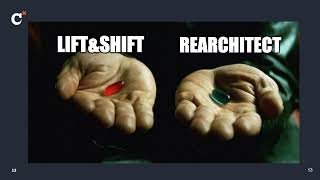
In this session, Gleb Mezhanskiy, CEO of Datafold, will share innovative strategies for automating the conversion of legacy transformation code (i.e., stored procedures) to dbt models, a crucial step in modernizing your data infrastructure. He will also delve into techniques for automating the data reconciliation between legacy and new systems with cross-database data diffing, ensuring data integrity and accelerating migration timelines. Additionally, Gleb will demonstrate how data teams can adopt a proactive approach to data quality post-migration by leveraging a "shift-left" approach to data testing and monitoring.
Speaker: Gleb Mezhanskiy Datafold
Read the blog to learn about the latest dbt Cloud features announced at Coalesce, designed to help organizations embrace analytics best practices at scale https://www.getdbt.com/blog/coalesce-2024-product-announcements
It’s a tale as old as time: a data migration that was supposed to take months turns into years turns into something that no longer has an end date—all while going over budget and increasing in complexity every day. In this session, Gleb is going deep on the methods, tooling, and hard lessons learned during a years-long migration at Lyft. Specifically, he'll share how you can leverage data quality testing methodologies like cross-database diffing to accelerate a data migration without sacrificing data quality. You should walk away with practices that will allow your data team to plan, move, and audit database objects with speed and confidence during a migration.
Identifying novel data issues that go undetected through CI/CD with dbt and Datafold - Coalesce 2023
Join the team from Moody's Analytics as they take you on a personal journey of optimizing their data pipelines for data quality and governance. Like many data practitioners, Ryan and Ravi understand the frustration and anxiety that comes with accidentally introducing bad code into production pipelines—they've spent countless hours putting out fires caused from these unexpected changes.
In this session, Ryan and Ravi recount their experiences with a previous data stack that lacked standardized testing methods and visibility into the impact of code changes on production data. They also share how their new data stack is safeguarded by Datafold's data diffing and continuous integration (CI) capabilities, which enables their team to work with greater confidence, peace of mind, and speed.
Speakers: Gleb Mezhanskiy, CEO, Datafold; Ravi Ramadoss, Director of Data Engineering, Moody's Analytics CRE; Ryan Kelly, Data Engineer, Moody's Analytics CRE
Register for Coalesce at https://coalesce.getdbt.com
Summary Data quality is a concern that has been gaining attention alongside the rising importance of analytics for business success. Many solutions rely on hand-coded rules for catching known bugs, or statistical analysis of records to detect anomalies retroactively. While those are useful tools, it is far better to prevent data errors before they become an outsized issue. In this episode Gleb Mezhanskiy shares some strategies for adding quality checks at every stage of your development and deployment workflow to identify and fix problematic changes to your data before they get to production.
Announcements
Hello and welcome to the Data Engineering Podcast, the show about modern data management You listen to this show to learn about all of the latest tools, patterns, and practices that power data engineering projects across every domain. Now there’s a book that captures the foundational lessons and principles that underly everything that you hear about here. I’m happy to announce I collected wisdom from the community to help you in your journey as a data engineer and worked with O’Reilly to publish it as 97 Things Every Data Engineer Should Know. Go to dataengineeringpodcast.com/97things today to get your copy! When you’re ready to build your next pipeline, or want to test out the projects you hear about on the show, you’ll need somewhere to deploy it, so check out our friends at Linode. With their managed Kubernetes platform it’s now even easier to deploy and scale your workflows, or try out the latest Helm charts from tools like Pulsar and Pachyderm. With simple pricing, fast networking, object storage, and worldwide data centers, you’ve got everything you need to run a bulletproof data platform. Go to dataengineeringpodcast.com/linode today and get a $100 credit to try out a Kubernetes cluster of your own. And don’t forget to thank them for their continued support of this show! RudderStack’s smart customer data pipeline is warehouse-first. It builds your customer data warehouse and your identity graph on your data warehouse, with support for Snowflake, Google BigQuery, Amazon Redshift, and more. Their SDKs and plugins make event streaming easy, and their integrations with cloud applications like Salesforce and ZenDesk help you go beyond event streaming. With RudderStack you can use all of your customer data to answer more difficult questions and then send those insights to your whole customer data stack. Sign up free at dataengineeringpodcast.com/rudder today. We’ve all been asked to help with an ad-hoc request for data by the sales and marketing team. Then it becomes a critical report that they need updated every week or every day. Then what do you do? Send a CSV via email? Write some Python scripts to automate it? But what about incremental sync, API quotas, error handling, and all of the other details that eat up your time? Today, there is a better way. With Census, just write SQL or plug in your dbt models and start syncing your cloud warehouse to SaaS applications like Salesforce, Marketo, Hubspot, and many more. Go to dataengineeringpodcast.com/census today to get a free 14-day trial. Your host is Tobias Macey and today I’m interviewing Gleb Mezhanskiy about strategies for proactive data quality management and his work at Datafold to help provide tools for implementing them
Interview
Introduction How did you get involved in the area of data management? Can you describe what you are building at Datafold and the story behind it? What are the biggest factors that you see contributing to data quality issues?
How are teams identifying and addressing those failures?
How does the data platform architecture impact the potential for introducing quality problems? What are some of the potential risks or consequences of introducing errors in data processing? How can organizations shift to being proactive in their data quality management?
How much of a role does tooling play in addressing the introduct