talk-data.com talk-data.com

Topic

Hubspot

marketing crm

27

tagged

Activity Trend

8 peak/qtr
2020-Q1 2026-Q1

Activities

27 activities · Newest first

At Qdrant Conference, builders, researchers, and industry practitioners shared how vector search, retrieval infrastructure, and LLM-driven workflows are evolving across developer tooling, AI platforms, analytics teams, and modern search research.

Andrey Vasnetsov (Qdrant) explained how Qdrant was born from the need to combine database-style querying with vector similarity search—something he first built during the COVID lockdowns. He highlighted how vector search has shifted from an ML specialty to a standard developer tool and why hosting an in-person conference matters for gathering honest, real-time feedback from the growing community.

Slava Dubrov (HubSpot) described how his team uses Qdrant to power AI Signals, a platform for embeddings, similarity search, and contextual recommendations that support HubSpot’s AI agents. He shared practical use cases like look-alike company search, reflected on evaluating agentic frameworks, and offered career advice for engineers moving toward technical leadership.

Marina Ariamnova (SumUp) presented her internally built LLM analytics assistant that turns natural-language questions into SQL, executes queries, and returns clean summaries—cutting request times from days to minutes. She discussed balancing analytics and engineering work, learning through real projects, and how LLM tools help analysts scale routine workflows without replacing human expertise.

Evgeniya (Jenny) Sukhodolskaya (Qdrant) discussed the multi-disciplinary nature of DevRel and her focus on retrieval research. She shared her work on sparse neural retrieval, relevance feedback, and hybrid search models that blend lexical precision with semantic understanding—contributing methods like Mini-COIL and shaping Qdrant’s search quality roadmap through end-to-end experimentation and community education.

Speakers

Andrey Vasnetsov Co-founder & CTO of Qdrant, leading the engineering and platform vision behind a developer-focused vector database and vector-native infrastructure. Connect: https://www.linkedin.com/in/andrey-vasnetsov-75268897/

Slava Dubrov Technical Lead at HubSpot working on AI Signals—embedding models, similarity search, and context systems for AI agents. Connect: https://www.linkedin.com/in/slavadubrov/

Marina Ariamnova Data Lead at SumUp, managing analytics and financial data workflows while prototyping LLM tools that automate routine analysis. Connect: https://www.linkedin.com/in/marina-ariamnova/

Evgeniya (Jenny) Sukhodolskaya Developer Relations Engineer at Qdrant specializing in retrieval research, sparse neural methods, and educational ML content. Connect: https://www.linkedin.com/in/evgeniya-sukhodolskaya/

The line between human work and AI capabilities is blurring in today's business environment. AI agents are now handling autonomous tasks across customer support, data management, and sales prospecting with increasing sophistication. But how do you effectively integrate these agents into your existing workflows? What's the right approach to training and evaluating AI team members? With data quality being the foundation of successful AI implementation, how can you ensure your systems have the unified context they need while maintaining proper governance and privacy controls? Karen Ng is the Head of Product at HubSpot, where she leads product strategy, design, and partnerships with the mission of helping millions of organizations grow better. Since joining in 2022, she has driven innovation across Smart CRM, Operations Hub, Breeze Intelligence, and the developer ecosystem, with a focus on unifying structured and unstructured data to make AI truly useful for businesses. Known for leading with clarity and “AI speed,” she pushes HubSpot to stay ahead of disruption and empower customers to thrive. Previously, Karen held senior product leadership roles at Common Room, Google, and Microsoft. At Common Room, she built the product and data science teams from the ground up, while at Google she directed Android’s product frameworks like Jetpack and Jetpack Compose. During more than a decade at Microsoft, she helped shape the company’s .NET strategy and launched the Roslyn compiler platform. Recognized as a Product 50 Winner and recipient of the PM Award for Technical Strategist, she also advises and invests in high-growth technology companies. In the episode, Richie and Karen explore the evolving role of AI agents in sales, marketing, and support, the distinction between chatbots, co-pilots, and autonomous agents, the importance of data quality and context, the concept of hybrid teams, the future of AI-driven business processes, and much more. Links Mentioned in the Show: Hubspot Breeze AgentsConnect with KarenWebinar: Pricing & Monetizing Your AI Products with Sam Lee, VP of Pricing Strategy & Product Operations at HubSpotRelated Episode: Enterprise AI Agents with Jun Qian, VP of Generative AI Services at OracleRewatch RADAR AI  New to DataCamp? Learn on the go using the DataCamp mobile appEmpower your business with world-class data and AI skills with DataCamp for business

Coalesce 2024: Accelerate your dbt development with AI and the dbt Power User extension

Making use of AI in the dbt development lifecycle has the potential to be a massive productivity unlock for your team. In this talk, explore how AI-driven approaches can improve your development process with Michiel De Smet from Altimate AI and Anton Goncharuk from Hubspot. Discover practical strategies to automate your work, prevent issues earlier, and embed best practices. Along the way, you'll also get to hear some real-life examples from how the team at HubSpot streamlined their dbt Cloud development workflow and enhanced collaboration within the team.

Speakers: Michiel De Smet Founding Engineer Altimate AI

Anton Goncharuk Principal Analytics Engineer HubSpot

Read the blog to learn about the latest dbt Cloud features announced at Coalesce, designed to help organizations embrace analytics best practices at scale https://www.getdbt.com/blog/coalesce-2024-product-announcements

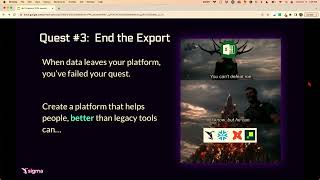
Game on: Building massive multiplayer online data products - Coalesce 2023

With dbt and the modern data stack, onboarding and surfacing data has never been more manageable for analytics engineers. Still, 85% of data products never make it into production. Why do data practitioners struggle to create data products that engage the people who actually use them?

Join Jake and Nate as they discuss how integration and collaboration can drive user engagement, ultimately leading to increased adoption. They’ll present guiding principles and three real world examples of data products designed to center and empower business users to: - Replace the need for seeds using materialized Sigma input tables - Create and manage HubSpot contacts and segments using Sigma’s HubSpot template - Sync insights from Sigma directly to downstream systems using the Hightouch integration.

The lessons learned from building a data platform at Sigma will provide everyone a framework for fostering collaboration between data teams and business users so they can raid insights, move up the leaderboard, and level up their gameplay no matter what data stack they use.

Speakers: Nate Meinzer, Director of Partner Engineering, Sigma Computing; Jake Hannan, Senior Manager, Data Platform, Sigma Computing

Register for Coalesce at https://coalesce.getdbt.com

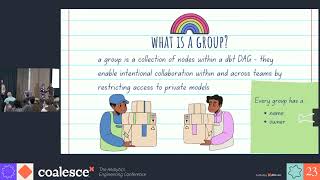
Unlocking model governance and multi-project deployments with dbt-meshify - Coalesce 2023

Join us for story hour, as we follow two intrepid analytics engineers working in a large dbt project as they go on a journey to meshify their dbt project, with help from a ✨special guest✨

Along the way, learn about dbt-meshify - a new CLI tool to automate the creation of model governance and cross-project lineage features in your dbt project. dbt-meshify refactors your code for you, helping you add model contracts, versions, groups, access, cross-project lineage, and more -- all in a matter of minutes! No bespoke YAML writing needed.

Speakers: Grace Goheen, Product Manager, dbt Labs; Nicholas Yager, Principal Analytics Engineer, HubSpot; Dave Connors, DX, dbt Labs

Register for Coalesce at https://coalesce.getdbt.com

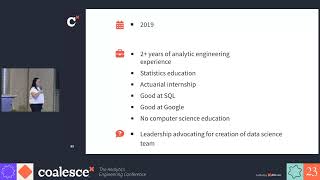
The career growth software development lifecycle - Coalesce 2023

Does career growth feel like a black box? Does the question "where do you want to be in five years" fill you with existential dread? Data people come in all shapes and sizes, from backgrounds and disciplines, which can make it hard to see a clear growth path through the industry. In this session, Kasey Mazza at Hubspot explains how you can explore the whole ecosystem of data roles without feeling overwhelmed.

As the great Natasha Bedingfield once said,” the rest is still unwritten.” While a blank canvas ahead of you can be scary, it's also full of promise and opportunity. You'll leave this session with actionable next steps on how to be in control of your career growth and your destiny.

Speaker: Kasey Mazza, Manager, Analytics Engineering, HubSpot

Register for Coalesce at https://coalesce.getdbt.com/

In this conversation with Tristan recorded at Coalesce 2023, Kasey Mazza, an analytics engineering manager on the RevOps team at HubSpot, discusses the roles of data analysts and analytics engineers, the importance of building internal data communities, and the evolving landscape of data teams.  Watch Kasey's Coalescse 2023 presentation The career growth software development lifecycle. For full show notes and to read 6+ years of back issues of the podcast's companion newsletter, head to https://roundup.getdbt.com.  The Analytics Engineering Podcast is sponsored by dbt Labs.

The missing link: Design as a daily activity

What does it mean to "be technical"? What makes a great analytics engineer? How can individuals "develop technically", how can managers "foster technical growth", and how can companies "hire technical people"? It's crucial to understand the component skills that build into great analytics engineering outcomes.

As it turns out, it's not so different from how fashion designers go from prompt to runway look. Join Ashley Sherwood (HubSpot) as she breaks down the parallels between fashion design and analytics engineering work and how small daily design decisions can compound to a massive impact on data teams' abilities to grow their skills and serve stakeholders.

Check the slides here: https://docs.google.com/presentation/d/1HDzAzHhWy4q_cXASB1F3EfTWivWlijCRu5e-CIbaXqI/edit?usp=sharing

Coalesce 2023 is coming! Register for free at https://coalesce.getdbt.com/.

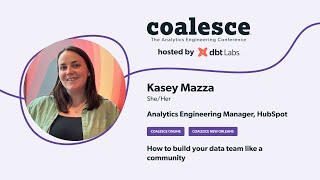
How to build your data team like a community

Data suggests that occupational identity has consequences for work engagement which in turn influences turnover intention. In a “new normal” with hybrid work environments and ever-increasing employee turnover, it’s crucial that our employees are engaged and feel a sense of belonging. As a data team manager, Kasey Mazza knows how important it is to build a community of data-minded folks that gives your people a place to learn, grow, and thrive.

Join Kasey as she discusses the things they’ve done at HubSpot to build a sense of community and camaraderie both within her team and across their entire data community of ~400 people. This talk will highlight:

  • Why diversity matters

  • Living your values

  • Leading with curiosity and empathy

  • Creating intentional space

  • Reducing or avoiding burnout

Check the slides here: https://docs.google.com/presentation/d/18vaqHWIt6q47YjkZhh3LSfzF6PL8ltpCDf8vnY6sKrs/edit?usp=sharing

Coalesce 2023 is coming! Register for free at https://coalesce.getdbt.com/.

Is the typical hiring and job search process broken? It is definitely full of bias. First, we get interested candidates to submit their resumes. Then someone (typically not the hiring manager) will pick out the resumes that look most interesting to them. Resumes that survive are typically carefully curated for someone to be able to form a positive opinion in just a few seconds. Then the hiring manager will pick their favourites out of that smaller pile. At this point, the lion’s share of candidates has been excluded purely based on resumes. Then comes the first interview. According to a study in the Journal of Occupational and Organisational Psychology, 60% of interviewers make their decision in the first 15 minutes. What’s more, according to Hubspot, 85% of jobs are filled through networking. We prefer to hire someone we already know, because we think we have an idea of their ability. We are genetically designed to make quick decisions based on limited data points, which is at odds with very complex decisions such as hiring the right candidate. We try to deal with this through resumes, but these documents are also heavily biased. How do we limit our own biases and measure all candidates objectively? How do we identify the rising stars and unique talents who don’t yet have a long resume full of experience? I recently spoke to Tim Freestone to get an answer to these questions and many more relating to hiring the right data and analytics candidates. Tim is the founder of Alooba, the world’s first data and analytics assessment platform. Alooba’s tools help organisations around the world objectively assess the skills and capabilities of new candidates and existing team members alike. In this episode of Leaders of Analytics, we discuss: The biggest challenges for hiring managers in the data and analytics industry and how we can solve theseThe typical mistakes hiring managers and candidates make when they recruit and apply for roles respectivelyThe biggest opportunities to improve the hiring process for data and analytics professionalsWhat skillsets make data & analytics candidates stand out in today’s job marketMust-have skills that hiring managers should look for in their candidates, and much more.Tim Freestone on LinkedIn: https://www.linkedin.com/in/tim-freestone-alooba/ Alooba's website: https://www.alooba.com/  

Gordon Wong is on a mission. A long-time business intelligence leader who has led data & analytics teams at HubSpot and FitBit, Wong believes BI teams aren’t data-driven enough. He says BI leaders need to think of themselves as small businesses owners and aggressively court and manage customers. He says too many don’t have metrics to track customer engagement and usage. In short, BI teams need to eat their own dog food and build success metrics to guide their activities.

If you are a data or analytics leader, do you know the value your team contributes to the business? Do you have KPIs for business intelligence? Can you measure the impact of data and analytics endeavors in terms the business understands and respects? Too often BI and data leaders get caught up in technical details and fail to evaluate how their technical initiatives add value to the business. This wide-ranging interview with a BI veteran will shed light on how to run a successful BI shop.

Ashley is a Principal Analytics Engineer at Hubspot, and has helped lead their implementation of dbt. Ashley makes unique connections in her writing and work. On her Substack, "syntax error at or near ❤️," Ashley might be found comparing growing companies to butterflies, or going deep on how to accommodate sensitive people in the workplace. In this conversation with Tristan & Julia, Ashley dives into the nuts and bolts of her trajectory pushing data innovation forward at Hubspot. For full show notes and to read 6+ years of back issues of the podcast's companion newsletter, head to https://roundup.getdbt.com.  The Analytics Engineering Podcast is sponsored by dbt Labs.

Summary The technological and social ecosystem of data engineering and data management has been reaching a stage of maturity recently. As part of this stage in our collective journey the focus has been shifting toward operation and automation of the infrastructure and workflows that power our analytical workloads. It is an encouraging sign for the industry, but it is still a complex and challenging undertaking. In order to make this world of DataOps more accessible and manageable the team at Nexla has built a platform that decouples the logical unit of data from the underlying mechanisms so that you can focus on the problems that really matter to your business. In this episode Saket Saurabh (CEO) and Avinash Shahdadpuri (CTO) share the story behind the Nexla platform, discuss the technical underpinnings, and describe how their concept of a Nexset simplifies the work of building data products for sharing within and between organizations.

Announcements

Hello and welcome to the Data Engineering Podcast, the show about modern data management When you’re ready to build your next pipeline, or want to test out the projects you hear about on the show, you’ll need somewhere to deploy it, so check out our friends at Linode. With their managed Kubernetes platform it’s now even easier to deploy and scale your workflows, or try out the latest Helm charts from tools like Pulsar and Pachyderm. With simple pricing, fast networking, object storage, and worldwide data centers, you’ve got everything you need to run a bulletproof data platform. Go to dataengineeringpodcast.com/linode today and get a $100 credit to try out a Kubernetes cluster of your own. And don’t forget to thank them for their continued support of this show! Schema changes, missing data, and volume anomalies caused by your data sources can happen without any advanced notice if you lack visibility into your data-in-motion. That leaves DataOps reactive to data quality issues and can make your consumers lose confidence in your data. By connecting to your pipeline orchestrator like Apache Airflow and centralizing your end-to-end metadata, Databand.ai lets you identify data quality issues and their root causes from a single dashboard. With Databand.ai, you’ll know whether the data moving from your sources to your warehouse will be available, accurate, and usable when it arrives. Go to dataengineeringpodcast.com/databand to sign up for a free 30-day trial of Databand.ai and take control of your data quality today. We’ve all been asked to help with an ad-hoc request for data by the sales and marketing team. Then it becomes a critical report that they need updated every week or every day. Then what do you do? Send a CSV via email? Write some Python scripts to automate it? But what about incremental sync, API quotas, error handling, and all of the other details that eat up your time? Today, there is a better way. With Census, just write SQL or plug in your dbt models and start syncing your cloud warehouse to SaaS applications like Salesforce, Marketo, Hubspot, and many more. Go to dataengineeringpodcast.com/census today to get a free 14-day trial. Your host is Tobias Macey and today I’m interviewing Saket Saurabh and Avinash Shahdadpuri about Nexla, a platform for powering data operations and sharing within and across businesses

Interview

Introduction How did you get involved in the area of data management? Can you describe what Nexla is and the story behind it? What are the major problems that Nexla is aiming to solve?

What are the components of a data platform that Nexla might replace?

What are the use cases and benefits of being able to publish data sets for use outside and across organizations? What are the different elements involved in implementing DataOps? How is the Nexla platform implemented?

What have been the most comple engineering challenges? How has the architecture changed or evolved since you first began working on it? What are some of the assumpt

Summary A major concern that comes up when selecting a vendor or technology for storing and managing your data is vendor lock-in. What happens if the vendor fails? What if the technology can’t do what I need it to? Compilerworks set out to reduce the pain and complexity of migrating between platforms, and in the process added an advanced lineage tracking capability. In this episode Shevek, CTO of Compilerworks, takes us on an interesting journey through the many technical and social complexities that are involved in evolving your data platform and the system that they have built to make it a manageable task.

Announcements

Hello and welcome to the Data Engineering Podcast, the show about modern data management When you’re ready to build your next pipeline, or want to test out the projects you hear about on the show, you’ll need somewhere to deploy it, so check out our friends at Linode. With their managed Kubernetes platform it’s now even easier to deploy and scale your workflows, or try out the latest Helm charts from tools like Pulsar and Pachyderm. With simple pricing, fast networking, object storage, and worldwide data centers, you’ve got everything you need to run a bulletproof data platform. Go to dataengineeringpodcast.com/linode today and get a $100 credit to try out a Kubernetes cluster of your own. And don’t forget to thank them for their continued support of this show! Schema changes, missing data, and volume anomalies caused by your data sources can happen without any advanced notice if you lack visibility into your data-in-motion. That leaves DataOps reactive to data quality issues and can make your consumers lose confidence in your data. By connecting to your pipeline orchestrator like Apache Airflow and centralizing your end-to-end metadata, Databand.ai lets you identify data quality issues and their root causes from a single dashboard. With Databand.ai, you’ll know whether the data moving from your sources to your warehouse will be available, accurate, and usable when it arrives. Go to dataengineeringpodcast.com/databand to sign up for a free 30-day trial of Databand.ai and take control of your data quality today. We’ve all been asked to help with an ad-hoc request for data by the sales and marketing team. Then it becomes a critical report that they need updated every week or every day. Then what do you do? Send a CSV via email? Write some Python scripts to automate it? But what about incremental sync, API quotas, error handling, and all of the other details that eat up your time? Today, there is a better way. With Census, just write SQL or plug in your dbt models and start syncing your cloud warehouse to SaaS applications like Salesforce, Marketo, Hubspot, and many more. Go to dataengineeringpodcast.com/census today to get a free 14-day trial. Your host is Tobias Macey and today I’m interviewing Shevek about Compilerworks and his work on writing compilers to automate data lineage tracking from your SQL code

Interview

Introduction How did you get involved in the area of data management? Can you describe what Compilerworks is and the story behind it? What is a compiler?

How are you applying compilers to the challenges of data processing systems?

What are some use cases that Compilerworks is uniquely well suited to? There are a number of other methods and systems available for tracking and/or computing data lineage. What are the benefits of the approach that you are taking with Compilerworks? Can you describe the design and implementation of the Compilerworks platform?

How has the system changed or evolved since you first began working on it?

What programming languages and SQL dialects do you currently support?

Which have been the most challenging to work with? How do you handle verification/validation of the algebraic representation of SQL code given the variability of implementations and the flexibility of the specification?

Can you talk through the process of getting Compilerworks

Summary All of the fancy data platform tools and shiny dashboards that you use are pointless if the consumers of your analysis don’t have trust in the answers. Stemma helps you establish and maintain that trust by giving visibility into who is using what data, annotating the reports with useful context, and understanding who is responsible for keeping it up to date. In this episode Mark Grover explains what he is building at Stemma, how it expands on the success of the Amundsen project, and why trust is the most important asset for data teams.

Announcements

Hello and welcome to the Data Engineering Podcast, the show about modern data management When you’re ready to build your next pipeline, or want to test out the projects you hear about on the show, you’ll need somewhere to deploy it, so check out our friends at Linode. With their managed Kubernetes platform it’s now even easier to deploy and scale your workflows, or try out the latest Helm charts from tools like Pulsar and Pachyderm. With simple pricing, fast networking, object storage, and worldwide data centers, you’ve got everything you need to run a bulletproof data platform. Go to dataengineeringpodcast.com/linode today and get a $100 credit to try out a Kubernetes cluster of your own. And don’t forget to thank them for their continued support of this show! RudderStack’s smart customer data pipeline is warehouse-first. It builds your customer data warehouse and your identity graph on your data warehouse, with support for Snowflake, Google BigQuery, Amazon Redshift, and more. Their SDKs and plugins make event streaming easy, and their integrations with cloud applications like Salesforce and ZenDesk help you go beyond event streaming. With RudderStack you can use all of your customer data to answer more difficult questions and then send those insights to your whole customer data stack. Sign up free at dataengineeringpodcast.com/rudder today. We’ve all been asked to help with an ad-hoc request for data by the sales and marketing team. Then it becomes a critical report that they need updated every week or every day. Then what do you do? Send a CSV via email? Write some Python scripts to automate it? But what about incremental sync, API quotas, error handling, and all of the other details that eat up your time? Today, there is a better way. With Census, just write SQL or plug in your dbt models and start syncing your cloud warehouse to SaaS applications like Salesforce, Marketo, Hubspot, and many more. Go to dataengineeringpodcast.com/census today to get a free 14-day trial. Your host is Tobias Macey and today I’m interviewing Mark Grover about his work at Stemma to bring the Amundsen project to a wider audience and increase trust in their data.

Interview

Introduction Can you describe what Stemma is and the story behind it? Can you give me more context into how and why Stemma fits into the current data engineering world? Among the popular tools of today for data warehousing and other products that stitch data together – what is Stemma’s place? Where does it fit into the workflow? How has the explosion in options for data cataloging and discovery influenced your thinking on the necessary feature set for that class of tools? How do you compare to your competitors With how long we have been using data and building systems to analyze it, why do you think that trust in the results is still such a momentous problem? Tell me more about Stemma and how it compares to Amundsen? Can you tell me more about the impact of Stemma/Amundsen to companies that use it? What are the opportunities for innovating on top of Stemma to help organizations streamline communication between data producers and consumers? Beyond the technological capabilities of a data platform, the bigger question is usually the social/organizational patterns around data. How have the "best practices" around the people side of data changed in the recent past?

What are the points of friction that

Summary Data lake architectures have largely been biased toward batch processing workflows due to the volume of data that they are designed for. With more real-time requirements and the increasing use of streaming data there has been a struggle to merge fast, incremental updates with large, historical analysis. Vinoth Chandar helped to create the Hudi project while at Uber to address this challenge. By adding support for small, incremental inserts into large table structures, and building support for arbitrary update and delete operations the Hudi project brings the best of both worlds together. In this episode Vinoth shares the history of the project, how its architecture allows for building more frequently updated analytical queries, and the work being done to add a more polished experience to the data lake paradigm.

Announcements

Hello and welcome to the Data Engineering Podcast, the show about modern data management You listen to this show to learn about all of the latest tools, patterns, and practices that power data engineering projects across every domain. Now there’s a book that captures the foundational lessons and principles that underly everything that you hear about here. I’m happy to announce I collected wisdom from the community to help you in your journey as a data engineer and worked with O’Reilly to publish it as 97 Things Every Data Engineer Should Know. Go to dataengineeringpodcast.com/97things today to get your copy! When you’re ready to build your next pipeline, or want to test out the projects you hear about on the show, you’ll need somewhere to deploy it, so check out our friends at Linode. With their managed Kubernetes platform it’s now even easier to deploy and scale your workflows, or try out the latest Helm charts from tools like Pulsar and Pachyderm. With simple pricing, fast networking, object storage, and worldwide data centers, you’ve got everything you need to run a bulletproof data platform. Go to dataengineeringpodcast.com/linode today and get a $100 credit to try out a Kubernetes cluster of your own. And don’t forget to thank them for their continued support of this show! RudderStack’s smart customer data pipeline is warehouse-first. It builds your customer data warehouse and your identity graph on your data warehouse, with support for Snowflake, Google BigQuery, Amazon Redshift, and more. Their SDKs and plugins make event streaming easy, and their integrations with cloud applications like Salesforce and ZenDesk help you go beyond event streaming. With RudderStack you can use all of your customer data to answer more difficult questions and then send those insights to your whole customer data stack. Sign up free at dataengineeringpodcast.com/rudder today. We’ve all been asked to help with an ad-hoc request for data by the sales and marketing team. Then it becomes a critical report that they need updated every week or every day. Then what do you do? Send a CSV via email? Write some Python scripts to automate it? But what about incremental sync, API quotas, error handling, and all of the other details that eat up your time? Today, there is a better way. With Census, just write SQL or plug in your dbt models and start syncing your cloud warehouse to SaaS applications like Salesforce, Marketo, Hubspot, and many more. Go to dataengineeringpodcast.com/census today to get a free 14-day trial. Your host is Tobias Macey and today I’m interviewing Vinoth Chandar about Apache Hudi, a data lake management layer for supporting fast and incremental updates to your tables.

Interview

Introduction How did you get involved in the area of data management? Can you describe what Hudi is and the story behind it? What are the use cases that it is focused on supporting? There have been a number of alternative table formats introduced for data lakes recently. How does Hudi compare to projects like Iceberg, Delta Lake, Hive, etc.? Can you describe how Hudi is architected?

How have the goals and design of Hudi changed or evolved since you first began working on it? If you were to start the whole project over today, what would you do differently?

Can you talk through the lifecycle of a data record as it is ingested, compacted, and queried in a Hudi deployment? One of the capabilities that is interesting to explore is support for arbitrary record deletion. Can you talk through why this is a challenging operation in data lake architectures?

How does Hudi make that a tractable problem?

What are the data platform components that are needed to support an installation of Hudi? What is involved in migrating an existing data lake to use Hudi?

How would someone approach supporting heterogeneous table formats in their lake?

As someone who has invested a lot of time in technologies for supporting data lakes, what are your thoughts on the tradeoffs of data lake vs data warehouse and the current trajectory of the ecosystem? What are the most interesting, innovative, or unexpected ways that you have seen Hudi used? What are the most interesting, unexpected, or challenging lessons that you have learned while working on Hudi? When is Hudi the wrong choice? What do you have planned for the future of Hudi?

Contact Info

Linkedin Twitter

Parting Question

From your perspective, what is the biggest gap in the tooling or technology for data management today?

Closing Announcements

Thank you for listening! Don’t forget to check out our other show, Podcast.init to learn about the Python language, its community, and the innovative ways it is being used. Visit the site to subscribe to the show, sign up for the mailing list, and read the show notes. If you’ve learned something or tried out a project from the show then tell us about it! Email [email protected]) with your story. To help other people find the show please leave a review on iTunes and tell your friends and co-workers Join the community in the new Zulip chat workspace at dataengineeringpodcast.com/chat

Links

Hudi Docs Hudi Design & Architecture Incremental Processing CDC == Change Data Capture

Podcast Episodes

Oracle GoldenGate Voldemort Kafka Hadoop Spark HBase Parquet Iceberg Table Format

Data Engineering Episode

Hive ACID Apache Kudu

Podcast Episode

Vertica Delta Lake

Podcast Episode

Optimistic Concurrency Control MVCC == Multi-Version Concurrency Control Presto Flink

Podcast Episode

Trino

Podcast Episode

Gobblin LakeFS

Podcast Episode

Nessie

The intro and outro music is from The Hug by The Freak Fandango Orchestra / CC BY-SA

Support Data Engineering Podcast

Summary Everyone expects data to be transmitted, processed, and updated instantly as more and more products integrate streaming data. The technology to make that possible has been around for a number of years, but the barriers to adoption have still been high due to the level of technical understanding and operational capacity that have been required to run at scale. Datastax has recently introduced a new managed offering for Pulsar workloads in the form of Astra Streaming that lowers those barriers and make stremaing workloads accessible to a wider audience. In this episode Prabhat Jha and Jonathan Ellis share the work that they have been doing to integrate streaming data into their managed Cassandra service. They explain how Pulsar is being used by their customers, the work that they have done to scale the administrative workload for multi-tenant environments, and the challenges of operating such a data intensive service at large scale. This is a fascinating conversation with a lot of useful lessons for anyone who wants to understand the operational aspects of Pulsar and the benefits that it can provide to data workloads.

Announcements

Hello and welcome to the Data Engineering Podcast, the show about modern data management You listen to this show to learn about all of the latest tools, patterns, and practices that power data engineering projects across every domain. Now there’s a book that captures the foundational lessons and principles that underly everything that you hear about here. I’m happy to announce I collected wisdom from the community to help you in your journey as a data engineer and worked with O’Reilly to publish it as 97 Things Every Data Engineer Should Know. Go to dataengineeringpodcast.com/97things today to get your copy! When you’re ready to build your next pipeline, or want to test out the projects you hear about on the show, you’ll need somewhere to deploy it, so check out our friends at Linode. With their managed Kubernetes platform it’s now even easier to deploy and scale your workflows, or try out the latest Helm charts from tools like Pulsar and Pachyderm. With simple pricing, fast networking, object storage, and worldwide data centers, you’ve got everything you need to run a bulletproof data platform. Go to dataengineeringpodcast.com/linode today and get a $100 credit to try out a Kubernetes cluster of your own. And don’t forget to thank them for their continued support of this show! RudderStack’s smart customer data pipeline is warehouse-first. It builds your customer data warehouse and your identity graph on your data warehouse, with support for Snowflake, Google BigQuery, Amazon Redshift, and more. Their SDKs and plugins make event streaming easy, and their integrations with cloud applications like Salesforce and ZenDesk help you go beyond event streaming. With RudderStack you can use all of your customer data to answer more difficult questions and then send those insights to your whole customer data stack. Sign up free at dataengineeringpodcast.com/rudder today. We’ve all been asked to help with an ad-hoc request for data by the sales and marketing team. Then it becomes a critical report that they need updated every week or every day. Then what do you do? Send a CSV via email? Write some Python scripts to automate it? But what about incremental sync, API quotas, error handling, and all of the other details that eat up your time? Today, there is a better way. With Census, just write SQL or plug in your dbt models and start syncing your cloud warehouse to SaaS applications like Salesforce, Marketo, Hubspot, and many more. Go to dataengineeringpodcast.com/census today to get a free 14-day trial. Your host is Tobias Macey and today I’m interviewing Prabhat Jha and Jonathan Ellis about Astra Streaming, a cloud-native streaming platform built on Apache Pulsar

Interview

Introduction

How did you get involved in the area of data management?

Can you describe what the Astra platform is and the story behind it?

How does streaming fit into your overall product vision and the needs of your customers?

What was your selection process/criteria for adopting a streaming engine to complement your existing technology investment?

What are the core use cases that you are aiming to support with Astra Streaming?

Can you describe the architecture and automation of your hosted platform for Pulsar?

What are the integration points that you have built to make it work well with Cassandra?

What are some of the additional tools that you have added to your distribution of Pulsar to simplify operation and use?

What are some of the sharp edges that you have had to sand down as you have scaled up your usage of Pulsar?

What is the process for someone to adopt and integrate with your Astra Streaming service?

How do you handle migrating existing projects, particularly if they are using Kafka currently?

One of the capabilities that you highlight on the product page for Astra Streaming is the ability to execute machine learning workflows on data in flight. What are some of the supporting systems that are necessary to power that workflow?

What are the capabilities that are built into Pulsar that simplify the operational aspects of streaming ML?

What are the ways that you are engaging with and supporting the Pulsar community?

What are the near to medium term elements of the Pulsar roadmap that you are working toward and excited to incorporate into Astra?

What are the most interesting, innovative, or unexpected ways that you have seen Astra used?

What are the most interesting, unexpected, or challenging lessons that you have learned while working on Astra?

When is Astra the wrong choice?

What do you have planned for the future of Astra?

Contact Info

Prabhat

LinkedIn @prabhatja on Twitter prabhatja on GitHub

Jonathan

LinkedIn @spyced on Twitter

Parting Question

From your perspective, what is the biggest gap in the tooling or technology for data management today?

Links

Pulsar

Podcast Episode Streamnative Episode

Datastax Astra Streaming Datastax Astra DB Luna Streaming Distribution Datastax Cassandra Kesque (formerly Kafkaesque) Kafka RabbitMQ Prometheus Grafana Pulsar Heartbeat Pulsar Summit Pulsar Summit Presentation on Kafka Connectors Replicated Chaos Engineering Fallout chaos engineering tools Jepsen

Podcast Episode

Jack VanLightly

BookKeeper TLA+ Model

Change Data Capture

The intro and outro music is from The Hug by The Freak Fandango Orchestra / CC BY-SA

Support Data Engineering Podcast
Summary Data quality is a concern that has been gaining attention alongside the rising importance of analytics for business success. Many solutions rely on hand-coded rules for catching known bugs, or statistical analysis of records to detect anomalies retroactively. While those are useful tools, it is far better to prevent data errors before they become an outsized issue. In this episode Gleb Mezhanskiy shares some strategies for adding quality checks at every stage of your development and deployment workflow to identify and fix problematic changes to your data before they get to production.

Announcements

Hello and welcome to the Data Engineering Podcast, the show about modern data management You listen to this show to learn about all of the latest tools, patterns, and practices that power data engineering projects across every domain. Now there’s a book that captures the foundational lessons and principles that underly everything that you hear about here. I’m happy to announce I collected wisdom from the community to help you in your journey as a data engineer and worked with O’Reilly to publish it as 97 Things Every Data Engineer Should Know. Go to dataengineeringpodcast.com/97things today to get your copy! When you’re ready to build your next pipeline, or want to test out the projects you hear about on the show, you’ll need somewhere to deploy it, so check out our friends at Linode. With their managed Kubernetes platform it’s now even easier to deploy and scale your workflows, or try out the latest Helm charts from tools like Pulsar and Pachyderm. With simple pricing, fast networking, object storage, and worldwide data centers, you’ve got everything you need to run a bulletproof data platform. Go to dataengineeringpodcast.com/linode today and get a $100 credit to try out a Kubernetes cluster of your own. And don’t forget to thank them for their continued support of this show! RudderStack’s smart customer data pipeline is warehouse-first. It builds your customer data warehouse and your identity graph on your data warehouse, with support for Snowflake, Google BigQuery, Amazon Redshift, and more. Their SDKs and plugins make event streaming easy, and their integrations with cloud applications like Salesforce and ZenDesk help you go beyond event streaming. With RudderStack you can use all of your customer data to answer more difficult questions and then send those insights to your whole customer data stack. Sign up free at dataengineeringpodcast.com/rudder today. We’ve all been asked to help with an ad-hoc request for data by the sales and marketing team. Then it becomes a critical report that they need updated every week or every day. Then what do you do? Send a CSV via email? Write some Python scripts to automate it? But what about incremental sync, API quotas, error handling, and all of the other details that eat up your time? Today, there is a better way. With Census, just write SQL or plug in your dbt models and start syncing your cloud warehouse to SaaS applications like Salesforce, Marketo, Hubspot, and many more. Go to dataengineeringpodcast.com/census today to get a free 14-day trial. Your host is Tobias Macey and today I’m interviewing Gleb Mezhanskiy about strategies for proactive data quality management and his work at Datafold to help provide tools for implementing them

Interview

Introduction How did you get involved in the area of data management? Can you describe what you are building at Datafold and the story behind it? What are the biggest factors that you see contributing to data quality issues?

How are teams identifying and addressing those failures?

How does the data platform architecture impact the potential for introducing quality problems? What are some of the potential risks or consequences of introducing errors in data processing? How can organizations shift to being proactive in their data quality management?

How much of a role does tooling play in addressing the introduct