 talk-data.com
Topic
Cassandra
Apache Cassandra
62
tagged
Activity Trend
Top Events
How to successfully migrate petabyte-scale of Cassandra clusters to Spanner without requiring code changes. The use case addresses various lifecycle aspects, including IaC, containerization, gradual migration, performance testing, security, centralized observability and multi-region operations.
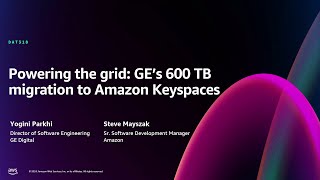
Amazon Keyspaces (for Apache Cassandra) is a globally scalable, serverless, fully managed database service with up to 99.999% availability. In this session, learn how GE Vernova, a leader in electrifying and decarbonizing the world, uses Amazon Keyspaces to store and query a massive 600 TB of industrial time-series data for its Asset Performance Management (APM) software. Dive deep into GE’s 600 TB migration from ScyllaDB to Amazon Keyspaces, and explore the benefits it observed, including improved availability and scalability. Gain insights into the AWS services it utilized and the challenges it overcame during this large-scale migration.
Learn more: AWS re:Invent: https://go.aws/reinvent. More AWS events: https://go.aws/3kss9CP
Subscribe: More AWS videos: http://bit.ly/2O3zS75 More AWS events videos: http://bit.ly/316g9t4
About AWS: Amazon Web Services (AWS) hosts events, both online and in-person, bringing the cloud computing community together to connect, collaborate, and learn from AWS experts. AWS is the world's most comprehensive and broadly adopted cloud platform, offering over 200 fully featured services from data centers globally. Millions of customers—including the fastest-growing startups, largest enterprises, and leading government agencies—are using AWS to lower costs, become more agile, and innovate faster.
AWSreInvent #AWSreInvent2024
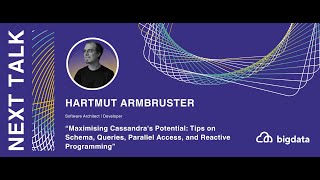
🌟 Session Overview 🌟
Session Name: Maximising Cassandra's Potential: Tips on Schema, Queries, Parallel Access, and Reactive Programming Speaker: Hartmut Armbruster Session Description: In this talk, we will design the backend and data layer for a data-rich social platform feed tailored to authenticated users.
We will begin with UI wireframes and then develop logical and physical Cassandra data models and query patterns. Using reactive programming paradigms, we will optimize the process flow to efficiently execute queries in parallel.
Finally, we will implement a Proof of Concept (POC) using Kotlin, Quarkus, and Mutiny. While reactive programming can initially seem intimidating, it becomes productive, elegant, and even enjoyable once you become familiar with it.
This talk aims to inspire new ideas and showcase what’s possible with a modern, tailored, and efficiently utilized stack.
Prior knowledge of Cassandra Query Language (CQL), data partitioning/sharding concepts, and reactive programming is beneficial but optional.
🚀 About Big Data and RPA 2024 🚀
Unlock the future of innovation and automation at Big Data & RPA Conference Europe 2024! 🌟 This unique event brings together the brightest minds in big data, machine learning, AI, and robotic process automation to explore cutting-edge solutions and trends shaping the tech landscape. Perfect for data engineers, analysts, RPA developers, and business leaders, the conference offers dual insights into the power of data-driven strategies and intelligent automation. 🚀 Gain practical knowledge on topics like hyperautomation, AI integration, advanced analytics, and workflow optimization while networking with global experts. Don’t miss this exclusive opportunity to expand your expertise and revolutionize your processes—all from the comfort of your home! 📊🤖✨
📅 Yearly Conferences: Curious about the evolution of QA? Check out our archive of past Big Data & RPA sessions. Watch the strategies and technologies evolve in our videos! 🚀 🔗 Find Other Years' Videos: 2023 Big Data Conference Europe https://www.youtube.com/playlist?list=PLqYhGsQ9iSEpb_oyAsg67PhpbrkCC59_g 2022 Big Data Conference Europe Online https://www.youtube.com/playlist?list=PLqYhGsQ9iSEryAOjmvdiaXTfjCg5j3HhT 2021 Big Data Conference Europe Online https://www.youtube.com/playlist?list=PLqYhGsQ9iSEqHwbQoWEXEJALFLKVDRXiP
💡 Stay Connected & Updated 💡
Don’t miss out on any updates or upcoming event information from Big Data & RPA Conference Europe. Follow us on our social media channels and visit our website to stay in the loop!
🌐 Website: https://bigdataconference.eu/, https://rpaconference.eu/ 👤 Facebook: https://www.facebook.com/bigdataconf, https://www.facebook.com/rpaeurope/ 🐦 Twitter: @BigDataConfEU, @europe_rpa 🔗 LinkedIn: https://www.linkedin.com/company/73234449/admin/dashboard/, https://www.linkedin.com/company/75464753/admin/dashboard/ 🎥 YouTube: http://www.youtube.com/@DATAMINERLT
In this episode, host Jason Foster sits down with Cassandra Vukorep, Chief Data Officer at Lloyds of London. The discussion delves into the critical role of data literacy and how fostering a culture of data engagement can benefit a diverse range of organisations across various industries. They also explore Cassandra's current role at Lloyds and the exciting data opportunities that can be applied to the insurance industry. ***** Cynozure is a leading data, analytics and AI company that helps organisations to reach their data potential. It works with clients on data and AI strategy, data management, data architecture and engineering, analytics and AI, data culture and literacy, and data leadership. The company was named one of The Sunday Times' fastest-growing private companies in both 2022 and 2023, and recognised as The Best Place to Work in Data by DataIQ in 2023 and 2024.
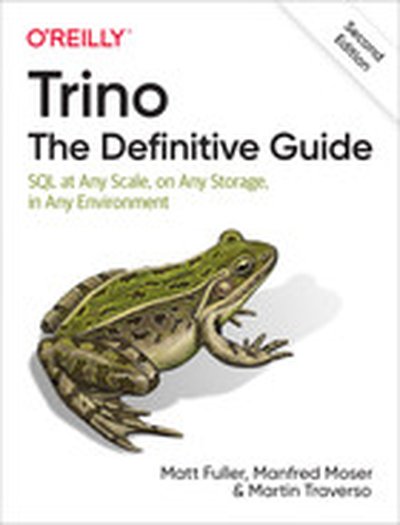
Perform fast interactive analytics against different data sources using the Trino high-performance distributed SQL query engine. In the second edition of this practical guide, you'll learn how to conduct analytics on data where it lives, whether it's a data lake using Hive, a modern lakehouse with Iceberg or Delta Lake, a different system like Cassandra, Kafka, or SingleStore, or a relational database like PostgreSQL or Oracle. Analysts, software engineers, and production engineers learn how to manage, use, and even develop with Trino and make it a critical part of their data platform. Authors Matt Fuller, Manfred Moser, and Martin Traverso show you how a single Trino query can combine data from multiple sources to allow for analytics across your entire organization. Explore Trino's use cases, and learn about tools that help you connect to Trino for querying and processing huge amounts of data Learn Trino's internal workings, including how to connect to and query data sources with support for SQL statements, operators, functions, and more Deploy and secure Trino at scale, monitor workloads, tune queries, and connect more applications Learn how other organizations apply Trino successfully
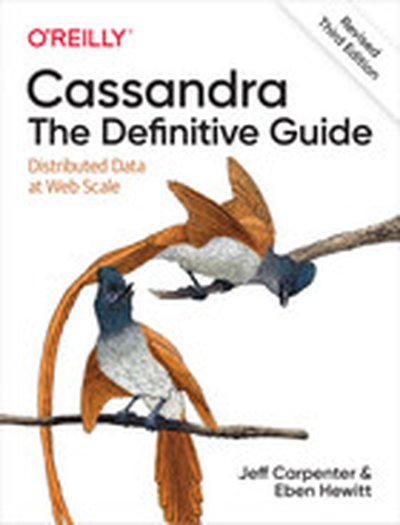
Imagine what you could do if scalability wasn't a problem. With this hands-on guide, you'll learn how the Cassandra database management system handles hundreds of terabytes of data while remaining highly available across multiple data centers. This revised third edition--updated for Cassandra 4.0 and new developments in the Cassandra ecosystem, including deployments in Kubernetes with K8ssandra--provides technical details and practical examples to help you put this database to work in a production environment. Authors Jeff Carpenter and Eben Hewitt demonstrate the advantages of Cassandra's nonrelational design, with special attention to data modeling. Developers, DBAs, and application architects looking to solve a database scaling issue or future-proof an application will learn how to harness Cassandra's speed and flexibility. Understand Cassandra's distributed and decentralized structure Use the Cassandra Query Language (CQL) and cqlsh (the CQL shell) Create a working data model and compare it with an equivalent relational model Design and develop applications using client drivers Explore cluster topology and learn how nodes exchange data Maintain a high level of performance in your cluster Deploy Cassandra onsite, in the cloud, or with Docker and Kubernetes Integrate Cassandra with Spark, Kafka, Elasticsearch, Solr, and Lucene
Summary The Cassandra database is one of the first open source options for globally scalable storage systems. Since its introduction in 2008 it has been powering systems at every scale. The community recently released a new major version that marks a milestone in its maturity and stability as a project and database. In this episode Ben Bromhead, CTO of Instaclustr, shares the challenges that the community has worked through, the work that went into the release, and how the stability and testing improvements are setting the stage for the future of the project.
Announcements
Hello and welcome to the Data Engineering Podcast, the show about modern data management When you’re ready to build your next pipeline, or want to test out the projects you hear about on the show, you’ll need somewhere to deploy it, so check out our friends at Linode. With their managed Kubernetes platform it’s now even easier to deploy and scale your workflows, or try out the latest Helm charts from tools like Pulsar and Pachyderm. With simple pricing, fast networking, object storage, and worldwide data centers, you’ve got everything you need to run a bulletproof data platform. Go to dataengineeringpodcast.com/linode today and get a $100 credit to try out a Kubernetes cluster of your own. And don’t forget to thank them for their continued support of this show! Schema changes, missing data, and volume anomalies caused by your data sources can happen without any advanced notice if you lack visibility into your data-in-motion. That leaves DataOps reactive to data quality issues and can make your consumers lose confidence in your data. By connecting to your pipeline orchestrator like Apache Airflow and centralizing your end-to-end metadata, Databand.ai lets you identify data quality issues and their root causes from a single dashboard. With Databand.ai, you’ll know whether the data moving from your sources to your warehouse will be available, accurate, and usable when it arrives. Go to dataengineeringpodcast.com/databand to sign up for a free 30-day trial of Databand.ai and take control of your data quality today. Atlan is a collaborative workspace for data-driven teams, like Github for engineering or Figma for design teams. By acting as a virtual hub for data assets ranging from tables and dashboards to SQL snippets & code, Atlan enables teams to create a single source of truth for all their data assets, and collaborate across the modern data stack through deep integrations with tools like Snowflake, Slack, Looker and more. Go to dataengineeringpodcast.com/atlan today and sign up for a free trial. If you’re a data engineering podcast listener, you get credits worth $3000 on an annual subscription Your host is Tobias Macey and today I’m interviewing Ben Bromhead about the recent release of Cassandra version 4 and how it fits in the current landscape of data tools
Interview
Introduction How did you get involved in the area of data management? For anyone who isn’t familiar with Cassandra, can you briefly describe what it is and some of the story behind it?
How did you get involved in the Cassandra project and how would you characterize your role?
What are the main use cases and industries where someone is likely to use Cassandra? What is notable about the version 4 release?
What were some of the factors that contributed to the long delay between versions 3 and 4? (2015 – 2021) What are your thoughts on the ongoing utility/benefits of projects such as ScyllaDB, particularly in light of the most recent release?
Cassandra is primarily used as a system of record. What are some of the tools and system architectures that users turn to when building analytical workloads for data stored in Cassandra? The architecture of Cassandra has lent itself well to the cloud native ecosystem that has been growing in recent years. What do you see as the opportunities for Cassandra over the near to medium term as the cloud continues to grow in prominence?
Summary Everyone expects data to be transmitted, processed, and updated instantly as more and more products integrate streaming data. The technology to make that possible has been around for a number of years, but the barriers to adoption have still been high due to the level of technical understanding and operational capacity that have been required to run at scale. Datastax has recently introduced a new managed offering for Pulsar workloads in the form of Astra Streaming that lowers those barriers and make stremaing workloads accessible to a wider audience. In this episode Prabhat Jha and Jonathan Ellis share the work that they have been doing to integrate streaming data into their managed Cassandra service. They explain how Pulsar is being used by their customers, the work that they have done to scale the administrative workload for multi-tenant environments, and the challenges of operating such a data intensive service at large scale. This is a fascinating conversation with a lot of useful lessons for anyone who wants to understand the operational aspects of Pulsar and the benefits that it can provide to data workloads.
Announcements
Hello and welcome to the Data Engineering Podcast, the show about modern data management You listen to this show to learn about all of the latest tools, patterns, and practices that power data engineering projects across every domain. Now there’s a book that captures the foundational lessons and principles that underly everything that you hear about here. I’m happy to announce I collected wisdom from the community to help you in your journey as a data engineer and worked with O’Reilly to publish it as 97 Things Every Data Engineer Should Know. Go to dataengineeringpodcast.com/97things today to get your copy! When you’re ready to build your next pipeline, or want to test out the projects you hear about on the show, you’ll need somewhere to deploy it, so check out our friends at Linode. With their managed Kubernetes platform it’s now even easier to deploy and scale your workflows, or try out the latest Helm charts from tools like Pulsar and Pachyderm. With simple pricing, fast networking, object storage, and worldwide data centers, you’ve got everything you need to run a bulletproof data platform. Go to dataengineeringpodcast.com/linode today and get a $100 credit to try out a Kubernetes cluster of your own. And don’t forget to thank them for their continued support of this show! RudderStack’s smart customer data pipeline is warehouse-first. It builds your customer data warehouse and your identity graph on your data warehouse, with support for Snowflake, Google BigQuery, Amazon Redshift, and more. Their SDKs and plugins make event streaming easy, and their integrations with cloud applications like Salesforce and ZenDesk help you go beyond event streaming. With RudderStack you can use all of your customer data to answer more difficult questions and then send those insights to your whole customer data stack. Sign up free at dataengineeringpodcast.com/rudder today. We’ve all been asked to help with an ad-hoc request for data by the sales and marketing team. Then it becomes a critical report that they need updated every week or every day. Then what do you do? Send a CSV via email? Write some Python scripts to automate it? But what about incremental sync, API quotas, error handling, and all of the other details that eat up your time? Today, there is a better way. With Census, just write SQL or plug in your dbt models and start syncing your cloud warehouse to SaaS applications like Salesforce, Marketo, Hubspot, and many more. Go to dataengineeringpodcast.com/census today to get a free 14-day trial. Your host is Tobias Macey and today I’m interviewing Prabhat Jha and Jonathan Ellis about Astra Streaming, a cloud-native streaming platform built on Apache Pulsar
Interview
Introduction
How did you get involved in the area of data management?
Can you describe what the Astra platform is and the story behind it?
How does streaming fit into your overall product vision and the needs of your customers?
What was your selection process/criteria for adopting a streaming engine to complement your existing technology investment?
What are the core use cases that you are aiming to support with Astra Streaming?
Can you describe the architecture and automation of your hosted platform for Pulsar?
What are the integration points that you have built to make it work well with Cassandra?
What are some of the additional tools that you have added to your distribution of Pulsar to simplify operation and use?
What are some of the sharp edges that you have had to sand down as you have scaled up your usage of Pulsar?
What is the process for someone to adopt and integrate with your Astra Streaming service?
How do you handle migrating existing projects, particularly if they are using Kafka currently?
One of the capabilities that you highlight on the product page for Astra Streaming is the ability to execute machine learning workflows on data in flight. What are some of the supporting systems that are necessary to power that workflow?
What are the capabilities that are built into Pulsar that simplify the operational aspects of streaming ML?
What are the ways that you are engaging with and supporting the Pulsar community?
What are the near to medium term elements of the Pulsar roadmap that you are working toward and excited to incorporate into Astra?
What are the most interesting, innovative, or unexpected ways that you have seen Astra used?
What are the most interesting, unexpected, or challenging lessons that you have learned while working on Astra?
When is Astra the wrong choice?
What do you have planned for the future of Astra?
Contact Info
Prabhat
LinkedIn @prabhatja on Twitter prabhatja on GitHub
Jonathan
LinkedIn @spyced on Twitter
Parting Question
From your perspective, what is the biggest gap in the tooling or technology for data management today?
Links
Pulsar
Podcast Episode Streamnative Episode
Datastax Astra Streaming Datastax Astra DB Luna Streaming Distribution Datastax Cassandra Kesque (formerly Kafkaesque) Kafka RabbitMQ Prometheus Grafana Pulsar Heartbeat Pulsar Summit Pulsar Summit Presentation on Kafka Connectors Replicated Chaos Engineering Fallout chaos engineering tools Jepsen
Podcast Episode
Jack VanLightly
BookKeeper TLA+ Model
Change Data Capture
The intro and outro music is from The Hug by The Freak Fandango Orchestra / CC BY-SA
Support Data Engineering Podcast
Perform fast interactive analytics against different data sources using the Trino high-performance distributed SQL query engine. With this practical guide, you'll learn how to conduct analytics on data where it lives, whether it's Hive, Cassandra, a relational database, or a proprietary data store. Analysts, software engineers, and production engineers will learn how to manage, use, and even develop with Trino. Initially developed by Facebook, open source Trino is now used by Amazon, Google, LinkedIn, Lyft, Netflix, Pinterest, Salesforce, Shopify, and many other companies. Matt Fuller, Manfred Moser, and Martin Traverso show you how a single Trino query can combine data from multiple sources to allow for analytics across your entire organization. Get started: Explore Trino's use cases and learn about tools that will help you connect to Trino and query data Go deeper: Learn Trino's internal workings, including how to connect to and query data sources with support for SQL statements, operators, functions, and more Put Trino in production: Secure Trino, monitor workloads, tune queries, and connect more applications; learn how other organizations apply Trino
Summary A majority of the time spent in data engineering is copying data between systems to make the information available for different purposes. This introduces challenges such as keeping information synchronized, managing schema evolution, building transformations to match the expectations of the destination systems. H.O. Maycotte was faced with these same challenges but at a massive scale, leading him to question if there is a better way. After tasking some of his top engineers to consider the problem in a new light they created the Pilosa engine. In this episode H.O. explains how using Pilosa as the core he built the Molecula platform to eliminate the need to copy data between systems in able to make it accessible for analytical and machine learning purposes. He also discusses the challenges that he faces in helping potential users and customers understand the shift in thinking that this creates, and how the system is architected to make it possible. This is a fascinating conversation about what the future looks like when you revisit your assumptions about how systems are designed.
Announcements
Hello and welcome to the Data Engineering Podcast, the show about modern data management When you’re ready to build your next pipeline, or want to test out the projects you hear about on the show, you’ll need somewhere to deploy it, so check out our friends at Linode. With their managed Kubernetes platform it’s now even easier to deploy and scale your workflows, or try out the latest Helm charts from tools like Pulsar and Pachyderm. With simple pricing, fast networking, object storage, and worldwide data centers, you’ve got everything you need to run a bulletproof data platform. Go to dataengineeringpodcast.com/linode today and get a $100 credit to try out a Kubernetes cluster of your own. And don’t forget to thank them for their continued support of this show! Modern Data teams are dealing with a lot of complexity in their data pipelines and analytical code. Monitoring data quality, tracing incidents, and testing changes can be daunting and often takes hours to days. Datafold helps Data teams gain visibility and confidence in the quality of their analytical data through data profiling, column-level lineage and intelligent anomaly detection. Datafold also helps automate regression testing of ETL code with its Data Diff feature that instantly shows how a change in ETL or BI code affects the produced data, both on a statistical level and down to individual rows and values. Datafold integrates with all major data warehouses as well as frameworks such as Airflow & dbt and seamlessly plugs into CI workflows. Go to dataengineeringpodcast.com/datafold today to start a 30-day trial of Datafold. Once you sign up and create an alert in Datafold for your company data, they will send you a cool water flask. RudderStack’s smart customer data pipeline is warehouse-first. It builds your customer data warehouse and your identity graph on your data warehouse, with support for Snowflake, Google BigQuery, Amazon Redshift, and more. Their SDKs and plugins make event streaming easy, and their integrations with cloud applications like Salesforce and ZenDesk help you go beyond event streaming. With RudderStack you can use all of your customer data to answer more difficult questions and then send those insights to your whole customer data stack. Sign up free at dataengineeringpodcast.com/rudder today. Your host is Tobias Macey and today I’m interviewing H.O. Maycotte about Molecula, a cloud based feature store based on the open source Pilosa project
Interview
Introduction How did you get involved in the area of data management? Can you start by giving an overview of what you are building at Molecula and the story behind it?
What are the additional capabilities that Molecula offers on top of the open source Pilosa project?
What are the problems/use cases that Molecula solves for? What are some of the technologies or architectural patterns that Molecula might replace in a companies data platform? One of the use cases that is mentioned on the Molecula site is as a feature store for ML and AI. This is a category that has been seeing a lot of growth recently. Can you provide some context how Molecula fits in that market and how it compares to options such as Tecton, Iguazio, Feast, etc.?
What are the benefits of using a bitmap index for identifying and computing features?
Can you describe how the Molecula platform is architected?
How has the design and goal of Molecula changed or evolved since you first began working on it?
For someone who is using Molecula, can you describe the process of integrating it with their existing data sources? Can you describe the internal data model of Pilosa/Molecula?
How should users think about data modeling and architecture as they are loading information into the platform?
Once a user has data in Pilosa, what are the available mechanisms for performing analyses or feature engineering? What are some of the most underutilized or misunderstood capabilities of Molecula? What are some of the most interesting, unexpected, or innovative ways that you have seen the Molecula platform used? What are the most interesting, unexpected, or challenging lessons that you have learned from building and scaling Molecula? When is Molecula the wrong choice? What do you have planned for the future of the platform and business?
Contact Info
LinkedIn @maycotte on Twitter
Parting Question
From your perspective, what is the biggest gap in the tooling or technology for data management today?
Closing Announcements
Thank you for listening! Don’t forget to check out our other show, Podcast.init to learn about the Python language, its community, and the innovative ways it is being used. Visit the site to subscribe to the show, sign up for the mailing list, and read the show notes. If you’ve learned something or tried out a project from the show then tell us about it! Email [email protected]) with your story. To help other people find the show please leave a review on iTunes and tell your friends and co-workers Join the community in the new Zulip chat workspace at dataengineeringpodcast.com/chat
Links
Molecula Pilosa
Podcast Episode
The Social Dilemma Feature Store Cassandra Elasticsearch
Podcast Episode
Druid MongoDB SwimOS
Podcast Episode
Kafka Kafka Schema Registry
Podcast Episode
Homomorphic Encryption Lucene Solr
The intro and outro music is from The Hug by The Freak Fandango Orchestra / CC BY-SA
Support Data Engineering Podcast
Send us a text Want to be featured as a guest on Making Data Simple? Reach out to us at [[email protected]] and tell us why you should be next.
Abstract Hosted by Al Martin, VP, Data and AI Expert Services and Learning at IBM, Making Data Simple provides the latest thinking on big data, A.I., and the implications for the enterprise from a range of experts. This week on Making Data Simple, we have Ayal Steinberg, Global Sales VP, Data and AI at IBM. Ayal Steinberg is the Vice President of Global Sales for IBM's Data and AI business unit. In his capacity Ayal oversees IBM's largest and one of the most strategic business units with over 1,500 people and several billion dollars of annual revenue. Ayal has proven success in managing complex and global sales organizations. Throughout his career, Ayal has created and led high-performing sales teams focused on selling complex software solutions to some of the world’s most well-known brands in more then 50 countries. Prior to IBM, Ayal successfully led sales teams through transformation and hyper growth at IBM Netezza, Oracle, Datastax (the open source provider of Apache Cassandra), and other enterprise software companies. Earlier in his career, Ayal was a pioneer in selling software for several start-ups in price optimization and advanced analytics. Ayal majored in Economics from Binghamton University, State University of New York.
Show Notes 4:00 – Ayal’s back ground 15:33 – IBM strategy 18:45 – Moving to cloud 21:23 – Why IBM 23:24 - Value Selling 27:58 – Value vs. price 29:57 - Skills set 31:20 – How do you bring someone back around Solution Selling Challenger Sale Strengths Finder 2.0 Connect with the Team Producer Kate Brown - LinkedIn. Producer Steve Templeton - LinkedIn. Host Al Martin - LinkedIn and Twitter. Want to be featured as a guest on Making Data Simple? Reach out to us at [email protected] and tell us why you should be next. The Making Data Simple Podcast is hosted by Al Martin, WW VP Technical Sales, IBM, where we explore trending technologies, business innovation, and leadership ... while keeping it simple & fun.
Imagine what you could do if scalability wasn't a problem. With this hands-on guide, you’ll learn how the Cassandra database management system handles hundreds of terabytes of data while remaining highly available across multiple data centers. This third edition—updated for Cassandra 4.0—provides the technical details and practical examples you need to put this database to work in a production environment. Authors Jeff Carpenter and Eben Hewitt demonstrate the advantages of Cassandra’s nonrelational design, with special attention to data modeling. If you’re a developer, DBA, or application architect looking to solve a database scaling issue or future-proof your application, this guide helps you harness Cassandra’s speed and flexibility. Understand Cassandra’s distributed and decentralized structure Use the Cassandra Query Language (CQL) and cqlsh—the CQL shell Create a working data model and compare it with an equivalent relational model Develop sample applications using client drivers for languages including Java, Python, and Node.js Explore cluster topology and learn how nodes exchange data
Summary The modern era of software development is identified by ubiquitous access to elastic infrastructure for computation and easy automation of deployment. This has led to a class of applications that can quickly scale to serve users worldwide. This requires a new class of data storage which can accomodate that demand without having to rearchitect your system at each level of growth. YugabyteDB is an open source database designed to support planet scale workloads with high data density and full ACID compliance. In this episode Karthik Ranganathan explains how Yugabyte is architected, their motivations for being fully open source, and how they simplify the process of scaling your application from greenfield to global. Announcements Hello and welcome to the Data Engineering Podcast, the show about modern data managementWhen you’re ready to build your next pipeline, or want to test out the projects you hear about on the show, you’ll need somewhere to deploy it, so check out our friends at Linode. With 200Gbit private networking, scalable shared block storage, and a 40Gbit public network, you’ve got everything you need to run a fast, reliable, and bullet-proof data platform. If you need global distribution, they’ve got that covered too with world-wide datacenters including new ones in Toronto and Mumbai. And for your machine learning workloads, they just announced dedicated CPU instances. Go to dataengineeringpodcast.com/linode today to get a $20 credit and launch a new server in under a minute. And don’t forget to thank them for their continued support of this show!You listen to this show to learn and stay up to date with what’s happening in databases, streaming platforms, big data, and everything else you need to know about modern data management. For even more opportunities to meet, listen, and learn from your peers you don’t want to miss out on this year’s conference season. We have partnered with organizations such as O’Reilly Media, Corinium Global Intelligence, ODSC, and Data Council. Upcoming events include the Software Architecture Conference in NYC, Strata Data in San Jose, and PyCon US in Pittsburgh. Go to dataengineeringpodcast.com/conferences to learn more about these and other events, and take advantage of our partner discounts to save money when you register today.Your host is Tobias Macey and today I’m interviewing Karthik Ranganathan about YugabyteDB, the open source, high-performance distributed SQL database for global, internet-scale apps.Interview IntroductionHow did you get involved in the area of data management?Can you start by describing what YugabyteDB is and its origin story?A growing trend in database engines (e.g. FaunaDB, CockroachDB) has been an out of the box focus on global distribution. Why is that important and how does it work in Yugabyte? What are the caveats?What are the most notable features of YugabyteDB that would lead someone to choose it over any of the myriad other options? What are the use cases that it is uniquely suited to?What are some of the systems or architecture patterns that can be replaced with Yugabyte?How does the design of Yugabyte or the different ways it is being used influence the way that users should think about modeling their data?Yugabyte is an impressive piece of engineering. Can you talk through the major design elements and how it is implemented?Easy scaling and failover is a feature that many database engines would like to be able to claim. What are the difficult elements that prevent them from implementing that capability as a standard practice? What do you have to sacrifice in order to support the level of scale and fault tolerance that you provide?Speaking of scaling, there are many ways to define that term, from vertical scaling of storage or compute, to horizontal scaling of compute, to scaling of reads and writes. What are the primary scaling factors that you focus on in Yugabyte?How do you approach testing and validation of the code given the complexity of the system that you are building?In terms of the query API you have support for a Postgres compatible SQL dialect as well as a Cassandra based syntax. What are the benefits of targeting compatibility with those platforms? What are the challenges and benefits of maintaining compatibility with those other platforms?Can you describe how the storage layer is implemented and the division between the different query formats?What are the operational characteristics of YugabyteDB? What are the complexities or edge cases that users should be aware of when planning a deployment?One of the challenges of working with large volumes of data is creating and maintaining backups. How does Yugabyte handle that problem?Most open source infrastructure projects that are backed by a business withhold various "enterprise" features such as backups and change data capture as a means of driving revenue. Can you talk through your motivation for releasing those capabilities as open source?What is the business model that you are using for YugabyteDB and how does it differ from the tribal knowledge of how open source companies generally work?What are some of the most interesting, innovative, or unexpected ways that you have seen yugabyte used?When is Yugabyte the wrong choice?What do you have planned for the future of the technical and business aspects of Yugabyte?Contact Info @karthikr on TwitterLinkedInrkarthik007 on GitHubParting Question From your perspective, what is the biggest gap in the tooling or technology for data management today?Closing Announcements Thank you for listening! Don’t forget to check out our other show, Podcast.init to learn about the Python language, its community, and the innovative ways it is being used.Visit the site to subscribe to the show, sign up for the mailing list, and read the show notes.If you’ve learned something or tried out a project from the show then tell us about it! Email [email protected]) with your story.To help other people find the show please leave a review on iTunes and tell your friends and co-workersJoin the community in the new Zulip chat workspace at dataengineeringpodcast.com/chatLinks YugabyteDBGitHubNutanixFacebook EngineeringApache CassandraApache HBaseDelphiFuanaDBPodcast EpisodeCockroachDBPodcast EpisodeHA == High AvailabilityOracleMicrosoft SQL ServerPostgreSQLPodcast EpisodeMongoDBAmazon AuroraPGCryptoPostGISpl/pgsqlForeign Data WrappersPipelineDBPodcast EpisodeCitusPodcast EpisodeJepsen TestingYugabyte Jepsen Test ResultsOLTP == Online Transaction ProcessingOLAP == Online Analytical ProcessingDocDBGoogle SpannerGoogle BigTableSpot InstancesKubernetesCloudformationTerraformPrometheusDebeziumPodcast EpisodeThe intro and outro music is from The Hug by The Freak Fandango Orchestra / CC BY-SA
Summary DataDog is one of the most successful companies in the space of metrics and monitoring for servers and cloud infrastructure. In order to support their customers, they need to capture, process, and analyze massive amounts of timeseries data with a high degree of uptime and reliability. Vadim Semenov works on their data engineering team and joins the podcast in this episode to discuss the challenges that he works through, the systems that DataDog has built to power their business, and how their teams are organized to allow for rapid growth and massive scale. Getting an inside look at the companies behind the services we use is always useful, and this conversation was no exception.
Announcements
Hello and welcome to the Data Engineering Podcast, the show about modern data management When you’re ready to build your next pipeline, or want to test out the projects you hear about on the show, you’ll need somewhere to deploy it, so check out our friends at Linode. With 200Gbit private networking, scalable shared block storage, and a 40Gbit public network, you’ve got everything you need to run a fast, reliable, and bullet-proof data platform. If you need global distribution, they’ve got that covered too with world-wide datacenters including new ones in Toronto and Mumbai. And for your machine learning workloads, they just announced dedicated CPU instances. Go to dataengineeringpodcast.com/linode today to get a $20 credit and launch a new server in under a minute. And don’t forget to thank them for their continued support of this show! You listen to this show to learn and stay up to date with what’s happening in databases, streaming platforms, big data, and everything else you need to know about modern data management. For even more opportunities to meet, listen, and learn from your peers you don’t want to miss out on this year’s conference season. We have partnered with organizations such as O’Reilly Media, Corinium Global Intelligence, ODSC, and Data Council. Upcoming events include the Software Architecture Conference in NYC, Strata Data in San Jose, and PyCon US in Pittsburgh. Go to dataengineeringpodcast.com/conferences to learn more about these and other events, and take advantage of our partner discounts to save money when you register today. Your host is Tobias Macey and today I’m interviewing Vadim Semenov about how data engineers work at DataDog
Interview
Introduction How did you get involved in the area of data management? For anyone who isn’t familiar with DataDog, can you start by describing the types and volumes of data that you’re dealing with? What are the main components of your platform for managing that information? How are the data teams at DataDog organized and what are your primary responsibilities in the organization? What are some of the complexities and challenges that you face in your work as a result of the volume of data that you are processing?
What are some of the strategies which have proven to be most useful in overcoming those challenges?
Who are the main consumers of your work and how do you build in feedback cycles to ensure that their needs are being met? Given that the majority of the data being ingested by DataDog is timeseries, what are your lifecycle and retention policies for that information? Most of the data that you are working with is customer generated from your deployed agents and API integrations. How do you manage cleanliness and schema enforcement for the events as they are being delivered? What are some of the upcoming projects that you have planned for the upcoming months and years? What are some of the technologies, patterns, or practices that you are hoping to adopt?
Contact Info
LinkedIn @databuryat on Twitter
Parting Question
From your perspective, what is the biggest gap in the tooling or technology for data management today?
Closing Announcements
Thank you for listening! Don’t forget to check out our other show, Podcast.init to learn about the Python language, its community, and the innovative ways it is being used. Visit the site to subscribe to the show, sign up for the mailing list, and read the show notes. If you’ve learned something or tried out a project from the show then tell us about it! Email [email protected]) with your story. To help other people find the show please leave a review on iTunes and tell your friends and co-workers Join the community in the new Zulip chat workspace at dataengineeringpodcast.com/chat
Links
DataDog Hadoop Hive Yarn Chef SRE == Site Reliability Engineer Application Performance Management (APM) Apache Kafka RocksDB Cassandra Apache Parquet data serialization format SLA == Service Level Agreement WatchDog Apache Spark
Podcast Episode
Apache Pig Databricks JVM == Java Virtual Machine Kubernetes SSIS (SQL Server Integration Services) Pentaho JasperSoft Apache Airflow
Podcast.init Episode
Apache NiFi
Podcast Episode
Luigi Dagster
Podcast Episode
Prefect
The intro and outro music is from The Hug by The Freak Fandango Orchestra / CC BY-SA
Support Data Engineering Podcast
Summary Anomaly detection is a capability that is useful in a variety of problem domains, including finance, internet of things, and systems monitoring. Scaling the volume of events that can be processed in real-time can be challenging, so Paul Brebner from Instaclustr set out to see how far he could push Kafka and Cassandra for this use case. In this interview he explains the system design that he tested, his findings for how these tools were able to work together, and how they behaved at different orders of scale. It was an interesting conversation about how he stress tested the Instaclustr managed service for benchmarking an application that has real-world utility.
Announcements
Hello and welcome to the Data Engineering Podcast, the show about modern data management When you’re ready to build your next pipeline, or want to test out the projects you hear about on the show, you’ll need somewhere to deploy it, so check out our friends at Linode. With 200Gbit private networking, scalable shared block storage, and a 40Gbit public network, you’ve got everything you need to run a fast, reliable, and bullet-proof data platform. If you need global distribution, they’ve got that covered too with world-wide datacenters including new ones in Toronto and Mumbai. And for your machine learning workloads, they just announced dedicated CPU instances. Go to dataengineeringpodcast.com/linode today to get a $20 credit and launch a new server in under a minute. And don’t forget to thank them for their continued support of this show! Integrating data across the enterprise has been around for decades – so have the techniques to do it. But, a new way of integrating data and improving streams has evolved. By integrating each silo independently – data is able to integrate without any direct relation. At CluedIn they call it “eventual connectivity”. If you want to learn more on how to deliver fast access to your data across the enterprise leveraging this new method, and the technologies that make it possible, get a demo or presentation of the CluedIn Data Hub by visiting dataengineeringpodcast.com/cluedin. And don’t forget to thank them for supporting the show! You listen to this show to learn and stay up to date with what’s happening in databases, streaming platforms, big data, and everything else you need to know about modern data management.For even more opportunities to meet, listen, and learn from your peers you don’t want to miss out on this year’s conference season. We have partnered with organizations such as O’Reilly Media, Dataversity, and the Open Data Science Conference. Coming up this fall is the combined events of Graphorum and the Data Architecture Summit. The agendas have been announced and super early bird registration for up to $300 off is available until July 26th, with early bird pricing for up to $200 off through August 30th. Use the code BNLLC to get an additional 10% off any pass when you register. Go to dataengineeringpodcast.com/conferences to learn more and take advantage of our partner discounts when you register. Go to dataengineeringpodcast.com to subscribe to the show, sign up for the mailing list, read the show notes, and get in touch. To help other people find the show please leave a review on iTunes and tell your friends and co-workers Join the community in the new Zulip chat workspace at dataengineeringpodcast.com/chat Your host is Tobias Macey and today I’m interviewing Paul Brebner about his experience designing and building a scalable, real-time anomaly detection system using Kafka and Cassandra
Interview
Introduction How did you get involved in the area of data management? Can you start by describing the problem that you were trying to solve and the requirements that you were aiming for?
What are some example cases where anomaly detection is useful or necessary?
Once you had established the requirements in terms of functionality and data volume, what was your approach for dete