talk-data.com talk-data.com

Topic

data-models

116

tagged

Activity Trend

1 peak/qtr
2020-Q1 2026-Q1

Activities

116 activities · Newest first

Universal Data Modeling

Most data professionals work with multiple datasets scattered across teams, systems, and formats. But without a clear modeling strategy, the result is often chaos: mismatched schemas, fragile pipelines, and a constant fight to make sense of the noise. This essential guide offers a better way by introducing a practical framework for designing high-quality data models that work across platforms while supporting the growing demands of AI, analytics, and real-time systems. Author Jun Shan bridges the gap between disconnected modeling approaches and the need for a unified, system-agnostic methodology. Whether you're building a new data platform or rethinking legacy infrastructure, Universal Data Modeling gives you the clarity, patterns, and tools to model data that's consistent, resilient, and ready to scale. Connect conceptual, logical, and physical modeling phases with confidence Apply best-fit techniques across relational, semistructured, and NoSQL formats Improve data quality, clarity, and maintainability across your organization Support modern design paradigms like data mesh and data products Translate domain knowledge into models that empower teams Build flexible, scalable models that stand the test of technology change

Data-driven Models in Inverse Problems

Advances in learning-based methods are revolutionizing several fields in applied mathematics, including inverse problems, resulting in a major paradigm shift towards data-driven approaches. This volume, which is inspired by this cutting-edge area of research, brings together contributors from the inverse problem community and shows how to successfully combine model- and data-driven approaches to gain insight into practical and theoretical issues.

Bio-Inspired Strategies for Modeling and Detection in Diabetes Mellitus Treatment

Bio-Inspired Strategies for Modeling and Detection in Diabetes Mellitus Treatment focuses on bio-inspired techniques such as modelling to generate control algorithms for the treatment of diabetes mellitus. The book addresses the identification of diabetes mellitus using a high-order recurrent neural network trained by the extended Kalman filter. The authors also describe the use of metaheuristic algorithms for the parametric identification of compartmental models of diabetes mellitus widely used in research works such as the Sorensen model and the Dallaman model. In addition, the book addresses the modelling of time series for the prediction of risk scenarios such as hyperglycaemia and hypoglycaemia using deep neural networks. The detection of diabetes mellitus in early stages or when current diagnostic techniques cannot detect glucose intolerance or prediabetes is proposed, carried out by means of deep neural networks in force in the literature. Readers will find leading-edge research in diabetes identification based on discrete high-order neural networks trained with the extended Kalman filter; parametric identification of compartmental models used to describe diabetes mellitus; modelling of data obtained by continuous glucose monitoring sensors for the prediction of risk scenarios such as hyperglycaemia and hypoglycaemia; and screening for glucose intolerance using glucose tolerance test data and deep neural networks. Application of the proposed approaches is illustrated via simulation and real-time implementations for modelling, prediction, and classification.Addresses the online identification of diabetes mellitus using a high-order recurrent neural network trained online by an extended Kalman filter. Covers parametric identification of compartmental models used to describe diabetes mellitus. Provides modeling of data obtained by continuous glucose-monitoring sensors for the prediction of risk scenarios such as hyperglycaemia and hypoglycaemia.

Building Information Modeling

This book presents how Building Information Modeling (BIM) and the use of shared representation of built assets facilitate design, construction and operation processes (ISO 19650). The modeling of public works data disrupts the art of construction. Written by both academics and engineers who are heavily involved in the French research project Modélisation des INformations INteropérables pour les INfrastructues Durables (MINnD) as well as in international standardization projects, this book presents the challenges of BIM from theoretical and practical perspectives. It provides knowledge for evolving in an ecosystem of federated models and common data environments, which are the basis of the platforms and data spaces. BIM makes it possible to handle interoperability very concretely, using open standards, which lead to openBIM. The use of a platform allows for the merging of business software and for approaches such as a Geographic Information System (GIS) to be added to the processes. In organizations, BIM meets the life cycles of structures and circular economy. It is not only a technique that reshapes cooperation and trades around a digital twin but can also disrupt organizations and business models.

Uncertainty in Data Envelopment Analysis

Classical data envelopment analysis (DEA) models use crisp data to measure the inputs and outputs of a given system. In cases such as manufacturing systems, production processes, service systems, etc., the inputs and outputs may be complex and difficult to measure with classical DEA models. Crisp input and output data are fundamentally indispensable in the conventional DEA models. If these models contain complex uncertain data, then they will become more important and practical for decision makers.Uncertainty in Data Envelopment Analysis introduces methods to investigate uncertain data in DEA models, providing a deeper look into two types of uncertain DEA methods, fuzzy DEA and belief degree-based uncertainty DEA, which are based on uncertain measures. These models aim to solve problems encountered by classical data analysis in cases where the inputs and outputs of systems and processes are volatile and complex, making measurement difficult. Introduces methods to deal with uncertain data in DEA models, as a source of information and a reference book for researchers and engineers Presents DEA models that can be used for evaluating the outputs of many reallife systems in social and engineering subjects Provides fresh DEA models for efficiency evaluation from the perspective of imprecise data Applies the fuzzy set and uncertainty theories to DEA to produce a new method of dealing with the empirical data

Reachable Sets of Dynamic Systems

Reachable Sets of Dynamic Systems: Uncertainty, Sensitivity, and Complex Dynamics introduces differential inclusions, providing an overview as well as multiple examples of its interdisciplinary applications. The design of dynamic systems of any type is an important issue as is the influence of uncertainty in model parameters and model sensitivity. The possibility of calculating the reachable sets may be a powerful additional tool in such tasks. This book can help graduate students, researchers, and engineers working in the field of computer simulation and model building, in the calculation of reachable sets of dynamic models. Introduces methodologies and approaches to the modeling and simulation of dynamic systems Presents uncertainty treatment and model sensitivity are described, and interdisciplinary examples Explores applications of differential inclusions in modeling and simulation

Data Modeling with Tableau

"Data Modeling with Tableau" provides a comprehensive guide to effectively utilizing Tableau Prep and Tableau Desktop for building elegant data models that drive organizational insights. You'll explore robust data modeling strategies and governance practices tailored to Tableau's diverse toolset, empowering you to make faster and more informed decisions based on data. What this Book will help me do Understand the fundamentals of data modeling in Tableau using Prep Builder and Desktop. Learn to optimize data sources for performance and better query capabilities. Implement secure and scalable governance strategies with Tableau Server and Cloud. Use advanced Tableau features like Ask Data and Explain Data to enable powerful analytics. Apply best practices for sharing and extending data models within your organization. Author(s) Kirk Munroe is an experienced data professional with a deep understanding of Tableau-driven analytics. With years of in-field expertise, Kirk now dedicates his career to helping businesses unlock their data's potential through effective Tableau solutions. His hands-on approach ensures this book is practical and approachable. Who is it for? This book is ideal for data analysts and business analysts aiming to enhance their skills in data modeling. It is also valuable for professionals such as data stewards, looking to implement secure and performant data strategies. If you seek to make enterprise data more accessible and actionable, this book is for you.

Tidy Modeling with R

Get going with tidymodels, a collection of R packages for modeling and machine learning. Whether you're just starting out or have years of experience with modeling, this practical introduction shows data analysts, business analysts, and data scientists how the tidymodels framework offers a consistent, flexible approach for your work. RStudio engineers Max Kuhn and Julia Silge demonstrate ways to create models by focusing on an R dialect called the tidyverse. Software that adopts tidyverse principles shares both a high-level design philosophy and low-level grammar and data structures, so learning one piece of the ecosystem makes it easier to learn the next. You'll understand why the tidymodels framework has been built to be used by a broad range of people. With this book, you will: Learn the steps necessary to build a model from beginning to end Understand how to use different modeling and feature engineering approaches fluently Examine the options for avoiding common pitfalls of modeling, such as overfitting Learn practical methods to prepare your data for modeling Tune models for optimal performance Use good statistical practices to compare, evaluate, and choose among models

Ten Things to Know About ModelOps

The past few years have seen significant developments in data science, AI, machine learning, and advanced analytics. But the wider adoption of these technologies has also brought greater cost, risk, regulation, and demands on organizational processes, tasks, and teams. This report explains how ModelOps can provide both technical and operational solutions to these problems. Thomas Hill, Mark Palmer, and Larry Derany summarize important considerations, caveats, choices, and best practices to help you be successful with operationalizing AI/ML and analytics in general. Whether your organization is already working with teams on AI and ML, or just getting started, this report presents ten important dimensions of analytic practice and ModelOps that are not widely discussed, or perhaps even known. In part, this report examines: Why ModelOps is the enterprise "operating system" for AI/ML algorithms How to build your organization's IP secret sauce through repeatable processing steps How to anticipate risks rather than react to damage done How ModelOps can help you deliver the many algorithms and model formats available How to plan for success and monitor for value, not just accuracy Why AI will be soon be regulated and how ModelOps helps ensure compliance

Data Modeling with SAP BW/4HANA 2.0: Implementing Agile Data Models Using Modern Modeling Concepts

Gain practical guidance for implementing data models on the SAP BW/4HANA platform using modern modeling concepts. You will walk through the various modeling scenarios such as exposing HANA tables and views through BW/4HANA, creating virtual and hybrid data models, and integrating SAP and non-SAP data into a single data model. Data Modeling with SAP BW/4HANA 2.0 gives you the skills you need to use the new SAP BW/HANA features and objects, covers modern modelling concepts, and equips you with the practical knowledge of how to use the best of the HANA and BW/4HANA worlds. What You Will Learn Discover the new modeling features in SAP BW/4HANA Combine SAP HANA and SAP BW/4HANA artifacts Leverage virtualization when designing and building data models Build hybrid data models combining InfoObject, OpenODS, and a field-based approach Integrate SAP and non-SAP data into single model Who This Book Is For BI consultants, architects, developers, and analysts working in the SAP BW/4HANA environment.

Data Modeling for Azure Data Services

Data Modeling for Azure Data Services is an essential guide that delves into the intricacies of designing, provisioning, and implementing robust data solutions within the Azure ecosystem. Through practical examples and hands-on exercises, this book equips you with the knowledge to create scalable, performant, and adaptable database designs tailored to your business needs. What this Book will help me do Understand and apply normalization, dimensional modeling, and data vault modeling for relational databases. Learn to provision and implement scalable solutions like Azure SQL DB and Azure Synapse SQL Pool. Master how to design and model a Data Lake using Azure Storage efficiently. Gain expertise in NoSQL database modeling and implementing solutions using Azure Cosmos DB. Develop ETL/ELT processes effectively using Azure Data Factory to support data integration workflows. Author(s) None Braake brings a wealth of expertise as a data architect and cloud solutions builder specializing in Azure's data services. With hands-on experience in projects requiring sophisticated data modeling and optimization, None crafts detailed learning material to help professionals level up their database design and Azure deployment skills. Dedicated to explaining complex topics with clarity and approachable language, None ensures that the learners gain not just knowledge but applied competence. Who is it for? This book is a valuable resource for business intelligence developers, data architects, and consultants aiming to refine their skills in data modeling within modern cloud ecosystems, particularly Microsoft Azure. Whether you're a beginner with some foundational cloud data management knowledge or an experienced professional seeking to deepen your Azure data services proficiency, this book caters to your learning needs.

Applied Modeling Techniques and Data Analysis 1

BIG DATA, ARTIFICIAL INTELLIGENCE AND DATA ANALYSIS SET Coordinated by Jacques Janssen Data analysis is a scientific field that continues to grow enormously, most notably over the last few decades, following rapid growth within the tech industry, as well as the wide applicability of computational techniques alongside new advances in analytic tools. Modeling enables data analysts to identify relationships, make predictions, and to understand, interpret and visualize the extracted information more strategically. This book includes the most recent advances on this topic, meeting increasing demand from wide circles of the scientific community. Applied Modeling Techniques and Data Analysis 1 is a collective work by a number of leading scientists, analysts, engineers, mathematicians and statisticians, working on the front end of data analysis and modeling applications. The chapters cover a cross section of current concerns and research interests in the above scientific areas. The collected material is divided into appropriate sections to provide the reader with both theoretical and applied information on data analysis methods, models and techniques, along with appropriate applications.

Applied Modeling Techniques and Data Analysis 2

BIG DATA, ARTIFICIAL INTELLIGENCE AND DATA ANALYSIS SET Coordinated by Jacques Janssen Data analysis is a scientific field that continues to grow enormously, most notably over the last few decades, following rapid growth within the tech industry, as well as the wide applicability of computational techniques alongside new advances in analytic tools. Modeling enables data analysts to identify relationships, make predictions, and to understand, interpret and visualize the extracted information more strategically. This book includes the most recent advances on this topic, meeting increasing demand from wide circles of the scientific community. Applied Modeling Techniques and Data Analysis 2 is a collective work by a number of leading scientists, analysts, engineers, mathematicians and statisticians, working on the front end of data analysis and modeling applications. The chapters cover a cross section of current concerns and research interests in the above scientific areas. The collected material is divided into appropriate sections to provide the reader with both theoretical and applied information on data analysis methods, models and techniques, along with appropriate applications.

Multi-Paradigm Modelling Approaches for Cyber-Physical Systems

Multi-Paradigm Modelling for Cyber-Physical Systems explores modeling and analysis as crucial activities in the development of Cyber-Physical Systems, which are inherently cross-disciplinary in nature and require distinct modeling techniques related to different disciplines, as well as a common background knowledge. This book will serve as a reference for anyone starting in the field of CPS who needs a solid foundation of modeling, including a comprehensive introduction to existing techniques and a clear explanation of their advantages and limitations. This book is aimed at both researchers and practitioners who are interested in various modeling paradigms across computer science and engineering. Identifies key problems and offers solution approaches as well as tools which have been developed or are necessary for modeling paradigms across cyber physical systems Explores basic theory and current research topics, related challenges, and research directions for multi-paradigm modeling Provides a complete, conceptual overview and framework of the research done by the MPM4CPS working groups and the different types of modeling paradigms developed

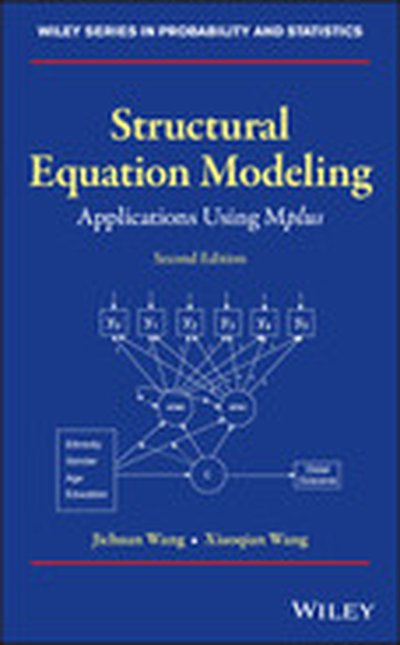
Structural Equation Modeling, 2nd Edition

Presents a useful guide for applications of SEM whilst systematically demonstrating various SEM models using Mplus Focusing on the conceptual and practical aspects of Structural Equation Modeling (SEM), this book demonstrates basic concepts and examples of various SEM models, along with updates on many advanced methods, including confirmatory factor analysis (CFA) with categorical items, bifactor model, Bayesian CFA model, item response theory (IRT) model, graded response model (GRM), multiple imputation (MI) of missing values, plausible values of latent variables, moderated mediation model, Bayesian SEM, latent growth modeling (LGM) with individually varying times of observations, dynamic structural equation modeling (DSEM), residual dynamic structural equation modeling (RDSEM), testing measurement invariance of instrument with categorical variables, longitudinal latent class analysis (LLCA), latent transition analysis (LTA), growth mixture modeling (GMM) with covariates and distal outcome, manual implementation of the BCH method and the three-step method for mixture modeling, Monte Carlo simulation power analysis for various SEM models, and estimate sample size for latent class analysis (LCA) model. The statistical modeling program Mplus Version 8.2 is featured with all models updated. It provides researchers with a flexible tool that allows them to analyze data with an easy-to-use interface and graphical displays of data and analysis results. Intended as both a teaching resource and a reference guide, and written in non-mathematical terms, Structural Equation Modeling: Applications Using Mplus, 2nd edition provides step-by-step instructions of model specification, estimation, evaluation, and modification. Chapters cover: Confirmatory Factor Analysis (CFA); Structural Equation Models (SEM); SEM for Longitudinal Data; Multi-Group Models; Mixture Models; and Power Analysis and Sample Size Estimate for SEM. Presents a useful reference guide for applications of SEM while systematically demonstrating various advanced SEM models Discusses and demonstrates various SEM models using both cross-sectional and longitudinal data with both continuous and categorical outcomes Provides step-by-step instructions of model specification and estimation, as well as detailed interpretation of Mplus results using real data sets Introduces different methods for sample size estimate and statistical power analysis for SEM Structural Equation Modeling is an excellent book for researchers and graduate students of SEM who want to understand the theory and learn how to build their own SEM models using M plus.

Managing Your Data Science Projects: Learn Salesmanship, Presentation, and Maintenance of Completed Models

At first glance, the skills required to work in the data science field appear to be self-explanatory. Do not be fooled. Impactful data science demands an interdisciplinary knowledge of business philosophy, project management, salesmanship, presentation, and more. In Managing Your Data Science Projects, author Robert de Graaf explores important concepts that are frequently overlooked in much of the instructional literature that is available to data scientists new to the field. If your completed models are to be used and maintained most effectively, you must be able to present and sell them within your organization in a compelling way. The value of data science within an organization cannot be overstated. Thus, it is vital that strategies and communication between teams are dexterously managed. Three main ways that data science strategy is used in a company is to research its customers, assess risk analytics, and log operational measurements. These all require different managerial instincts, backgrounds, and experiences, and de Graaf cogently breaks down the unique reasons behind each. They must align seamlessly to eventually be adopted as dynamic models. Data science is a relatively new discipline, and as such, internal processes for it are not as well-developed within an operational business as others. With Managing Your Data Science Projects, you will learn how to create products that solve important problems for your customers and ensure that the initial success is sustained throughout the product’s intended life. Your users will trust you and your models, and most importantly, you will be a more well-rounded and effectual data scientist throughout your career. Who This Book Is For Early-career data scientists, managers of data scientists, and those interested in entering the fieldof data science