talk-data.com talk-data.com

Topic

data-models

116

tagged

Activity Trend

1 peak/qtr
2020-Q1 2026-Q1

Activities

116 activities · Newest first

Loss Models, 5th Edition

A guide that provides in-depth coverage of modeling techniques used throughout many branches of actuarial science, revised and updated Now in its fifth edition, Loss Models: From Data to Decisions puts the focus on material tested in the Society of Actuaries (SOA) newly revised Exams STAM (Short-Term Actuarial Mathematics) and LTAM (Long-Term Actuarial Mathematics). Updated to reflect these exam changes, this vital resource offers actuaries, and those aspiring to the profession, a practical approach to the concepts and techniques needed to succeed in the profession. The techniques are also valuable for anyone who uses loss data to build models for assessing risks of any kind. Loss Models contains a wealth of examples that highlight the real-world applications of the concepts presented, and puts the emphasis on calculations and spreadsheet implementation. With a focus on the loss process, the book reviews the essential quantitative techniques such as random variables, basic distributional quantities, and the recursive method, and discusses techniques for classifying and creating distributions. Parametric, non-parametric, and Bayesian estimation methods are thoroughly covered. In addition, the authors offer practical advice for choosing an appropriate model. This important text: • Presents a revised and updated edition of the classic guide for actuaries that aligns with newly introduced Exams STAM and LTAM • Contains a wealth of exercises taken from previous exams • Includes fresh and additional content related to the material required by the Society of Actuaries (SOA) and the Canadian Institute of Actuaries (CIA) • Offers a solutions manual available for further insight, and all the data sets and supplemental material are posted on a companion site Written for students and aspiring actuaries who are preparing to take the SOA examinations, Loss Models offers an essential guide to the concepts and techniques of actuarial science.
Social-Behavioral Modeling for Complex Systems

This volume describes frontiers in social-behavioral modeling for contexts as diverse as national security, health, and on-line social gaming. Recent scientific and technological advances have created exciting opportunities for such improvements. However, the book also identifies crucial scientific, ethical, and cultural challenges to be met if social-behavioral modeling is to achieve its potential. Doing so will require new methods, data sources, and technology. The volume discusses these, including those needed to achieve and maintain high standards of ethics and privacy. The result should be a new generation of modeling that will advance science and, separately, aid decision-making on major social and security-related subjects despite the myriad uncertainties and complexities of social phenomena. Intended to be relatively comprehensive in scope, the volume balances theory-driven, data-driven, and hybrid approaches. The latter may be rapidly iterative, as when artificial-intelligence methods are coupled with theory-driven insights to build models that are sound, comprehensible and usable in new situations. With the intent of being a milestone document that sketches a research agenda for the next decade, the volume draws on the wisdom, ideas and suggestions of many noted researchers who draw in turn from anthropology, communications, complexity science, computer science, defense planning, economics, engineering, health systems, medicine, neuroscience, physics, political science, psychology, public policy and sociology. In brief, the volume discusses: Cutting-edge challenges and opportunities in modeling for social and behavioral science Special requirements for achieving high standards of privacy and ethics New approaches for developing theory while exploiting both empirical and computational data Issues of reproducibility, communication, explanation, and validation Special requirements for models intended to inform decision making about complex social systems

Vertically Integrated Architectures: Versioned Data Models, Implicit Services, and Persistence-Aware Programming

Understand how and why the separation between layers and tiers in service-oriented architectures holds software developers back from being truly productive, and how you can remedy that problem. Strong processes and development tools can help developers write more complex software, but large amounts of code can still be directly deduced from the underlying database model, hampering developer productivity. In a world with a shortage of developers, this is bad news. More code also increases maintenance costs and the risk of bugs, meaning less time is spent improving the quality of systems. You will learn that by making relationships first-class citizens within an item/relationship model, you can develop an extremely compact query language, inspired by natural language. You will also learn how this model can serve as both a database schema and an object model upon which to build business logic. Implicit services free you from writing code for standard read/write operations, while still supporting fine-grained authorization. Vertically Integrated Architectures explains how functional schema mappings can solve database migrations and service versioning at the same time, and how all this can support any client, from free-format to fully vertically integrated types. Unleash the potential and use VIA to drastically increase developer productivity and quality. What You'll Learn See how the separation between application server and database in a SOA-based architecture might be justifiable from a historical perspective, but can also hold us back Examine how the vertical integration of application logic and database functionality can drastically increase developer productivity and quality Review why application developers only need to write pure business logic if an architecture takes care of basic read/write client-server communication and data persistence Understand why a set-oriented and persistence-aware programming language would not only make it easier to build applications, but would also enable the fully optimized execution of incoming service requests Who This Book Is For Software architects, senior software developers, computer science professionals and students, and the open source community.

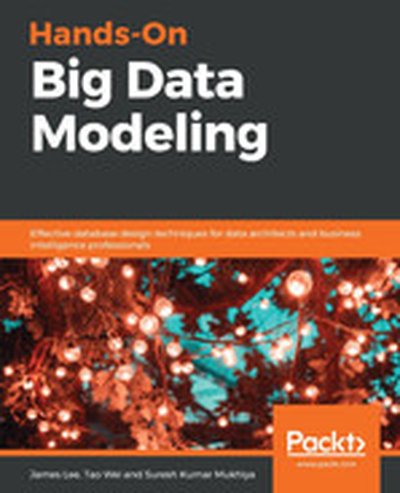
Hands-On Big Data Modeling

This book, Hands-On Big Data Modeling, provides you with practical guidance on data modeling techniques, focusing particularly on the challenges of big data. You will learn the concepts behind various data models, explore tools and platforms for efficient data management, and gain hands-on experience with structured and unstructured data. What this Book will help me do Master the fundamental concepts of big data and its challenges. Explore advanced data modeling techniques using SQL, Python, and R. Design effective models for structured, semi-structured, and unstructured data types. Apply data modeling to real-world datasets like social media and sensor data. Optimize data models for performance and scalability in various big data platforms. Author(s) The authors of this book are experienced data architects and engineers with a strong background in developing scalable data solutions. They bring their collective expertise to simplify complex concepts in big data modeling, ensuring readers can effectively apply these techniques in their projects. Who is it for? This book is intended for data architects, business intelligence professionals, and any programmer interested in understanding and applying big data modeling concepts. If you are already familiar with basic data management principles and want to enhance your skills, this book is perfect for you. You will learn to tackle real-world datasets and create scalable models. Additionally, it is suitable for professionals transitioning to working with big data frameworks.

Business Models

The growing body of research on business models draws upon a range of sub-disciplines, including strategic management, entrepreneurship, organization studies and management accounting. Business Models: A Research Overview provides a research map for business scholars, incorporating theoretical and applied perspectives.

An Introduction to Cyber Modeling and Simulation

Introduces readers to the field of cyber modeling and simulation and examines current developments in the US and internationally This book provides an overview of cyber modeling and simulation (M&S) developments. Using scenarios, courses of action (COAs), and current M&S and simulation environments, the author presents the overall information assurance process, incorporating the people, policies, processes, and technologies currently available in the field. The author ties up the various threads that currently compose cyber M&S into a coherent view of what is measurable, simulative, and usable in order to evaluate systems for assured operation. An Introduction to Cyber Modeling and Simulation provides the reader with examples of tools and technologies currently available for performing cyber modeling and simulation. It examines how decision-making processes may benefit from M&S in cyber defense. It also examines example emulators, simulators and their potential combination. The book also takes a look at corresponding verification and validation (V&V) processes, which provide the operational community with confidence in knowing that cyber models represent the real world. This book: Explores the role of cyber M&S in decision making Provides a method for contextualizing and understanding cyber risk Shows how concepts such the Risk Management Framework (RMF) leverage multiple processes and policies into a coherent whole Evaluates standards for pure IT operations, "cyber for cyber," and operational/mission cyber evaluations—"cyber for others" Develops a method for estimating both the vulnerability of the system (i.e., time to exploit) and provides an approach for mitigating risk via policy, training, and technology alternatives Uses a model-based approach An Introduction to Cyber Modeling and Simulation is a must read for all technical professionals and students wishing to expand their knowledge of cyber M&S for future professional work.

Modeling and Control of Precision Actuators

This book offers a concise description of procedures for precision actuator modeling and control. It addresses four main schemes: modeling and control of precise actuators; nonlinear control of precise actuators, including sliding mode control and neural network feedback control; fault detection and fault-tolerant control; and advanced air bearing control. A substantial part of the book addresses application issues in the modeling and control of precise actuators, providing several interesting case studies for more application-oriented readers.

Agent-based Modeling of Tax Evasion

The only single-source guide to understanding, using, adapting, and designing state-of-the-art agent-based modelling of tax evasion A computational method for simulating the behavior of individuals or groups and their effects on an entire system, agent-based modeling has proven itself to be a powerful new tool for detecting tax fraud. While interdisciplinary groups and individuals working in the tax domain have published numerous articles in diverse peer-reviewed journals and have presented their findings at international conferences, until Agent-based Modelling of Tax Evasion there was no authoritative, single-source guide to state-of-the-art agent-based tax evasion modeling techniques and technologies. Featuring contributions from distinguished experts in the field from around the globe, Agent-Based Modelling of Tax Evasion provides in-depth coverage of an array of field tested agent-based tax evasion models. Models are presented in a unified format so as to enable readers to systematically work their way through the various modeling alternatives available to them. Three main components of each agent-based model are explored in accordance with the Overview, Design Concepts, and Details (ODD) protocol, each section of which contains several sub elements that help to illustrate the model clearly and that assist readers in replicating the modeling results described. Presents models in a unified and structured manner to provide a point of reference for readers interested in agent-based modelling of tax evasion Explores the theoretical aspects and diversity of agent-based modeling through the example of tax evasion Provides an overview of the characteristics of more than thirty agent-based tax evasion frameworks Functions as a solid foundation for lectures and seminars on agent-based modelling of tax evasion The only comprehensive treatment of agent-based tax evasion models and their applications, this book is an indispensable working resource for practitioners and tax evasion modelers both in the agent-based computational domain and using other methodologies. It is also an excellent pedagogical resource for teaching tax evasion modeling and/or agent-based modeling generally.

Building on Multi-Model Databases

In many organizations today, businesspeople are busy requesting unified views of data stored across multiple sources within their organizations. But integrating multiple data types from multiple data stores is a complex, error-prone, and time-consuming process of cobbling everything together manually. This concise book examines how multi-model databases can help you integrate data storage and access across your organization in a seamless and elegant way. Author Pete Aven and Diane Burley from MarkLogic explain how this latest evolution in data management naturally accepts heterogeneous data, enabling you to eventually phase out technical data silos. Through several case studies, you’ll discover how organizations use multi-model databases to reduce complexity, save money, take advantage of opportunities, lessen risk, and shorten time to value. Get unified views across disparate data models and formats within a single database Learn how multi-model databases leverage the inherent structure of the data being stored Load and use unstructured and semi-structured data (such as documents and text) as is Provide agility in data access and delivery through APIs, interfaces, and indexes Learn how to scale a multi-model database, and provide ACID capabilities and security Examine how a multi-model database would fit into your existing architecture

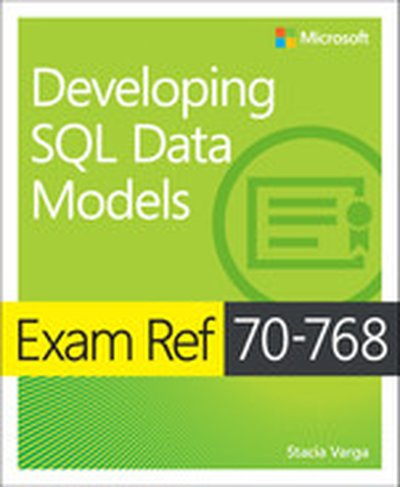
Exam Ref 70-768 Developing SQL Data Models, First Edition

Prepare for Microsoft Exam 70-768–and help demonstrate your real-world mastery of Business Intelligence (BI) solutions development with SQL Server 2016 Analysis Services (SSAS), including modeling and queries. Designed for experienced IT professionals ready to advance their status, Exam Ref focuses on the critical thinking and decision-making acumen needed for success at the MCSA level. Focus on the expertise measured by these objectives: • Design a multidimensional BI semantic model • Design a tabular BI semantic model • Develop queries using Multidimensional Expressions (MDX) and Data Analysis Expressions (DAX) • Configure and maintain SSAS This Microsoft Exam Ref: • Organizes its coverage by exam objectives • Features strategic, what-if scenarios to challenge you • Assumes you are a database or BI professional with experience creating models, writing MDX or DAX queries, and using SSAS

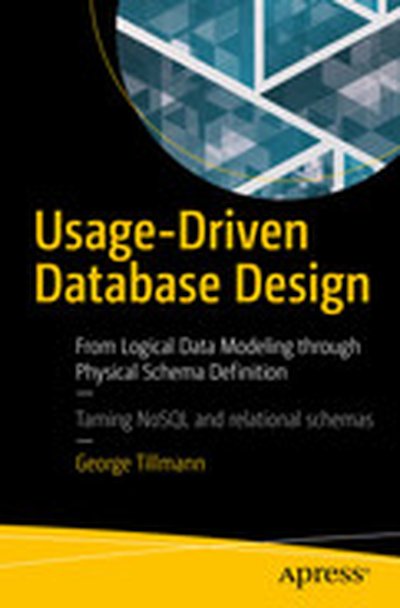
Usage-Driven Database Design: From Logical Data Modeling through Physical Schema Definition

Design great databases—from logical data modeling through physical schema definition. You will learn a framework that finally cracks the problem of merging data and process models into a meaningful and unified design that accounts for how data is actually used in production systems. Key to the framework is a method for taking the logical data model that is a static look at the definition of the data, and merging that static look with the process models describing how the data will be used in actual practice once a given system is implemented. The approach solves the disconnect between the static definition of data in the logical data model and the dynamic flow of the data in the logical process models. The design framework in this book can be used to create operational databases for transaction processing systems, or for data warehouses in support of decision support systems. The information manager can be a flat file, Oracle Database, IMS, NoSQL, Cassandra, Hadoop, or any other DBMS. Usage-Driven Database Design emphasizes practical aspects of design, and speaks to what works, what doesn't work, and what to avoid at all costs. Included in the book are lessons learned by the author over his 30+ years in the corporate trenches. Everything in the book is grounded on good theory, yet demonstrates a professional and pragmatic approach to design that can come only from decades of experience. Presents an end-to-end framework from logical data modeling through physical schema definition. Includes lessons learned, techniques, and tricks that can turn a database disaster into a success. Applies to all types of database management systems, including NoSQL such as Cassandra and Hadoop, and mainstream SQL databases such as Oracle and SQL Server What You'll Learn Create logical data models that accurately reflect the real world of the user Create usage scenarios reflecting how applications will use a new database Merge static data models with dynamic process models to create resilient yet flexible database designs Support application requirements by creating responsive database schemas in any database architecture Cope with big data and unstructured data for transaction processing and decision support systems Recognize when relational approaches won't work, and when to turn toward NoSQL solutions such as Cassandra or Hadoop Who This Book Is For System developers, including business analysts, database designers, database administrators, and application designers and developers who must design or interact with database systems

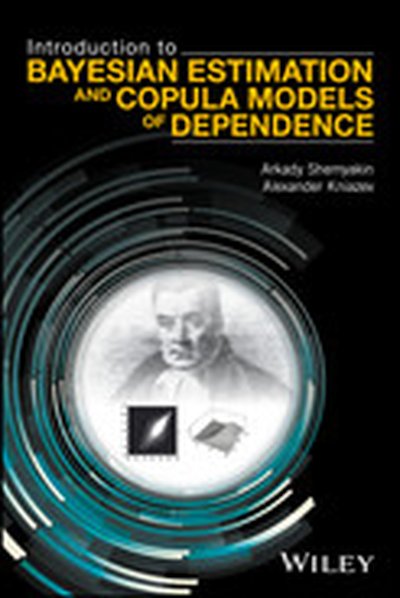
Introduction to Bayesian Estimation and Copula Models of Dependence

Presents an introduction to Bayesian statistics, presents an emphasis on Bayesian methods (prior and posterior), Bayes estimation, prediction, MCMC,Bayesian regression, and Bayesian analysis of statistical modelsof dependence, and features a focus on copulas for risk management Introduction to Bayesian Estimation and Copula Models of Dependence emphasizes the applications of Bayesian analysis to copula modeling and equips readers with the tools needed to implement the procedures of Bayesian estimation in copula models of dependence. This book is structured in two parts: the first four chapters serve as a general introduction to Bayesian statistics with a clear emphasis on parametric estimation and the following four chapters stress statistical models of dependence with a focus of copulas. A review of the main concepts is discussed along with the basics of Bayesian statistics including prior information and experimental data, prior and posterior distributions, with an emphasis on Bayesian parametric estimation. The basic mathematical background of both Markov chains and Monte Carlo integration and simulation is also provided. The authors discuss statistical models of dependence with a focus on copulas and present a brief survey of pre-copula dependence models. The main definitions and notations of copula models are summarized followed by discussions of real-world cases that address particular risk management problems. In addition, this book includes: • Practical examples of copulas in use including within the Basel Accord II documents that regulate the world banking system as well as examples of Bayesian methods within current FDA recommendations • Step-by-step procedures of multivariate data analysis and copula modeling, allowing readers to gain insight for their own applied research and studies • Separate reference lists within each chapter and end-of-the-chapter exercises within Chapters 2 through 8 • A companion website containing appendices: data files and demo files in Microsoft® Office Excel®, basic code in R, and selected exercise solutions Introduction to Bayesian Estimation and Copula Models of Dependence is a reference and resource for statisticians who need to learn formal Bayesian analysis as well as professionals within analytical and risk management departments of banks and insurance companies who are involved in quantitative analysis and forecasting. This book can also be used as a textbook for upper-undergraduate and graduate-level courses in Bayesian statistics and analysis. ARKADY SHEMYAKIN, PhD, is Professor in the Department of Mathematics and Director of the Statistics Program at the University of St. Thomas. A member of the American Statistical Association and the International Society for Bayesian Analysis, Dr. Shemyakin's research interests include informationtheory, Bayesian methods of parametric estimation, and copula models in actuarial mathematics, finance, and engineering. ALEXANDER KNIAZEV, PhD, is Associate Professor and Head of the Department of Mathematics at Astrakhan State University in Russia. Dr. Kniazev's research interests include representation theory of Lie algebras and finite groups, mathematical statistics, econometrics, and financial mathematics.

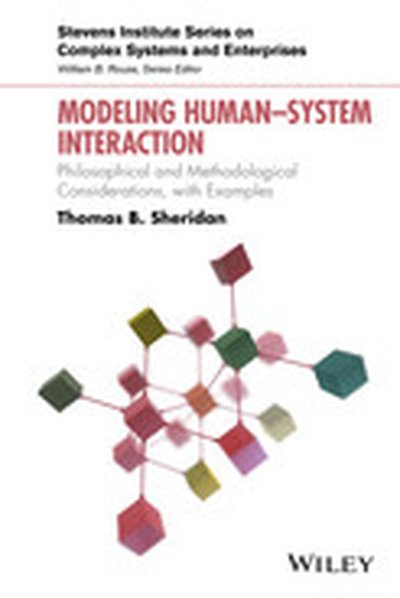
Modeling Human–System Interaction

This book presents theories and models to examine how humans interact with complex automated systems, including both empirical and theoretical methods. Provides examples of models appropriate to the four stages of human-system interaction Examines in detail the philosophical underpinnings and assumptions of modeling Discusses how a model fits into "doing science" and the considerations in garnering evidence and arriving at beliefs for the modeled phenomena Modeling Human-System Interaction is a reference for professionals in industry, academia and government who are researching, designing and implementing human-technology systems in transportation, communication, manufacturing, energy, and health care sectors.

Determining the right model for your experience

Inherent in creating a social layer into your experience is some form of relationships between people. There are different models, each of which create different kinds of social interactions and outcomes within an experience. What you'll learn—and how you can apply it This lesson reviews the different types of relationship models and shows you how to assess your specific goals to determine which model might be the right fit for your product or needs and what supporting tools are appropriate to create a rich relationship framework. Prerequisites You want to create or enhance a product with a social layer. This Lesson is taken from , 2nd Edition, by Erin Malone and Christian Crumlish. Designing Social Interfaces

Global Dynamics

A world model: economies, trade, migration, security and development aid. This bookprovides the analytical capability to understand and explore the dynamics of globalisation. It is anchored in economic input-output models of over 200 countries and their relationships through trade, migration, security and development aid. The tools of complexity science are brought to bear and mathematical and computer models are developed both for the elements and for an integrated whole. Models are developed at a variety of scales ranging from the global and international trade through a European model of inter-sub-regional migration to piracy in the Gulf and the London riots of 2011. The models embrace the changing technology of international shipping, the impacts of migration on economic development along with changing patterns of military expenditure and development aid. A unique contribution is the level of spatial disaggregation which presents each of 200+ countries and their mutual interdependencies – along with some finer scale analyses of cities and regions. This is the first global model which offers this depth of detail with fully work-out models, these provide tools for policy making at national, European and global scales. Global dynamics: Presents in depth models of global dynamics. Provides a world economic model of 200+ countries and their interactions through trade, migration, security and development aid. Provides pointers to the deployment of analytical capability through modelling in policy development. Features a variety of models that constitute a formidable toolkit for analysis and policy development. Offers a demonstration of the practicalities of complexity science concepts. This book is for practitioners and policy analysts as well as those interested in mathematical model building and complexity science as well as advanced undergraduate and postgraduate level students.

Measurement Data Modeling and Parameter Estimation

This book discusses the theories, methods, and application techniques of the measurement data mathematical modeling and parameter estimation. It seeks to build a bridge between mathematical theory and engineering practice in the measurement data processing field so theoretical researchers and technical engineers can communicate. It is organized with abundant materials, such as illustrations, tables, examples, and exercises. The authors create examples to apply mathematical theory innovatively to measurement and control engineering. Not only does this reference provide theoretical knowledge, it provides information on first hand experiences.

Remanufacturing Modeling and Analysis

Providing a solid foundation of knowledge in modeling remanufacturing systems, this book addresses the design, planning, and processing issues faced by decision-makers in the field. With easy-to-use mathematical or simulation modeling to demonstrate solutions for each remanufacturing issue, it helps practitioners understand how a particular issue can be effectively modeled and how to choose the appropriate solution methodology. The book also discusses how increasingly stringent environmental regulations and decreasing natural resources influence manufacturers toward more environmentally conscious manufacturing and product recovery initiatives.