talk-data.com talk-data.com

Topic

GitHub

version_control collaboration code_hosting

12

tagged

Activity Trend

79 peak/qtr
2020-Q1 2026-Q1

Activities

Showing filtered results

Filtering by: O'Reilly Data Engineering Books ×
Hands-On Software Engineering with Python - Second Edition

Grow your software engineering discipline, incorporating and mastering design, development, testing, and deployment best practices examples in a realistic Python project structure. Key Features Understand what makes Software Engineering a discipline, distinct from basic programming Gain practical insight into updating, refactoring, and scaling an existing Python system Implement robust testing, CI/CD pipelines, and cloud-ready architecture decisions Book Description Software engineering is more than coding; it’s the strategic design and continuous improvement of systems that serve real-world needs. This newly updated second edition of Hands-On Software Engineering with Python expands on its foundational approach to help you grow into a senior or staff-level engineering role. Fully revised for today’s Python ecosystem, this edition includes updated tooling, practices, and architectural patterns. You’ll explore key changes across five minor Python versions, examine new features like dataclasses and type hinting, and evaluate modern tools such as Poetry, pytest, and GitHub Actions. A new chapter introduces high-performance computing in Python, and the entire development process is enhanced with cloud-readiness in mind. You’ll follow a complete redesign and refactor of a multi-tier system from the first edition, gaining insight into how software evolves—and what it takes to do that responsibly. From system modeling and SDLC phases to data persistence, testing, and CI/CD automation, each chapter builds your engineering mindset while updating your hands-on skills. By the end of this book, you'll have mastered modern Python software engineering practices and be equipped to revise and future-proof complex systems with confidence. What you will learn Distinguish software engineering from general programming Break down and apply each phase of the SDLC to Python systems Create system models to plan architecture before writing code Apply Agile, Scrum, and other modern development methodologies Use dataclasses, pydantic, and schemas for robust data modeling Set up CI/CD pipelines with GitHub Actions and cloud build tools Write and structure unit, integration, and end-to-end tests Evaluate and integrate tools like Poetry, pytest, and Docker Who this book is for This book is for Python developers with a basic grasp of software development who want to grow into senior or staff-level engineering roles. It’s ideal for professionals looking to deepen their understanding of software architecture, system modeling, testing strategies, and cloud-aware development. Familiarity with core Python programming is required, as the book focuses on applying engineering principles to maintain, extend, and modernize real-world systems.
Building Integrations with MuleSoft

This concise yet comprehensive guide shows developers and architects how to tackle data integration challenges with MuleSoft. Authors Pooja Kamath and Diane Kesler take you through the process necessary to build robust and scalable integration solutions step-by-step. Supported by real-world use cases, Building Integrations with MuleSoft teaches you to identify and resolve performance bottlenecks, handle errors, and ensure the reliability and scalability of your integration solutions. You'll explore MuleSoft's robust set of connectors and their components, and use them to connect to systems and applications from legacy databases to cloud services. Ask the right questions to determine your use case, define requirements, decide on reuse versus rebuild, and create sequence and context diagrams Master tools like the Anypoint Platform, Anypoint Studio, Code Builder, GitHub, and Maven Design APIs with RAML and OAS and craft effective requests and responses Write MUnit tests, validate DataWeave expressions, and use Postman Collections Deploy Mule applications to CloudHub, use API Manager to create API proxies, and secure APIs with Mule OAuth 2.0 Learn message orchestration techniques for routers, transactions, error handling, For Each, Parallel For Each, and batch processing

The Complete Developer

Whether you’ve been in the developer kitchen for decades or are just taking the plunge to do it yourself, The Complete Developer will show you how to build and implement every component of a modern stack—from scratch. You’ll go from a React-driven frontend to a fully fleshed-out backend with Mongoose, MongoDB, and a complete set of REST and GraphQL APIs, and back again through the whole Next.js stack. The book’s easy-to-follow, step-by-step recipes will teach you how to build a web server with Express.js, create custom API routes, deploy applications via self-contained microservices, and add a reactive, component-based UI. You’ll leverage command line tools and full-stack frameworks to build an application whose no-effort user management rides on GitHub logins. You’ll also learn how to: Work with modern JavaScript syntax, TypeScript, and the Next.js framework Simplify UI development with the React library Extend your application with REST and GraphQL APIs Manage your data with the MongoDB NoSQL database Use OAuth to simplify user management, authentication, and authorization Automate testing with Jest, test-driven development, stubs, mocks, and fakes Whether you’re an experienced software engineer or new to DIY web development, The Complete Developer will teach you to succeed with the modern full stack. After all, control matters. Covers: Docker, Express.js, JavaScript, Jest, MongoDB, Mongoose, Next.js, Node.js, OAuth, React, REST and GraphQL APIs, and TypeScript

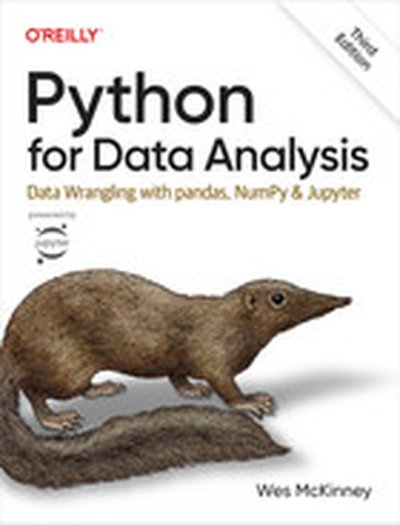
Python for Data Analysis, 3rd Edition

Get the definitive handbook for manipulating, processing, cleaning, and crunching datasets in Python. Updated for Python 3.10 and pandas 1.4, the third edition of this hands-on guide is packed with practical case studies that show you how to solve a broad set of data analysis problems effectively. You'll learn the latest versions of pandas, NumPy, and Jupyter in the process. Written by Wes McKinney, the creator of the Python pandas project, this book is a practical, modern introduction to data science tools in Python. It's ideal for analysts new to Python and for Python programmers new to data science and scientific computing. Data files and related material are available on GitHub. Use the Jupyter notebook and IPython shell for exploratory computing Learn basic and advanced features in NumPy Get started with data analysis tools in the pandas library Use flexible tools to load, clean, transform, merge, and reshape data Create informative visualizations with matplotlib Apply the pandas groupby facility to slice, dice, and summarize datasets Analyze and manipulate regular and irregular time series data Learn how to solve real-world data analysis problems with thorough, detailed examples

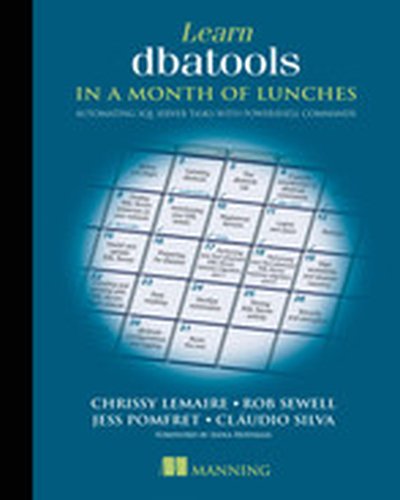
Learn dbatools in a Month of Lunches

If you work with SQL Server, dbatools is a lifesaver. This book will show you how to use this free and open source PowerShell module to automate just about every SQL server task you can imagine—all in just one month! In Learn dbatools in a Month of Lunches you will learn how to: Perform instance-to-instance and customized migrations Automate security audits, tempdb configuration, alerting, and reporting Schedule and monitor PowerShell tasks in SQL Server Agent Bulk-import any type of data into SQL Server Install dbatools in secure environments Written by a group of expert authors including dbatools creator Chrissy LeMaire, Learn dbatools in a Month of Lunches teaches you techniques that will make you more effective—and efficient—than you ever thought possible. In twenty-eight lunchbreak lessons, you’ll learn the most important use cases of dbatools and the favorite functions of its core developers. Stabilize and standardize your SQL server environment, and simplify your tasks by building automation, alerting, and reporting with this powerful tool. About the Technology For SQL Server DBAs, automation is the key to efficiency. Using the open-source dbatools PowerShell module, you can easily execute tasks on thousands of database servers at once—all from the command line. dbatools gives you over 500 pre-built commands, with countless new options for managing SQL Server at scale. There’s nothing else like it. About the Book Learn dbatools in a Month of Lunches teaches you how to automate SQL Server using the dbatools PowerShell module. Each 30-minute lesson introduces a new automation that will make your daily duties easier. Following the expert advice of dbatools creator Chrissy LeMaire and other top community contributors, you’ll learn to script everything from backups to disaster recovery. What's Inside Performing instance-to-instance and customized migrations Automating security audits, best practices, and standardized configurations Administering SQL Server Agent including running PowerShell scripts effectively Bulk-importing many types of data into SQL Server Executing advanced tasks and increasing efficiency for everyday administration About the Reader For DBAs, accidental DBAs, and systems engineers who manage SQL Server. About the Authors Chrissy LeMaire is a GitHub Star and the creator of dbatools. Rob Sewell is a data engineer and a passionate automator. Jess Pomfret and Cláudio Silva are data platform architects. All are Microsoft MVPs. Quotes All SQL Server professionals should learn dbatools. With its combination of knowledge transfer, anecdotes, and hands-on labs, this book is the perfect way. - From the Foreword by Anna Hoffman, Databases Product Management, Microsoft Excellent guide for dbatools with lots of practical tips! Required reading for anyone interested in dbatools. - Ruben Vandeginste, PeopleWare A must-have for any SQL server developer. - Raushan Kumar Jha, Microsoft If you want to automate all vital aspects of SQL Server, wait no more! Learn dbatools in a month, with guidance from the best minds in the business. - Ranjit Sahai, RAM Consulting

Spark in Action, Second Edition

The Spark distributed data processing platform provides an easy-to-implement tool for ingesting, streaming, and processing data from any source. In Spark in Action, Second Edition, you’ll learn to take advantage of Spark’s core features and incredible processing speed, with applications including real-time computation, delayed evaluation, and machine learning. Spark skills are a hot commodity in enterprises worldwide, and with Spark’s powerful and flexible Java APIs, you can reap all the benefits without first learning Scala or Hadoop. About the Technology Analyzing enterprise data starts by reading, filtering, and merging files and streams from many sources. The Spark data processing engine handles this varied volume like a champ, delivering speeds 100 times faster than Hadoop systems. Thanks to SQL support, an intuitive interface, and a straightforward multilanguage API, you can use Spark without learning a complex new ecosystem. About the Book Spark in Action, Second Edition, teaches you to create end-to-end analytics applications. In this entirely new book, you’ll learn from interesting Java-based examples, including a complete data pipeline for processing NASA satellite data. And you’ll discover Java, Python, and Scala code samples hosted on GitHub that you can explore and adapt, plus appendixes that give you a cheat sheet for installing tools and understanding Spark-specific terms. What's Inside Writing Spark applications in Java Spark application architecture Ingestion through files, databases, streaming, and Elasticsearch Querying distributed datasets with Spark SQL About the Reader This book does not assume previous experience with Spark, Scala, or Hadoop. About the Author Jean-Georges Perrin is an experienced data and software architect. He is France’s first IBM Champion and has been honored for 12 consecutive years. Quotes This book reveals the tools and secrets you need to drive innovation in your company or community. - Rob Thomas, IBM An indispensable, well-paced, and in-depth guide. A must-have for anyone into big data and real-time stream processing. - Anupam Sengupta, GuardHat Inc. This book will help spark a love affair with distributed processing. - Conor Redmond, InComm Product Control Currently the best book on the subject! - Markus Breuer, Materna IPS

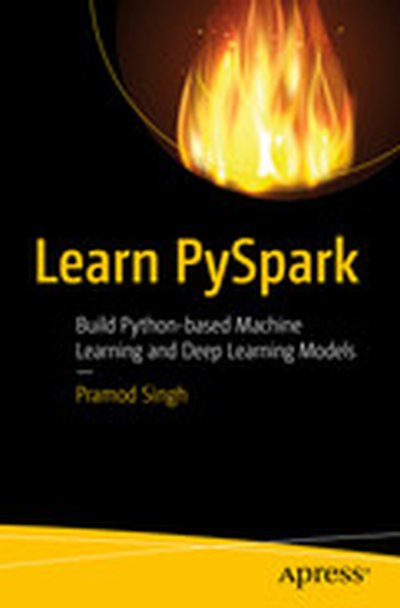
Learn PySpark: Build Python-based Machine Learning and Deep Learning Models

Leverage machine and deep learning models to build applications on real-time data using PySpark. This book is perfect for those who want to learn to use this language to perform exploratory data analysis and solve an array of business challenges. You'll start by reviewing PySpark fundamentals, such as Spark’s core architecture, and see how to use PySpark for big data processing like data ingestion, cleaning, and transformations techniques. This is followed by building workflows for analyzing streaming data using PySpark and a comparison of various streaming platforms. You'll then see how to schedule different spark jobs using Airflow with PySpark and book examine tuning machine and deep learning models for real-time predictions. This book concludes with a discussion on graph frames and performing network analysis using graph algorithms in PySpark. All the code presented in the book will be available in Python scripts on Github. What You'll Learn Develop pipelines for streaming data processing using PySpark Build Machine Learning & Deep Learning models using PySpark latest offerings Use graph analytics using PySpark Create Sequence Embeddings from Text data Who This Book is For Data Scientists, machine learning and deep learning engineers who want to learn and use PySpark for real time analysis on streaming data.

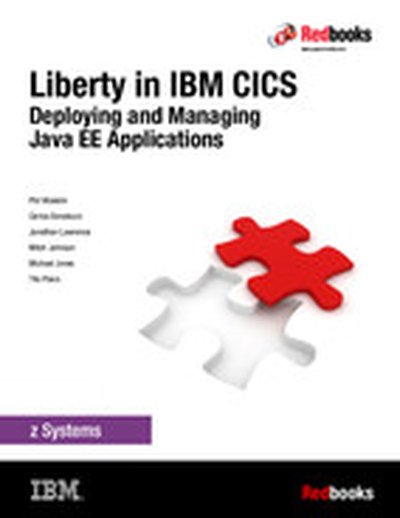
Liberty in IBM CICS: Deploying and Managing Java EE Applications

Abstract This IBM® Redbooks® publication is intended for IBM CICS® system programmers and IBM Z architects. It describes how to deploy and manage Java EE 7 web-based applications in an IBM CICS Liberty JVM server and access data on IBM Db2® for IBM z/OS® and IBM MQ for z/OS sub systems. In this book, we describe the key steps to create and install a Liberty JVM server within a CICS region. We then describe how to best use the different deployment techniques for Java EE applications and the specific considerations when deploying applications that use JDBC, JMS, and the new CICS link to Liberty API. Finally, we describe how to secure web applications in CICS Liberty, including transport-level security and request authentication and authorization by using IBM RACF® and LDAP registries. Information is also provided about how to build a high availability infrastructure and how to use the logging and monitoring functions that are available in the CICS Liberty environment. This book is based on IBM CICS Transaction Server (CICS TS) V5.4 that uses the embedded IBM WebSphere® Application Server Liberty technology. It is also applicable to CICS TS V5.3 with the fixes for the continuous delivery APAR PI77502 applied. Sample applications are used throughout this publication and are freely available for download from the IBM CICSDev GitHub organization along with detailed deployment instructions.

Development Workflows for Data Scientists

Data science teams often borrow best practices from software development, but since the product of a data science project is insight, not code, software development workflows are not a perfect fit. How can data scientists create workflows tailored to their needs? Through interviews with several data-driven organizations, this practical report reveals how data science teams are improving the way they define, enforce, and automate a development workflow. Data science workflows differ from team to team because their tasks, goals, and skills vary so much. In this report, author Ciara Byrne talked to teams from BinaryEdge, Airbnb, GitHub, Scotiabank, Fast Forward Labs, Datascope, and others about their approaches to the data science process, including their procedures for: Defining team structure and roles Asking interesting questions Examining previous work Collecting, exploring, and modeling data Testing, documenting, and deploying code to production Communicating the results With this report, you’ll also examine a complete data science workflow developed by the team from Swiss cybersecurity firm BinaryEdge that includes steps for preliminary data analysis, exploratory data analysis, knowledge discovery, and visualization.

Using Flume

How can you get your data from frontend servers to Hadoop in near real time? With this complete reference guide, you’ll learn Flume’s rich set of features for collecting, aggregating, and writing large amounts of streaming data to the Hadoop Distributed File System (HDFS), Apache HBase, SolrCloud, Elastic Search, and other systems. Using Flume shows operations engineers how to configure, deploy, and monitor a Flume cluster, and teaches developers how to write Flume plugins and custom components for their specific use-cases. You’ll learn about Flume’s design and implementation, as well as various features that make it highly scalable, flexible, and reliable. Code examples and exercises are available on GitHub. Learn how Flume provides a steady rate of flow by acting as a buffer between data producers and consumers Dive into key Flume components, including sources that accept data and sinks that write and deliver it Write custom plugins to customize the way Flume receives, modifies, formats, and writes data Explore APIs for sending data to Flume agents from your own applications Plan and deploy Flume in a scalable and flexible way—and monitor your cluster once it’s running

Apache Sqoop Cookbook

Integrating data from multiple sources is essential in the age of big data, but it can be a challenging and time-consuming task. This handy cookbook provides dozens of ready-to-use recipes for using Apache Sqoop, the command-line interface application that optimizes data transfers between relational databases and Hadoop. Sqoop is both powerful and bewildering, but with this cookbook’s problem-solution-discussion format, you’ll quickly learn how to deploy and then apply Sqoop in your environment. The authors provide MySQL, Oracle, and PostgreSQL database examples on GitHub that you can easily adapt for SQL Server, Netezza, Teradata, or other relational systems. Transfer data from a single database table into your Hadoop ecosystem Keep table data and Hadoop in sync by importing data incrementally Import data from more than one database table Customize transferred data by calling various database functions Export generated, processed, or backed-up data from Hadoop to your database Run Sqoop within Oozie, Hadoop’s specialized workflow scheduler Load data into Hadoop’s data warehouse (Hive) or database (HBase) Handle installation, connection, and syntax issues common to specific database vendors

Data Source Handbook

If you're a developer looking to supplement your own data tools and services, this concise ebook covers the most useful sources of public data available today. You'll find useful information on APIs that offer broad coverage, tie their data to the outside world, and are either accessible online or feature downloadable bulk data. You'll also find code and helpful links. This guide organizes APIs by the subjects they cover—such as websites, people, or places—so you can quickly locate the best resources for augmenting the data you handle in your own service. Categories include: Website tools such as WHOIS, bit.ly, and Compete Services that use email addresses as search terms, including Github Finding information from just a name, with APIs such as WhitePages Services, such as Klout, for locating people with Facebook and Twitter accounts Search APIs, including BOSS and Wikipedia Geographical data sources, including SimpleGeo and U.S. Census Company information APIs, such as CrunchBase and ZoomInfo APIs that list IP addresses, such as MaxMind Services that list books, films, music, and products