talk-data.com talk-data.com

Topic

Apache HBase

nosql_database big_data columnar_storage

35

tagged

Activity Trend

1 peak/qtr
2020-Q1 2026-Q1

Activities

35 activities · Newest first

Summary Data lake architectures have largely been biased toward batch processing workflows due to the volume of data that they are designed for. With more real-time requirements and the increasing use of streaming data there has been a struggle to merge fast, incremental updates with large, historical analysis. Vinoth Chandar helped to create the Hudi project while at Uber to address this challenge. By adding support for small, incremental inserts into large table structures, and building support for arbitrary update and delete operations the Hudi project brings the best of both worlds together. In this episode Vinoth shares the history of the project, how its architecture allows for building more frequently updated analytical queries, and the work being done to add a more polished experience to the data lake paradigm.

Announcements

Hello and welcome to the Data Engineering Podcast, the show about modern data management You listen to this show to learn about all of the latest tools, patterns, and practices that power data engineering projects across every domain. Now there’s a book that captures the foundational lessons and principles that underly everything that you hear about here. I’m happy to announce I collected wisdom from the community to help you in your journey as a data engineer and worked with O’Reilly to publish it as 97 Things Every Data Engineer Should Know. Go to dataengineeringpodcast.com/97things today to get your copy! When you’re ready to build your next pipeline, or want to test out the projects you hear about on the show, you’ll need somewhere to deploy it, so check out our friends at Linode. With their managed Kubernetes platform it’s now even easier to deploy and scale your workflows, or try out the latest Helm charts from tools like Pulsar and Pachyderm. With simple pricing, fast networking, object storage, and worldwide data centers, you’ve got everything you need to run a bulletproof data platform. Go to dataengineeringpodcast.com/linode today and get a $100 credit to try out a Kubernetes cluster of your own. And don’t forget to thank them for their continued support of this show! RudderStack’s smart customer data pipeline is warehouse-first. It builds your customer data warehouse and your identity graph on your data warehouse, with support for Snowflake, Google BigQuery, Amazon Redshift, and more. Their SDKs and plugins make event streaming easy, and their integrations with cloud applications like Salesforce and ZenDesk help you go beyond event streaming. With RudderStack you can use all of your customer data to answer more difficult questions and then send those insights to your whole customer data stack. Sign up free at dataengineeringpodcast.com/rudder today. We’ve all been asked to help with an ad-hoc request for data by the sales and marketing team. Then it becomes a critical report that they need updated every week or every day. Then what do you do? Send a CSV via email? Write some Python scripts to automate it? But what about incremental sync, API quotas, error handling, and all of the other details that eat up your time? Today, there is a better way. With Census, just write SQL or plug in your dbt models and start syncing your cloud warehouse to SaaS applications like Salesforce, Marketo, Hubspot, and many more. Go to dataengineeringpodcast.com/census today to get a free 14-day trial. Your host is Tobias Macey and today I’m interviewing Vinoth Chandar about Apache Hudi, a data lake management layer for supporting fast and incremental updates to your tables.

Interview

Introduction How did you get involved in the area of data management? Can you describe what Hudi is and the story behind it? What are the use cases that it is focused on supporting? There have been a number of alternative table formats introduced for data lakes recently. How does Hudi compare to projects like Iceberg, Delta Lake, Hive, etc.? Can you describe how Hudi is architected?

How have the goals and design of Hudi changed or evolved since you first began working on it? If you were to start the whole project over today, what would you do differently?

Can you talk through the lifecycle of a data record as it is ingested, compacted, and queried in a Hudi deployment? One of the capabilities that is interesting to explore is support for arbitrary record deletion. Can you talk through why this is a challenging operation in data lake architectures?

How does Hudi make that a tractable problem?

What are the data platform components that are needed to support an installation of Hudi? What is involved in migrating an existing data lake to use Hudi?

How would someone approach supporting heterogeneous table formats in their lake?

As someone who has invested a lot of time in technologies for supporting data lakes, what are your thoughts on the tradeoffs of data lake vs data warehouse and the current trajectory of the ecosystem? What are the most interesting, innovative, or unexpected ways that you have seen Hudi used? What are the most interesting, unexpected, or challenging lessons that you have learned while working on Hudi? When is Hudi the wrong choice? What do you have planned for the future of Hudi?

Contact Info

Linkedin Twitter

Parting Question

From your perspective, what is the biggest gap in the tooling or technology for data management today?

Closing Announcements

Thank you for listening! Don’t forget to check out our other show, Podcast.init to learn about the Python language, its community, and the innovative ways it is being used. Visit the site to subscribe to the show, sign up for the mailing list, and read the show notes. If you’ve learned something or tried out a project from the show then tell us about it! Email [email protected]) with your story. To help other people find the show please leave a review on iTunes and tell your friends and co-workers Join the community in the new Zulip chat workspace at dataengineeringpodcast.com/chat

Links

Hudi Docs Hudi Design & Architecture Incremental Processing CDC == Change Data Capture

Podcast Episodes

Oracle GoldenGate Voldemort Kafka Hadoop Spark HBase Parquet Iceberg Table Format

Data Engineering Episode

Hive ACID Apache Kudu

Podcast Episode

Vertica Delta Lake

Podcast Episode

Optimistic Concurrency Control MVCC == Multi-Version Concurrency Control Presto Flink

Podcast Episode

Trino

Podcast Episode

Gobblin LakeFS

Podcast Episode

Nessie

The intro and outro music is from The Hug by The Freak Fandango Orchestra / CC BY-SA

Support Data Engineering Podcast
Summary

The Hadoop platform is purpose built for processing large, slow moving data in long-running batch jobs. As the ecosystem around it has grown, so has the need for fast data analytics on fast moving data. To fill this need the Kudu project was created with a column oriented table format that was tuned for high volumes of writes and rapid query execution across those tables. For a perfect pairing, they made it easy to connect to the Impala SQL engine. In this episode Brock Noland and Jordan Birdsell from PhData explain how Kudu is architected, how it compares to other storage systems in the Hadoop orbit, and how to start integrating it into you analytics pipeline.

Preamble

Hello and welcome to the Data Engineering Podcast, the show about modern data management When you’re ready to build your next pipeline, or want to test out the projects you hear about on the show, you’ll need somewhere to deploy it, so check out Linode. With 200Gbit private networking, scalable shared block storage, and a 40Gbit public network, you’ve got everything you need to run a fast, reliable, and bullet-proof data platform. If you need global distribution, they’ve got that covered too with world-wide datacenters including new ones in Toronto and Mumbai. Go to dataengineeringpodcast.com/linode today to get a $20 credit and launch a new server in under a minute. Go to dataengineeringpodcast.com to subscribe to the show, sign up for the mailing list, read the show notes, and get in touch. To help other people find the show please leave a review on iTunes, or Google Play Music, tell your friends and co-workers, and share it on social media. Join the community in the new Zulip chat workspace at dataengineeringpodcast.com/chat Your host is Tobias Macey and today I’m interviewing Brock Noland and Jordan Birdsell about Apache Kudu and how it is able to provide fast analytics on fast data in the Hadoop ecosystem

Interview

Introduction How did you get involved in the area of data management? Can you start by explaining what Kudu is and the motivation for building it?

How does it fit into the Hadoop ecosystem? How does it compare to the work being done on the Iceberg table format?

What are some of the common application and system design patterns that Kudu supports? How is Kudu architected and how has it evolved over the life of the project? There are many projects in and around the Hadoop ecosystem that rely on Zookeeper as a building block for consensus. What was the reasoning for using Raft in Kudu? How does the storage layer in Kudu differ from what would be found in systems like Hive or HBase?

What are the implementation details in the Kudu storage interface that have had the greatest impact on its overall speed and performance?

A number of the projects built for large scale data processing were not initially built with a focus on operational simplicity. What are the features of Kudu that simplify deployment and management of production infrastructure? What was the motivation for using C++ as the language target for Kudu?

If you were to start the project over today what would you do differently?

What are some situations where you would advise against using Kudu? What have you found to be the most interesting/unexpected/challenging lessons learned in the process of building and maintaining Kudu? What are you most excited about for the future of Kudu?

Contact Info

Brock

LinkedIn @brocknoland on Twitter

Jordan

LinkedIn @jordanbirdsell jbirdsell on GitHub

PhData

Website phdata on GitHub @phdatainc on Twitter

Parting Question

From your perspective, what is the biggest gap in the tooling or technology for data management today?

Links

Kudu PhData Getting Started with Apache Kudu Thomson Reuters Hadoop Oracle Exadata Slowly Changing Dimensions HDFS S3 Azure Blob Storage State Farm Stanly Black & Decker ETL (Extract, Transform, Load) Parquet

Podcast Episode

ORC HBase Spark

Podcast Episode

Summary Distributed systems are complex to build and operate, and there are certain primitives that are common to a majority of them. Rather then re-implement the same capabilities every time, many projects build on top of Apache Zookeeper. In this episode Patrick Hunt explains how the Apache Zookeeper project was started, how it functions, and how it is used as a building block for other distributed systems. He also explains the operational considerations for running your own cluster, how it compares to more recent entrants such as Consul and EtcD, and what is in store for the future.

Preamble

Hello and welcome to the Data Engineering Podcast, the show about modern data management When you’re ready to build your next pipeline, or want to test out the projects you hear about on the show, you’ll need somewhere to deploy it, so check out Linode. With 200Gbit private networking, scalable shared block storage, and a 40Gbit public network, you’ve got everything you need to run a fast, reliable, and bullet-proof data platform. If you need global distribution, they’ve got that covered too with world-wide datacenters including new ones in Toronto and Mumbai. Go to dataengineeringpodcast.com/linode today to get a $20 credit and launch a new server in under a minute. Go to dataengineeringpodcast.com to subscribe to the show, sign up for the mailing list, read the show notes, and get in touch. Join the community in the new Zulip chat workspace at dataengineeringpodcast.com/chat Your host is Tobias Macey and today I’m interviewing Patrick Hunt about Apache Zookeeper and how it is used as a building block for distributed systems

Interview

Introduction How did you get involved in the area of data management? Can you start by explaining what Zookeeper is and how the project got started?

What are the main motivations for using a centralized coordination service for distributed systems?

What are the distributed systems primitives that are built into Zookeeper?

What are some of the higher-order capabilities that Zookeeper provides to users who are building distributed systems on top of Zookeeper? What are some of the types of system level features that application developers will need which aren’t provided by Zookeeper?

Can you discuss how Zookeeper is architected and how that design has evolved over time?

What have you found to be some of the most complicated or difficult aspects of building and maintaining Zookeeper?

What are the scaling factors for Zookeeper?

What are the edge cases that users should be aware of? Where does it fall on the axes of the CAP theorem?

What are the main failure modes for Zookeeper?

How much of the recovery logic is left up to the end user of the Zookeeper cluster?

Since there are a number of projects that rely on Zookeeper, many of which are likely to be run in the same environment (e.g. Kafka and Flink), what would be involved in sharing a single Zookeeper cluster among those multiple services? In recent years we have seen projects such as EtcD which is used by Kubernetes, and Consul. How does Zookeeper compare with those projects?

What are some of the cases where Zookeeper is the wrong choice?

How have the needs of distributed systems engineers changed since you first began working on Zookeeper? If you were to start the project over today, what would you do differently?

Would you still use Java?

What are some of the most interesting or unexpected ways that you have seen Zookeeper used? What do you have planned for the future of Zookeeper?

Contact Info

@phunt on Twitter

Parting Question

From your perspective, what is the biggest gap in the tooling or technology for data management today?

Links

Zookeeper Cloudera Google Chubby Sourceforge HBase High Availability Fallacies of distributed computing Falsehoods programmers believe about networking Consul EtcD Apache Curator Raft Consensus Algorithm Zookeeper Atomic Broadcast SSD Write Cliff Apache Kafka Apache Flink

Podcast

Learning Apache Drill

Get up to speed with Apache Drill, an extensible distributed SQL query engine that reads massive datasets in many popular file formats such as Parquet, JSON, and CSV. Drill reads data in HDFS or in cloud-native storage such as S3 and works with Hive metastores along with distributed databases such as HBase, MongoDB, and relational databases. Drill works everywhere: on your laptop or in your largest cluster. In this practical book, Drill committers Charles Givre and Paul Rogers show analysts and data scientists how to query and analyze raw data using this powerful tool. Data scientists today spend about 80% of their time just gathering and cleaning data. With this book, you’ll learn how Drill helps you analyze data more effectively to drive down time to insight. Use Drill to clean, prepare, and summarize delimited data for further analysis Query file types including logfiles, Parquet, JSON, and other complex formats Query Hadoop, relational databases, MongoDB, and Kafka with standard SQL Connect to Drill programmatically using a variety of languages Use Drill even with challenging or ambiguous file formats Perform sophisticated analysis by extending Drill’s functionality with user-defined functions Facilitate data analysis for network security, image metadata, and machine learning

Next-Generation Big Data: A Practical Guide to Apache Kudu, Impala, and Spark

Utilize this practical and easy-to-follow guide to modernize traditional enterprise data warehouse and business intelligence environments with next-generation big data technologies. Next-Generation Big Data takes a holistic approach, covering the most important aspects of modern enterprise big data. The book covers not only the main technology stack but also the next-generation tools and applications used for big data warehousing, data warehouse optimization, real-time and batch data ingestion and processing, real-time data visualization, big data governance, data wrangling, big data cloud deployments, and distributed in-memory big data computing. Finally, the book has an extensive and detailed coverage of big data case studies from Navistar, Cerner, British Telecom, Shopzilla, Thomson Reuters, and Mastercard. What You’ll Learn Install Apache Kudu, Impala, and Spark to modernize enterprise data warehouse and business intelligence environments, complete with real-world, easy-to-follow examples, and practical advice Integrate HBase, Solr, Oracle, SQL Server, MySQL, Flume, Kafka, HDFS, and Amazon S3 with Apache Kudu, Impala, and Spark Use StreamSets, Talend, Pentaho, and CDAP for real-time and batch data ingestion and processing Utilize Trifacta, Alteryx, and Datameer for data wrangling and interactive data processing Turbocharge Spark with Alluxio, a distributed in-memory storage platform Deploy big data in the cloud using Cloudera Director Perform real-time data visualization and time series analysis using Zoomdata, Apache Kudu, Impala, and Spark Understand enterprise big data topics such as big data governance, metadata management, data lineage, impact analysis, and policy enforcement, and how to use Cloudera Navigator to perform common data governance tasks Implement big data use cases such as big data warehousing, data warehouse optimization, Internet of Things, real-time data ingestion and analytics, complex event processing, and scalable predictive modeling Study real-world big data case studies from innovative companies, including Navistar, Cerner, British Telecom, Shopzilla, Thomson Reuters, and Mastercard Who This Book Is For BI and big data warehouse professionals interested in gaining practical and real-world insight into next-generation big data processing and analytics using Apache Kudu, Impala, and Spark; and those who want to learn more about other advanced enterprise topics

Seven NoSQL Databases in a Week

Learn the fundamentals of seven essential NoSQL databases in just one week with this book. Covering MongoDB, DynamoDB, Redis, Cassandra, Neo4j, InfluxDB, and HBase, you'll explore their functionalities and practical applications. Designed to give you a working understanding of NoSQL database types, this guide helps aspiring DBAs and developers comprehend and utilize modern data solutions. What this Book will help me do Master the fundamentals of MongoDB, including high-performance, high-availability, and scaling features. Gain hands-on experience with Neo4j to perform database queries and integrate with Python and Java applications. Learn efficient querying with Redis for storage and retrieval tasks. Understand Cassandra's powerful solution for scalable and fault-tolerant systems. Get well-versed with HBase for creating tables, and reading and writing data efficiently. Author(s) Sudarshan Kadambi and Xun (Brian) Wu bring a wealth of experience in database technologies. They have worked extensively in the software development and database management fields. With their practical and concise teaching approach, the authors make complex topics accessible for readers. Who is it for? This book is ideal for budding DBAs and developers looking to understand NoSQL databases. It is particularly useful for those transitioning from relational databases who want to learn about modern database technologies. Suitable for both beginners and those with some database knowledge, it aims to bridge skill gaps and expand the reader's technical expertise.

Mastering Apache Storm

Mastering Apache Storm is your step-by-step guide to mastering real-time data streaming with this robust framework. You'll learn how to process big data efficiently and integrate Apache Storm with popular technologies like Kafka, HBase, and Redis to maximize its potential. This book walks you through from basic concepts to advanced implementations of Apache Storm in real-world scenarios. What this Book will help me do Understand the core features and operation of Apache Storm for real-time data streaming. Integrate Apache Storm with other Big Data frameworks like Kafka, HBase, Redis, and Hadoop. Effectively deploy and manage multi-node Apache Storm clusters in real-world environments. Monitor and analyze your data streams and system health effectively using built-in and external tools. Learn to implement fault-tolerant, scalable, and distributed stream processing applications in Apache Storm. Author(s) None Jain is an experienced software developer and technical instructor specializing in distributed systems and real-time data processing. With years of experience working with Apache Storm and related technologies, their teachings focus on practical, hands-on learning to equip readers with actionable skills. Who is it for? This book is ideal for Java developers aspiring to build expertise in real-time data streaming and distributed processing applications using Apache Storm. Beginners can start with the fundamentals provided, while those with prior knowledge can delve into intermediate and advanced implementations.

HBase High Performance Cookbook

"HBase High Performance Cookbook" is your guide to mastering the optimization, scaling, and tuning of HBase systems. Covering everything from configuring HBase clusters to designing scalable table structures and performance tuning, this comprehensive book provides practical advice and strategies for leveraging HBase's full potential. By following this book's recipes, you'll supercharge your HBase expertise. What this Book will help me do Understand how to configure HBase for optimal performance, improving your data system's efficiency. Learn to design table structures to maximize scalability and functionality in HBase. Gain skills in performing CRUD operations and using advanced features like MapReduce within HBase. Discover practices for integrating HBase with other technologies such as ElasticSearch. Master the steps involved in setting up and optimizing HBase in cloud environments for enhanced performance. Author(s) Ruchir Choudhry is a seasoned data management professional with extensive experience in distributed database systems. He possesses deep expertise in HBase, Hadoop, and other big data technologies. His practical and engaging writing style aims to demystify complex technical topics, making them accessible to developers and architects alike. Who is it for? This book is tailored for developers and system architects looking to deepen their understanding of HBase. Whether you are experienced with other NoSQL databases or are new to HBase, this book provides extensive practical knowledge. Ideal for professionals working in big data applications or those eager to optimize and scale their database systems effectively.

Pro Apache Phoenix: An SQL Driver for HBase, First Edition

Leverage Phoenix as an ANSI SQL engine built on top of the highly distributed and scalable NoSQL framework HBase. Learn the basics and best practices that are being adopted in Phoenix to enable a high write and read throughput in a big data space. This book includes real-world cases such as Internet of Things devices that send continuous streams to Phoenix, and the book explains how key features such as joins, indexes, transactions, and functions help you understand the simple, flexible, and powerful API that Phoenix provides. Examples are provided using real-time data and data-driven businesses that show you how to collect, analyze, and act in seconds. Pro Apache Phoenix covers the nuances of setting up a distributed HBase cluster with Phoenix libraries, running performance benchmarks, configuring parameters for production scenarios, and viewing the results. The book also shows how Phoenix plays well with other key frameworks in the Hadoop ecosystem such as Apache Spark, Pig, Flume, and Sqoop. You will learn how to: Handle a petabyte data store by applying familiar SQL techniques Store, analyze, and manipulate data in a NoSQL Hadoop echo system with HBase Apply best practices while working with a scalable data store on Hadoop and HBase Integrate popular frameworks (Apache Spark, Pig, Flume) to simplify big data analysis Demonstrate real-time use cases and big data modeling techniques Who This Book Is For Data engineers, Big Data administrators, and architects

Apache HBase Primer

Learn the fundamental foundations and concepts of the Apache HBase (NoSQL) open source database. It covers the HBase data model, architecture, schema design, API, and administration. Apache HBase is the database for the Apache Hadoop framework. HBase is a column family based NoSQL database that provides a flexible schema model. What You'll Learn Work with the core concepts of HBase Discover the HBase data model, schema design, and architecture Use the HBase API and administration Who This Book Is For Apache HBase (NoSQL) database users, designers, developers, and admins.

Practical Hadoop Ecosystem: A Definitive Guide to Hadoop-Related Frameworks and Tools

Learn how to use the Apache Hadoop projects, including MapReduce, HDFS, Apache Hive, Apache HBase, Apache Kafka, Apache Mahout, and Apache Solr. From setting up the environment to running sample applications each chapter in this book is a practical tutorial on using an Apache Hadoop ecosystem project. While several books on Apache Hadoop are available, most are based on the main projects, MapReduce and HDFS, and none discusses the other Apache Hadoop ecosystem projects and how they all work together as a cohesive big data development platform. What You Will Learn: Set up the environment in Linux for Hadoop projects using Cloudera Hadoop Distribution CDH 5 Run a MapReduce job Store data with Apache Hive, and Apache HBase Index data in HDFS with Apache Solr Develop a Kafka messaging system Stream Logs to HDFS with Apache Flume Transfer data from MySQL database to Hive, HDFS, and HBase with Sqoop Create a Hive table over Apache Solr Develop a Mahout User Recommender System Who This Book Is For: Apache Hadoop developers. Pre-requisite knowledge of Linux and some knowledge of Hadoop is required.

Big Data Analytics

Dive into the world of big data with "Big Data Analytics: Real Time Analytics Using Apache Spark and Hadoop." This comprehensive guide introduces readers to the fundamentals and practical applications of Apache Spark and Hadoop, covering essential topics like Spark SQL, DataFrames, structured streaming, and more. Learn how to harness the power of real-time analytics and big data tools effectively. What this Book will help me do Master the key components of Apache Spark and Hadoop ecosystems, including Spark SQL and MapReduce. Gain an understanding of DataFrames, DataSets, and structured streaming for seamless data handling. Develop skills in real-time analytics using Spark Streaming and technologies like Kafka and HBase. Learn to implement machine learning models using Spark's MLlib and ML Pipelines. Explore graph analytics with GraphX and leverage data visualization tools like Jupyter and Zeppelin. Author(s) Venkat Ankam, an expert in big data technologies, has years of experience working with Apache Hadoop and Spark. As an educator and technical consultant, Venkat has enabled numerous professionals to gain critical insights into big data ecosystems. With a pragmatic approach, his writings aim to guide readers through complex systems in a structured and easy-to-follow manner. Who is it for? This book is perfect for data analysts, data scientists, software architects, and programmers aiming to expand their knowledge of big data analytics. Readers should ideally have a basic programming background in languages like Python, Scala, R, or SQL. Prior hands-on experience with big data environments is not necessary but is an added advantage. This guide is created to cater to a range of skill levels, from beginners to intermediate learners.

Architecting HBase Applications

HBase is a remarkable tool for indexing mass volumes of data, but getting started with this distributed database and its ecosystem can be daunting. With this hands-on guide, you’ll learn how to architect, design, and deploy your own HBase applications by examining real-world solutions. Along with HBase principles and cluster deployment guidelines, this book includes in-depth case studies that demonstrate how large companies solved specific use cases with HBase. Authors Jean-Marc Spaggiari and Kevin O’Dell also provide draft solutions and code examples to help you implement your own versions of those use cases, from master data management (MDM) and document storage to near real-time event processing. You’ll also learn troubleshooting techniques to help you avoid common deployment mistakes. Learn exactly what HBase does, what its ecosystem includes, and how to set up your environment Explore how real-world HBase instances were deployed and put into production Examine documented use cases for tracking healthcare claims, digital advertising, data management, and product quality Understand how HBase works with tools and techniques such as Spark, Kafka, MapReduce, and the Java API Learn how to identify the causes and understand the consequences of the most common HBase issues

Pro Spark Streaming: The Zen of Real-Time Analytics Using Apache Spark

Learn the right cutting-edge skills and knowledge to leverage Spark Streaming to implement a wide array of real-time, streaming applications. This book walks you through end-to-end real-time application development using real-world applications, data, and code. Taking an application-first approach, each chapter introduces use cases from a specific industry and uses publicly available datasets from that domain to unravel the intricacies of production-grade design and implementation. The domains covered in Pro Spark Streaming include social media, the sharing economy, finance, online advertising, telecommunication, and IoT. In the last few years, Spark has become synonymous with big data processing. DStreams enhance the underlying Spark processing engine to support streaming analysis with a novel micro-batch processing model. Pro Spark Streaming by Zubair Nabi will enable you to become a specialist of latency sensitive applications by leveraging the key features of DStreams, micro-batch processing, and functional programming. To this end, the book includes ready-to-deploy examples and actual code. Pro Spark Streaming will act as the bible of Spark Streaming. What You'll Learn Discover Spark Streaming application development and best practices Work with the low-level details of discretized streams Optimize production-grade deployments of Spark Streaming via configuration recipes and instrumentation using Graphite, collectd, and Nagios Ingest data from disparate sources including MQTT, Flume, Kafka, Twitter, and a custom HTTP receiver Integrate and couple with HBase, Cassandra, and Redis Take advantage of design patterns for side-effects and maintaining state across the Spark Streaming micro-batch model Implement real-time and scalable ETL using data frames, SparkSQL, Hive, and SparkR Use streaming machine learning, predictive analytics, and recommendations Mesh batch processing with stream processing via the Lambda architecture Who This Book Is For Data scientists, big data experts, BI analysts, and data architects.

Big Data Analytics with Spark: A Practitioner’s Guide to Using Spark for Large-Scale Data Processing, Machine Learning, and Graph Analytics, and High-Velocity Data Stream Processing

This book is a step-by-step guide for learning how to use Spark for different types of big-data analytics projects, including batch, interactive, graph, and stream data analysis as well as machine learning. It covers Spark core and its add-on libraries, including Spark SQL, Spark Streaming, GraphX, MLlib, and Spark ML. Big Data Analytics with Spark shows you how to use Spark and leverage its easy-to-use features to increase your productivity. You learn to perform fast data analysis using its in-memory caching and advanced execution engine, employ in-memory computing capabilities for building high-performance machine learning and low-latency interactive analytics applications, and much more. Moreover, the book shows you how to use Spark as a single integrated platform for a variety of data processing tasks, including ETL pipelines, BI, live data stream processing, graph analytics, and machine learning. The book also includes a chapter on Scala, the hottest functional programming language, and the language that underlies Spark. You’ll learn the basics of functional programming in Scala, so that you can write Spark applications in it. What's more, Big Data Analytics with Spark provides an introduction to other big data technologies that are commonly used along with Spark, such as HDFS, Avro, Parquet, Kafka, Cassandra, HBase, Mesos, and so on. It also provides an introduction to machine learning and graph concepts. So the book is self-sufficient; all the technologies that you need to know to use Spark are covered. The only thing that you are expected to have is some programming knowledge in any language.

Hadoop 2 Quick-Start Guide: Learn the Essentials of Big Data Computing in the Apache Hadoop 2 Ecosystem

Get Started Fast with Apache Hadoop ® 2, YARN, and Today’s Hadoop Ecosystem With Hadoop 2.x and YARN, Hadoop moves beyond MapReduce to become practical for virtually any type of data processing. Hadoop 2.x and the Data Lake concept represent a radical shift away from conventional approaches to data usage and storage. Hadoop 2.x installations offer unmatched scalability and breakthrough extensibility that supports new and existing Big Data analytics processing methods and models. Hadoop ® 2 Quick-Start Guide is the first easy, accessible guide to Apache Hadoop 2.x, YARN, and the modern Hadoop ecosystem. Building on his unsurpassed experience teaching Hadoop and Big Data, author Douglas Eadline covers all the basics you need to know to install and use Hadoop 2 on personal computers or servers, and to navigate the powerful technologies that complement it. Eadline concisely introduces and explains every key Hadoop 2 concept, tool, and service, illustrating each with a simple “beginning-to-end” example and identifying trustworthy, up-to-date resources for learning more. This guide is ideal if you want to learn about Hadoop 2 without getting mired in technical details. Douglas Eadline will bring you up to speed quickly, whether you’re a user, admin, devops specialist, programmer, architect, analyst, or data scientist. Coverage Includes Understanding what Hadoop 2 and YARN do, and how they improve on Hadoop 1 with MapReduce Understanding Hadoop-based Data Lakes versus RDBMS Data Warehouses Installing Hadoop 2 and core services on Linux machines, virtualized sandboxes, or clusters Exploring the Hadoop Distributed File System (HDFS) Understanding the essentials of MapReduce and YARN application programming Simplifying programming and data movement with Apache Pig, Hive, Sqoop, Flume, Oozie, and HBase Observing application progress, controlling jobs, and managing workflows Managing Hadoop efficiently with Apache Ambari–including recipes for HDFS to NFSv3 gateway, HDFS snapshots, and YARN configuration Learning basic Hadoop 2 troubleshooting, and installing Apache Hue and Apache Spark

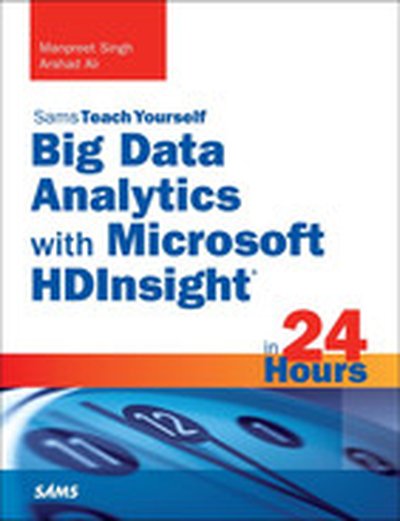
Sams Teach Yourself: Big Data Analytics with Microsoft HDInsight in 24 Hours

Sams Teach Yourself Big Data Analytics with Microsoft HDInsight in 24 Hours In just 24 lessons of one hour or less, Sams Teach Yourself Big Data Analytics with Microsoft HDInsight in 24 Hours helps you leverage Hadoop’s power on a flexible, scalable cloud platform using Microsoft’s newest business intelligence, visualization, and productivity tools. This book’s straightforward, step-by-step approach shows you how to provision, configure, monitor, and troubleshoot HDInsight and use Hadoop cloud services to solve real analytics problems. You’ll gain more of Hadoop’s benefits, with less complexity–even if you’re completely new to Big Data analytics. Every lesson builds on what you’ve already learned, giving you a rock-solid foundation for real-world success. Practical, hands-on examples show you how to apply what you learn Quizzes and exercises help you test your knowledge and stretch your skills Notes and tips point out shortcuts and solutions Learn how to… Master core Big Data and NoSQL concepts, value propositions, and use cases Work with key Hadoop features, such as HDFS2 and YARN Quickly install, configure, and monitor Hadoop (HDInsight) clusters in the cloud Automate provisioning, customize clusters, install additional Hadoop projects, and administer clusters Integrate, analyze, and report with Microsoft BI and Power BI Automate workflows for data transformation, integration, and other tasks Use Apache HBase on HDInsight Use Sqoop or SSIS to move data to or from HDInsight Perform R-based statistical computing on HDInsight datasets Accelerate analytics with Apache Spark Run real-time analytics on high-velocity data streams Write MapReduce, Hive, and Pig programs Register your book at informit.com/register for convenient access to downloads, updates, and corrections as they become available.

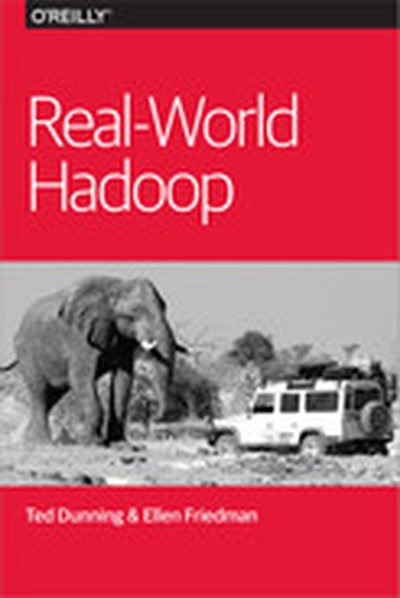
Real-World Hadoop

If you’re a business team leader, CIO, business analyst, or developer interested in how Apache Hadoop and Apache HBase-related technologies can address problems involving large-scale data in cost-effective ways, this book is for you. Using real-world stories and situations, authors Ted Dunning and Ellen Friedman show Hadoop newcomers and seasoned users alike how NoSQL databases and Hadoop can solve a variety of business and research issues. You’ll learn about early decisions and pre-planning that can make the process easier and more productive. If you’re already using these technologies, you’ll discover ways to gain the full range of benefits possible with Hadoop. While you don’t need a deep technical background to get started, this book does provide expert guidance to help managers, architects, and practitioners succeed with their Hadoop projects. Examine a day in the life of big data: India’s ambitious Aadhaar project Review tools in the Hadoop ecosystem such as Apache’s Spark, Storm, and Drill to learn how they can help you Pick up a collection of technical and strategic tips that have helped others succeed with Hadoop Learn from several prototypical Hadoop use cases, based on how organizations have actually applied the technology Explore real-world stories that reveal how MapR customers combine use cases when putting Hadoop and NoSQL to work, including in production Ted Dunning is Chief Applications Architect at MapR Technologies, and committer and PMC member of the Apache’s Drill, Storm, Mahout, and ZooKeeper projects. He is also mentor for Apache’s Datafu, Kylin, Zeppelin, Calcite, and Samoa projects. Ellen Friedman is a solutions consultant, speaker, and author, writing mainly about big data topics. She is a committer for the Apache Mahout project and a contributor to the Apache Drill project.

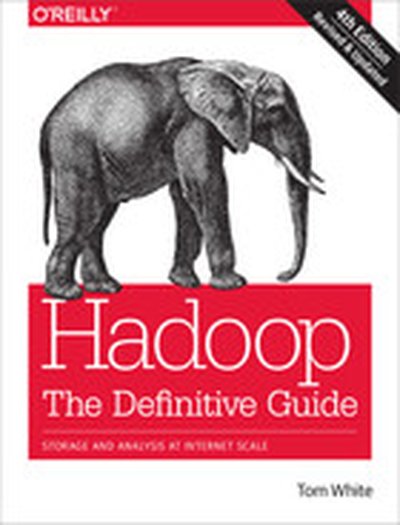
Hadoop: The Definitive Guide, 4th Edition

Get ready to unlock the power of your data. With the fourth edition of this comprehensive guide, youâ??ll learn how to build and maintain reliable, scalable, distributed systems with Apache Hadoop. This book is ideal for programmers looking to analyze datasets of any size, and for administrators who want to set up and run Hadoop clusters. Using Hadoop 2 exclusively, author Tom White presents new chapters on YARN and several Hadoop-related projects such as Parquet, Flume, Crunch, and Spark. Youâ??ll learn about recent changes to Hadoop, and explore new case studies on Hadoopâ??s role in healthcare systems and genomics data processing. Learn fundamental components such as MapReduce, HDFS, and YARN Explore MapReduce in depth, including steps for developing applications with it Set up and maintain a Hadoop cluster running HDFS and MapReduce on YARN Learn two data formats: Avro for data serialization and Parquet for nested data Use data ingestion tools such as Flume (for streaming data) and Sqoop (for bulk data transfer) Understand how high-level data processing tools like Pig, Hive, Crunch, and Spark work with Hadoop Learn the HBase distributed database and the ZooKeeper distributed configuration service

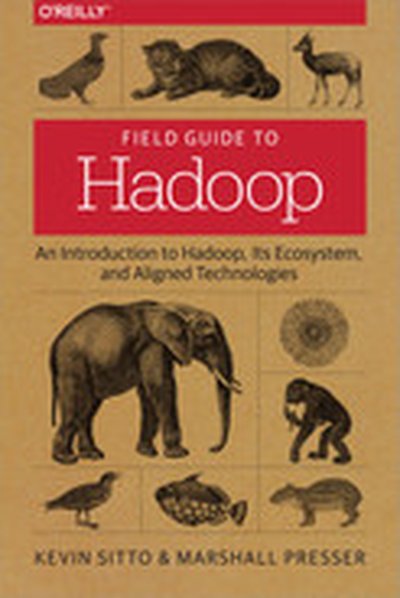
Field Guide to Hadoop

If your organization is about to enter the world of big data, you not only need to decide whether Apache Hadoop is the right platform to use, but also which of its many components are best suited to your task. This field guide makes the exercise manageable by breaking down the Hadoop ecosystem into short, digestible sections. You’ll quickly understand how Hadoop’s projects, subprojects, and related technologies work together. Each chapter introduces a different topic—such as core technologies or data transfer—and explains why certain components may or may not be useful for particular needs. When it comes to data, Hadoop is a whole new ballgame, but with this handy reference, you’ll have a good grasp of the playing field. Topics include: Core technologies—Hadoop Distributed File System (HDFS), MapReduce, YARN, and Spark Database and data management—Cassandra, HBase, MongoDB, and Hive Serialization—Avro, JSON, and Parquet Management and monitoring—Puppet, Chef, Zookeeper, and Oozie Analytic helpers—Pig, Mahout, and MLLib Data transfer—Scoop, Flume, distcp, and Storm Security, access control, auditing—Sentry, Kerberos, and Knox Cloud computing and virtualization—Serengeti, Docker, and Whirr