
talk-data.com talk-data.com

P

Speaker

Paul Rogers

3

talks

author

Frequent Collaborators

Filter by Event / Source

Talks & appearances

3 activities · Newest first

Search activities →
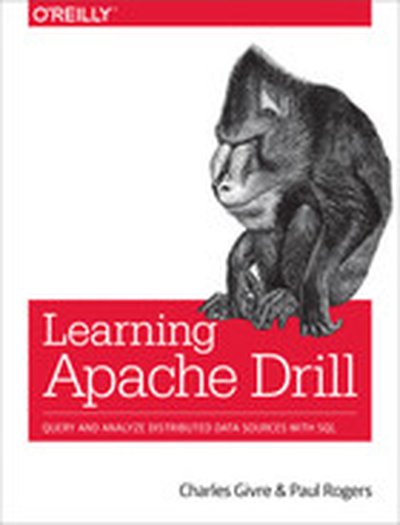
Learning Apache Drill

Get up to speed with Apache Drill, an extensible distributed SQL query engine that reads massive datasets in many popular file formats such as Parquet, JSON, and CSV. Drill reads data in HDFS or in cloud-native storage such as S3 and works with Hive metastores along with distributed databases such as HBase, MongoDB, and relational databases. Drill works everywhere: on your laptop or in your largest cluster. In this practical book, Drill committers Charles Givre and Paul Rogers show analysts and data scientists how to query and analyze raw data using this powerful tool. Data scientists today spend about 80% of their time just gathering and cleaning data. With this book, you’ll learn how Drill helps you analyze data more effectively to drive down time to insight. Use Drill to clean, prepare, and summarize delimited data for further analysis Query file types including logfiles, Parquet, JSON, and other complex formats Query Hadoop, relational databases, MongoDB, and Kafka with standard SQL Connect to Drill programmatically using a variety of languages Use Drill even with challenging or ambiguous file formats Perform sophisticated analysis by extending Drill’s functionality with user-defined functions Facilitate data analysis for network security, image metadata, and machine learning
ABCs of IBM z/OS System Programming Volume 1

The ABCs of IBM® z/OS® System Programming is a 13-volume collection that provides an introduction to the z/OS operating system and the hardware architecture. Whether you are a beginner or an experienced system programmer, the ABCs collection provides the information that you need to start your research into z/OS and related subjects. Whether you want to become more familiar with z/OS in your current environment, or you are evaluating platforms to consolidate your online business applications, the ABCs collection will serve as a powerful technical tool. Volume 1 provides an updated understanding of the software and IBM zSeries architecture, and explains how it is used together with the z/OS operating system. This includes the main components of z/OS needed to customize and install the z/OS operating system. This edition has been significantly updated and revised. The other volumes contain the following content: Volume 2: z/OS implementation and daily maintenance, defining subsystems, IBM Job Entry Subsystem 2 (JES2) and JES3, link pack area (LPA), LNKLST, authorized libraries, System Modification Program/Extended (SMP/E), IBM Language Environment® Volume 3: Introduction to Data Facility Storage Management Subsystem (DFSMS), data set basics, storage management hardware and software, catalogs, and DFSMS Transactional Virtual Storage Access Method (VSAM), or DFSMStvs Volume 4: z/OS Communications Server, Transmission Control Protocol/Internet Protocol (TCP/IP), and IBM Virtual Telecommunications Access Method (IBM VTAM®) Volume 5: Base and IBM Parallel Sysplex®, z/OS System Logger, Resource Recovery Services (RRS), Global Resource Serialization (GRS), z/OS system operations, z/OS Automatic Restart Manager (ARM), IBM Geographically Dispersed Parallel Sysplex™ (IBM GDPS®) Volume 6: Introduction to security, IBM Resource Access Control Facility (IBM RACF®), Digital certificates and public key infrastructure (PKI), Kerberos, cryptography and IBM eServer™ z990 integrated cryptography, zSeries firewall technologies, Lightweight Directory Access Protocol (LDAP), and Enterprise Identity Mapping (EIM) Volume 7: Printing in a z/OS environment, Infoprint Server, and Infoprint Central Volume 8: An introduction to z/OS problem diagnosis Volume 9: z/OS UNIX System Services Volume 10: Introduction to IBM z/Architecture®, zSeries processor design, zSeries connectivity, LPAR concepts, HCD, and IBM DS8000® Volume 11: Capacity planning, IBM Performance Management, z/OS Workload Manager (WLM), IBM Resource Management Facility (IBM RMF™), and IBM System Management Facility (SMF) Volume 12: WLM Volume 13: JES2 and JES3 System Display and Search Facility (SDSF)

ABCs of IBM z/OS System Programming Volume 6

The ABCs of IBM® z/OS® System Programming is an 11-volume collection that provides an introduction to the z/OS operating system and the hardware architecture. Whether you are a beginner or an experienced system programmer, the ABCs collection provides the information that you need to start your research into z/OS and related subjects. If you want to become more familiar with z/OS in your current environment or if you are evaluating platforms to consolidate your e-business applications, the ABCs collection can serve as a powerful technical tool. Following are the contents of the volumes: Volume 1: Introduction to z/OS and storage concepts, TSO/E, ISPF, JCL, SDSF, and z/OS delivery and installation Volume 2: z/OS implementation and daily maintenance, defining subsystems, JES2 and JES3, LPA, LNKLST, authorized libraries, IBM Language Environment®, and SMP/E Volume 3: Introduction to DFSMS, data set basics, storage management hardware and software, VSAM, System-managed storage, catalogs, and DFSMStvs Volume 4: Communication Server, TCP/IP, and IBM VTAM® Volume 5: Base and IBM Parallel Sysplex®, System Logger, Resource Recovery Services (RRS), global resource serialization (GRS), z/OS system operations, automatic restart management (ARM), and IBM Geographically Dispersed Parallel Sysplex™ (IBM GDPS®) Volume 6: Introduction to security, IBM RACF®, digital certificates and public key infrastructure (PKI), Kerberos, cryptography and IBM z9® integrated cryptography, Lightweight Directory Access Protocol (LDAP), and Enterprise Identity Mapping (EIM) Volume 7: Printing in a z/OS environment, Infoprint Server, and Infoprint Central Volume 8: An introduction to z/OS problem diagnosis Volume 9: z/OS UNIX System Services Volume 10: Introduction to IBM z/Architecture®, IBM System z® processor design, System z connectivity, logical partition (LPAR) concepts, hardware configuration definition (HCD), and Hardware Management Console (HMC) Volume 11: Capacity planning, performance management, Workload Manager (WLM), IBM Resource Measurement Facility™ (RMF™), and System Management Facilities (SMF)