talk-data.com talk-data.com

Topic

search

86

tagged

Activity Trend

1 peak/qtr
2020-Q1 2026-Q1

Activities

86 activities · Newest first

Elasticsearch Query Language the Definitive Guide

Streamline your workflow with ESQL enhance data analysis with real-time insights, and speed up aggregations and visualizations Key Features Apply ESQL efficiently in analytics, observability, and cybersecurity Optimize performance and scalability for high-demand environments Discover how to visualize and debug ESQL queries Purchase of the print or Kindle book includes a free PDF eBook Book Description Built to simplify high-scale data analytics in Elasticsearch, this practical guide will take you from foundational concepts to advanced applications across search, observability, and security. It will help you overcome common challenges such as efficiently querying large datasets, applying advanced analytics without deep prior knowledge, and resolving for a unique and consolidated query language. Written by senior experts at Elastic with extensive field experience, this book delivers actionable guidance rooted in solving today’s data challenges at scale. After introducing ESQL and its architecture, the chapters explore real-world applications across various domains, including analytics, raw log analysis, observability, and cybersecurity. Advanced topics such as scaling, optimization, and future developments are also covered to help you maximize your ESQL capabilities. By the end of this book, you’ll be able to leverage ESQL for comprehensive data management and analysis, optimizing your workflows and enhancing your productivity with Elasticsearch. What you will learn Gain a solid understanding of ESQL and its architecture Use ESQL for data analysis and performance monitoring Apply ESQL in cybersecurity for threat detection and incident response Find out how to perform advanced searches using ESQL Prepare for future ESQL developments Showcase ESQL in action through real-world, persona-driven use cases Who this book is for If you’re an Elasticsearch user, this book is essential for your growth. Whether you’re a data analyst looking to build analytics on top of Elasticsearch, an SRE monitoring the health of your IT system, or a cybersecurity analyst, this book will give you a complete understanding of how ESQL is built and used. Additionally, database administrators, business intelligence professionals, and operational intelligence professionals will find this book invaluable. Even with a beginner-level knowledge of Elasticsearch, you’ll be able to get started and make the most of this comprehensive guide.
Arno will explore the evolution of search technology in the age of AI. From large language models and “LLM Wars” to enterprise-scale challenges in observability and security, he’ll share practical insights on how Elastic customers are experimenting with AI, what works today, and why the answer often depends on context.

The Definitive Guide to OpenSearch

Learn how to harness the power of OpenSearch effectively with 'The Definitive Guide to OpenSearch'. This book explores installation, configuration, query building, and visualization, guiding readers through practical use cases and real-world implementations. Whether you're building search experiences or analyzing data patterns, this guide equips you thoroughly. What this Book will help me do Understand core OpenSearch principles, architecture, and the mechanics of its search and analytics capabilities. Learn how to perform data ingestion, execute advanced queries, and produce insightful visualizations on OpenSearch Dashboards. Implement scaling strategies and optimum configurations for high-performance OpenSearch clusters. Explore real-world case studies that demonstrate OpenSearch applications in diverse industries. Gain hands-on experience through practical exercises and tutorials for mastering OpenSearch functionality. Author(s) Jon Handler, Soujanya Konka, and Prashant Agrawal, celebrated experts in search technologies and big data analysis, bring their years of experience at AWS and other domains to this book. Their collective expertise ensures that readers receive both core theoretical knowledge and practical applications to implement directly. Who is it for? This book is aimed at developers, data professionals, engineers, and systems operators who work with search systems or analytics platforms. It is especially suitable for individuals in roles handling large-scale data, who want to improve their skills or deploy OpenSearch in production environments. Early learners and seasoned experts alike will find valuable insights.

OpenSearch has become a cornerstone of open source search and observability, empowering developers and organizations to derive meaningful insights from unstructured data at scale. This year marks a significant milestone in its journey, with OpenSearch officially joining The Linux Foundation, further cementing its position in the open source ecosystem. In this session we’ll introduce OpenSearch, from indexing and analyzing unstructured logs to full observability capabilities across tracing, monitoring and security. We’ll share latest improvements in query performance and scalability, and real-time analytics, as well as its expanding ecosystem with new plugins and SDKs in multiple programming languages, and its compatibility with cloud-native environments.

AI-Powered Search

Apply cutting-edge machine learning techniques—from crowdsourced relevance and knowledge graph learning, to Large Language Models (LLMs)—to enhance the accuracy and relevance of your search results. Delivering effective search is one of the biggest challenges you can face as an engineer. AI-Powered Search is an in-depth guide to building intelligent search systems you can be proud of. It covers the critical tools you need to automate ongoing relevance improvements within your search applications. Inside you’ll learn modern, data-science-driven search techniques like: Semantic search using dense vector embeddings from foundation models Retrieval augmented generation (RAG) Question answering and summarization combining search and LLMs Fine-tuning transformer-based LLMs Personalized search based on user signals and vector embeddings Collecting user behavioral signals and building signals boosting models Semantic knowledge graphs for domain-specific learning Semantic query parsing, query-sense disambiguation, and query intent classification Implementing machine-learned ranking models (Learning to Rank) Building click models to automate machine-learned ranking Generative search, hybrid search, multimodal search, and the search frontier AI-Powered Search will help you build the kind of highly intelligent search applications demanded by modern users. Whether you’re enhancing your existing search engine or building from scratch, you’ll learn how to deliver an AI-powered service that can continuously learn from every content update, user interaction, and the hidden semantic relationships in your content. You’ll learn both how to enhance your AI systems with search and how to integrate large language models (LLMs) and other foundation models to massively accelerate the capabilities of your search technology. About the Technology Modern search is more than keyword matching. Much, much more. Search that learns from user interactions, interprets intent, and takes advantage of AI tools like large language models (LLMs) can deliver highly targeted and relevant results. This book shows you how to up your search game using state-of-the-art AI algorithms, techniques, and tools. About the Book AI-Powered Search teaches you to create a search that understands natural language and improves automatically the more it is used. As you work through dozens of interesting and relevant examples, you’ll learn powerful AI-based techniques like semantic search on embeddings, question answering powered by LLMs, real-time personalization, and Retrieval Augmented Generation (RAG). What's Inside Sparse lexical and embedding-based semantic search Question answering, RAG, and summarization using LLMs Personalized search and signals boosting models Learning to Rank, multimodal, and hybrid search About the Reader For software developers and data scientists familiar with the basics of search engine technology. About the Author Trey Grainger is the Founder of Searchkernel and former Chief Algorithms Officer and SVP of Engineering at Lucidworks. Doug Turnbull is a Principal Engineer at Reddit and former Staff Relevance Engineer at Spotify. Max Irwin is the Founder of Max.io and former Managing Consultant at OpenSource Connections. Quotes Belongs on the shelf of every search practitioner! - Khalifeh AlJadda, Google A treasure map! Now you have decades of semantic search knowledge at your fingertips. - Mark Moyou, NVIDIA Modern and comprehensive! Everything you need to build world-class search experiences. - Kelvin Tan, SearchStax Kick starts your ability to implement AI search with easy to understand examples. - David Meza, NASA

Elastic Stack 8.x Cookbook

Unlock the potential of the Elastic Stack with the "Elastic Stack 8.x Cookbook." This book provides over 80 hands-on recipes, guiding you through ingesting, processing, and visualizing data using Elasticsearch, Logstash, Kibana, and more. You'll also explore advanced features like machine learning and observability to create data-driven applications with ease. What this Book will help me do Implement a robust workflow for ingesting, transforming, and visualizing diverse datasets. Utilize Kibana to create insightful dashboards and visual analytics. Leverage Elastic Stack's AI capabilities, such as natural language processing and machine learning. Develop search solutions and integrate advanced features like vector search. Monitor and optimize your Elastic Stack deployments for performance and security. Author(s) Huage Chen and Yazid Akadiri are experienced professionals in the field of Elastic Stack. They bring years of practical experience in data engineering, observability, and software development. Huage and Yazid aim to provide a clear, practical pathway for both beginners and experienced users to get the most out of the Elastic Stack's capabilities. Who is it for? This book is perfect for developers, data engineers, and observability practitioners looking to harness the power of Elastic Stack. It caters to both beginners and experts, providing clear instructions to help readers understand and implement powerful data solutions. If you're working with search applications, data analysis, or system observability, this book is an ideal resource.

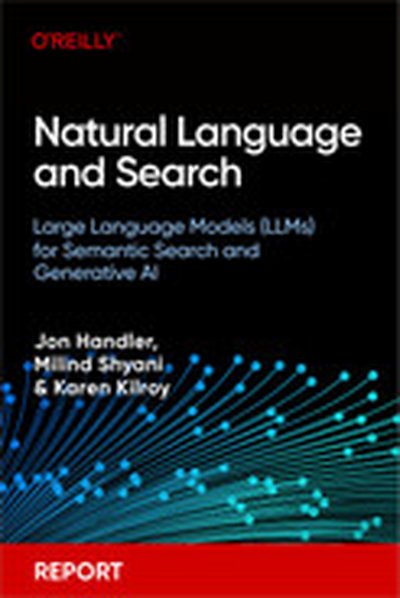
Natural Language and Search

When you look at operational analytics and business data analysis activities—such as log analytics, real-time application monitoring, website search, observability, and more—effective search functionality is key to identifying issues, improving customers experience, and increasing operational effectiveness. How can you support your business needs by leveraging ML-driven advancements in search relevance? In this report, authors Jon Handler, Milind Shyani, Karen Kilroy help executives and data scientists explore how ML can enable ecommerce firms to generate more pertinent search results to drive better sales. You'll learn how personalized search helps you quickly find relevant data within applications, websites, and data lake catalogs. You'll also discover how to locate the content available in CRM systems and document stores. This report helps you: Address the challenges of traditional document search, including data preparation and ingestion Leverage ML techniques to improve search outcomes and the relevance of documents you retrieve Discover what makes a good search solution that's reliable, scalable, and can drive your business forward Learn how to choose a search solution to improve your decision-making process With advancements in ML-driven search, businesses can realize even more benefits and improvements in their data and document search capabilities to better support their own business needs and the needs of their customers. About the authors: Jon Handler is a senior principal solutions architect at Amazon Web Services. Milind Shyani is an applied scientist at Amazon Web Services working on large language models, information retrieval and machine learning algorithms. Karen Kilroy, CEO of Kilroy Blockchain, is a lifelong technologist, full stack software engineer, speaker, and author living in Northwest Arkansas.

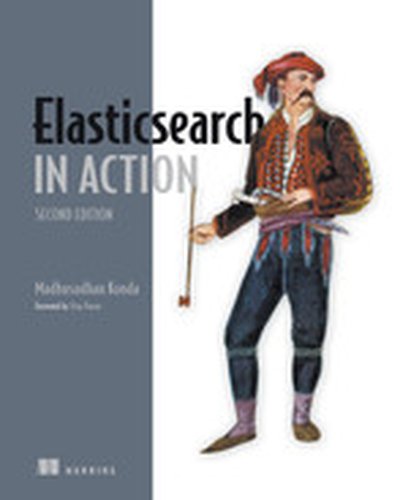
Elasticsearch in Action, Second Edition

Build powerful, production-ready search applications using the incredible features of Elasticsearch. In Elasticsearch in Action, Second Edition you will discover: Architecture, concepts, and fundamentals of Elasticsearch Installing, configuring, and running Elasticsearch and Kibana Creating an index with custom settings Data types, mapping fundamentals, and templates Fundamentals of text analysis and working with text analyzers Indexing, deleting, and updating documents Indexing data in bulk, and reindexing and aliasing operations Learning search concepts, relevancy scores, and similarity algorithms Elasticsearch in Action, Second Edition teaches you to build scalable search applications using Elasticsearch. This completely new edition explores Elasticsearch fundamentals from the ground up. You’ll deep dive into design principles, search architectures, and Elasticsearch’s essential APIs. Every chapter is clearly illustrated with diagrams and hands-on examples. You’ll even explore real-world use cases for full text search, data visualizations, and machine learning. Plus, its comprehensive nature means you’ll keep coming back to the book as a handy reference! About the Technology Create fully professional-grade search engines with Elasticsearch and Kibana! Rewritten for the latest version of Elasticsearch, this practical book explores Elasticsearch’s high-level architecture, reveals infrastructure patterns, and walks through the search and analytics capabilities of numerous Elasticsearch APIs. About the Book Elasticsearch in Action, Second Edition teaches you how to add modern search features to websites and applications using Elasticsearch 8. In it, you’ll quickly progress from the basics of installation and configuring clusters, to indexing documents, advanced aggregations, and putting your servers into production. You’ll especially appreciate the mix of technical detail with techniques for designing great search experiences. What's Inside Understanding search architecture Full text and term-level search queries Analytics and aggregations High-level visualizations in Kibana Configure, scale, and tune clusters About the Reader For application developers comfortable with scripting and command-line applications. About the Author Madhusudhan Konda is a full-stack lead engineer, architect, mentor, and conference speaker. He delivers live online training on Elasticsearch and the Elastic Stack. Quotes Madhu’s passion comes across in the depth and breadth of this book, the enthusiastic tone, and the hands-on examples. I hope you will take what you have read and put it ‘in action’. - From the Foreword by Shay Banon, Founder of Elasticsearch Practical and well-written. A great starting point for beginners and a comprehensive guide for more experienced professionals. - Simona Russo, Serendipity The author’s excitement is evident from the first few paragraphs. Couple that with extensive experience and technical prowess, and you have an instant classic. - Herodotos Koukkides and Semi Koen, Global Japanese Financial Institution

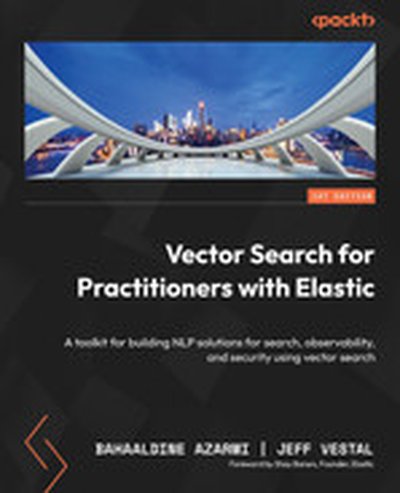
Vector Search for Practitioners with Elastic

The book "Vector Search for Practitioners with Elastic" provides a comprehensive guide to leveraging vector search technology within Elastic for applications in NLP, cybersecurity, and observability. By exploring practical examples and advanced techniques, this book teaches you how to optimize and implement vector search to address complex challenges in modern data management. What this Book will help me do Gain a deep understanding of implementing vector search with Elastic. Learn techniques to optimize vector data storage and retrieval for practical applications. Understand how to apply vector search for image similarity in Elastic. Discover methods for utilizing vector search for security and observability enhancements. Develop skills to integrate modern NLP tools with vector databases and Elastic. Author(s) Bahaaldine Azarmi, with his extensive experience in Elastic and NLP technologies, brings a practitioner's insight into the world of vector search. Co-author None Vestal contributes expertise in observability and system optimization. Together, they deliver practical and actionable knowledge in a clear and approachable manner. Who is it for? This book is designed for data professionals seeking to deepen their expertise in vector search and Elastic technologies. It is ideal for individuals in observability, search technology, or cybersecurity roles. If you have foundational knowledge in machine learning models, Python, and Elastic, this book will enable you to effectively utilize vector search in your projects.

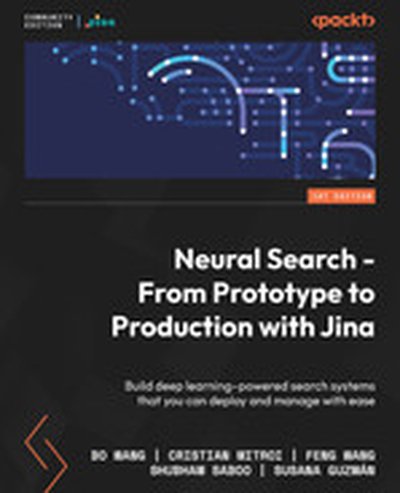
Neural Search - From Prototype to Production with Jina

Dive into the world of modern search systems with 'Neural Search - From Prototype to Production with Jina.' This book introduces you to the fundamentals of neural search, exploring how machine learning revolutionizes information retrieval. You'll gain hands-on experience building versatile, scalable search engines using Jina, unraveling the complexities of AI-powered searches. What this Book will help me do Understand the basics of neural search compared to traditional search methods. Develop mastery of vector representation and its application in neural search. Learn to utilize Jina for constructing AI-powered search engines. Enhance your capabilities to handle multi-modal search systems like text, images, and audio. Acquire the skills to deploy and optimize deep learning-powered search systems effectively. Author(s) Bo Wang, Cristian Mitroi, Feng Wang, Shubham Saboo, and Susana Guzmán are experienced technologists and AI researchers passionate about simplifying complex subjects like neural search. With their expertise in Jina and deep learning, their collaborative approach ensures practical, reader-friendly content that empowers learners to excel in creating cutting-edge search systems. Who is it for? This book is perfect for machine learning, AI, or Python developers eager to advance their understanding of neural search. Whether you're building text, image, or other modality-based search systems, it caters to beginners with foundational knowledge and extends to professionals wanting to deepen their skills. Unlock the potential of Jina for your projects.

Elasticsearch 8.x Cookbook - Fifth Edition

"Elasticsearch 8.x Cookbook" is your go-to resource for harnessing the full potential of Elasticsearch 8. This book provides over 180 hands-on recipes to help you efficiently implement, customize, and scale Elasticsearch solutions in your enterprise. Whether you're handling complex queries, analytics, or cluster management, you'll find practical insights to enhance your capabilities. What this Book will help me do Understand the advanced features of Elasticsearch 8.x, including X-Pack, for improving functionality and security. Master advanced indexing and query techniques to perform efficient and scalable data operations. Implement and manage Elasticsearch clusters effectively including monitoring performance via Kibana. Integrate Elasticsearch seamlessly into Java, Scala, Python, and big data environments. Develop custom plugins and extend Elasticsearch to meet unique project requirements. Author(s) Alberto Paro is a seasoned Elasticsearch expert with years of experience in search technologies and enterprise solution development. As a professional developer and consultant, he has worked with numerous organizations to implement Elasticsearch at scale. Alberto brings his deep technical knowledge and hands-on approach to this book, ensuring readers gain practical insights and skills. Who is it for? This book is perfect for software engineers, data professionals, and developers working with Elasticsearch in enterprise environments. If you're seeking to advance your Elasticsearch knowledge, enhance your query-writing abilities, or seek to integrate it into big data workflows, this book will be invaluable. Regardless of whether you're deploying Elasticsearch in e-commerce, applications, or for analytics, you'll find the content purposeful and engaging.

Logging in Action

Make log processing a real asset to your organization with powerful and free open source tools. In Logging in Action you will learn how to: Deploy Fluentd and Fluent Bit into traditional on-premises, IoT, hybrid, cloud, and multi-cloud environments, both small and hyperscaled Configure Fluentd and Fluent Bit to solve common log management problems Use Fluentd within Kubernetes and Docker services Connect a custom log source or destination with Fluentd’s extensible plugin framework Logging best practices and common pitfalls Logging in Action is a guide to optimize and organize logging using the CNCF Fluentd and Fluent Bit projects. You’ll use the powerful log management tool Fluentd to solve common log management, and learn how proper log management can improve performance and make management of software and infrastructure solutions easier. Through useful examples like sending log-driven events to Slack, you’ll get hands-on experience applying structure to your unstructured data. About the Technology Don’t fly blind! An effective logging system can help you see and correct problems before they cripple your software. With the Fluentd log management tool, it’s a snap to monitor the behavior and health of your software and infrastructure in real time. Designed to collect and process log data from multiple sources using the industry-standard JSON format, Fluentd delivers a truly unified logging layer across all your systems. About the Book Logging in Action teaches you to record and analyze application and infrastructure data using Fluentd. Using clear, relevant examples, it shows you exactly how to transform raw system data into a unified stream of actionable information. You’ll discover how logging configuration impacts the way your system functions and set up Fluentd to handle data from legacy IT environments, local data centers, and massive Kubernetes-driven distributed systems. You’ll even learn how to implement complex log parsing with RegEx and output events to MongoDB and Slack. What's Inside Capture log events from a wide range of systems and software, including Kubernetes and Docker Connect to custom log sources and destinations Employ Fluentd’s extensible plugin framework Create a custom plugin for niche problems About the Reader For developers, architects, and operations professionals familiar with the basics of monitoring and logging. About the Author Phil Wilkins has spent over 30 years in the software industry. Has worked for small startups through to international brands. Quotes I highly recommend using Logging in Action as a getting-started guide, a refresher, or as a way to optimize your logging journey. - From the Foreword by Anurag Gupta, Fluent maintainer and Cofounder, Calyptia Covers everything you need if you want to implement a logging system using open source technology such as Fluentd and Kubernetes. - Alex Saez, Naranja X A great exploration of the features and capabilities of Fluentd, along with very useful hands-on exercises. - George Thomas, Manhattan Associates A practical holistic guide to integrating logging into your enterprise architecture. - Satej Sahu, Honeywell

Getting Started with Elastic Stack 8.0

Discover how to harness the power of the Elastic Stack 8.0 to manage, analyze, and secure complex data environments. You will learn to combine components such as Elasticsearch, Kibana, Logstash, and more to build scalable and effective solutions for your organization. By focusing on hands-on implementations, this book ensures you can apply your knowledge to real-world use cases. What this Book will help me do Set up and manage Elasticsearch clusters tailored to various architecture scenarios. Utilize Logstash and Elastic Agent to ingest and process diverse data sources efficiently. Create interactive dashboards and data models in Kibana, enabling business intelligence insights. Implement secure and effective search infrastructures for enterprise applications. Deploy Elastic SIEM to fortify your organization's security against modern cybersecurity threats. Author(s) Asjad Athick is a seasoned technologist and author with expertise in developing scalable data solutions. With years of experience working with the Elastic Stack, Asjad brings a pragmatic approach to teaching complex architectures. His dedication to explaining technical concepts in an accessible manner makes this book a valuable resource for learners. Who is it for? This book is ideal for developers seeking practical knowledge in search, observability, and security solutions using Elastic Stack. Solutions architects who aim to design scalable data platforms will also benefit greatly. Even tech leads or managers keen to understand the Elastic Stack's impact on their operations will find the insights valuable. No prior experience with Elastic Stack is needed.

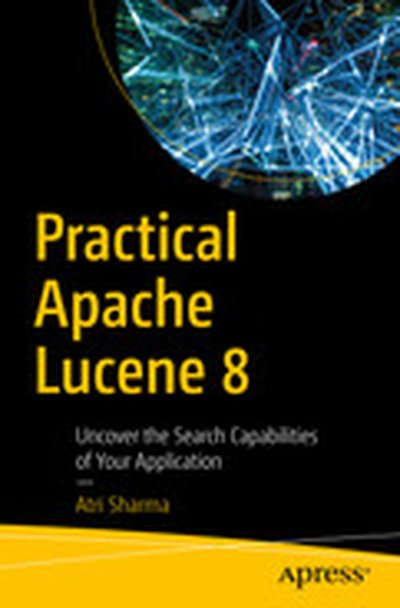
Practical Apache Lucene 8: Uncover the Search Capabilities of Your Application

Gain a thorough knowledge of Lucene's capabilities and use it to develop your own search applications. This book explores the Java-based, high-performance text search engine library used to build search capabilities in your applications. Starting with the basics of Lucene and searching, you will learn about the types of queries used in it and also take a look at scoring models. Applying this basic knowledge, you will develop a hello world app using basic Lucene queries and explore functions like scoring and document level boosting. Along the way you will also uncover the concepts of partial searching and matching in Lucene and then learn how to integrate geographical information (geospatial data) in Lucene using spatial queries and n-dimensional indexing. This will prepare you to build a location-aware search engine with a representative data set that allows location constraints to be specified during a search. You’ll also develop atext classifier using Lucene and Apache Mahout, a popular machine learning framework. After a detailed review of performance bench-marking and common issues associated with it, you’ll learn some of the best practices of tuning the performance of your application. By the end of the book you’ll be able to build your first Lucene patch, where you will not only write your patch, but also test it and ensure it adheres to community coding standards. What You’ll Learn Master the basics of Apache Lucene Utilize different query types in Apache Lucene Explore scoring and document level boosting Integrate geospatial data into your application Who This Book Is For Developers wanting to learn the finer details of Apache Lucene by developing a series of projects with it.

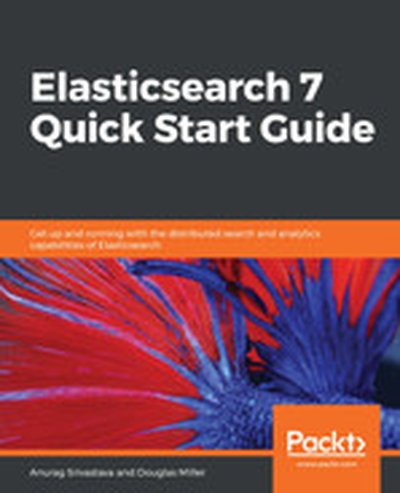
Elasticsearch 7 Quick Start Guide

Elasticsearch 7 Quick Start Guide introduces the core capabilities of Elasticsearch, one of the most powerful distributed search and analytics tools available. Through this concise and practical guide, you will learn how to install, configure, and effectively utilize Elasticsearch while exploring its powerful features, including real-time search and data aggregation. What this Book will help me do Install and configure Elasticsearch to create secure and scalable deployments. Understand and utilize analyzers, filters, and mappings to optimize search results. Perform data aggregations using advanced techniques in metric and bucket operations. Identify and troubleshoot common Elasticsearch performance issues for smooth operation. Leverage best practices to ensure effective deployment in production environments. Author(s) None Srivastava and None Miller are experienced writers and technologists who bring real-world expertise in search systems and analytics. With practical backgrounds in distributed systems and data management, the authors deliver a straightforward and hands-on approach in their writing. They aim to make Elasticsearch concepts approachable and practical for developers and administrators alike. Who is it for? This book is ideal for software developers, data engineers, and IT professionals who are seeking to implement Elasticsearch within their projects. It is particularly suited for those with basic to intermediate technical experience and a need for robust search and analytics solutions. If you're aiming to learn the fundamentals and acquire practical skills in Elasticsearch 7, this book will serve as an excellent resource for you.

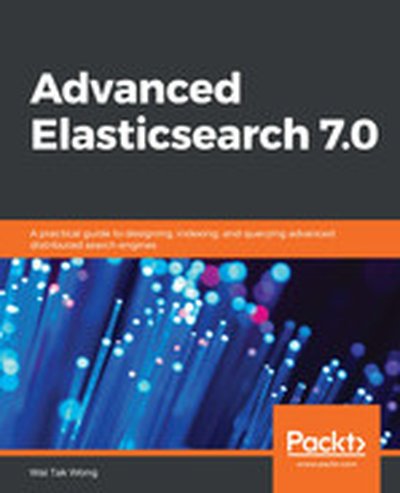
Advanced Elasticsearch 7.0

Dive deep into the advanced capabilities of Elasticsearch 7.0 with this expert-level guide. In this book, you will explore the most effective techniques and tools for building, indexing, and querying advanced distributed search engines. Whether optimizing performance, scaling applications, or integrating with big data analytics, this guide empowers you with practical skills and insights. What this Book will help me do Master ingestion pipelines and preprocess documents for faster and more efficient indexing. Model search data optimally for complex and varied real-world applications. Perform exploratory data analyses using Elasticsearch's robust features. Integrate Elasticsearch with modern analytics platforms like Kibana and Logstash. Leverage Elasticsearch with Apache Spark and machine learning libraries for real-time advanced analytics. Author(s) None Wong is a seasoned Elasticsearch expert with years of real-world experience developing enterprise-grade search and analytics systems. With a passion for innovation and teaching, Wong enjoys breaking down complex technical concepts into digestible learning experiences. His work reflects a pragmatic and results-driven approach to teaching Elasticsearch. Who is it for? This book is ideal for Elasticsearch developers and data engineers with some prior experience who are looking to elevate their skills to an advanced level. It suits professionals seeking to enhance their expertise in building scalable search and analytics solutions. If you aim to master sophisticated Elasticsearch operations and real-time integrations, this book is tailored for you.

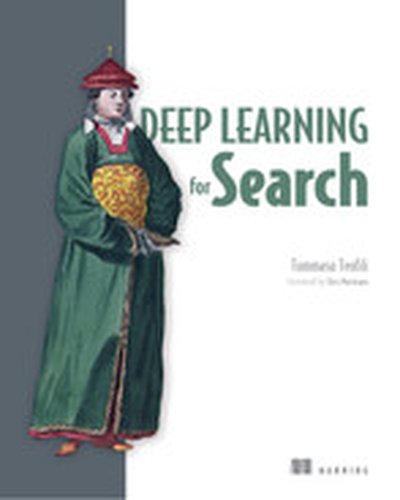
Deep Learning for Search

Deep Learning for Search teaches you how to improve the effectiveness of your search by implementing neural network-based techniques. By the time you're finished with the book, you'll be ready to build amazing search engines that deliver the results your users need and that get better as time goes on! About the Technology Deep learning handles the toughest search challenges, including imprecise search terms, badly indexed data, and retrieving images with minimal metadata. And with modern tools like DL4J and TensorFlow, you can apply powerful DL techniques without a deep background in data science or natural language processing (NLP). This book will show you how. About the Book Deep Learning for Search teaches you to improve your search results with neural networks. You’ll review how DL relates to search basics like indexing and ranking. Then, you’ll walk through in-depth examples to upgrade your search with DL techniques using Apache Lucene and Deeplearning4j. As the book progresses, you’ll explore advanced topics like searching through images, translating user queries, and designing search engines that improve as they learn! What's Inside Accurate and relevant rankings Searching across languages Content-based image search Search with recommendations About the Reader For developers comfortable with Java or a similar language and search basics. No experience with deep learning or NLP needed. About the Author Tommaso Teofili is a software engineer with a passion for open source and machine learning. As a member of the Apache Software Foundation, he contributes to a number of open source projects, ranging from topics like information retrieval (such as Lucene and Solr) to natural language processing and machine translation (including OpenNLP, Joshua, and UIMA). He currently works at Adobe, developing search and indexing infrastructure components, and researching the areas of natural language processing, information retrieval, and deep learning. He has presented search and machine learning talks at conferences including BerlinBuzzwords, International Conference on Computational Science, ApacheCon, EclipseCon, and others. You can find him on Twitter at @tteofili. Quotes A practical approach that shows you the state of the art in using neural networks, AI, and deep learning in the development of search engines. - From the Foreword by Chris Mattmann, NASA JPL A thorough and thoughtful synthesis of traditional search and the latest advancements in deep learning. - Greg Zanotti, Marquette Partners A well-laid-out deep dive into the latest technologies that will take your search engine to the next level. - Andrew Wyllie, Thynk Health Hands-on exercises teach you how to master deep learning for search-based products. - Antonio Magnaghi, System1

Learning Elastic Stack 7.0 - Second Edition

"Learning Elastic Stack 7.0" introduces you to the tools and techniques of Elastic Stack, covering Elasticsearch, Logstash, Beats, and Kibana. With clear explanations and practical examples, this book helps you grasp the 7.0 version's new features and capabilities, empowering you to build and deploy robust, real-time data processing applications. What this Book will help me do Gain the necessary skills to install and configure Elastic Stack for professional use. Master the data handling capabilities of Elasticsearch for distributed search and analytics. Develop expertise in creating data pipelines with Logstash and other ingestion tools. Learn to utilize Kibana to visualize and interpret complex datasets. Acquire knowledge of deploying Elastic Stack solutions both on-premise and in cloud environments. Author(s) Pranav Shukla and Sharath Kumar M N are experienced software engineers and data professionals with a profound knowledge of databases, distributed systems, and cloud architectures. They specialize in educating developers through structured guidance and proven methodologies related to data handling and visualization. Who is it for? This book is designed for software engineers, data analysts, and technical architects interested in learning the Elastic Stack tools from the ground up. Readers familiar with database concepts but new to Elastic Stack will find this book particularly helpful. Advanced users seeking to understand the updates in Elastic Stack 7.0 are also a complementary audience. If you wish to apply Elastic Stack to real-time data processing and analytics, this book provides a strong foundation.