We’ll explore: - How Elasticsearch can be used to organize and search through large content libraries (music samples, project files, video clips, code snippets) for fast retrieval. - Ways Kibana visualizations can track audience engagement and content performance in real time. - The role of AI-driven insights in shaping creative output, from deciding which DJ mixes to publish next to optimizing Python course delivery for beginners. - How to bridge technical concepts with creative workflows to reach a global audience, including Spanish-speaking learners in Latin America and Spain. Whether you’re a developer, educator, or creator, you’ll leave with practical ideas for using Elastic’s tools to bring structure, insight, and scalability to your own projects, technical or creative.
 talk-data.com
Topic
Kibana
25
tagged
Activity Trend
Top Events
Streams provides a single, centralized UI within Kibana that streamlines common tasks like extracting fields, setting data retention, and routing data using AI, so you don't need to use multiple applications or manually configure underlying Elasticsearch components.
Recognized by Gartner as a leading observability tool, Elasticsearch is not just log analytics. It has infrastructure monitoring, alerts, APM capabilities—and it's all open-source! Now with the addition of OpenTelemetry, it's even easier to onboard your telemetry data in a standard and vendor-neutral way. Join Andrzej in a technical session to discover the shortest path from zero to a fully functional open-source observability solution with the OTEK stack - OpenTelemetry, Elasticsearch and Kibana.

Unlock the potential of the Elastic Stack with the "Elastic Stack 8.x Cookbook." This book provides over 80 hands-on recipes, guiding you through ingesting, processing, and visualizing data using Elasticsearch, Logstash, Kibana, and more. You'll also explore advanced features like machine learning and observability to create data-driven applications with ease. What this Book will help me do Implement a robust workflow for ingesting, transforming, and visualizing diverse datasets. Utilize Kibana to create insightful dashboards and visual analytics. Leverage Elastic Stack's AI capabilities, such as natural language processing and machine learning. Develop search solutions and integrate advanced features like vector search. Monitor and optimize your Elastic Stack deployments for performance and security. Author(s) Huage Chen and Yazid Akadiri are experienced professionals in the field of Elastic Stack. They bring years of practical experience in data engineering, observability, and software development. Huage and Yazid aim to provide a clear, practical pathway for both beginners and experienced users to get the most out of the Elastic Stack's capabilities. Who is it for? This book is perfect for developers, data engineers, and observability practitioners looking to harness the power of Elastic Stack. It caters to both beginners and experts, providing clear instructions to help readers understand and implement powerful data solutions. If you're working with search applications, data analysis, or system observability, this book is an ideal resource.
Elasticsearch and Kibana added a brand new query language: ES|QL — coming with a new endpoint (_query) and a simpler syntax. It lets you refine your results one step at a time and adds new features like data enrichment and processing right in your query. And you can use it across the Elastic Stack — from the Elasticsearch API to Discover and Alerting in Kibana. But the biggest change is behind the scenes: Using a new compute engine that was built with performance in mind. Join us for a quick overview and a look at syntax and internals.
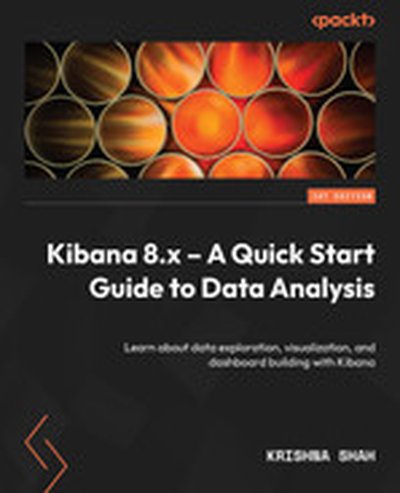
Kibana 8.x - A Quick Start Guide to Data Analysis is an essential resource for anyone wanting to harness the robust capabilities of Kibana to analyze, visualize, and make sense of their data. Through clear explanations and practical exercises, this guide breaks down topics like creating dashboards, exploring datasets, and configuring Kibana's powerful features. What this Book will help me do Understand Kibana's interface and functionalities to manage Elasticsearch data. Learn how to create intuitive visualizations and customize dashboards. Explore features such as data discovery and real-time updates for analytics. Optimize and query datasets using ESQL and detailed analytics techniques. Master the process of embedding dashboards and exporting insights. Author(s) None Shah is an experienced data analytics professional with a deep understanding of the Elastic Stack, including Kibana and Elasticsearch. Having spent years working on big data projects, Shah is dedicated to helping technologists turn data into actionable insights. Her writing aims to simplify complex concepts into achievable learning milestones. Who is it for? This book is ideal for data analysts, data engineers, and anyone working extensively with Elasticsearch datasets. If you aim to gain hands-on experience with building interactive dashboards and visualizing data trends, this book is tailored for you. A foundational understanding of Elasticsearch would be beneficial but is not strictly required. Perfect for advancing decision-making with data insights.
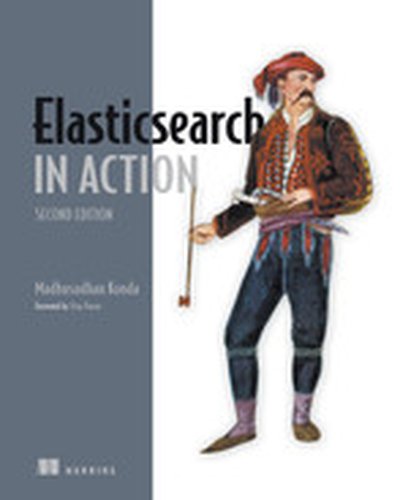
Build powerful, production-ready search applications using the incredible features of Elasticsearch. In Elasticsearch in Action, Second Edition you will discover: Architecture, concepts, and fundamentals of Elasticsearch Installing, configuring, and running Elasticsearch and Kibana Creating an index with custom settings Data types, mapping fundamentals, and templates Fundamentals of text analysis and working with text analyzers Indexing, deleting, and updating documents Indexing data in bulk, and reindexing and aliasing operations Learning search concepts, relevancy scores, and similarity algorithms Elasticsearch in Action, Second Edition teaches you to build scalable search applications using Elasticsearch. This completely new edition explores Elasticsearch fundamentals from the ground up. You’ll deep dive into design principles, search architectures, and Elasticsearch’s essential APIs. Every chapter is clearly illustrated with diagrams and hands-on examples. You’ll even explore real-world use cases for full text search, data visualizations, and machine learning. Plus, its comprehensive nature means you’ll keep coming back to the book as a handy reference! About the Technology Create fully professional-grade search engines with Elasticsearch and Kibana! Rewritten for the latest version of Elasticsearch, this practical book explores Elasticsearch’s high-level architecture, reveals infrastructure patterns, and walks through the search and analytics capabilities of numerous Elasticsearch APIs. About the Book Elasticsearch in Action, Second Edition teaches you how to add modern search features to websites and applications using Elasticsearch 8. In it, you’ll quickly progress from the basics of installation and configuring clusters, to indexing documents, advanced aggregations, and putting your servers into production. You’ll especially appreciate the mix of technical detail with techniques for designing great search experiences. What's Inside Understanding search architecture Full text and term-level search queries Analytics and aggregations High-level visualizations in Kibana Configure, scale, and tune clusters About the Reader For application developers comfortable with scripting and command-line applications. About the Author Madhusudhan Konda is a full-stack lead engineer, architect, mentor, and conference speaker. He delivers live online training on Elasticsearch and the Elastic Stack. Quotes Madhu’s passion comes across in the depth and breadth of this book, the enthusiastic tone, and the hands-on examples. I hope you will take what you have read and put it ‘in action’. - From the Foreword by Shay Banon, Founder of Elasticsearch Practical and well-written. A great starting point for beginners and a comprehensive guide for more experienced professionals. - Simona Russo, Serendipity The author’s excitement is evident from the first few paragraphs. Couple that with extensive experience and technical prowess, and you have an instant classic. - Herodotos Koukkides and Semi Koen, Global Japanese Financial Institution

Discover the power of enriching postal addresses with the Elastic Stack in this live coding session led by David Pilato. 🌍🛠️ Learn how to transform poorly formatted addresses into valuable location data and vice versa using Elasticsearch, Logstash, and Kibana, with a special emphasis on Elasticsearch's ingest pipelines. Don't miss out on unlocking the potential to map customer locations and enhance your data systems!📍📈 #ElasticStack #AddressEnrichment
✨ H I G H L I G H T S ✨
🙌 A huge shoutout to all the incredible participants who made Big Data Conference Europe 2023 in Vilnius, Lithuania, from November 21-24, an absolute triumph! 🎉 Your attendance and active participation were instrumental in making this event so special. 🌍
Don't forget to check out the session recordings from the conference to relive the valuable insights and knowledge shared! 📽️
Once again, THANK YOU for playing a pivotal role in the success of Big Data Conference Europe 2023. 🚀 See you next year for another unforgettable conference! 📅 #BigDataConference #SeeYouNextYear
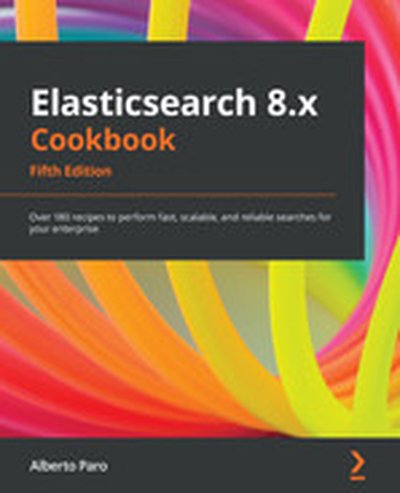
"Elasticsearch 8.x Cookbook" is your go-to resource for harnessing the full potential of Elasticsearch 8. This book provides over 180 hands-on recipes to help you efficiently implement, customize, and scale Elasticsearch solutions in your enterprise. Whether you're handling complex queries, analytics, or cluster management, you'll find practical insights to enhance your capabilities. What this Book will help me do Understand the advanced features of Elasticsearch 8.x, including X-Pack, for improving functionality and security. Master advanced indexing and query techniques to perform efficient and scalable data operations. Implement and manage Elasticsearch clusters effectively including monitoring performance via Kibana. Integrate Elasticsearch seamlessly into Java, Scala, Python, and big data environments. Develop custom plugins and extend Elasticsearch to meet unique project requirements. Author(s) Alberto Paro is a seasoned Elasticsearch expert with years of experience in search technologies and enterprise solution development. As a professional developer and consultant, he has worked with numerous organizations to implement Elasticsearch at scale. Alberto brings his deep technical knowledge and hands-on approach to this book, ensuring readers gain practical insights and skills. Who is it for? This book is perfect for software engineers, data professionals, and developers working with Elasticsearch in enterprise environments. If you're seeking to advance your Elasticsearch knowledge, enhance your query-writing abilities, or seek to integrate it into big data workflows, this book will be invaluable. Regardless of whether you're deploying Elasticsearch in e-commerce, applications, or for analytics, you'll find the content purposeful and engaging.
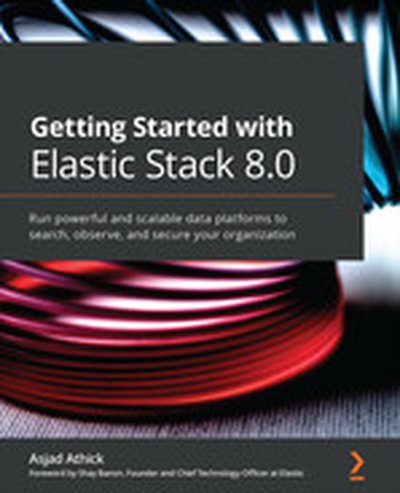
Discover how to harness the power of the Elastic Stack 8.0 to manage, analyze, and secure complex data environments. You will learn to combine components such as Elasticsearch, Kibana, Logstash, and more to build scalable and effective solutions for your organization. By focusing on hands-on implementations, this book ensures you can apply your knowledge to real-world use cases. What this Book will help me do Set up and manage Elasticsearch clusters tailored to various architecture scenarios. Utilize Logstash and Elastic Agent to ingest and process diverse data sources efficiently. Create interactive dashboards and data models in Kibana, enabling business intelligence insights. Implement secure and effective search infrastructures for enterprise applications. Deploy Elastic SIEM to fortify your organization's security against modern cybersecurity threats. Author(s) Asjad Athick is a seasoned technologist and author with expertise in developing scalable data solutions. With years of experience working with the Elastic Stack, Asjad brings a pragmatic approach to teaching complex architectures. His dedication to explaining technical concepts in an accessible manner makes this book a valuable resource for learners. Who is it for? This book is ideal for developers seeking practical knowledge in search, observability, and security solutions using Elastic Stack. Solutions architects who aim to design scalable data platforms will also benefit greatly. Even tech leads or managers keen to understand the Elastic Stack's impact on their operations will find the insights valuable. No prior experience with Elastic Stack is needed.
Dive deep into the advanced capabilities of Elasticsearch 7.0 with this expert-level guide. In this book, you will explore the most effective techniques and tools for building, indexing, and querying advanced distributed search engines. Whether optimizing performance, scaling applications, or integrating with big data analytics, this guide empowers you with practical skills and insights. What this Book will help me do Master ingestion pipelines and preprocess documents for faster and more efficient indexing. Model search data optimally for complex and varied real-world applications. Perform exploratory data analyses using Elasticsearch's robust features. Integrate Elasticsearch with modern analytics platforms like Kibana and Logstash. Leverage Elasticsearch with Apache Spark and machine learning libraries for real-time advanced analytics. Author(s) None Wong is a seasoned Elasticsearch expert with years of real-world experience developing enterprise-grade search and analytics systems. With a passion for innovation and teaching, Wong enjoys breaking down complex technical concepts into digestible learning experiences. His work reflects a pragmatic and results-driven approach to teaching Elasticsearch. Who is it for? This book is ideal for Elasticsearch developers and data engineers with some prior experience who are looking to elevate their skills to an advanced level. It suits professionals seeking to enhance their expertise in building scalable search and analytics solutions. If you aim to master sophisticated Elasticsearch operations and real-time integrations, this book is tailored for you.
"Learning Elastic Stack 7.0" introduces you to the tools and techniques of Elastic Stack, covering Elasticsearch, Logstash, Beats, and Kibana. With clear explanations and practical examples, this book helps you grasp the 7.0 version's new features and capabilities, empowering you to build and deploy robust, real-time data processing applications. What this Book will help me do Gain the necessary skills to install and configure Elastic Stack for professional use. Master the data handling capabilities of Elasticsearch for distributed search and analytics. Develop expertise in creating data pipelines with Logstash and other ingestion tools. Learn to utilize Kibana to visualize and interpret complex datasets. Acquire knowledge of deploying Elastic Stack solutions both on-premise and in cloud environments. Author(s) Pranav Shukla and Sharath Kumar M N are experienced software engineers and data professionals with a profound knowledge of databases, distributed systems, and cloud architectures. They specialize in educating developers through structured guidance and proven methodologies related to data handling and visualization. Who is it for? This book is designed for software engineers, data analysts, and technical architects interested in learning the Elastic Stack tools from the ground up. Readers familiar with database concepts but new to Elastic Stack will find this book particularly helpful. Advanced users seeking to understand the updates in Elastic Stack 7.0 are also a complementary audience. If you wish to apply Elastic Stack to real-time data processing and analytics, this book provides a strong foundation.

Dive into the world of Kibana 7 with this hands-on guide that simplifies the process of visualizing and analyzing data using Elasticsearch. From fundamental concepts to advanced tools, this book enables you to create intuitive dashboards and leverage powerful machine learning capabilities effectively. Discover how to transform your data into actionable insights with ease. What this Book will help me do Configure Logstash to fetch and process CSV data for visualization. Master creating and managing index patterns within Kibana for efficient data navigation. Effectively apply filters to refine data presentations and insights. Develop and utilize machine learning jobs in Kibana to identify trends and anomalies. Create, customize, and share impactful visualizations and dashboards to drive data-driven decisions. Author(s) None Srivastava is a technical expert in data visualization and Elasticsearch tools, with practical experience implementing and teaching about the Elastic Stack. The author brings a hands-on approach to this book, simplifying complex concepts for ease of understanding. Their expertise ensures that the book serves both as a learning guide and a practical reference. Who is it for? This book is ideal for developers and IT professionals who are either new to Kibana or looking to deepen their understanding of its visualization capabilities. It is suitable for individuals working with the Elastic Stack or seeking to leverage Kibana for data analysis purposes. Even if you are progressing from a novice to an intermediate level, this guide will provide future-proof skills to optimize your workflow.
Mastering Kibana 6.x is your guide to leveraging Kibana for creating impactful data visualizations and insightful dashboards. From setting up basic visualizations to exploring advanced analytics and machine learning integrations, this book equips you with the necessary skills to dive deep into your data and gain actionable insights at scale. You'll also learn to effectively manage and monitor data with powerful tools such as X-Pack and Beats. What this Book will help me do Build sophisticated dashboards to visualize elastic stack data effectively. Understand and utilize Timelion expressions for analyzing time series data. Incorporate X-Pack capabilities to enhance security and monitoring in Kibana. Extract, analyze, and visualize data from Elasticsearch for advanced analytics. Set up monitoring and alerting using Beats components for reliable data operations. Author(s) With extensive experience in big data technologies, the author brings a practical approach to teaching advanced Kibana topics. Having worked on real-world data analytics projects, their aim is to make complex concepts accessible while showing how to tackle analytics challenges using Kibana. Who is it for? This book is ideal for data engineers, DevOps professionals, and data scientists who want to optimize large-scale data visualizations. If you're looking to manage Elasticsearch data through insightful dashboards and visual analytics, or enhance your data operations with features like machine learning, then this book is perfect for you. A basic understanding of the Elastic Stack is helpful, though not required.
Summary
Data integration and routing is a constantly evolving problem and one that is fraught with edge cases and complicated requirements. The Apache NiFi project models this problem as a collection of data flows that are created through a self-service graphical interface. This framework provides a flexible platform for building a wide variety of integrations that can be managed and scaled easily to fit your particular needs. In this episode project members Kevin Doran and Andy LoPresto discuss the ways that NiFi can be used, how to start using it in your environment, and plans for future development. They also explained how it fits in the broad landscape of data tools, the interesting and challenging aspects of the project, and how to build new extensions.
Preamble
Hello and welcome to the Data Engineering Podcast, the show about modern data management When you’re ready to build your next pipeline you’ll need somewhere to deploy it, so check out Linode. With private networking, shared block storage, node balancers, and a 40Gbit network, all controlled by a brand new API you’ve got everything you need to run a bullet-proof data platform. Go to dataengineeringpodcast.com/linode to get a $20 credit and launch a new server in under a minute. Are you struggling to keep up with customer request and letting errors slip into production? Want to try some of the innovative ideas in this podcast but don’t have time? DataKitchen’s DataOps software allows your team to quickly iterate and deploy pipelines of code, models, and data sets while improving quality. Unlike a patchwork of manual operations, DataKitchen makes your team shine by providing an end to end DataOps solution with minimal programming that uses the tools you love. Join the DataOps movement and sign up for the newsletter at datakitchen.io/de today. After that learn more about why you should be doing DataOps by listening to the Head Chef in the Data Kitchen at dataengineeringpodcast.com/datakitchen Go to dataengineeringpodcast.com to subscribe to the show, sign up for the mailing list, read the show notes, and get in touch. Your host is Tobias Macey and today I’m interviewing Kevin Doran and Andy LoPresto about Apache NiFi
Interview
Introduction How did you get involved in the area of data management? Can you start by explaining what NiFi is? What is the motivation for building a GUI as the primary interface for the tool when the current trend is to represent everything as code? How did you get involved with the project?
Where does it sit in the broader landscape of data tools?
Does the data that is processed by NiFi flow through the servers that it is running on (á la Spark/Flink/Kafka), or does it orchestrate actions on other systems (á la Airflow/Oozie)?
How do you manage versioning and backup of data flows, as well as promoting them between environments?
One of the advertised features is tracking provenance for data flows that are managed by NiFi. How is that data collected and managed?
What types of reporting are available across this information?
What are some of the use cases or requirements that lend themselves well to being solved by NiFi?
When is NiFi the wrong choice?
What is involved in deploying and scaling a NiFi installation?
What are some of the system/network parameters that should be considered? What are the scaling limitations?
What have you found to be some of the most interesting, unexpected, and/or challenging aspects of building and maintaining the NiFi project and community? What do you have planned for the future of NiFi?
Contact Info
Kevin Doran
@kevdoran on Twitter Email
Andy LoPresto
@yolopey on Twitter Email
Parting Question
From your perspective, what is the biggest gap in the tooling or technology for data management today?
Links
NiFi HortonWorks DataFlow HortonWorks Apache Software Foundation Apple CSV XML JSON Perl Python Internet Scale Asset Management Documentum DataFlow NSA (National Security Agency) 24 (TV Show) Technology Transfer Program Agile Software Development Waterfall Spark Flink Kafka Oozie Luigi Airflow FluentD ETL (Extract, Transform, and Load) ESB (Enterprise Service Bus) MiNiFi Java C++ Provenance Kubernetes Apache Atlas Data Governance Kibana K-Nearest Neighbors DevOps DSL (Domain Specific Language) NiFi Registry Artifact Repository Nexus NiFi CLI Maven Archetype IoT Docker Backpressure NiFi Wiki TLS (Transport Layer Security) Mozilla TLS Observatory NiFi Flow Design System Data Lineage GDPR (General Data Protection Regulation)
The intro and outro music is from The Hug by The Freak Fandango Orchestra / CC BY-SA Support Data Engineering Podcast
Summary
Search is a common requirement for applications of all varieties. Elasticsearch was built to make it easy to include search functionality in projects built in any language. From that foundation, the rest of the Elastic Stack has been built, expanding to many more use cases in the proces. In this episode Philipp Krenn describes the various pieces of the stack, how they fit together, and how you can use them in your infrastructure to store, search, and analyze your data.
Preamble
Hello and welcome to the Data Engineering Podcast, the show about modern data management When you’re ready to build your next pipeline you’ll need somewhere to deploy it, so check out Linode. With private networking, shared block storage, node balancers, and a 40Gbit network, all controlled by a brand new API you’ve got everything you need to run a bullet-proof data platform. Go to dataengineeringpodcast.com/linode to get a $20 credit and launch a new server in under a minute. For complete visibility into the health of your pipeline, including deployment tracking, and powerful alerting driven by machine-learning, DataDog has got you covered. With their monitoring, metrics, and log collection agent, including extensive integrations and distributed tracing, you’ll have everything you need to find and fix performance bottlenecks in no time. Go to dataengineeringpodcast.com/datadog today to start your free 14 day trial and get a sweet new T-Shirt. Go to dataengineeringpodcast.com to subscribe to the show, sign up for the newsletter, read the show notes, and get in touch. Your host is Tobias Macey and today I’m interviewing Philipp Krenn about the Elastic Stack and the ways that you can use it in your systems
Interview
Introduction How did you get involved in the area of data management? The Elasticsearch product has been around for a long time and is widely known, but can you give a brief overview of the other components that make up the Elastic Stack and how they work together? Beyond the common pattern of using Elasticsearch as a search engine connected to a web application, what are some of the other use cases for the various pieces of the stack? What are the common scaling bottlenecks that users should be aware of when they are dealing with large volumes of data? What do you consider to be the biggest competition to the Elastic Stack as you expand the capabilities and target usage patterns? What are the biggest challenges that you are tackling in the Elastic stack, technical or otherwise? What are the biggest challenges facing Elastic as a company in the near to medium term? Open source as a business model: https://www.elastic.co/blog/doubling-down-on-open?utm_source=rss&utm_medium=rss What is the vision for Elastic and the Elastic Stack going forward and what new features or functionality can we look forward to?
Contact Info
@xeraa on Twitter xeraa on GitHub Website Email
Parting Question
From your perspective, what is the biggest gap in the tooling or technology for data management today?
Links
Elastic Vienna – Capital of Austria What Is Developer Advocacy? NoSQL MongoDB Elasticsearch Cassandra Neo4J Hazelcast Apache Lucene Logstash Kibana Beats X-Pack ELK Stack Metrics APM (Application Performance Monitoring) GeoJSON Split Brain Elasticsearch Ingest Nodes PacketBeat Elastic Cloud Elasticon Kibana Canvas SwiftType
The intro and outro music is from The Hug by The Freak Fandango Orchestra / CC BY-SA Support Data Engineering Podcast
Learn how to harness the power of the Elastic Stack 6.0 to manage, analyze, and visualize data effectively. This book introduces you to Elasticsearch, Logstash, Kibana, and other components, helping you build scalable, real-time data processing solutions from scratch. By reading this guide, you'll gain practical insights into the platform's components, including tips for production deployment. What this Book will help me do Understand and utilize the core components of Elastic Stack 6.0, including Elasticsearch, Logstash, and Kibana. Set up scalable data pipelines for ingesting and processing vast amounts of data. Craft real-time data visualizations and analytics using Kibana. Secure and monitor Elastic Stack deployments with X-Pack and other related tools. Deploy Elastic Stack applications effectively in cloud or on-premise production environments. Author(s) Pranav Shukla and Sharath Kumar are experienced professionals with deep knowledge in distributed data systems and the Elastic Stack ecosystem. They are passionate about data analytics and visualization and bring their hands-on experience in building real-world Elastic Stack applications into this book. Their practical approach and explanatory style make complex concepts accessible to readers at all levels. Who is it for? This book is perfect for data professionals who want to analyze large datasets or create effective real-time visualizations. It is suited for those new to Elastic Stack or looking to understand its capabilities. Basic JSON knowledge is recommended, but no prior expertise with Elastic Stack is required to benefit from this practical guide.
This comprehensive guide to Elasticsearch will teach you how to build robust and scalable search and analytics applications using Elasticsearch 5.x. You will learn the fundamentals of Elasticsearch, including its APIs and tools, and how to apply them to real-world problems. By the end of the book, you will have a solid grasp of Elasticsearch and be ready to implement your own solutions. What this Book will help me do Master the setup and configuration of Elasticsearch and Kibana. Learn to efficiently query and analyze both structured and unstructured data. Understand how to use Elasticsearch aggregations to perform advanced analytics. Gain knowledge of advanced search features including geospatial queries and autocomplete. Explore the Elastic Stack and learn deployment best practices and cloud hosting options. Author(s) None Andhavarapu is an expert in database technology and distributed systems, with years of experience in Elasticsearch. Their passion for search technologies is reflected in their clear and practical teaching style. They've written this guide to help developers of all levels get up to speed with Elasticsearch quickly and comprehensively. Who is it for? This book is perfect for software developers looking to implement effective search and analytics solutions. It's ideal for those who are new to Elasticsearch as well as for professionals familiar with other search tools like Lucene or Solr. The book assumes basic programming knowledge but no prior experience with Elasticsearch.
Mastering Elastic Stack is your complete guide to advancing your data analytics expertise using the ELK Stack. With detailed coverage of Elasticsearch, Logstash, Kibana, Beats, and X-Pack, this book equips you with the skills to process and analyze any type of data efficiently. Through practical examples and real-world scenarios, you'll gain the ability to build end-to-end pipelines and create insightful dashboards. What this Book will help me do Build and manage log pipelines using Logstash, Beats, and Elasticsearch for real-time analytics. Develop advanced Kibana dashboards to visualize and interpret complex datasets. Efficiently utilize X-Pack features for alerting, monitoring, and security in the Elastic Stack. Master plugin customization and deployment for a tailored Elastic Stack environment. Apply Elastic Stack solutions to real-world cases for centralized logging and actionable insights. Author(s) The authors, None Kumar Gupta and None Gupta, are experienced technologists who have spent years working at the forefront of data processing and analytics. They are well-versed in Elasticsearch, Logstash, Kibana, and the Elastic ecosystem, having worked extensively in enterprise environments where these tools have transformed operations. Their passion for teaching and thorough understanding of the tools culminate in this comprehensive resource. Who is it for? The ideal reader is a developer already familiar with Elasticsearch, Logstash, and Kibana who wants to deepen their understanding of the stack. If you're involved in creating scalable data pipelines, analyzing complex datasets, or looking to implement centralized logging solutions in your work, this book is an excellent resource. It bridges the gap from intermediate to expert knowledge, allowing you to use the Elastic Stack effectively in various scenarios. Whether you are transitioning from a beginner or enhancing your skill set, this book meets your needs.
Learning Kibana 5.0 is your gateway to mastering the art of data visualization using the powerful features of the Kibana platform. This book guides you through the process of creating stunning interactive dashboards and making data-driven insights accessible with real-time visualizations. Whether you're new to the Elastic stack or seeking to refine your expertise, this book equips you to harness Kibana's full potential. What this Book will help me do Build robust, real-time dashboards in Kibana to visualize complex datasets efficiently. Leverage Timelion to perform time-series data analysis and create metrics-based dashboards. Explore advanced analytics using the Graph plugin to uncover relationships and correlations in data. Learn how to create and deploy custom plugins to tailor Kibana to specific project needs. Understand how to use the Elastic stack to monitor, analyze, and optimize various types of data flows. Author(s) Bahaaldine Azarmi is a seasoned expert in the Elastic stack, known for his dedication to making complex technical topics approachable and practical. With years of experience in data analytics and software development, Bahaaldine shares not only his technical expertise but also his passion for helping professionals achieve their goals through clear, actionable guidance. His writing emphasizes hands-on learning and practical application. Who is it for? This book is perfect for developers, data visualization engineers, and data scientists who aim to hone their skills in data visualization and interactive dashboard development. It assumes a basic understanding of Elasticsearch and Logstash to maximize its practicality. If you aim to advance your career by learning how to optimize data architecture and solve real-world problems using the Elastic stack, this book is ideal for you.