talk-data.com talk-data.com

Topic

Logstash

log_processing data_processing elk_stack

15

tagged

Activity Trend

1 peak/qtr
2020-Q1 2026-Q1

Activities

15 activities · Newest first

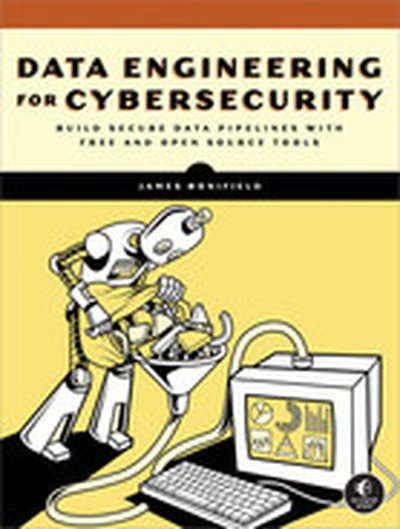
Data Engineering for Cybersecurity

Security teams rely on telemetry—the continuous stream of logs, events, metrics, and signals that reveal what’s happening across systems, endpoints, and cloud services. But that data doesn’t organize itself. It has to be collected, normalized, enriched, and secured before it becomes useful. That’s where data engineering comes in. In this hands-on guide, cybersecurity engineer James Bonifield teaches you how to design and build scalable, secure data pipelines using free, open source tools such as Filebeat, Logstash, Redis, Kafka, and Elasticsearch and more. You’ll learn how to collect telemetry from Windows including Sysmon and PowerShell events, Linux files and syslog, and streaming data from network and security appliances. You’ll then transform it into structured formats, secure it in transit, and automate your deployments using Ansible. You’ll also learn how to: Encrypt and secure data in transit using TLS and SSH Centrally manage code and configuration files using Git Transform messy logs into structured events Enrich data with threat intelligence using Redis and Memcached Stream and centralize data at scale with Kafka Automate with Ansible for repeatable deployments Whether you’re building a pipeline on a tight budget or deploying an enterprise-scale system, this book shows you how to centralize your security data, support real-time detection, and lay the groundwork for incident response and long-term forensics.

Elastic Stack 8.x Cookbook

Unlock the potential of the Elastic Stack with the "Elastic Stack 8.x Cookbook." This book provides over 80 hands-on recipes, guiding you through ingesting, processing, and visualizing data using Elasticsearch, Logstash, Kibana, and more. You'll also explore advanced features like machine learning and observability to create data-driven applications with ease. What this Book will help me do Implement a robust workflow for ingesting, transforming, and visualizing diverse datasets. Utilize Kibana to create insightful dashboards and visual analytics. Leverage Elastic Stack's AI capabilities, such as natural language processing and machine learning. Develop search solutions and integrate advanced features like vector search. Monitor and optimize your Elastic Stack deployments for performance and security. Author(s) Huage Chen and Yazid Akadiri are experienced professionals in the field of Elastic Stack. They bring years of practical experience in data engineering, observability, and software development. Huage and Yazid aim to provide a clear, practical pathway for both beginners and experienced users to get the most out of the Elastic Stack's capabilities. Who is it for? This book is perfect for developers, data engineers, and observability practitioners looking to harness the power of Elastic Stack. It caters to both beginners and experts, providing clear instructions to help readers understand and implement powerful data solutions. If you're working with search applications, data analysis, or system observability, this book is an ideal resource.

David Pilato: Enriching Postal Addresses With Elastic Stack

Discover the power of enriching postal addresses with the Elastic Stack in this live coding session led by David Pilato. 🌍🛠️ Learn how to transform poorly formatted addresses into valuable location data and vice versa using Elasticsearch, Logstash, and Kibana, with a special emphasis on Elasticsearch's ingest pipelines. Don't miss out on unlocking the potential to map customer locations and enhance your data systems!📍📈 #ElasticStack #AddressEnrichment

✨ H I G H L I G H T S ✨

🙌 A huge shoutout to all the incredible participants who made Big Data Conference Europe 2023 in Vilnius, Lithuania, from November 21-24, an absolute triumph! 🎉 Your attendance and active participation were instrumental in making this event so special. 🌍

Don't forget to check out the session recordings from the conference to relive the valuable insights and knowledge shared! 📽️

Once again, THANK YOU for playing a pivotal role in the success of Big Data Conference Europe 2023. 🚀 See you next year for another unforgettable conference! 📅 #BigDataConference #SeeYouNextYear

Real-Time analytics with open-source connectors in MS Fabric | OD46

This session focuses on the use of open-source connectors to enable real-time analytics in Microsoft Fabric and will cover the use of connectors such as Apache Kafka, Apache Flink, Apache Spark, Open Telemetry, Logstash etc. to ingest and process data in real-time. Attendees will learn how to analyze data ingested via open-source connectors to generate insights.

𝗦𝗽𝗲𝗮𝗸𝗲𝗿𝘀: * Akshay Dixit

𝗦𝗲𝘀𝘀𝗶𝗼𝗻 𝗜𝗻𝗳𝗼𝗿𝗺𝗮𝘁𝗶𝗼𝗻: This video is one of many sessions delivered for the Microsoft Ignite 2023 event. View sessions on-demand and learn more about Microsoft Ignite at https://ignite.microsoft.com

OD46 | English (US) | Data

MSIgnite

Getting Started with Elastic Stack 8.0

Discover how to harness the power of the Elastic Stack 8.0 to manage, analyze, and secure complex data environments. You will learn to combine components such as Elasticsearch, Kibana, Logstash, and more to build scalable and effective solutions for your organization. By focusing on hands-on implementations, this book ensures you can apply your knowledge to real-world use cases. What this Book will help me do Set up and manage Elasticsearch clusters tailored to various architecture scenarios. Utilize Logstash and Elastic Agent to ingest and process diverse data sources efficiently. Create interactive dashboards and data models in Kibana, enabling business intelligence insights. Implement secure and effective search infrastructures for enterprise applications. Deploy Elastic SIEM to fortify your organization's security against modern cybersecurity threats. Author(s) Asjad Athick is a seasoned technologist and author with expertise in developing scalable data solutions. With years of experience working with the Elastic Stack, Asjad brings a pragmatic approach to teaching complex architectures. His dedication to explaining technical concepts in an accessible manner makes this book a valuable resource for learners. Who is it for? This book is ideal for developers seeking practical knowledge in search, observability, and security solutions using Elastic Stack. Solutions architects who aim to design scalable data platforms will also benefit greatly. Even tech leads or managers keen to understand the Elastic Stack's impact on their operations will find the insights valuable. No prior experience with Elastic Stack is needed.

Advanced Elasticsearch 7.0

Dive deep into the advanced capabilities of Elasticsearch 7.0 with this expert-level guide. In this book, you will explore the most effective techniques and tools for building, indexing, and querying advanced distributed search engines. Whether optimizing performance, scaling applications, or integrating with big data analytics, this guide empowers you with practical skills and insights. What this Book will help me do Master ingestion pipelines and preprocess documents for faster and more efficient indexing. Model search data optimally for complex and varied real-world applications. Perform exploratory data analyses using Elasticsearch's robust features. Integrate Elasticsearch with modern analytics platforms like Kibana and Logstash. Leverage Elasticsearch with Apache Spark and machine learning libraries for real-time advanced analytics. Author(s) None Wong is a seasoned Elasticsearch expert with years of real-world experience developing enterprise-grade search and analytics systems. With a passion for innovation and teaching, Wong enjoys breaking down complex technical concepts into digestible learning experiences. His work reflects a pragmatic and results-driven approach to teaching Elasticsearch. Who is it for? This book is ideal for Elasticsearch developers and data engineers with some prior experience who are looking to elevate their skills to an advanced level. It suits professionals seeking to enhance their expertise in building scalable search and analytics solutions. If you aim to master sophisticated Elasticsearch operations and real-time integrations, this book is tailored for you.

Learning Elastic Stack 7.0 - Second Edition

"Learning Elastic Stack 7.0" introduces you to the tools and techniques of Elastic Stack, covering Elasticsearch, Logstash, Beats, and Kibana. With clear explanations and practical examples, this book helps you grasp the 7.0 version's new features and capabilities, empowering you to build and deploy robust, real-time data processing applications. What this Book will help me do Gain the necessary skills to install and configure Elastic Stack for professional use. Master the data handling capabilities of Elasticsearch for distributed search and analytics. Develop expertise in creating data pipelines with Logstash and other ingestion tools. Learn to utilize Kibana to visualize and interpret complex datasets. Acquire knowledge of deploying Elastic Stack solutions both on-premise and in cloud environments. Author(s) Pranav Shukla and Sharath Kumar M N are experienced software engineers and data professionals with a profound knowledge of databases, distributed systems, and cloud architectures. They specialize in educating developers through structured guidance and proven methodologies related to data handling and visualization. Who is it for? This book is designed for software engineers, data analysts, and technical architects interested in learning the Elastic Stack tools from the ground up. Readers familiar with database concepts but new to Elastic Stack will find this book particularly helpful. Advanced users seeking to understand the updates in Elastic Stack 7.0 are also a complementary audience. If you wish to apply Elastic Stack to real-time data processing and analytics, this book provides a strong foundation.

Kibana 7 Quick Start Guide

Dive into the world of Kibana 7 with this hands-on guide that simplifies the process of visualizing and analyzing data using Elasticsearch. From fundamental concepts to advanced tools, this book enables you to create intuitive dashboards and leverage powerful machine learning capabilities effectively. Discover how to transform your data into actionable insights with ease. What this Book will help me do Configure Logstash to fetch and process CSV data for visualization. Master creating and managing index patterns within Kibana for efficient data navigation. Effectively apply filters to refine data presentations and insights. Develop and utilize machine learning jobs in Kibana to identify trends and anomalies. Create, customize, and share impactful visualizations and dashboards to drive data-driven decisions. Author(s) None Srivastava is a technical expert in data visualization and Elasticsearch tools, with practical experience implementing and teaching about the Elastic Stack. The author brings a hands-on approach to this book, simplifying complex concepts for ease of understanding. Their expertise ensures that the book serves both as a learning guide and a practical reference. Who is it for? This book is ideal for developers and IT professionals who are either new to Kibana or looking to deepen their understanding of its visualization capabilities. It is suitable for individuals working with the Elastic Stack or seeking to leverage Kibana for data analysis purposes. Even if you are progressing from a novice to an intermediate level, this guide will provide future-proof skills to optimize your workflow.

Summary

Search is a common requirement for applications of all varieties. Elasticsearch was built to make it easy to include search functionality in projects built in any language. From that foundation, the rest of the Elastic Stack has been built, expanding to many more use cases in the proces. In this episode Philipp Krenn describes the various pieces of the stack, how they fit together, and how you can use them in your infrastructure to store, search, and analyze your data.

Preamble

Hello and welcome to the Data Engineering Podcast, the show about modern data management When you’re ready to build your next pipeline you’ll need somewhere to deploy it, so check out Linode. With private networking, shared block storage, node balancers, and a 40Gbit network, all controlled by a brand new API you’ve got everything you need to run a bullet-proof data platform. Go to dataengineeringpodcast.com/linode to get a $20 credit and launch a new server in under a minute. For complete visibility into the health of your pipeline, including deployment tracking, and powerful alerting driven by machine-learning, DataDog has got you covered. With their monitoring, metrics, and log collection agent, including extensive integrations and distributed tracing, you’ll have everything you need to find and fix performance bottlenecks in no time. Go to dataengineeringpodcast.com/datadog today to start your free 14 day trial and get a sweet new T-Shirt. Go to dataengineeringpodcast.com to subscribe to the show, sign up for the newsletter, read the show notes, and get in touch. Your host is Tobias Macey and today I’m interviewing Philipp Krenn about the Elastic Stack and the ways that you can use it in your systems

Interview

Introduction How did you get involved in the area of data management? The Elasticsearch product has been around for a long time and is widely known, but can you give a brief overview of the other components that make up the Elastic Stack and how they work together? Beyond the common pattern of using Elasticsearch as a search engine connected to a web application, what are some of the other use cases for the various pieces of the stack? What are the common scaling bottlenecks that users should be aware of when they are dealing with large volumes of data? What do you consider to be the biggest competition to the Elastic Stack as you expand the capabilities and target usage patterns? What are the biggest challenges that you are tackling in the Elastic stack, technical or otherwise? What are the biggest challenges facing Elastic as a company in the near to medium term? Open source as a business model: https://www.elastic.co/blog/doubling-down-on-open?utm_source=rss&utm_medium=rss What is the vision for Elastic and the Elastic Stack going forward and what new features or functionality can we look forward to?

Contact Info

@xeraa on Twitter xeraa on GitHub Website Email

Parting Question

From your perspective, what is the biggest gap in the tooling or technology for data management today?

Links

Elastic Vienna – Capital of Austria What Is Developer Advocacy? NoSQL MongoDB Elasticsearch Cassandra Neo4J Hazelcast Apache Lucene Logstash Kibana Beats X-Pack ELK Stack Metrics APM (Application Performance Monitoring) GeoJSON Split Brain Elasticsearch Ingest Nodes PacketBeat Elastic Cloud Elasticon Kibana Canvas SwiftType

The intro and outro music is from The Hug by The Freak Fandango Orchestra / CC BY-SA Support Data Engineering Podcast

Learning Elastic Stack 6.0

Learn how to harness the power of the Elastic Stack 6.0 to manage, analyze, and visualize data effectively. This book introduces you to Elasticsearch, Logstash, Kibana, and other components, helping you build scalable, real-time data processing solutions from scratch. By reading this guide, you'll gain practical insights into the platform's components, including tips for production deployment. What this Book will help me do Understand and utilize the core components of Elastic Stack 6.0, including Elasticsearch, Logstash, and Kibana. Set up scalable data pipelines for ingesting and processing vast amounts of data. Craft real-time data visualizations and analytics using Kibana. Secure and monitor Elastic Stack deployments with X-Pack and other related tools. Deploy Elastic Stack applications effectively in cloud or on-premise production environments. Author(s) Pranav Shukla and Sharath Kumar are experienced professionals with deep knowledge in distributed data systems and the Elastic Stack ecosystem. They are passionate about data analytics and visualization and bring their hands-on experience in building real-world Elastic Stack applications into this book. Their practical approach and explanatory style make complex concepts accessible to readers at all levels. Who is it for? This book is perfect for data professionals who want to analyze large datasets or create effective real-time visualizations. It is suited for those new to Elastic Stack or looking to understand its capabilities. Basic JSON knowledge is recommended, but no prior expertise with Elastic Stack is required to benefit from this practical guide.

Mastering Elastic Stack

Mastering Elastic Stack is your complete guide to advancing your data analytics expertise using the ELK Stack. With detailed coverage of Elasticsearch, Logstash, Kibana, Beats, and X-Pack, this book equips you with the skills to process and analyze any type of data efficiently. Through practical examples and real-world scenarios, you'll gain the ability to build end-to-end pipelines and create insightful dashboards. What this Book will help me do Build and manage log pipelines using Logstash, Beats, and Elasticsearch for real-time analytics. Develop advanced Kibana dashboards to visualize and interpret complex datasets. Efficiently utilize X-Pack features for alerting, monitoring, and security in the Elastic Stack. Master plugin customization and deployment for a tailored Elastic Stack environment. Apply Elastic Stack solutions to real-world cases for centralized logging and actionable insights. Author(s) The authors, None Kumar Gupta and None Gupta, are experienced technologists who have spent years working at the forefront of data processing and analytics. They are well-versed in Elasticsearch, Logstash, Kibana, and the Elastic ecosystem, having worked extensively in enterprise environments where these tools have transformed operations. Their passion for teaching and thorough understanding of the tools culminate in this comprehensive resource. Who is it for? The ideal reader is a developer already familiar with Elasticsearch, Logstash, and Kibana who wants to deepen their understanding of the stack. If you're involved in creating scalable data pipelines, analyzing complex datasets, or looking to implement centralized logging solutions in your work, this book is an excellent resource. It bridges the gap from intermediate to expert knowledge, allowing you to use the Elastic Stack effectively in various scenarios. Whether you are transitioning from a beginner or enhancing your skill set, this book meets your needs.

Learning Kibana 5.0

Learning Kibana 5.0 is your gateway to mastering the art of data visualization using the powerful features of the Kibana platform. This book guides you through the process of creating stunning interactive dashboards and making data-driven insights accessible with real-time visualizations. Whether you're new to the Elastic stack or seeking to refine your expertise, this book equips you to harness Kibana's full potential. What this Book will help me do Build robust, real-time dashboards in Kibana to visualize complex datasets efficiently. Leverage Timelion to perform time-series data analysis and create metrics-based dashboards. Explore advanced analytics using the Graph plugin to uncover relationships and correlations in data. Learn how to create and deploy custom plugins to tailor Kibana to specific project needs. Understand how to use the Elastic stack to monitor, analyze, and optimize various types of data flows. Author(s) Bahaaldine Azarmi is a seasoned expert in the Elastic stack, known for his dedication to making complex technical topics approachable and practical. With years of experience in data analytics and software development, Bahaaldine shares not only his technical expertise but also his passion for helping professionals achieve their goals through clear, actionable guidance. His writing emphasizes hands-on learning and practical application. Who is it for? This book is perfect for developers, data visualization engineers, and data scientists who aim to hone their skills in data visualization and interactive dashboard development. It assumes a basic understanding of Elasticsearch and Logstash to maximize its practicality. If you aim to advance your career by learning how to optimize data architecture and solve real-world problems using the Elastic stack, this book is ideal for you.

Beginning Elastic Stack

Learn how to install, configure and implement the Elastic Stack (Elasticsearch, Logstash and Kibana) – the invaluable tool for anyone deploying a centralized log management solution for servers and apps. You will see how to use and configure Elastic Stack independently and alongside Puppet. Each chapter includes real-world examples and practical troubleshooting tips, enabling you to get up and running with Elastic Stack in record time. Fully customizable and easy to use, Elastic Stack enables you to be on top of your servers all the time, and resolve problems for your clients as fast as possible. Supported by Puppet and available with various plugins. Get started with Beginning Elastic Stack today and see why many consider Elastic Stack the best option for server log management. What You Will Learn: Install and configure Logstash Use Logstash with Elasticsearch and Kibana Use Logstash with Puppet and Foreman Centralize data processing Who This Book Is For: Anyone working on multiple servers who needs to search their logs using a web interface. It is ideal for server administrators who have just started their job and need to look after multiple servers efficiently.

Scalable Big Data Architecture: A Practitioner’s Guide to Choosing Relevant Big Data Architecture

This book highlights the different types of data architecture and illustrates the many possibilities hidden behind the term "Big Data", from the usage of No-SQL databases to the deployment of stream analytics architecture, machine learning, and governance. Scalable Big Data Architecture covers real-world, concrete industry use cases that leverage complex distributed applications , which involve web applications, RESTful API, and high throughput of large amount of data stored in highly scalable No-SQL data stores such as Couchbase and Elasticsearch. This book demonstrates how data processing can be done at scale from the usage of NoSQL datastores to the combination of Big Data distribution. When the data processing is too complex and involves different processing topology like long running jobs, stream processing, multiple data sources correlation, and machine learning, it’s often necessary to delegate the load to Hadoop or Spark and use the No-SQL to serve processed data in real time. This book shows you how to choose a relevant combination of big data technologies available within the Hadoop ecosystem. It focuses on processing long jobs, architecture, stream data patterns, log analysis, and real time analytics. Every pattern is illustrated with practical examples, which use the different open sourceprojects such as Logstash, Spark, Kafka, and so on. Traditional data infrastructures are built for digesting and rendering data synthesis and analytics from large amount of data. This book helps you to understand why you should consider using machine learning algorithms early on in the project, before being overwhelmed by constraints imposed by dealing with the high throughput of Big data. Scalable Big Data Architecture is for developers, data architects, and data scientists looking for a better understanding of how to choose the most relevant pattern for a Big Data project and which tools to integrate into that pattern.

Learning ELK Stack

Dive into the ELK stack-Elasticsearch, Logstash, and Kibana-with this comprehensive guide. Designed to help you set up, configure, and utilize the stack to its fullest, this book provides you with the skills to manage data with precision, enrich logs, and create meaningful analytics. Develop an entire data pipeline and cultivate powerful visual insights from your data. What this Book will help me do Install and configure Elasticsearch, Logstash, and Kibana to establish a robust ELK stack setup. Understand the role of each component in the stack and master the basics of log analysis. Create custom Logstash plugins to handle non-standard data processing requirements. Develop interactive and insightful data visualizations and dashboards using Kibana. Implement a complete data pipeline and gain expertise in data indexing, searching, and reporting. Author(s) None Chhajed brings depth of technical understanding and practical experience to the exploration of the ELK Stack. With a strong background in open-source technologies and data analytics, Chhajed has worked extensively with ELK stack implementations in real-world scenarios. Through this guide, the author offers clarity, detailed examples, and actionable insights for professionals seeking to improve their data systems. Who is it for? This book is targeted towards software developers, data analysts, and DevOps engineers seeking to harness the potential of the ELK stack for data analysis and logging. It is most suitable for intermediate-level professionals with basic knowledge of Unix or programming. If your aim is to gain insights and build metrics from diverse data formats utilizing open-source technologies, this book is crafted for you.