talk-data.com talk-data.com

Topic

NoSQL

databases big_data non_relational

7

tagged

Activity Trend

7 peak/qtr
2020-Q1 2026-Q1

Activities

Showing filtered results

Filtering by: O'Reilly Data Science Books ×
Practical Big Data Analytics

Practical Big Data Analytics is your ultimate guide to harnessing Big Data technologies for enterprise analytics and machine learning. By leveraging tools like Hadoop, Spark, NoSQL databases, and frameworks such as R, this book equips you with the skills to implement robust data solutions that drive impactful business insights. Gain practical expertise in handling data at scale and uncover the value behind the numbers. What this Book will help me do Master the fundamental concepts of Big Data storage, processing, and analytics. Gain practical skills in using tools like Hadoop, Spark, and NoSQL databases for large-scale data handling. Develop and deploy machine learning models and dashboards with R and R Shiny. Learn strategies for creating cost-efficient and scalable enterprise data analytics solutions. Understand and implement effective approaches to combining Big Data technologies for actionable insights. Author(s) None Dasgupta is an expert in Big Data analytics, statistical methodologies, and enterprise data solutions. With years of experience consulting on enterprise data platforms and working with leading industry technologies, Dasgupta brings a wealth of practical knowledge to help readers navigate and succeed in the field of Big Data. Through this book, Dasgupta shares an accessible and systematic way to learn and apply key Big Data concepts. Who is it for? This book is ideal for professionals eager to delve into Big Data analytics, regardless of their current level of expertise. It accommodates both aspiring analysts and seasoned IT professionals looking to enhance their knowledge in data-driven decision making. Individuals with a technical inclination and a drive to build Big Data architectures will find this book particularly beneficial. No prior knowledge of Big Data is required, although familiarity with programming concepts will enhance the learning experience.
Scala: Guide for Data Science Professionals

Scala will be a valuable tool to have on hand during your data science journey for everything from data cleaning to cutting-edge machine learning About This Book Build data science and data engineering solutions with ease An in-depth look at each stage of the data analysis process — from reading and collecting data to distributed analytics Explore a broad variety of data processing, machine learning, and genetic algorithms through diagrams, mathematical formulations, and source code Who This Book Is For This learning path is perfect for those who are comfortable with Scala programming and now want to enter the field of data science. Some knowledge of statistics is expected. What You Will Learn Transfer and filter tabular data to extract features for machine learning Read, clean, transform, and write data to both SQL and NoSQL databases Create Scala web applications that couple with JavaScript libraries such as D3 to create compelling interactive visualizations Load data from HDFS and HIVE with ease Run streaming and graph analytics in Spark for exploratory analysis Bundle and scale up Spark jobs by deploying them into a variety of cluster managers Build dynamic workflows for scientific computing Leverage open source libraries to extract patterns from time series Master probabilistic models for sequential data In Detail Scala is especially good for analyzing large sets of data as the scale of the task doesn’t have any significant impact on performance. Scala’s powerful functional libraries can interact with databases and build scalable frameworks — resulting in the creation of robust data pipelines. The first module introduces you to Scala libraries to ingest, store, manipulate, process, and visualize data. Using real world examples, you will learn how to design scalable architecture to process and model data — starting from simple concurrency constructs and progressing to actor systems and Apache Spark. After this, you will also learn how to build interactive visualizations with web frameworks. Once you have become familiar with all the tasks involved in data science, you will explore data analytics with Scala in the second module. You’ll see how Scala can be used to make sense of data through easy to follow recipes. You will learn about Bokeh bindings for exploratory data analysis and quintessential machine learning with algorithms with Spark ML library. You’ll get a sufficient understanding of Spark streaming, machine learning for streaming data, and Spark graphX. Armed with a firm understanding of data analysis, you will be ready to explore the most cutting-edge aspect of data science — machine learning. The final module teaches you the A to Z of machine learning with Scala. You’ll explore Scala for dependency injections and implicits, which are used to write machine learning algorithms. You’ll also explore machine learning topics such as clustering, dimentionality reduction, Naïve Bayes, Regression models, SVMs, neural networks, and more. This learning path combines some of the best that Packt has to offer into one complete, curated package. It includes content from the following Packt products: Scala for Data Science, Pascal Bugnion Scala Data Analysis Cookbook, Arun Manivannan Scala for Machine Learning, Patrick R. Nicolas Style and approach A complete package with all the information necessary to start building useful data engineering and data science solutions straight away. It contains a diverse set of recipes that cover the full spectrum of interesting data analysis tasks and will help you revolutionize your data analysis skills using Scala. Downloading the example code for this book. You can download the example code files for all Packt books you have purchased from your account at http://www.PacktPub.com. If you purchased this book elsewhere, you can visit http://www.PacktPub.com/support and register to have the code file.

Pro Tableau: A Step-by-Step Guide

Leverage the power of visualization in business intelligence and data science to make quicker and better decisions. Use statistics and data mining to make compelling and interactive dashboards. This book will help those familiar with Tableau software chart their journey to being a visualization expert. Pro Tableau demonstrates the power of visual analytics and teaches you how to: Connect to various data sources such as spreadsheets, text files, relational databases (Microsoft SQL Server, MySQL, etc.), non-relational databases (NoSQL such as MongoDB, Cassandra), R data files, etc. Write your own custom SQL, etc. Perform statistical analysis in Tableau using R Use a multitude of charts (pie, bar, stacked bar, line, scatter plots, dual axis, histograms, heat maps, tree maps, highlight tables, box and whisker, etc.) What you'll learn Connect to various data sources such as relational databases (Microsoft SQL Server, MySQL), non-relational databases (NoSQL such as MongoDB, Cassandra), write your own custom SQL, join and blend data sources, etc. Leverage table calculations (moving average, year over year growth, LOD (Level of Detail), etc. Integrate Tableau with R Tell a compelling story with data by creating highly interactive dashboards Who this book is for All levels of IT professionals, from executives responsible for determining IT strategies to systems administrators, to data analysts, to decision makers responsible for driving strategic initiatives, etc. The book will help those familiar with Tableau software chart their journey to a visualization expert.

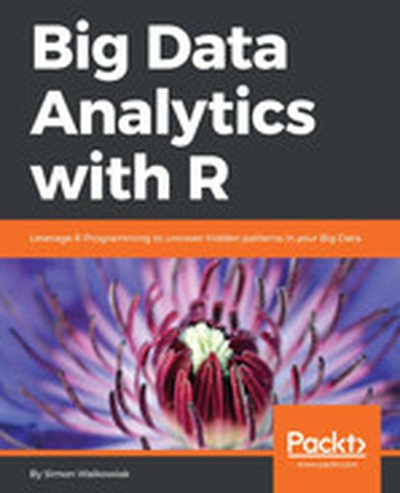
Big Data Analytics with R

Unlock the potential of big data analytics by mastering R programming with this comprehensive guide. This book takes you step-by-step through real-world scenarios where R's capabilities shine, providing you with practical skills to handle, process, and analyze large and complex datasets effectively. What this Book will help me do Understand the latest big data processing methods and how R can enhance their application. Set up and use big data platforms such as Hadoop and Spark in conjunction with R. Utilize R for practical big data problems, such as analyzing consumption and behavioral datasets. Integrate R with SQL and NoSQL databases to maximize its versatility in data management. Discover advanced machine learning implementations using R and Spark MLlib for predictive analytics. Author(s) None Walkowiak is an experienced data analyst and R programming expert with a passion for data engineering and machine learning. With a deep knowledge of big data platforms and extensive teaching experience, they bring a clear and approachable writing style to help learners excel. Who is it for? Ideal for data analysts, scientists, and engineers with fundamental data analysis knowledge looking to enhance their big data capabilities using R. If you aim to adapt R for large-scale data management and analysis workflows, this book is your ideal companion to bridge the gap.

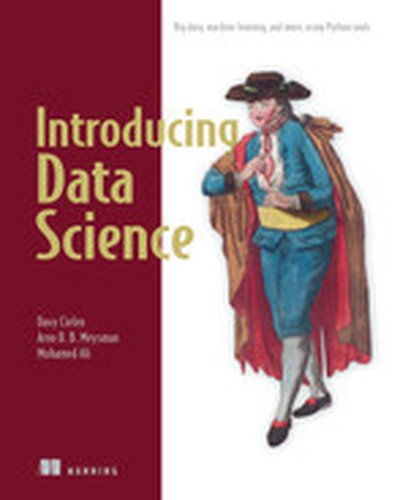
Introducing Data Science

Introducing Data Science teaches you how to accomplish the fundamental tasks that occupy data scientists. Using the Python language and common Python libraries, you'll experience firsthand the challenges of dealing with data at scale and gain a solid foundation in data science. About the Technology Many companies need developers with data science skills to work on projects ranging from social media marketing to machine learning. Discovering what you need to learn to begin a career as a data scientist can seem bewildering. This book is designed to help you get started. About the Book Introducing Data Science explains vital data science concepts and teaches you how to accomplish the fundamental tasks that occupy data scientists. You'll explore data visualization, graph databases, the use of NoSQL, and the data science process. You'll use the Python language and common Python libraries as you experience firsthand the challenges of dealing with data at scale. Discover how Python allows you to gain insights from data sets so big that they need to be stored on multiple machines, or from data moving so quickly that no single machine can handle it. This book gives you hands-on experience with the most popular Python data science libraries, Scikit-learn and StatsModels. After reading this book, you'll have the solid foundation you need to start a career in data science. What's Inside Handling large data Introduction to machine learning Using Python to work with data Writing data science algorithms About the Reader This book assumes you're comfortable reading code in Python or a similar language, such as C, Ruby, or JavaScript. No prior experience with data science is required. About the Authors Davy Cielen, Arno D. B. Meysman, and Mohamed Ali are the founders and managing partners of Optimately and Maiton, where they focus on developing data science projects and solutions in various sectors. Quotes Read this book if you want to get a quick overview of data science, with lots of examples to get you started! - Alvin Raj, Oracle The map that will help you navigate the data science oceans. - Marius Butuc, Shopify Covers the processes involved in data science from end to end… A complete overview. - Heather Campbell, Kainos A must-read for anyone who wants to get into the data science world. - Hector Cuesta, Big Data Bootcamp

Data Analysis in the Cloud

Data Analysis in the Cloud introduces and discusses models, methods, techniques, and systems to analyze the large number of digital data sources available on the Internet using the computing and storage facilities of the cloud. Coverage includes scalable data mining and knowledge discovery techniques together with cloud computing concepts, models, and systems. Specific sections focus on map-reduce and NoSQL models. The book also includes techniques for conducting high-performance distributed analysis of large data on clouds. Finally, the book examines research trends such as Big Data pervasive computing, data-intensive exascale computing, and massive social network analysis. Introduces data analysis techniques and cloud computing concepts Describes cloud-based models and systems for Big Data analytics Provides examples of the state-of-the-art in cloud data analysis Explains how to develop large-scale data mining applications on clouds Outlines the main research trends in the area of scalable Big Data analysis

Beginning Big Data with Power BI and Excel 2013

In Beginning Big Data with Power BI and Excel 2013, you will learn to solve business problems by tapping the power of Microsoft’s Excel and Power BI to import data from NoSQL and SQL databases and other sources, create relational data models, and analyze business problems through sophisticated dashboards and data-driven maps. While Beginning Big Data with Power BI and Excel 2013 covers prominent tools such as Hadoop and the NoSQL databases, it recognizes that most small and medium-sized businesses don’t have the Big Data processing needs of a Netflix, Target, or Facebook. Instead, it shows how to import data and use the self-service analytics available in Excel with Power BI. As you’ll see through the book’s numerous case examples, these tools—which you already know how to use—can perform many of the same functions as the higher-end Apache tools many people believe are required to carry out in Big Data projects. Through instruction, insight, advice, and case studies, Beginning Big Data with Power BI and Excel 2013 will show you how to: Import and mash up data from web pages, SQL and NoSQL databases, the Azure Marketplace and other sources. Tap into the analytical power of PivotTables and PivotCharts and develop relational data models to track trends and make predictions based on a wide range of data. Understand basic statistics and use Excel with PowerBI to do sophisticated statistical analysis—including identifying trends and correlations. Use SQL within Excel to do sophisticated queries across multiple tables, including NoSQL databases. Create complex formulas to solve real-world business problems using Data Analysis Expressions (DAX).