
talk-data.com talk-data.com

Topic

NoSQL

databases big_data non_relational

3

tagged

Activity Trend

7 peak/qtr
2020-Q1 2026-Q1

Activities

Showing filtered results

Filtering by: O'Reilly SQL Books ×
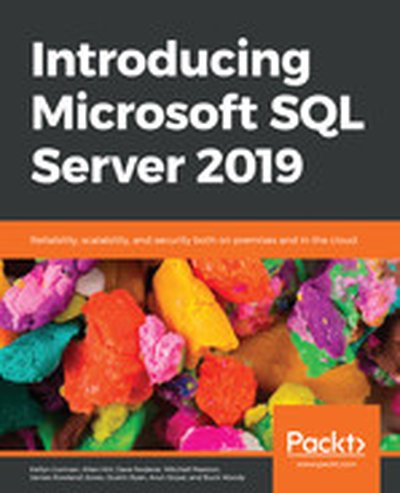
Introducing Microsoft SQL Server 2019

Introducing Microsoft SQL Server 2019 is the must-have guide for database professionals eager to leverage the latest advancements in SQL Server 2019. This book covers the features and capabilities that make SQL Server 2019 a powerful tool for managing and analyzing data both on-premises and in the cloud. What this Book will help me do Understand the new features introduced in SQL Server 2019 and their practical applications. Confidently manage and analyze relational, NoSQL, and big data within SQL Server 2019. Implement containerization for SQL Server using Docker and Kubernetes. Migrate and integrate your databases effectively to use Power BI Report Server. Query data from Hadoop Distributed File System with Azure Data Studio. Author(s) The authors of 'Introducing Microsoft SQL Server 2019' are subject matter experts including Kellyn Gorman, Allan Hirt, and others. With years of professional experience in database management and SQL Server, they bring a wealth of practical insight and knowledge to the book. Their experience spans roles as administrators, architects, and educators in the field. Who is it for? This book is aimed at database professionals such as DBAs, architects, and big data engineers who are currently using earlier versions of SQL Server or other database platforms. It is particularly well-suited for professionals aiming to understand and implement SQL Server 2019's new features. Readers should have basic familiarity with SQL Server and RDBMS concepts. If you're looking to explore SQL Server 2019 to improve data management and analytics in your organization, this book is for you.
SQL and Relational Theory, 3rd Edition

SQL is full of difficulties and traps for the unwary. You can avoid them if you understand relational theory, but only if you know how to put that theory into practice. In this book, Chris Date explains relational theory in depth, and demonstrates through numerous examples and exercises how you can apply it to your use of SQL. This third edition has been revised, extended, and improved throughout. Topics whose treatment has been expanded include data types and domains, table comparisons, image relations, aggregate operators and summarization, view updating, and subqueries. A special feature of this edition is a new appendix on NoSQL and relational theory.

Joe Celko's SQL for Smarties, 5th Edition

SQL for Smarties was hailed as the first book devoted explicitly to the advanced techniques needed to transform an experienced SQL programmer into an expert. Now, 20 years later and in its fifth edition, this classic reference still reigns supreme as the only book written by a SQL master that teaches programmers and practitioners to become SQL masters themselves! These are not just tips and techniques; also offered are the best solutions to old and new challenges. Joe Celko conveys the way you need to think in order to get the most out of SQL programming efforts for both correctness and performance. New to the fifth edition, Joe features new examples to reflect the ANSI/ISO Standards so anyone can use it. He also updates data element names to meet new ISO-11179 rules with the same experience-based teaching style that made the previous editions the classics they are today. You will learn new ways to write common queries, such as finding coverings, partitions, runs in data, auctions and inventory, relational divisions and so forth. SQL for Smarties explains some of the principles of SQL programming as well as the code. A new chapter discusses design flaws in DDL, such as attribute splitting, non-normal forum redundancies and tibbling. There is a look at the traditional acid versus base transaction models, now popular in NoSQL products. You’ll learn about computed columns and the DEFERRABLE options in constraints. An overview of the bi-temporal model is new to this edition and there is a longer discussion about descriptive statistic aggregate functions. The book finishes with an overview of SQL/PSM that is applicable to proprietary 4GL vendor extensions. New to the 5th Edition: Overview of the bitemporal model Extended coverage of descriptive statistic aggregate functions New chapter covers flaws in DDL Examination of traditional acid versus base transaction models Reorganized to help you navigate related topics with ease Expert advice from a noted SQL authority and award-winning columnist Joe Celko, who served on the ANSI SQL standards committee for over a decade Teaches scores of advanced techniques that can be used with any product, in any SQL environment, whether it is SQL 92 or SQL 2011 Offers tips for working around deficiencies and gives insight into real-world challenges