
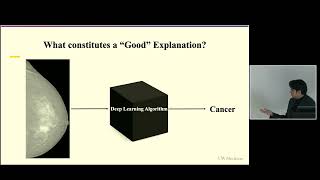
Advancements in deep learning for biomedical image processing have led to the development of promising algorithms across multiple clinical domains, including radiology, digital pathology, ophthalmology, cardiology, and dermatology, among others. With robust AI models demonstrating commendable results, it is crucial to understand that their limited interpretability can impede the clinical translation of deep learning algorithms. The inference mechanism of these black-box models is not entirely understood by clinicians, patients, regulatory authorities, and even algorithm developers, thereby exacerbating safety concerns. In this interactive talk, we will explore some novel explainability techniques designed to interpret the decision-making process of robust deep learning algorithms for biomedical image processing. We will also discuss the impact and limitations of these techniques and analyze their potential to provide medically meaningful algorithmic explanations. Open-source resources for implementing these interpretability techniques using Python will be covered to provide a holistic understanding of explaining deep learning models for biomedical image processing.
This talk is distilled from a course that Ojas Ramwala designed, which received the best seminar award for the highest graduate student enrollment at the Department of Biomedical Informatics and Medical Education at the University of Washington, Seattle.