
talk-data.com talk-data.com

J

Speaker

Jim Dowling

2

talks

author

Filter by Event / Source

Talks & appearances

2 activities · Newest first

Search activities →
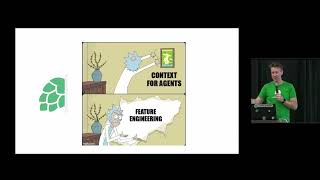
Real-TIme Context Engineering for Agents

Agents need timely and relevant context data to work effectively in an interactive environment. If an agent takes more than a few seconds to react to an action in a client applicatoin, users will not perceive it as intelligent - just laggy.

Real-time context engineering involves building real-time data pipelines to pre-process application data and serve relevant and timely context to agents. This talk will focus on how you can leverage application identifiers (user ID, session ID, article ID, order ID, etc) to identify which real-time context data to provide to agents. We will contrast this approach with the more traditional RAG approach of using vector indexes to retrieve chunks of relevent text using the user query. Our approach will necessitate the introduction of the Agent-to-Agent protocol, an emerging standard for defining APIs for agents.

We will also demonstrate how we provide real-time context data from applications inside Python agents using the Hopsworks feature store. We will walk through an example of an interactive application (TikTok clone).
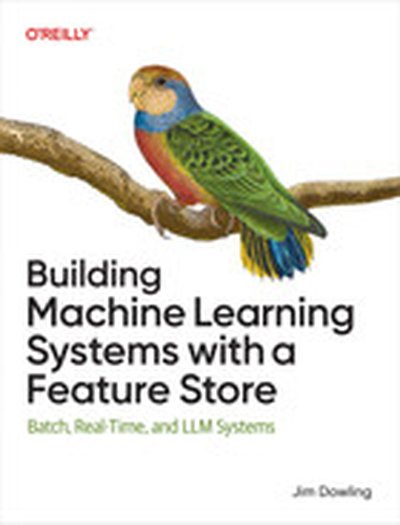
Building Machine Learning Systems with a Feature Store

Get up to speed on a new unified approach to building machine learning (ML) systems with a feature store. Using this practical book, data scientists and ML engineers will learn in detail how to develop and operate batch, real-time, and agentic ML systems. Author Jim Dowling introduces fundamental principles and practices for developing, testing, and operating ML and AI systems at scale. You'll see how any AI system can be decomposed into independent feature, training, and inference pipelines connected by a shared data layer. Through example ML systems, you'll tackle the hardest part of ML systems--the data, learning how to transform data into features and embeddings, and how to design a data model for AI. Develop batch ML systems at any scale Develop real-time ML systems by shifting left or shifting right feature computation Develop agentic ML systems that use LLMs, tools, and retrieval-augmented generation Understand and apply MLOps principles when developing and operating ML systems