No one wants to end life's journey wondering: Did my life count for something? Did I have a reason for being here? The stories in this book show that for people of all ages, income levels, and expertise, the answer can be a resounding " Yes!" From extraordinary examples -- relief efforts in the aftermath of Hurricane Katrina or work in refugee camps in Afghanistan -- to localized, everyday actions, the authors demonstrate that living a life of service to others, and seeing how lives are changed as a result, establishes the meaning and significance all humans long for. Moreover, the book provides strategies for creating a purposeful life through daily service. The authors prove that the ability to find fulfillment is within reach, and that the discovery is waiting to be made in homes, workplaces, communities, neighborhoods, and schools all across America.
 talk-data.com
Topic
business-intelligence
227
tagged
Activity Trend
Top Events
American democracy, argues Charles Derber, is being subverted in the name of democracy itself. Derber shows how the current regime has maintained power by intensifying the red/blue culture wars—supporting religious extremists, exploiting terrorism fears, and manipulating the electoral process. And he reveals our best hope for positive change: an alliance between the Democratic Party and another source of hidden power—the grass roots progressive movements that have always been catalysts for change. Thoughtful, eloquent, and compelling, Hidden Power offers real hope for restoring genuine democracy to America.
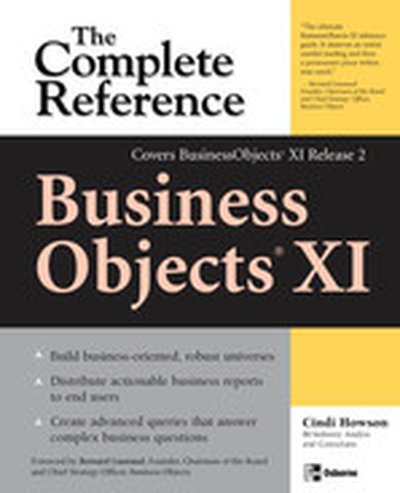
This book is a must read for anyone deploying BusinessObjects. It covers everything from planning your upgrade to the latest release, to best practices in universe design, and powerful report creation that maximizes business insight. This book covers the most frequently used features for the full BI suite, in one comprehensive book. There's in depth coverage of Designer, security via the Central Management Console, InfoView, Web Intelligence, and Desktop Intelligence. It goes beyond step-by-step instructions to cover how and why in a business context. Transition notes are interspersed for version 5 and 6 customers to understand the biggest changes in XI Release 2. If you drive BI requirements in your company or are a data warehouse program manager, Business Objects administrator, report author or consumer, this book is for you.
In this IBM Redbooks publication we discuss primary processes and various alternatives that prepare you in implementing a DB2 near-realtime business intelligence environment. We discuss architectural alternatives and include overviews of software products that you can use in an implementation. As a primary focus, we tested the capabilities for supporting continuous update of a DB2 data warehouse while running a continuous concurrent query workload against that data warehouse. We tested several implementation scenarios and the variables that impact them. The results of our testing and the issues we encountered are provided.
Data warehouses in the 1990s were for the privileged few business analysts. Business Intelligence is now being democratized by being shared with the rank and file employee demanding higher levels of RDBMS scalability and ease of use, being delivered through Web portals. To support this emerging e-Business Intelligence world, the challenges that face the enterprises for their centralized data warehouse RDBMS technology are scalability, performance, availability and smart manageability. This IBM Redbooks publication focuses on the innovative technical functionalities of DB2 UDB ESE V8.1 and discusses: This book positions the new functionalities, so you can understand and evaluate their applicability in your own enterprise data warehouse environment, and get started prioritizing and implementing them. Please note that the additional material referenced in the text is not available from IBM.
This issue discusses the six steps involved in defining a client's training needs in relation to the organization's overall business goals. Offers techniques to use at each point in the analysis process plus sample questions used for collecting data.
This issue explains how to analyze work and work processes using methods such as:observation, interviews, checklists, critical incident technique, and process mapping. It provides case studies that illustrate how training practitioners apply the principles of analysis to create training deliverables.