 talk-data.com

Speaker
Andrea Gioia
3
talks
Andrea Gioia is a Partner and CTO at Quantyca, a consulting company specializing in data management. He is also a co-founder of blindata.io, a SaaS platform focused on data governance and compliance. With over two decades of experience in the field, Andrea has led cross-functional teams in the successful execution of complex data projects across diverse market sectors, ranging from banking and utilities to retail and industry. In his current role as CTO at Quantyca, Andrea primarily focuses on advisory, helping clients define and execute their data strategy with a strong emphasis on organizational and change management issues. Actively involved in the data community, Andrea is a regular speaker, writer, and author of 'Managing Data as a Product,'. Currently, he is the main organizer of the Data Engineering Italian Meetup and leads the Open Data Mesh Initiative. Within this initiative, Andrea has published the data product descriptor open specification and is guiding the development of the open-source ODM Platform to support the automation of the data product lifecycle. Andrea is an active member of DAMA and, since 2023, has been part of the scientific committee of the DAMA Italian Chapter.
Bio from: Big Data LDN 2025
Filter by Event / Source
Talks & appearances
3 activities · Newest first
Federated data management approaches like data mesh promise to reduce complexity by organizing data into domain-owned, reusable products. But managing data as a product alone isn't enough. In many organizations, true reuse and cross-domain collaboration remain limited, while redundant data products continue to grow driving up costs without delivering efficiency. To make federated data strategies work, organizations also need a platform where supply and demand can meet, and where valuable products can be easily discovered, understood, accessed, and combined. They need a data product marketplace. In this talk, using real-world examples, we will explore how a data product marketplace: Drives reuse and composability of data products, reducing integration costs and helping stabilize maintenance over time. Aligns data supply with real business demand, highlighting high-value products and preventing the unchecked growth of low-impact ones. Engages the full ecosystem, from producers to consumers, in shaping governance policies and a shared language that support collaboration and trust. A well-designed data product marketplace is not just a nice to have. It is the necessary link that makes federated data management strategies both sustainable and effective.
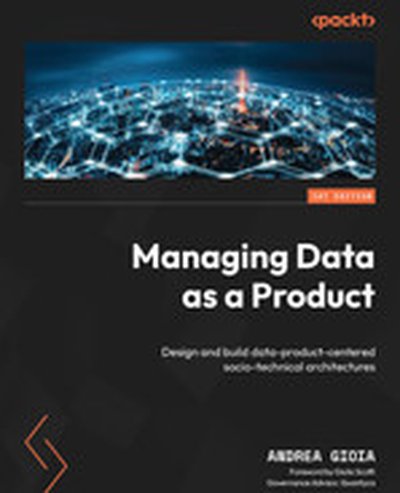
Discover how to transform your data architecture with the insights and techniques presented in Managing Data as a Product by Andrea Gioia. In this comprehensive guide, you'll explore how to design, implement, and maintain data-product-centered systems to meet modern demands, achieving scalable and sustainable data management tailored to your organization's needs. What this Book will help me do Understand the principles of data-product-centered architectures and their advantages. Learn to design, develop, and operate data products in production settings. Explore strategies to manage the lifecycle of data products efficiently. Gain insights into team topologies and data ownership for distributed systems. Discover data modeling techniques for AI-ready architectures. Author(s) Andrea Gioia is a renowned data architect and the creator of the Open Data Mesh Initiative. With over 20 years of experience, Andrea has successfully led complex data projects and is passionate about sharing his expertise. His writing is practical and driven by real-world challenges, aiming to equip engineers with actionable knowledge. Who is it for? This book is ideal for data engineers, software architects, and engineering leaders involved in shaping innovative data architectures. If you have foundational knowledge of data engineering and are eager to advance your expertise by adopting data-product principles, this book will suit your needs. It is for professionals aiming to modernize and optimize their approach to organizational data management.