Historically Airflow was only capable of time-based scheduling, where a DAG would run at certain times. For data updates at varying times, such as an external party delivering data to an S3 bucket, that meant having to run a DAG and continuously poll for updates. Airflow 3 introduces event-driven scheduling that enables you to trigger DAGs based on such updates. In this talk I'll demonstrate how this changes your DAG's code and how this works internally in Airflow. Lastly, I'll demonstrate a practical use case that leverages Airflow 3's event-driven scheduling.
 talk-data.com
B
Speaker
Bas Harenslak
4
talks
Staff Architect
Astronomer
Staff Architect at Astronomer.
Bio from: Amsterdam Apache Airflow® Meetup at Booking.com!
Filter by Event / Source
Talks & appearances
4 activities · Newest first
Have you ever added a DAG file and had no clue what happened to it? You’re not alone! With default settings, Airflow can wait up to 5 minutes before processing new DAG files. In this talk, I’ll discuss the implementation of an event-based DAG parser that immediately processes changes in the DAGs folder. As a result, changes are reflected immediately in the Airflow UI. In this talk I will cover: A demonstration of the event-based DAG parser and the fast Airflow UI experience How the current DAG parser implementation and configuration works How an event-based DAG parser is implemented
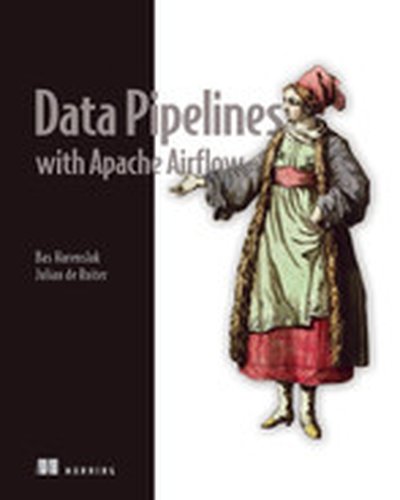
A successful pipeline moves data efficiently, minimizing pauses and blockages between tasks, keeping every process along the way operational. Apache Airflow provides a single customizable environment for building and managing data pipelines, eliminating the need for a hodgepodge collection of tools, snowflake code, and homegrown processes. Using real-world scenarios and examples, Data Pipelines with Apache Airflow teaches you how to simplify and automate data pipelines, reduce operational overhead, and smoothly integrate all the technologies in your stack. About the Technology Data pipelines manage the flow of data from initial collection through consolidation, cleaning, analysis, visualization, and more. Apache Airflow provides a single platform you can use to design, implement, monitor, and maintain your pipelines. Its easy-to-use UI, plug-and-play options, and flexible Python scripting make Airflow perfect for any data management task. About the Book Data Pipelines with Apache Airflow teaches you how to build and maintain effective data pipelines. You’ll explore the most common usage patterns, including aggregating multiple data sources, connecting to and from data lakes, and cloud deployment. Part reference and part tutorial, this practical guide covers every aspect of the directed acyclic graphs (DAGs) that power Airflow, and how to customize them for your pipeline’s needs. What's Inside Build, test, and deploy Airflow pipelines as DAGs Automate moving and transforming data Analyze historical datasets using backfilling Develop custom components Set up Airflow in production environments About the Reader For DevOps, data engineers, machine learning engineers, and sysadmins with intermediate Python skills. About the Authors Bas Harenslak and Julian de Ruiter are data engineers with extensive experience using Airflow to develop pipelines for major companies. Bas is also an Airflow committer. Quotes An Airflow bible. Useful for all kinds of users, from novice to expert. - Rambabu Posa, Sai Aashika Consultancy An easy-to-follow exploration of the benefits of orchestrating your data pipeline jobs with Airflow. - Daniel Lamblin, Coupang The one reference you need to create, author, schedule, and monitor workflows with Apache Airflow. Clear recommendation. - Thorsten Weber, bbv Software Services AG By far the best resource for Airflow. - Jonathan Wood, LexisNexis
How do you ensure your workflows work before deploying to production? In this talk I’ll go over various ways to assure your code works as intended - both on a task and a DAG level. In this talk I cover: How to test and debug tasks locally How to test with and without task instance context How to test against external systems, e.g. how to test a PostgresOperator? How to test the integration of multiple tasks to ensure they work nicely together