
talk-data.com talk-data.com

Topic

AWS Glue

etl data_catalog aws

43

tagged

Activity Trend

10 peak/qtr
2020-Q1 2026-Q1

Activities

43 activities · Newest first

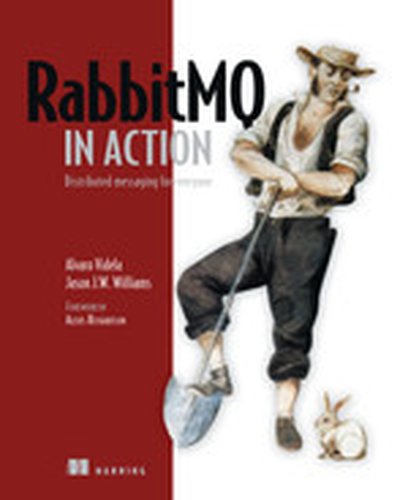
RabbitMQ in Action

RabbitMQ in Action is a fast-paced run through building and managing scalable applications using the RabbitMQ messaging server. It starts by explaining how message queuing works, its history, and how RabbitMQ fits in. Then it shows you real-world examples you can apply to your own scalability and interoperability challenges. About the Technology There's a virtual switchboard at the core of most large applications where messages race between servers, programs, and services. RabbitMQ is an efficient and easy-to-deploy queue that handles this message traffic effortlessly in all situations, from web startups to massive enterprise systems. About the Book RabbitMQ in Action teaches you to build and manage scalable applications in multiple languages using the RabbitMQ messaging server. It's a snap to get started. You'll learn how message queuing works and how RabbitMQ fits in. Then, you'll explore practical scalability and interoperability issues through many examples. By the end, you'll know how to make Rabbit run like a well-oiled machine in a 24 x 7 x 365 environment. What's Inside Learn fundamental messaging design patterns Use patterns for on-demand scalability Glue a PHP frontend to a backend written in anything Implement a PubSub-alerting service in 30 minutes flat Configure RabbitMQ's built-in clustering Monitor, manage, extend, and tune RabbitMQ About the Reader Written for developers familiar with Python, PHP, Java, .NET, or any other modern programming language. No RabbitMQ experience required. About the Authors Alvaro Videla is a developer and architect specializing in MQ-based applications. Jason J. W. Williams is CTO of DigiTar, a messaging service provider, where he directs design and development. Quotes In this outstanding work, two experts share their years of experience running large-scale RabbitMQ systems. - Alexis Richardson, VMware Well-written, thoughtful, and easy to follow. - Karsten Strøbæk, Microsoft Soup to nuts on RabbitMQ; a wide variety of in-depth examples. - Patrick Lemiuex, Voxel Internap This book will take you to a messaging wonderland. - David Dossot, Coauthor of Mule in Action
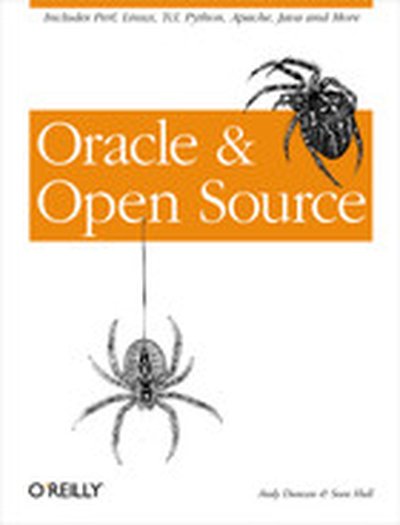
Oracle and Open Source

Oracle & Open Source is the first book to tie together the commercial world of Oracle and the free-wheeling world of open source software. As this book reveals, these two worlds are not as far apart as they may seem. Today, there are many excellent and freely available software tools that Oracle developers and database administrators can use, at no cost, to improve their own coding productivity and their system's performance. Moreover, many of the finest Oracle developers are now making their source code freely available so their peers can build upon this code base. Oracle Corporation is even porting its RDBMS to Linux and starting to incorporate a growing number of open source tools in the company's own software. Oracle & Open Source describes close to 100 open source tools you can use for Oracle development and database administration, from large and widely known open source systems (like Linux, Perl, Apache, TCL/Tk and Python) to more Oracle-specific tools (like Orasoft, Orac, OracleTool, and OraSnap). You'll learn how to obtain the software and how to adapt it to best advantage. The book abounds with code examples, download and installation instructions, and helpful usage hints. Not only does it tell you how to find and use existing open source code; Oracle & Open Source gives you the details and the motivation to build your own open source contributions and release them to the Oracle community. You'll learn all about tools like the Oracle Call Interface (OCI) and Perl-DBI (Database Interface), which provide the glue allowing new open source tools to link into commercial Oracle software. With Oracle & Open Source as a guide, you'll discover an enormous number of highly effective open source tools, while getting involved with the thriving community of open source development.

Essential XML: Beyond Markup

The Extensible Markup Language (XML) has been anointed as the universal duct tape for all software integration problems despite XML's relatively humble origins in the world of document management systems. presents a software engineering-focused view of XML and investigates how XML can be used as a component integration technology much like COM or CORBA. Written for software developers and technical managers, this book demonstrates how XML can be used as the glue between independently developed software components (or in the marketecture terminology Essential XML du jour, how XML can act as the backplane for B2B e-commerce applications). Authors Don Box, Aaron Skonnard, and John Lam cover the key issues, technologies, and techniques involved in using XML as the adhesive between disparate software components and environments. They explain the fundamental abstractions and concepts that permeate all XML technologies, primarily those documented in the XML Information Set (Infoset). XML-based approaches to metadata, declarative, and procedural programming through transformation and programmatic interfaces are covered. Don Box, co-author of the Simple Object Access Protocol (SOAP) specification, provides readers with insight into this emerging XML messaging technology for bridging COM, CORBA, EJB, and the Web. Readers acquire a better understanding of XML's inner workings and come to see how its platform, language, and vendor independence--along with its accessibility--make it an extraordinarily effective solution for software interoperation. 0201709147B04062001