talk-data.com talk-data.com

Topic

storage-formats

132

tagged

Activity Trend

1 peak/qtr
2020-Q1 2026-Q1

Activities

132 activities · Newest first

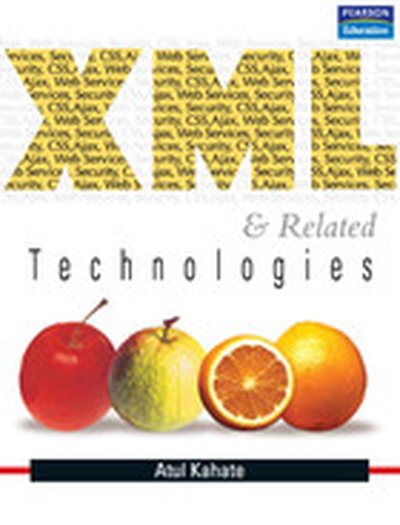
XML and Related Technologies

About The Author – Atul Kahate has over 13 years of experience in Information Technology in India and abroad in various capacities. He has done his Bachelor of Science degree in Statistics and his Master of Business Administration in Computer Systems. He has authored 17 highly acclaimed books on various areas of Information Technology. Several of his books are being used as course textbooks or sources of reference in a number of universities/colleges/IT companies all over the world. Atul has been writing articles in newspapers about cricket, since the age of 12. He has also authored two books on cricket and has written over 2000 articles on IT and cricket. He has a deep interest in teaching, music, and cricket besides technology. He has conducted several training programs, in a number of educational institutions and IT organisations, on a wide range of technologies. Some of the prestigious institutions where he has conducted training programs, include IIT, Symbiosis, I2IT, MET, Indira Institute of Management, Fergusson College, MIT, VIIT, MIT, Walchand Government Engineering College besides numerous other colleges in India.

Book Content – 1. Introduction to XML, 2. XML Syntaxes, 3. Document Type Definitions, 4. XML Schemas 5. Cascading Style Sheets, 6. Extensible Stylesheet Language, 7. XML and Java, 8. XML and ASP.NET, 9. Web Services and AJAX, 10. XML Security, Appendix – Miscellaneous Topics
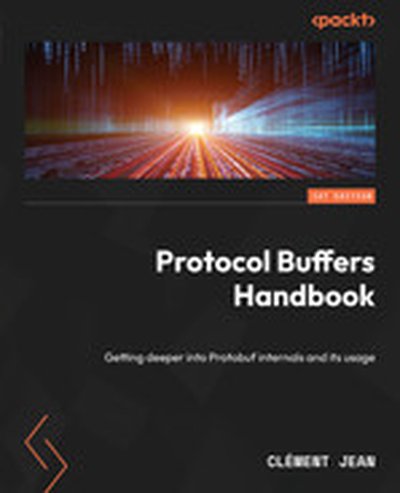
Protocol Buffers Handbook

The "Protocol Buffers Handbook" by Clément Jean offers an in-depth exploration of Protocol Buffers (Protobuf), a powerful data serialization format. Learn everything from syntax and schema evolution to custom validations and cross-language integrations. With practical examples in Go and Python, this guide empowers you to efficiently serialize and manage structured data across platforms. What this Book will help me do Develop advanced skills in using Protocol Buffers (Protobuf) for efficient data serialization. Master the key concepts of Protobuf syntax and schema evolution for compatibility. Learn to create custom validation plugins and tailor Protobuf processes. Integrate Protobuf with multiple programming environments, including Go and Python. Automate Protobuf projects using tools like Buf and Bazel to streamline workflows. Author(s) Clément Jean is a skilled programmer and technical writer specializing in data serialization and distributed systems. With substantial experience in developing scalable microservices, he shares valuable insights into using Protocol Buffers effectively. Through this book, Clément offers a hands-on approach to Protobuf, blending theory with practical examples derived from real-world scenarios. Who is it for? This book is perfect for software engineers, system integrators, and data architects who aim to optimize data serialization and APIs, regardless of their programming language expertise. Beginners will grasp foundational Protobuf concepts, while experienced developers will extend their knowledge to advanced, practical applications. Those working with microservices and heavily data-dependent systems will find this book especially relevant.

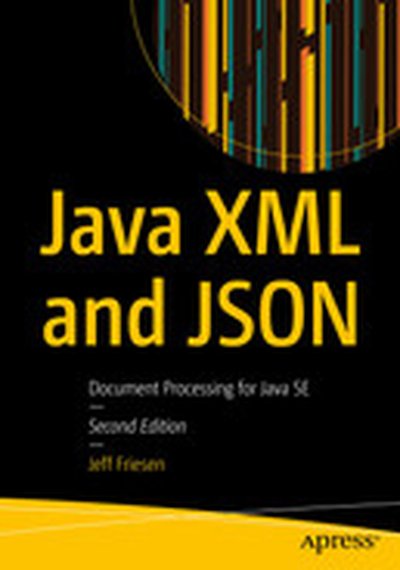
Java XML and JSON: Document Processing for Java SE

Use this guide to master the XML metalanguage and JSON data format along with significant Java APIs for parsing and creating XML and JSON documents from the Java language. New in this edition is coverage of Jackson (a JSON processor for Java) and Oracle’s own Java API for JSON processing (JSON-P), which is a JSON processing API for Java EE that also can be used with Java SE. This new edition of Java XML and JSON also expands coverage of DOM and XSLT to include additional API content and useful examples. All examples in this book have been tested under Java 11. In some cases, source code has been simplified to use Java 11’s var language feature. The first six chapters focus on XML along with the SAX, DOM, StAX, XPath, and XSLT APIs. The remaining six chapters focus on JSON along with the mJson, GSON, JsonPath, Jackson, and JSON-P APIs. Each chapter ends with select exercises designed to challenge your grasp of the chapter's content.An appendix provides the answers to these exercises. What You'll Learn Master the XML language Create, validate, parse, and transform XML documents Apply Java’s SAX, DOM, StAX, XPath, and XSLT APIs Master the JSON format for serializing and transmitting data Code against third-party APIs such as Jackson, mJson, Gson, JsonPath Master Oracle’s JSON-P API in a Java SE context Who This Book Is For Intermediate and advanced Java programmers who are developing applications that must access data stored in XML or JSON documents. The book also targets developers wanting to understand the XML language and JSON data format.

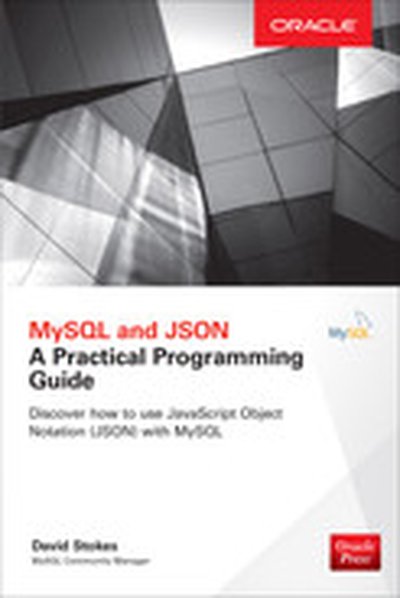
MySQL and JSON: A Practical Programming Guide

Practical instruction on using JavaScript Object Notation (JSON) with MySQL This hands-on guide teaches, step by step, how to use JavaScript Object Notation (JSON) with MySQL. Written by a MySQL Community Manager for Oracle , MySQL and JSON: A Practical Programming Guide shows how to quickly get started using JSON with MySQL and clearly explains the latest tools and functions. All content is based on the author’s years of interaction with MySQL professionals. Throughout, real-world examples and sample code guide you through the syntax and application of each method. You will get in-depth coverage of programming with the MySQL Document Store. •See how JavaScript Object Notation (JSON) works with MySQL •Use JSON as string data and JSON as a data type •Find the path, load data, and handle searches with REGEX •Work with JSON and non-JSON output •Build virtual generated columns and stored generated columns •Generate complex geometries using GeoJSON •Convert and manage data with JSON functions •Access JSON data, collections, and tables through MySQL Document Store

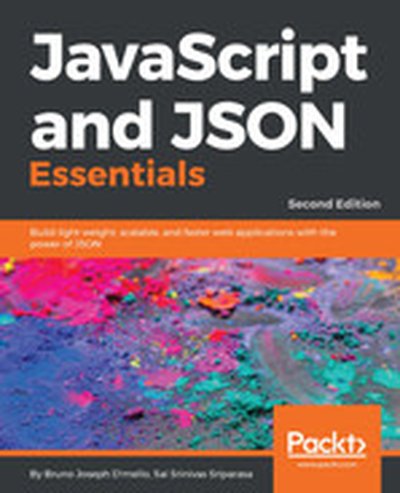
JavaScript and JSON Essentials - Second Edition

Dive into "JavaScript and JSON Essentials" to discover how JSON works as a cornerstone in modern web development. Through hands-on examples and practical guidance, this book equips you with the knowledge to effectively use JSON with JavaScript for creating responsive, scalable, and capable web applications. What this Book will help me do Master JSON structures and utilize them in web development workflows. Integrate JSON data within Angular, Node.js, and other popular frameworks. Implement real-time JSON features using tools like Kafka and Socket.io. Understand BSON, GeoJSON, and JSON-LD formats for specialized applications. Develop efficient JSON handling for distributed and scalable systems. Author(s) None Joseph D'mello and Sai S Sriparasa are seasoned software developers and educators with extensive experience in JavaScript. Their expertise in web application development and JSON usage shines through in this book. They take a clear and engaging approach, ensuring that complex concepts are demystified and actionable. Who is it for? This book is best suited for web developers familiar with JavaScript who want to enhance their abilities to use JSON for building fast, data-driven web applications. Whether you're looking to strengthen your backend skills or learn tools like Angular and Kafka in conjunction with JSON, this book is made for you.

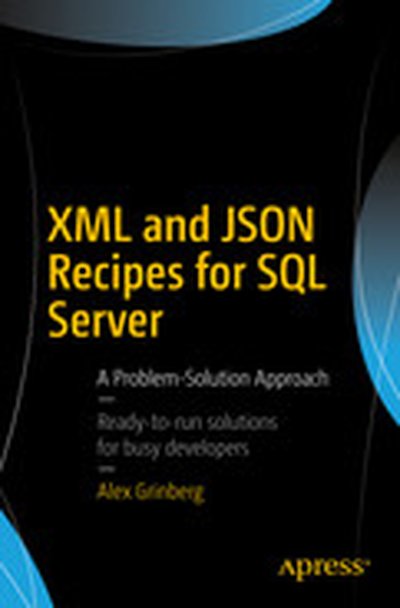
XML and JSON Recipes for SQL Server: A Problem-Solution Approach

Quickly find solutions to dozens of common problems encountered while using XML and JSON features that are built into SQL Server. Content is presented in the popular problem-solution format. Look up the problem that you want to solve. Read the solution. Apply the solution directly in your own code. Problem solved! This book shows how to take advantage of XML and JSON to share data and automate tasks. JSON is commonly used to move data back and forth between the database and front-end applications, often running in a browser. This book shows all you need to know about transforming query results into JSON format, and back again. Also covered are the processes and techniques for moving data into and out of XML format for business intelligence and other purposes, such as when transferring data from a reporting system into a data warehouse, or between different database brands such as between SQL Server and Oracle. Microsoft intensively implements XML in SQL Server, and in many related products. Execution plans are generated in XML format, and this book shows you how to parse those plans and automate the detection of performance problems. The relatively new Extended Events feature writes tracing data into XML files, and the recipes in this book help in parsing those files. XML is also used in SQL Server's BI tool set, including in SSIS, SSR, and SSAS. XML is used in many configuration files, and is even behind the construction of DDL triggers. In reading this book you’ll dive deeply into the features that allow you to build and parse XML, and also JSON, which is a specific format of XML used to transmit objects in a web-friendly format between a database and its front-end applications. What You Will Learn Build XML and JSON objects in support of automation and data transfer Import and parse XML and JSON from operating system files Build appropriate indexes on XML objects to improve query performance Move data from query result sets into JSON format, and back again Automate the detection of database performance problems by querying and parsing the database’s own execution plans Replace external and manual JSON processes with SQL Server's internal, JSON functionality Who This Book Is For Database administrators, .NET developers, business intelligence developers, and other professionals who want a deep and detailed skill set around working with XML and JSON in a SQL Server database environment. Web developers will particularly find the book useful for its coverage of transforming database result sets into JSON text that can be transmitted to front-end web applications.

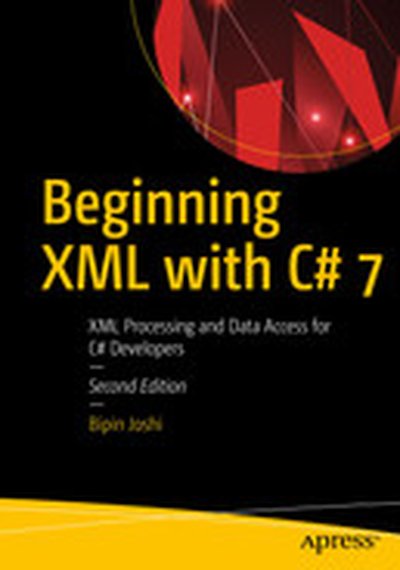
Beginning XML with C# 7: XML Processing and Data Access for C# Developers

Master the basics of XML as well as the namespaces and objects you need to know in order to work efficiently with XML. You’ll learn extensive support for XML in everything from data access to configuration, from raw parsing to code documentation. You will see clear, practical examples that illustrate best practices in implementing XML APIs and services as part of your C#-based Windows 10 applications. Beginning XML with C# 7 is completely revised to cover the XML features of .NET Framework 4.7 using C# 7 programming language. In this update, you’ll discover the tight integration of XML with ADO.NET and LINQ as well as additional .NET support for today’s RESTful web services and Web API. Written by a Microsoft Most Valuable Professional and developer, this book demystifies everything to do with XML and C# 7. What You Will Learn: Discover how XML works with the .NET Framework Read, write, access, validate, and manipulate XML documents Transform XML with XSLT Use XML serialization and web services Combine XML in ADO.NET and SQL Server Create services using Windows Communication Foundation Work with LINQ Use XML with Web API and more Who This Book Is For : Those with experience in C# and .NET new to the nuances of using XML. Some XML experience is helpful.

JSON at Work

JSON is becoming the backbone for meaningful data interchange over the internet. This format is now supported by an entire ecosystem of standards, tools, and technologies for building truly elegant, useful, and efficient applications. With this hands-on guide, author and architect Tom Marrs shows you how to build enterprise-class applications and services by leveraging JSON tooling and message/document design. JSON at Work provides application architects and developers with guidelines, best practices, and use cases, along with lots of real-world examples and code samples. You’ll start with a comprehensive JSON overview, explore the JSON ecosystem, and then dive into JSON’s use in the enterprise. Get acquainted with JSON basics and learn how to model JSON data Learn how to use JSON with Node.js, Ruby on Rails, and Java Structure JSON documents with JSON Schema to design and test APIs Search the contents of JSON documents with JSON Search tools Convert JSON documents to other data formats with JSON Transform tools Compare JSON-based hypermedia formats, including HAL and jsonapi Leverage MongoDB to store and access JSON documents Use Apache Kafka to exchange JSON-based messages between services

Java XML and JSON

Java XML and JSON is your one-stop guide to mastering the XML metalanguage and JSON data format along with significant Java APIs for parsing and creating XML/JSON documents (and more). The first six chapters focus on XML along with the SAX, DOM, StAX, XPath, and XSLT APIs. The remaining four chapters focus on JSON along with the mJson, GSON, and JsonPath APIs. Each chapter ends with select exercises designed to challenge your grasp of the chapter's content. An appendix provides the answers to these exercises. What You'll Learn Master the XML language Learn how to validate XML documents Learn how to parse XML documents with the SAX, DOM, and StAX APIs Learn how to create XML documents with the DOM and StAX APIs Learn how to extract values from XML documents with the XPath API Learn how to transform XML documents with the XSLT API Master the JSON format Learn how to validate JSON documents Learn how to parse and create JSON documents with the mJson and Gson APIs Learn how to extract values from JSON documents with the JsonPath API Who This Book Is For Intermediate or advanced Java programmers/developers.

JSON Quick Syntax Reference

This compact quick scripting syntax reference on JSON covers syntax and parameters central to JSON object definitions, using the NetBeans 8.1 open source and Eclipse IDE software tool packages. JSON Quick Syntax Reference covers the syntax used in the JSON object definition language, logically organized by topical chapters, and getting more advanced as chapters progress, covering structures and file formats which are best for use with HTML5. Furthermore, this book includes the key factors regarding the data footprint optimization work process, the in-lining of .CSS and .JS files, and why a data footprint optimization work process is important.

Client-Side Data Storage

One of the most useful features of today’s modern browsers is the ability to store data right on the user’s computer or mobile device. Even as more people move toward the cloud, client-side storage can still save web developers a lot of time and money, if you do it right. This hands-on guide demonstrates several storage APIs in action. You’ll learn how and when to use them, their plusses and minuses, and steps for implementing one or more of them in your application.

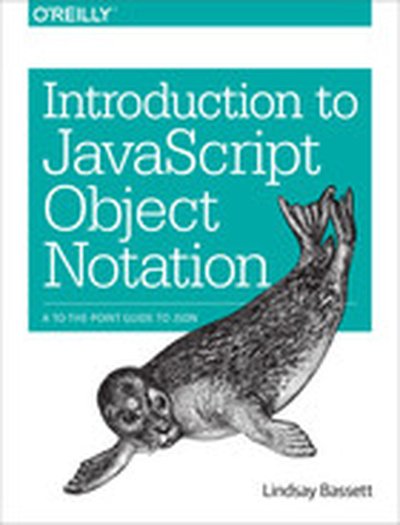
Introduction to JavaScript Object Notation

What is JavaScript Object Notation (JSON) and how can you put it to work? This concise guide helps busy IT professionals get up and running quickly with this popular data interchange format, and provides a deep understanding of how JSON works. Author Lindsay Bassett begins with an overview of JSON syntax, data types, formatting, and security concerns before exploring the many ways you can apply JSON today. From Web APIs and server-side language libraries to NoSQL databases and client-side frameworks, JSON has emerged as a viable alternative to XML for exchanging data between different platforms. If you have some programming experience and understand HTML and JavaScript, this is your book. Learn why JSON syntax represents data in name-value pairs Explore JSON data types, including object, string, number, and array Find out how you can combat common security concerns Learn how the JSON schema verifies that data is formatted correctly Examine the relationship between browsers, web APIs, and JSON Understand how web servers can both request and create data Discover how jQuery and other client-side frameworks use JSON Learn why the CouchDB NoSQL database uses JSON to store data

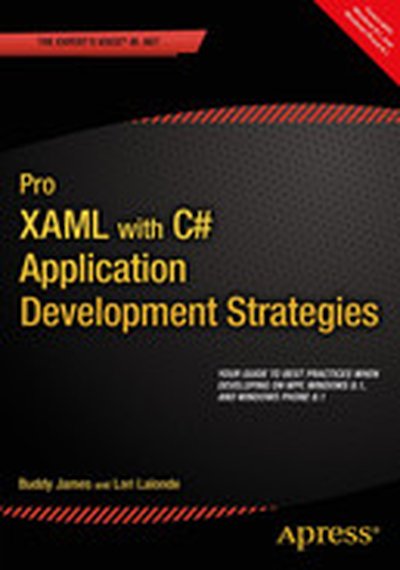
Pro XAML with C#: Application Development Strategies

Pro XAML with C#: Application Development Strategies is your guide to real-world development practices on Microsoft’s XAML-based platforms, with examples in WPF, Windows 8.1, and Windows Phone 8.1. Learn how to properly plan and architect an application on one or more of these platforms for a robust, scalable solution. In Part I, authors Buddy James and Lori Lalonde introduce you to XAML and reveal proven techniques for developing successful line-of-business applications. You’ll also find out about some of the conflicting needs and interests that you might encounter as an enterprise XAML developer. Part II begins to lay the groundwork to help you properly architect your application, providing you with a deeper understanding of domain-driven design and the Model-View-ViewModel design pattern. You will also learn about proper exception handling and logging techniques, and how to cover your code with unit tests to reduce bugs and validate your design. Part III explores implementation and deployment details for each of Microsoft’s XAML UIs, along with advice on deploying and maintaining your application across different devices using version control repositories and continuous integration. Pro XAML with C# Application Development Strategies is for intermediate to experienced developers looking to improve their professional practice. Readers should have experience working with C# and at least one XAML-based technology (WPF, Silverlight, Windows Store, or Windows Phone).

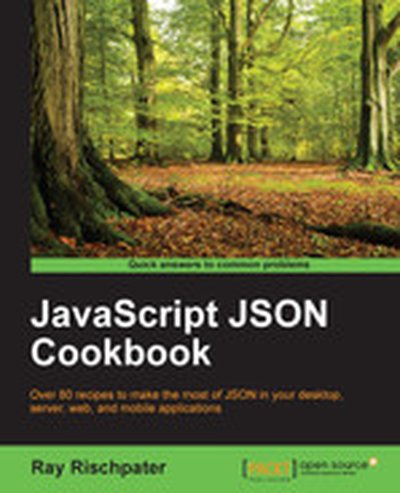
The JavaScript JSON Cookbook

Take your understanding of JSON to the next level with "The JavaScript JSON Cookbook." This in-depth guide equips developers of all levels with practical recipes to integrate JSON into a variety of applications such as web, mobile, and server-side systems, enabling efficient data exchange and manipulation. What this Book will help me do Master the fundamentals of JSON formatting, data exchange, and manipulation. Work with JSON in popular libraries and frameworks like AngularJS, jQuery, and AJAX. Integrate JSON seamlessly with databases such as MongoDB and CouchDB. Utilize JSON in mobile platform development for Android and iOS. Learn advanced techniques such as querying JSON using JSON Path and representing binary objects. Author(s) Ray Rischpater is an accomplished software developer and author with extensive experience in programming and web development. He has a deep understanding of JavaScript and JSON, and his practical approach to solving complex technical challenges makes his books invaluable resources. Ray's instructional style is clear and comprehensive, aiming to empower programmers to achieve their goals. Who is it for? This book is ideal for software developers working with web, mobile, or backend systems who want to expand their expertise in JSON. Whether you're a frontend, backend, or full-stack developer at any skill level, the recipes in this cookbook will enhance your ability to create efficient, data-driven applications. If you aim to use JSON for tasks like data exchange, web services, or database integration, this book is for you. By working through the examples, you will gain actionable skills to implement JSON in diverse real-world scenarios.

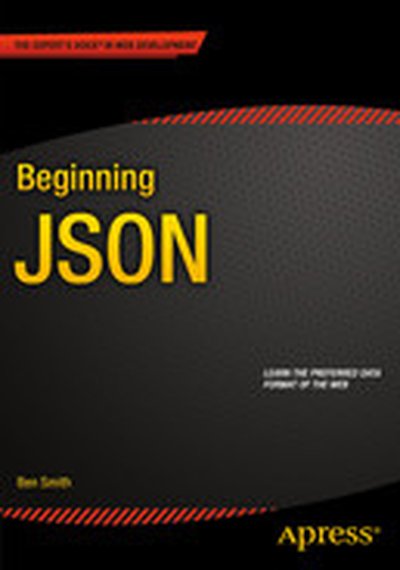
Beginning JSON

Beginning JSON is the definitive guide to JSON - JavaScript Object Notation - today’s standard in data formatting for the web. The book starts with the basics, and walks you through all aspects of using the JSON format. Beginning JSON covers all areas of JSON from the basics of data formats to creating your own server to store and retrieve persistent data. Beginning JSON provides you with the skill set required for reading and writing properly validated JSON data. The first two chapters of the book will discuss the foundations of JavaScript for those who need it, and provide the necessary understandings for later chapters. Chapters 3 through 12 will uncover what data is, how to convert that data into a transmittable/storable format, how to use AJAX to send and receive JSON, and, lastly, how to reassemble that data back into a proper JavaScript object to be used by your program. The final chapters put everything you learned into practice.

eXist

Get a head start with eXist, the open source NoSQL database and application development platform built entirely around XML technologies. With this hands-on guide, you’ll learn eXist from the ground up, from using this feature-rich database to work with millions of documents to building complex web applications that take advantage of eXist’s many extensions. If you’re familiar with XML—as a student, professor, publisher, or developer—you’ll find that eXist is ideal for all kinds of documents.

Programming the Windows Runtime by Example: A Comprehensive Guide to WinRT with Examples in C# and XAML

Master Windows 8.1/Windows Runtime Programming Through 80 Expert Projects This is the most complete, hands-on, solutions-focused guide to programming modern Windows applications with the Windows Runtime. Leading Windows development consultants Jeremy Likness and John Garland present easy-to-adapt C# and XAML example code for more than 80 projects. Their real-world application examples help you apply Windows 8.1’s best improvements, including large tiles, the new search control, flyouts, command bars, native WinRT networking, and new deployment and sideloading options. Drawing on their pioneering experience, they illuminate key areas of the Windows Runtime API, offering uniquely detailed coverage of encryption, cloud connectivity, devices, printers, and media integration. You’ll find cutting-edge tips and tricks available in no other book. This is an indispensable resource for all intermediate-to-advanced Windows developers, and for any architect building desktop, tablet, or mobile solutions with Microsoft technologies. Its focus on both C# and XAML will make it valuable to millions of Windows developers already familiar with Silverlight, WPF, and/or .NET. Coverage includes • Creating robust app interfaces with the newest XAML controls, including flyouts and command bars • Saving data in a persistent “roaming zone” for syncing across Windows 8.1 devices • Using Visual State Manager (VSM) to build apps that adapt to various device resolutions and orientations • Integrating virtually any form of data into your apps • Connecting with web services, RSS, Atom feeds, and social networks • Securing apps via authentication, encrypting, signing, and single sign-on with Microsoft Account, Facebook, Google, and more • Leveraging Windows 8.1 media enhancements that improve battery life and app performance • Networking more effectively with Windows 8.1’s revamped HTTP implementation and new location APIs • Using Tiles and Toasts to keep apps alive and connected, even when they aren’t running • Enabling users to send content between devices via NFC tap and send • Ensuring accessibility and globalizing your apps • Efficiently debugging, optimizing, packaging, and deploying your apps • Building sideloadable apps that don’t have to be published in Windows Store “This book doesn’t just focus on singular concepts, it also provides end-to-end perspective on building an app in WinRT. It is one of those essential tools for Windows developers that will help you complete your software goals sooner than without it!” —Tim Heuer, Principal Program Manager Lead, XAML Platform, Microsoft Corporation

Windows® 8.1 Apps with XAML and C# Sams Teach Yourself in 24 Hours

Learn how to build great Windows Store apps! Figures and code appear as they do in Visual Studio. In just 24 sessions of one hour or less, Sams Teach Yourself Windows 8.1 Apps with XAML and C# in 24 Hours will help you build compelling apps for Windows 8.1 devices of all kinds. Using this book’s straightforward approach, you’ll learn to design and build apps, create flexible user interfaces, handle inputs, integrate controls, and more. Step by step, you’ll discover how to leverage XAML’s visual richness and the immense power of Windows 8.1. Every lesson builds on what you’ve already learned, giving you a rock-solid foundation for real-world success! Step-by-step instructions carefully walk you through today’s most common XAML and C# development tasks. Quizzes at the end of each chapter help you test your knowledge. Notes present interesting information related to the discussion. Tips offer advice or show you easier ways to perform tasks. Cautions alert you to possible problems and give you advice on how to avoid them. Learn how to… Create user interfaces that adapt to any device, from tablets to high-def TVs Handle input from touch, mouse, pen, and keyboard Manage the entire Windows 8.1 app lifecycle and all execution states Master powerful XAML controls for text, images, audio, video, and more Integrate vector graphics that scale perfectly to any size Apply rich animations Work with styles, templates, and visual states Exploit the Windows charms within your apps Take full advantage of data binding and contracts Read data from sensors and control external devices Provide dynamic updates via live tiles, notifications, and the lock screen Discover the many ways to monetize your Windows Store apps

JavaScript and JSON Essentials

"JavaScript and JSON Essentials" is a focused tutorial that introduces you to the lightweight JSON data format, essential for effective data storage and transfer with JavaScript. By following this book, you'll gain the expertise to work with JSON in web applications, including tasks such as serialization, asynchronous calls, and debugging. What this Book will help me do Fully understand the structure and use of JSON and how it integrates with JavaScript. Learn to implement synchronous and asynchronous data transfers using JSON. Develop skills in creating, updating, and manipulating JSON objects effectively. Master the design of web functionalities like the Carousel application using JSON. Gain knowledge about best practices in debugging and optimizing JSON for web applications. Author(s) Sai S. Sriparasa is a seasoned developer and educator with extensive experience in JavaScript and related technologies. Having worked on numerous data-driven projects, Sai integrates real-world scenarios into his writing. His tutorials are crafted to be approachable and practical, aimed at demystifying complex concepts for a diverse audience. Who is it for? This book is ideal for web developers who are familiar with JavaScript and seek to expand their understanding of JSON. Suitable for programmers who have a basic knowledge of HTML and some exposure to server-side languages like PHP or Python. Those aiming to integrate efficient data exchange formats into their web applications will find it highly beneficial. It's also a good resource for JavaScript developers wanting to delve deeper into the synchronous and asynchronous handling of data.

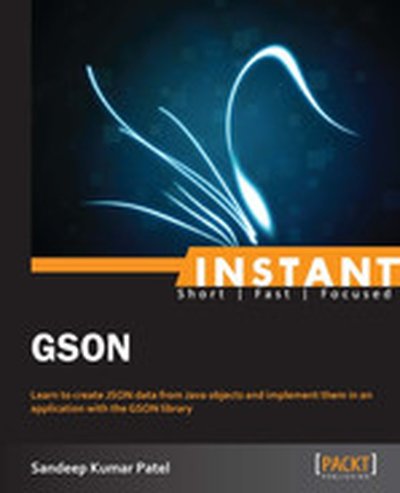
Instant GSON

Explore the powerful features of the GSON library in this concise and practical book. "Instant GSON" provides a hands-on guide to efficiently handling JSON data using Google's GSON library. In this book, you'll learn essential techniques to convert Java objects to JSON and vice versa, utilize field exclusion strategies, and implement GSON in real-world applications. What this Book will help me do Convert Java objects into JSON format and retrieve Java objects from JSON data. Understand and work with GSON's handling of generic types and nested classes. Learn how to implement field exclusion strategies and write custom JSON converters. Gain knowledge on pretty-printing JSON and utilizing versioning support. Effectively use GSON in various practical Java-based applications, including web projects. Author(s) Sandeep Patel is an experienced software developer specializing in Java programming and JSON data interchange. With years of hands-on experience working with GSON, Sandeep has a deep understanding of its capabilities and nuances. His writing style is focused on practical examples and clear explanations, aimed at helping readers efficiently integrate advanced JSON management into their programming projects. Who is it for? If you are a Java developer who is new to the GSON library and keen to incorporate it into your projects, this book is for you. "Instant GSON" will appeal to software developers aiming to boost productivity and master JSON data handling. Readers should have a basic understanding of Java programming and an interest in JSON serialization and deserialization. This book provides guidance tailored to beginner and intermediate skill levels.