talk-data.com talk-data.com

Topic

storage-formats

132

tagged

Activity Trend

1 peak/qtr
2020-Q1 2026-Q1

Activities

132 activities · Newest first

Inside XML

The XML explosion hardly needs any introduction-it's everywhere and there just seems to be no end to what can be done with XML. While writing to the W3C standards, and keeping up with the pace for corporate implementation, you, the programmer or web developer, will need a comprehensive guide to get you started and show you what XML and its related technologies can do. A thorough guide is imperative to success because you will need to know and understand the full scope of XML from day one in order to work with it successfully. With your time constraints and impossible project schedules, you need a comprehensive guide that fulfills your needs in one complete book. Inside XML is an anchor book that covers both the Microsoft and non-Microsoft approach to XML programming. It covers in detail the hot aspects of XML; such as, DTD's vs. XML Schemas, CSS, XSL, XSLT, Xlinks, Xpointers, XHTML, RDF, CDF, parsing XML in Perl and Java, and much more.

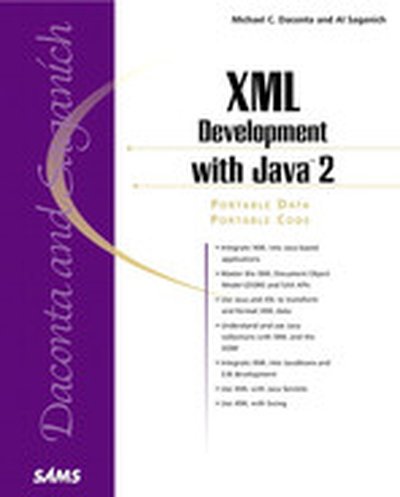
XML Development with Java™ 2

XML Development with Java 2 provides the information and techniques a Java developer will need to integrate XML into Java-based applications. This book presents a fast-paced introduction to XML and moves quickly into the areas where XML has the biggest impact on Java Development. The book covers crucial topics such as the XML Documet Object Model (DOM), Using Java and XSL to transform and format XML data, Integrating XML into JavaBeans and EJB development, and using XML with Java Servlets. The authors also cover the impact XML has on Java database access and the way XML works with the Swing classes.

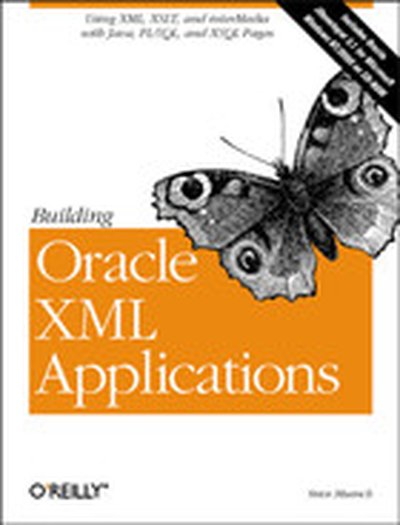
Building Oracle XML Applications

This rich and detailed look at the many Oracle tools that support XML development shows Java and PL/SQL developers how to combine the power of XML and XSLT with the speed, functionality, and reliability of the Oracle database. The nearly 800 pages of entertaining text, helpful and time-saving hints, and extensive examples can be put to use immediately to build custom XML applications. Includes a CD-ROM with JDeveloper 3.1, an integrated development environment for Java developers.

XSL companion, The

A concise, comprehensive and accessible guide to the scope, strengths and limitations of the XSL (eXtensible Stylesheet Language) family of stylesheet standards for XML, this book explains the practical ways in which XSL can be utilized for formatting and manipulating information held in the hugely popular XML data format. The huge expansion in usage of XML created the need for a powerful standard for formatting and transforming XML documents - the XSL standard, which developed into the family of three specific standards exaimned in detail in this book. XSL enables the further expansion of XML technology into new domains of content management, audience targeted presentation and distributed document processing. If you are a current or potential XML user looking for just one reference to get you up to speed on styling and manipulating your XML documents with clarity, comprehensive coverage and precision, then this book will be your essential and constant companion. This book covers in detail the family of three separate stylesheet which make up XSL: •Xpath locates specific information within XML Documents •XSLT transforms XML documents into other data formats •XSL embeds formatting information in XML documents Together these form a powerful array of tools that allow you to control and optimize the formatting of your XML documents, and thus deliver content and information in a dynamic and flexible way. 0201674874B04062001

Sams Teach Yourself XML in 24 Hours

Sams Teach Yourself XML in 24 Hours teaches you the fundamental concepts of XML using practical, hands-on examples. Rather than dwelling on dry theory, the book is filled with clear, real-world examples of how the technology can be used today. Coverage includes displaying XML files in HTML files, parsing HTML files into corresponding hierarchical tree structure, embedding XML code into an HTML file, using Extensible Style Sheets (XSL), performing queries in XSL, and building an online store.

Enterprise Application Integration With XML and Java™

High-value solutions for integrating enterprise and legacy systems XML, Enterprise JavaAPIs, and much more Techniques for building flexible, extensible EIA solutions Easy-to-read, fully-documented code throughout CD-ROM includes leading-edge software and code library for XML/Java integration! "XML is the amazing new web standard for universal data interchange. With this book and XML you can integrate your applications without converting the code!" —Charles F. Goldfarb Integrate your enterprise with XML and Java! Enterprise Application Integration (EAI) links diverse applications, platforms, and operating systems so they work as one-and deliver powerful business results seamlessly. Platform-independent Java is one powerful tool for building EAI applications, and XML adds the missing link: robust mechanisms to exchange data with non-Java applications. Now there's a complete, step-by-step guide to using Java and XML together to deliver enterprise integration solutions that work! Enterprise Application Integration With XML and Java covers all this, and more: Demonstrating why XML is such a powerful EAI infrastructure solution Identifying your key requirements for sharing and exchanging data Building robust, high-performance Java applications for parsing and processing XML documents Moving data between Java and non-Java applications Integrating XML with relational databases Serializing Java objects into XML, and asynchronous messaging with XML Providing convenient references to XML 1.0 grammar and the W3C Document Object Model Whether you're a technical manager planning for enterprise application integration, or a Java developer tasked with delivering it, Enterprise Application Integration With XML and Java delivers the in-depth solutions and real-world expertise you need. CD-ROM INCLUDED The CD-ROM contains extensive source code from the book, plus a remarkable library of leading-edge software and trialware, including: Bluestone Visual-XML desktop XML development environment; IBM XML4J Java-based parser; and Push-technologies SpiritWAVE2 implementation of the Java Messaging Service!

Essential XML: Beyond Markup

The Extensible Markup Language (XML) has been anointed as the universal duct tape for all software integration problems despite XML's relatively humble origins in the world of document management systems. presents a software engineering-focused view of XML and investigates how XML can be used as a component integration technology much like COM or CORBA. Written for software developers and technical managers, this book demonstrates how XML can be used as the glue between independently developed software components (or in the marketecture terminology Essential XML du jour, how XML can act as the backplane for B2B e-commerce applications). Authors Don Box, Aaron Skonnard, and John Lam cover the key issues, technologies, and techniques involved in using XML as the adhesive between disparate software components and environments. They explain the fundamental abstractions and concepts that permeate all XML technologies, primarily those documented in the XML Information Set (Infoset). XML-based approaches to metadata, declarative, and procedural programming through transformation and programmatic interfaces are covered. Don Box, co-author of the Simple Object Access Protocol (SOAP) specification, provides readers with insight into this emerging XML messaging technology for bridging COM, CORBA, EJB, and the Web. Readers acquire a better understanding of XML's inner workings and come to see how its platform, language, and vendor independence--along with its accessibility--make it an extraordinarily effective solution for software interoperation. 0201709147B04062001

XML Processing with Python

Breakthrough techniques for building XML applications — fast! Includes a detailed Python tutorial Learn about DOM and SAX application development with Python Exclusive coverage of the new Pyxie XML processing library CD-ROM includes Python and Pyxie distributions for Windows NT and Linux—plus powerful utilities and lots of working code "XML processing is the newest required skill for webmasters and application developers. The Python language and Sean McGrath's book make it fun to learn and easy to do." — Charles F. Goldfarb When it comes to XML processing, Python is in a league of its own. If you're doing XML development without Python, you're wasting time! Python offers outstanding productivity — especially in the areas that matter most to XML developers, such as XML parsing, DOM/SAX implementations, string processing, and Internet APIs. And now there's Pyxie — the new open source library that makes Python XML processing even easier and more powerful. In XML Processing with Python, top XML developer Sean McGrath delivers the hands-on explanations and examples you need to get results with Python and Pyxie fast — even if you've never used them before! Install Python and the Pyxie XML package Learn the fundamentals of Python: control structures, classes, nested lists, dictionaries, and regular rexpresions Process XML with regular expression-driven, event-driven, and tree-driven techniques Understand Python's support for DOM and SAX APIs Explore the power of Python/XML through worked examples of GUI development, database integration, and an XML query-by-example implementation. Elegant, easy, powerful and fun, Python helps you build world-class XML applications in less time than you ever imagined. If you know XML, one book has all the techniques, code, and tools you'll need to process it: XML Processing with Python. CD-ROM INCLUDED The accompanying CD-ROM contains everything you need to develop XML applications with Python — including complete Python distributions for Windows and Linux the Pyxie open-source libraries powerful utility programs an extensive library of sample source code tested on both Windows NT and Linux

Java and XML

XML has been the biggest buzzword on the Internet community for the past year. But how do you cut through all the hype and actually put it to work? Java revolutionized the programming world by providing a platform-independent programming language. XML takes the revolution a step further with a platform-independent language for interchanging data. Java and XML share many features that are ideal for building web-based enterprise applications, such as platform-independence, extensibility, reusability, and global language (Unicode) support, and both are based on industry standards. Together Java and XML allow enterprises to simplify and lower costs of information sharing and data exchange. Java and XML shows how to put the two together, building real-world applications in which both the code and the data are truly portable. This book covers: The basics of XML Using standard Java APIs to parse XML Designing new document types using DTDs and Schemas Writing programs that generate XML data Transforming XML into different forms using XSL transformations (XSL/T) XML-RPC Using a web publishing framework like Apache-Cocoon This is the first book to cover the most recent versions of the DOM specification (DOM 2), the SAX API (SAX 2) and Sun's Java API for XML.

XML Unleashed

XML Unleashed is a complete and comprehensive reference for sophisticated Web developers that covers every possible use of XML, from creating Web documents to building sophisticated Web applications. It covers all aspects of XML technology, from DTDs, XSL, and X Pointers to manipulating XML with Java and JavaScript. See hundreds of professional programming techniques as well as code for more than 15 real-world XML applications involving e-commerce, database access, Web management, real estate, and healthcare. This book also includes reference material on SMIL, the XML-based language for Web multimedia.

XML by Example

XML by Example teaches Web developers to make the most of XML with short, self-contained examples every step of the way. The book presumes knowledge of HTML, the Web, Web scripting, and covers such topics as: Document Type Definitions, Namespaces, Parser Debugging, XSL (Extensible Stylesheet Language), and DOM and SAX APIs. At the end, developers will review the concepts taught in the book by building a full, real-world e-commerce application.

XML Pocket Reference

XML, the Extensible Markup Language, is the next-generation markup language for the Web. It provides a more structured (and therefore more powerful) medium than HTML, allowing us to define new document types and stylesheets as needed. Although the generic tags of HTML are sufficient for everyday text, XML gives us a way to add rich, well-defined markup to electronic documents. The XML Pocket Reference is both a handy introduction to XML terminology and syntax, and a quick reference to XML instructions, attributes, entities, and datatypes. It also covers XSL (Extensible Stylesheet Language), necessary to ensure that your XML documents have a consistent look and feel across platforms. Although XML itself is complex, its basic concepts are simple. This small book acts both as a perfect tutorial for learning the basics of XML, and as a reference to the XML and XSL specifications.