
talk-data.com talk-data.com

Topic

storage-formats

3

tagged

Activity Trend

1 peak/qtr
2020-Q1 2026-Q1

Activities

Showing filtered results

Filtering by: Simon St. Laurent ×
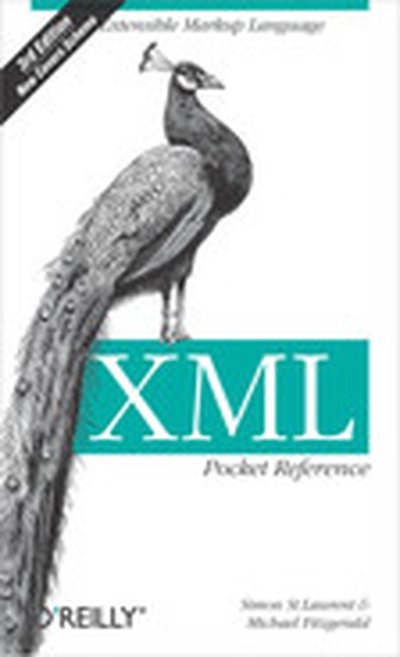
XML Pocket Reference, 3rd Edition

XML, the Extensible Markup Language, is everywhere: the syntax of choice for newly designed document formats across almost all computer applications. Now used daily by developers, XML is living up to its reputation as one of the most important developments in document interchange in the history of computing. A perennial bestseller, the handy XML Pocket Reference from O'Reilly has been revised once again to give you quick access to the latest goods. In addition to its comprehensive look at XML, this third edition has been updated with new material on Namespaces and XML Schema--considered among the most important elements in current XML use--along with RELAX NG and Schematron, additional powerful tools for describing XML document structures. Like other titles in O'Reilly's Pocket Reference series, the XML Pocket Reference, 3rd Edition features a well-organized format that gets right to the point. As a result, it's already won over the allegiance of developers everywhere. If you need XML answers quick and on the fly, this compact book is most definitely the book for you.
Office 2003 XML

In Microsoft's Office 2003, users experience the merger of the power of the classic Office suite of applications with the fluidity of data exchange inherent in XML. With XML at its heart, the new version of Microsoft's desktop suite liberates the information stored in millions of documents created with Office software over the past fifteen years, making it available to a wide variety of programs. Office 2003 XML offers an in-depth exploration of the relationship between XML and Office 2003, examining how the various products in the Office suite both produce and consume XML. Developers will learn how they can connect Microsoft Office to others systems, while power users will learn to create and analyze XML documents using familiar Office tools. The book begins with an overview of the XML features included in the various Office 2003 components, and explores in detail how Word, Excel, and Access interact with XML. This book covers both the user interface side, creating interfaces so that users can comfortably (and even unknowingly) work with XML, and the back end, exposing Office information to other processes. It also looks at Microsoft's new InfoPath application and how it fits with the rest of Office. Finally, the book's appendices introduce various XML technologies that may be useful in working with Office, including XSLT, W3C XML Schema, RELAX NG, and SOAP. Office 2003 XML provides quick and clear guidance to a anyone who needs to import or export information from Office documents into other systems. Both XML programmers and Office power will learn how to get the most from this powerful new intersection between Office 2003 and XML.

Programming Web Services with XML-RPC

Have you ever needed to share processing between two or more computers running programs written in different languages on different operating systems? Or have you ever wanted to publish information on the Web so that programs other than browsers could work with it? XML-RPC, a system for remote procedure calls built on XML and the ubiquitous HTTP protocol, is the solution you've been looking for. Programming Web Services with XML-RPC introduces the simple but powerful capabilities of XML-RPC, which lets you connect programs running on different computers with a minimum of fuss, by wrapping procedure calls in XML and establishing simple pathways for calling functions. With XML-RPC, Java programs can talk to Perl scripts, which can talk to Python programs, ASP applications, and so on. You can provide access to procedure calls without having to worry about the system on the other end, so it's easy to create services that are available on the Web.XML-RPC isn't the only solution for web services; the Simple Object Access Protocol (SOAP) is another much-hyped protocol for implementing web services. While XML-RPC provides fewer capabilities than SOAP, it also has far fewer interoperability problems and its capabilities and limitations are much better understood. XML-RPC is also stable, with over 30 implementations on a wide variety of platforms, so you can start doing real work with it immediately. Programming Web Services with XML-RPC covers the details of five XML-RPC implementations, so you can get started developing distributed applications in Java, Perl, Python, ASP, or PHP. The chapters on these implementations contain code examples that you can use as the basis for your own work. This book also provides in-depth coverage of the XML-RPC specification, which is helpful for low-level debugging of XML-RPC clients and servers. And if you want to build your own XML-RPC implementation for another environment, the detailed explanations in this book will serve as a foundation for that work.