talk-data.com talk-data.com

Topic

storage-formats

132

tagged

Activity Trend

1 peak/qtr
2020-Q1 2026-Q2

Activities

132 activities · Newest first

Java & XML Data Binding

More Java developers today want to work with XML, the technology that enables data to be transported intact over the Internet, but they don't have time to become XML experts. If this describes you, then you'll appreciate data binding, the new way of converting XML documents into Java objects, so those documents can be worked on and manipulated like any other Java object, then converted back to XML This new title provides an in-depth technical look at XML Data Binding. The book offers complete documentation of all features in both the Sun Microsystems JAXB API and popular open source alternative implementations (Enhydra Zeus, Exolabs Castor and Quick). It also gets into significant detail about when data binding is appropriate to use, and provides numerous practical examples of using data binding in applications. As Author Brett McLaughlin says "Too many books are written about technologies by people who barely understand them. I've already written two data binding implementations (Zeus, and a previous one for IBM DeveloperWorks.) I've actually used data binding for longer than the official specification has been in existence, and I've really been able to dig into what it takes to code an effective data biding implementation, as well as use one correctly. This book is part user guide, part under-the-hood manual, and part use-case. It's a powerful combination, and one I think people need."
Understanding Web Services: XML, WSDL, SOAP, and UDDI

Web services enable the new generation of Internet-based applications. These services support application-to-application Internet communication--that is, applications at different network locations can be integrated to function as if they were part of a single, large software system. Examples of applications made possible by Web services include automated business transactions and direct (nonbrowser) desktop and handheld device access to reservations, stock trading, and order-tracking systems. Several key standards have emerged that together form the foundation for Web services: XML (Extensible Markup Language), WSDL (Web Services Definition Language), SOAP (Simple Object Access Protocol), and UDDI (Universal Description, Discovery, and Integration). In addition, ebXML (Electronic Business XML) has been specified to facilitate automated business process integration among trading partners. This book introduces the main ideas and concepts behind core and extended Web services' technologies and provides developers with a primer for each of the major technologies that have emerged in this space. In addition, summarizes the major architectural approaches to Web services, examines the role of Web services within the .NET and J2EE communities, and provides information about major product offerings from BEA, Hewlett-Packard, IBM, IONA, Microsoft, Oracle, Sun Microsystems, and others. Understanding Web Services Key topics include: XML facilities for structuring and serializing data How WSDL maps services onto communication protocols and transports WSDL support for RPC-oriented and document-oriented interactions SOAP's required and optional elements Message processing and the role of intermediaries in SOAP UDDI data formats and APIs How ebXML offers an alternative to Web services that supports reliable messaging, security, and trading-partner negotiations With , you will be well informed and well positioned to participate in this vast, emerging marketplace. Understanding Web Services

JSP™ and XML Integrating XML and Web Services in Your JSP™ Application

The first Internet revolution was all about delivering information to people. We are now in the second revolution, which focuses on delivering information to systems. XML is the tool that makes this new revolution a reality, and Web services are the methods by which businesses will drive system-to-system communication. JSP(TM) and XML takes you beyond the basics, giving you practical advice and in-depth coverage. In the book, you'll learn the technologies and techniques needed to create your own Web services for use in JSP applications. Written by programmers for programmers, the book will help you successfully utilize these exciting technologies with minimal hassle and maximum speed. In you will: JSP™ and XML Learn how to use XML, XSLT, and XPath in your JSP site Program SAX to speed up your XML document processing Understand DOM to learn the W3C standard method of working with XML Coordinate cross-browser client-side XML utilization Understand the Web services alphabet Learn how to leverage Web services to simplify access to your data Learn how SOAP, WSDL, and UDDI integrate into Web Services Use JDOM and dom4J to easily work with XML files Design a balanced JSP site using XML Expand your knowledge of JSP to add new functionality to your Web pages Learn how to practically apply Servlet filters and listeners to a Web site Build dynamic JSP pages that can self- modify, making sites easier to maintain Understand how the new JSP XML syntax works Review the basics of database access within JSP Learn JSP tag library design and how tag libraries simplify using XML and Web Services

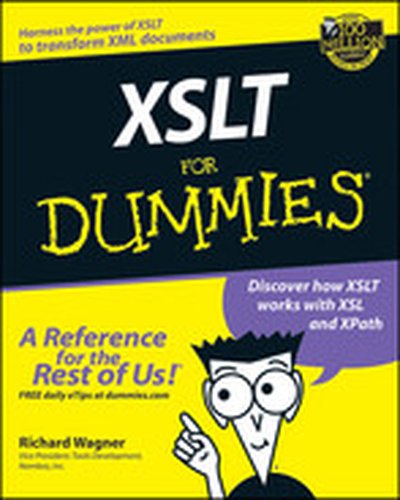
XSLT for Dummies

Restructuring information in an XML document so that it works in other formats used to be a time-consuming ordeal involving lots of blood, sweat, and tears. Now XSLT (Extensible Stylesheet Language Transformations) makes the process nearly instantaneous. Just provide an example of the kind of information you'd like to see, and XSLT does the rest. With XSLT you can effortlessly transform XML documents into virtually any kind of output, including other XML documents and HTML pages. But mastering XSLT can be tricky, especially if you've never worked with XML or HTML; and most books on the subject are written for people who have. Here comes XSLT For Dummies to the rescue! XSLT For Dummies is your ticket to quickly mastering XSLT—no matter what your prior programming experience. Writing in easygoing, plain English, XML pro Richard Wagner provides expert advice, step-by-step guidance, and tons of crystal-clear examples to help you harness the power of XSLT to transform documen ts. In no time you'll: Understand how XSLT works with XSL and XPath Experiment with templates, stylesheets, and expressions Perform HTML transformations Master XPath data types and functions Combine XSLT stylesheets Explore cool XSLT programming tricks XSLT For Dummies works from the ground up, starting with a practical introduction of the "X-Team"—XML, XSL, XSLT, and X-Path—and instructions on how to write a XSLT stylesheet. From there it quickly moves onward and upward through the whole range of important XSLT topics, including: Transforming with stylesheets Understanding and using template rules Using XPath to locate nodes in XML documents Combining XSLT stylesheets and adding processing instructions Debugging XSLT transformations Ten XSLT processors available online It doesn't matter whether you're a babe in the woods who can't tell a "tag" from an element, or you're an old pro at creating XML documents, XSLT For Dummies offers you a fun, easy way to explore and take full advantage of Extensible Stylesheet Language Transformations.

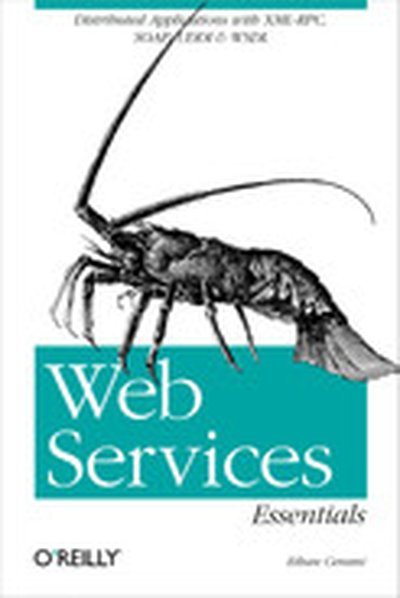
Web Services Essentials

As a developer new to Web Services, how do you make sense of thisemerging framework so you can start writing your own servicestoday? This concise book gives programmers both a concreteintroduction and a handy reference to XML web services, first byexplaining the foundations of this new breed of distributedservices, and then by demonstrating quick ways to create serviceswith open-source Java tools. Web Services make it possible fordiverse applications to discover each other and exchange dataseamlessly via the Internet. For instance, programs written in Javaand running on Solaris can find and call code written in C# thatrun on Windows XP, or programs written in Perl that run on Linux,without any concern about the details of how that service isimplemented. A common set of Web Services is at the core ofMicrosoft's new .NET strategy, Sun Microsystems's Sun One Platform,and the W3C's XML Protocol Activity Group. In this book, authorEthan Cerami explores four key emerging technologies: XML Remote Procedure Calls (XML-RPC) SOAP - The foundation for most commercial WebServices development Universal Discovery, Description and Integration(UDDI) Web Services Description Language (WSDL) For each of these topics, Web Services Essentials provides aquick overview, Java tutorials with sample code, samples of the XMLdocuments underlying the service, and explanations offreely-available Java APIs. Cerami also includes a guide to thecurrent state of Web Services, pointers to open-source tools and acomprehensive glossary of terms. If you want to break through theWeb Services hype and find useful information on these evolvingtechnologies, look no further than Web Services Essentials.

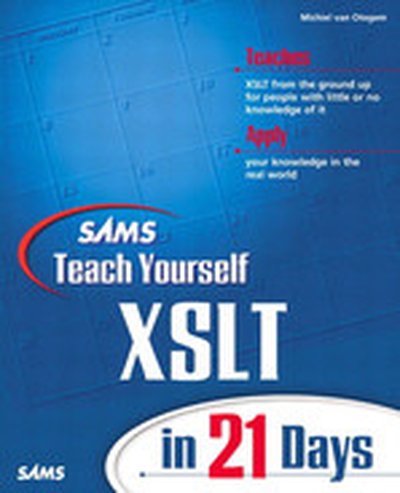
Sams Teach Yourself XSLT in 21 Days

The book covers XSLT and Xpath (as a part of XSLT), as these topics have everything to do with processing XML. It will also cover XML from an XSLT processing and design point of view. Other XML technologies will not be discussed as superset of XSLT, most notably XSL. XSL Formatting Objects alone is enough material for an entire book. Apart from that, XSLT and Xpath form the processing/programming section of the entire XSL specification. This book presents an overview of XSLT and guides readers through transforming their first XML data. In this book you will also learn: Selecting Data-Stylesheets and Xpath Basics; Inserting text and elements in output; Copying elements from the source and inserting text; Conditional processing basics and expressions; Modularizing stylesheets; Understanding, creating, and using templates; Controlling output, as well as creating more advanced output; Using multi-file stylesheets, variables, and parameters; Working with numbers, strings, multiple XML sources, and namespaces; Selecting data based upon keys; Recursion; Creating computational stylesheets; Working with parses; Designing XML and XSLT applications; Extending XSLT.

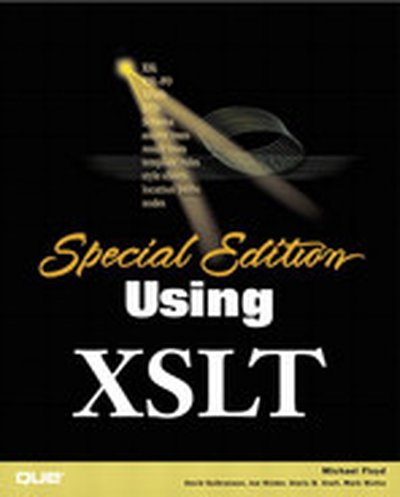
Special Edition Using XSLT

Special Edition Using XSLT starts with an overview explaining how XSLT fits into the bigger picture of the Extensible Stylesheet Language, and the differences between XSLT and XSL-FO. It then demonstrates practical examples of XSL transformations from XML to a variety of other useful formats including HTML, PDF, SVG and others. Later chapters discuss developer techniques for implementing XSLT within dynamic web environments including ASP and JSP. The author also covers debugging techniques and how XSLT relates to .NET. The book finishes with a useful reference section including detailed coverage of XSLT, XPath and XSL-FO.

SAX2

This concise book gives you the information you need to effectively use the Simple API for XML (SAX2), the dominant API for efficient XML processing with Java. With the SAX2 API, developers have access to the information in XML documents as they are read, without imposing major memory constraints or a large code footprint. SAX2 is often used by other APIs "under the covers", and provides a foundation for processing and creating both XML and non-XML information. While generally considered the most efficient approach to handling XML document parsing, SAX2 also carries a significant learning curve. In SAX2, author David Brownell explores the many details of managing XML parsers, filtering the information those parsers return, generating your own SAX2 events to convert non-XML information to an XML form, and developing strategies for using event-based parsing in a variety of application scenarios. Created in a public process by the XML-Dev mailing list, the SAX2 API is compact and highly functional. SAX2 uses callbacks to report the information in an XML document as the document is read, allowing you to create your own program structures around the content of documents. No intermediary model of an entire XML document is necessary, and the mapping from XML structures to Java structures and back is straightforward. Both developers learning about SAX2 for the first time and developers returning for reference and advanced material about SAX2 will find useful information in this book. Chapters provide detailed explanations and examples of many different aspects of SAX2 development, while appendices provide a reference to the API and an explanation of the relationships between the SAX2 API and the XML Information Set. While the core of the API is quite approachable, many of its more advanced features are both obscure and powerful. You can use SAX2 to filter, modify, and restructure information in layers of processing which make it easy to reuse generic tools. SAX2 also has some significant limitations that applications need to address in their own ways. This new book gives you the detail and examples required to use SAX2 to its full potential, taking advantage of its power while avoiding its limitations.

XML Companion, The, Third Edition

Building on the success of the first and second editions of The XML Companion, Neil Bradley has up-dated this accessible, in-depth reference to cover many of the new supporting standards that have emerged since XML was released in 1998. Apart from the core chapters on the XML standard itself, this book concentrates on related standards developed by the W3C and on the two most popular applications of this technology: document publishing and data exchange. The XML Companion Provides accessible, comprehensive description of each XML feature Does not assume experience of HTML or SGML Detailed study of the standard is supported by the inclusion of cross-referenced ‘roadmaps’ of the building blocks that comprise the standard. Includes an extensive glossary Related standards for cataloguing, processing, linking and styling XML are covered in detail.

XML and SQL: Developing Web Applications

"Dan's book provides something that the formal standards and development manuals sorely lack: a context that helps developers understand how to use XML in their own projects." --Tim Kientzle, Independent Software Consultant is a guide for Web developers and database programmers interested in building robust XML applications backed by SQL databases. It makes it easier than ever for Web developers to create and manage scalable database applications optimized for the Internet. XML and SQL: Developing Web Applications The author offers an understanding of the many advantages of both XML and SQL and provides practical information and techniques for utilizing the best of both systems. The book explores the stages of application development step by step, featuring a real-world perspective and many examples of when and how each technology is most effective. Specific topics covered include: Project definition for a data-oriented application Creating a bullet-proof data model DTDs (document type definitions) and the design of XML documents When to use XML, and what parts of your data should remain purely relational Related standards, such as XSLT and XML Schema How to use the XML support incorporated into Microsoft's SQL Server™ 2000 The XML-specific features of J2EE™ (Java™ 2 Enterprise Edition) Throughout this book, numerous concrete examples illustrate how to use each of these powerful technologies to circumvent the other's limitations. If you want to use the best part of XML and SQL to create robust, data-centric systems then there is no better resource than this book. 0201657961B10152001

Applied SOAP: Implementing .NET XML Web Services

This book takes the reader from the architecture of .NET to real-world techniques they can use in their own Internet applications. The reader is introduced to .NET and Web Services and explores (in detail) issues surrounding the fielding of successful Web Services. Practical guidelines as well as solutions are provided that the rader may use in their own projects. Some of the issues involve lack of specific guidance in the SOAP specification, while others transcend SOAP and involve issues Internet developers have grappled with since the inception of the World Wide Web. At this time, this book has no competition.

Strategic XML

Strategic XML analyses the IT systems of a typical large corporation and gives specific, fully-functional examples that show how XML can solve problems today while positoning your company for the demands of tomorrow. Strategic XML addresses: XML Web content publishing, a simple workflow system, an offline order processing system, SOAP client and server examples, legacy system integration (using COBOL), and a unified Web and print documentation system based on XML and XSL.

XSLT

XSLT documents a core technology for processing XML. Originally created for page layout, XSLT (Extensible Stylesheet Transformations) is now much more: a general-purpose translation tool, a system for reorganizing document content, and a way to generate multiple results-- such as HTML, WAP, and SVG--from the same content. What sets XSLT apart from other books on this critical tool is the depth of detail and breadth of knowledge that Doug Tidwell, a developer with years of XSLT experience, brings to his concise treatment of the many talents of XSLT. He covers XSLT and XPath, a critical companion standard, and addresses topics ranging from basic transformations to complex sorting and linking. He explores extension functions on a variety of different XSLT processors and shows ways to combine multiple documents using XSLT. Code examples add a real-world dimension to each technique. Useful as XSLT is, its peculiar characteristics make it difficult to get started in, and the ability to use advanced techniques depends on a clear and exact understanding of how XSLT templates work and interact. For instance, the understanding of "variables" in XSLT is deeply different from the understanding of "variables" in procedural languages. The author explains XSLT by building from the basics to its more complex and powerful possibilities, so that whether you're just starting out in XSLT or looking for advanced techniques, you'll find the level of information you need.

Java and XML, Second Edition

While the XML "buzz" still dominates talk among Internet developers, the critical need is for information that cuts through the hype and lets Java programmers put XML to work. Java & XML shows how to use the APIs, tools, and tricks of XML to build real-world applications, with the end result that both the data and the code are portable. This second edition of Java & XML adds chapters on Advanced SAX and Advanced DOM, new chapters on SOAP and data binding, and new examples throughout. A concise chapter on XML basics introduces concepts, and the rest of the book focuses on using XML from your Java applications. Java developers who need to work with XML, or think that they will in the future--as well as developers involved in the new peer-to-peer movement, messaging, or web services--will find the new Java & XML a constant companion. This book covers: The basics of XML, including DTDs, namespaces, XML Schema, XPath, and XSL The SAX API, including all handlers, the SAX 2 extensions, filters, and writers The DOM API, including DOM Level 2, Level 3, and the Traversal, Range, CSS, Events, and HTML modules. The JDOM API, including the core, a look at XPath support, and JDOM as a JSR Using web publishing frameworks like Apache Cocoon Developing applications with XML-RPC Using SOAP and UDDI for web services Data Binding, using both DTDs and XML Schema for constraints Building business-to-business applications with XML Building information channels with RSS and dynamic content with XSP Includes a quick reference on SAX 2.0, DOM Level 2, and JDOM.

XSLT and XPATH: A Guide to XML Transformations

Gain total control over your information with XSLT and XPath! Master XSLT and XPath—the "keys to the XML kingdom" Build custom XML output solutions that won't become obsolete Learn everything from basic XML-to-HTML conversions to leading edge techniques CD-ROM includes all examples from the book Mastering XSLT and XPath gives you unprecedented control over your information—and helps you leverage virtually every new XML technology, from XLink to schemas. Discover XSLT's powerful vocabulary of easy, programming-like features, and learn how to build custom solutions that resist obsolescence. By the end of the first chapter, you'll be performing XML-to-HTML conversions for display in any Web browser. Then build on your knowledge through a series of hands-on examples that transform you into an XSLT/XPath expert! XSLT as an XML document instance: leveraging your existing XML skills XSLT stylesheet concepts and constructs: fundamental through advanced level XPath patterns and functions XSLT subroutine functions and variables XSLT processing of multiple nodes: iterative and conditional XSLT elements Controlling output options XSLT extensions, and more Whether you're an experienced programmer or a novice markup specialist, here's your chance to master XML's most potent tools for organizing, updating, and delivering digital information—any data, anywhere, any time!

Inside XSLT

Inside XSLT is designed to be a companion guide to Inside XML. This example oriented book covers XML to HTML, XML to Music, XML with Java, style sheet creation and usage, nodes and attributes, sorting data, creating Xpath expressions, using Xpath and XSLT functions, namespaces, names templates, name variables, designing style sheets and using XSLT processor API's, the 56 XSL formatting objects, the XSLT DTD, and much much more.

Programming Web Services with XML-RPC

Have you ever needed to share processing between two or more computers running programs written in different languages on different operating systems? Or have you ever wanted to publish information on the Web so that programs other than browsers could work with it? XML-RPC, a system for remote procedure calls built on XML and the ubiquitous HTTP protocol, is the solution you've been looking for. Programming Web Services with XML-RPC introduces the simple but powerful capabilities of XML-RPC, which lets you connect programs running on different computers with a minimum of fuss, by wrapping procedure calls in XML and establishing simple pathways for calling functions. With XML-RPC, Java programs can talk to Perl scripts, which can talk to Python programs, ASP applications, and so on. You can provide access to procedure calls without having to worry about the system on the other end, so it's easy to create services that are available on the Web.XML-RPC isn't the only solution for web services; the Simple Object Access Protocol (SOAP) is another much-hyped protocol for implementing web services. While XML-RPC provides fewer capabilities than SOAP, it also has far fewer interoperability problems and its capabilities and limitations are much better understood. XML-RPC is also stable, with over 30 implementations on a wide variety of platforms, so you can start doing real work with it immediately. Programming Web Services with XML-RPC covers the details of five XML-RPC implementations, so you can get started developing distributed applications in Java, Perl, Python, ASP, or PHP. The chapters on these implementations contain code examples that you can use as the basis for your own work. This book also provides in-depth coverage of the XML-RPC specification, which is helpful for low-level debugging of XML-RPC clients and servers. And if you want to build your own XML-RPC implementation for another environment, the detailed explanations in this book will serve as a foundation for that work.

XML Pocket Reference, Second Edition

XML, the Extensible Markup Language, is the next-generation markup language for the Web. It provides a more structured (and therefore more powerful) medium than HTML, allowing you to define new document types and stylesheets as needed. Although the generic tags of HTML are sufficient for everyday text, XML gives you a way to add rich, well-defined markup to electronic documents. The XML Pocket Reference is both a handy introduction to XML terminology and syntax, and a quick reference to XML instructions, attributes, entities, and datatypes. Although XML itself is complex, its basic concepts are simple. This small book combines a perfect tutorial for learning the basics of XML with a reference to the XML and XSL specifications. The new edition introduces information on XSLT (Extensible Stylesheet Language Transformations) and Xpath.

XML and Java™ from scratch

With the help of XML and Java from scratch, you will build a Web site and application for ChaseWeb Furniture-a fictitious catalog furniture company. All of the information on products, prices, vendors, and so on, is rendered in XML. You'll learn how to display products on the company Web site, take orders, produce a paper catalog, and communicate with the external databases of vendors using XML. The from scratch format is designed to teach novice programmers the hows and whys of programming in the context of creating a functioning application.

Learning XML

The arrival of support for XML--the Extensible Markup Language--in browsers and authoring tools has followed a long period of intense hype. Major databases, authoring tools (including Microsoft's Office 2000), and browsers are committed to XML support. Many content creators and programmers for the Web and other media are left wondering, "What can XML and its associated standards really do for me?" Getting the most from XML requires being able to tag and transform XML documents so they can be processed by web browsers, databases, mobile phones, printers, XML processors, voice response systems, and LDAP directories, just to name a few targets. In Learning XML, the author explains XML and its capabilities succinctly and professionally, with references to real-life projects and other cogent examples. Learning XML shows the purpose of XML markup itself, the CSS and XSL styling languages, and the XLink and XPointer specifications for creating rich link structures. The basic advantages of XML over HTML are that XML lets a web designer define tags that are meaningful for the particular documents or database output to be used, and that it enforces an unambiguous structure that supports error-checking. XML supports enhanced styling and linking standards (allowing, for instance, simultaneous linking to the same document in multiple languages) and a range of new applications. For writers producing XML documents, this book demystifies files and the process of creating them with the appropriate structure and format. Designers will learn what parts of XML are most helpful to their team and will get started on creating Document Type Definitions. For programmers, the book makes syntax and structures clear It also discusses the stylesheets needed for viewing documents in the next generation of browsers, databases, and other devices.