talk-data.com talk-data.com

Topic

storage-formats

132

tagged

Activity Trend

1 peak/qtr
2020-Q1 2026-Q1

Activities

132 activities · Newest first

Rexx Programmer's Reference

Originally developed for mainframes but highly portable across platforms-from servers to desktops to handhelds-Rexx is an easy yet powerful scripting language that's widely used for rapid application development. Covers Rexx interpreters for specialized functions-object-oriented, mainframe, and handheld. There are 8 different free Rexx interpreters optimized for different platforms and uses. This book shows how to use them all. Shows how to script for GUIs, databases, web servers, XML, and other interfaces. Details how to make the best use of Rexx tools and interfaces, with examples for both Linux and Windows. Includes a tutorial with lots of examples to help people get up and running.

OASIS OpenDocument Essentials: Using OASIS OpenDocument XML

The Organization for the Advancement of Structured Information Standards (OASIS) recently approved OpenDocument as standard. OpenDocument is "a royalty-free, XML-based file format that covers features required by text, spreadsheets, charts, and graphical documents." OpenDocument serves as the native file format for OpenOffice.org version 2 and future versions of KOffice. OASIS OpenDocument Essentials—Using OASIS OpenDocument XML shows you how to take advantage of this format. In addition to explaining the basics of OpenDocument, this book has examples showing how to extract information from, transform, and programmatically create OpenDocument files.

XML in a Nutshell, 3rd Edition

If you're a developer working with XML, you know there's a lot to know about XML, and the XML space is evolving almost moment by moment. But you don't need to commit every XML syntax, API, or XSLT transformation to memory; you only need to know where to find it. And if it's a detail that has to do with XML or its companion standards, you'll find it--clear, concise, useful, and well-organized--in the updated third edition of XML in a Nutshell.With XML in a Nutshell beside your keyboard, you'll be able to: This powerful new edition is the comprehensive XML reference. Serious users of XML will find coverage on just about everything they need, from fundamental syntax rules, to details of DTD and XML Schema creation, to XSLT transformations, to APIs used for processing XML documents. Quick-reference syntax rules and usage examples for the core XML technologies, including XML, DTDs, Xpath, XSLT, SAX, and DOM Develop an understanding of well-formed XML, DTDs, namespaces, Unicode, and W3C XML Schema Gain a working knowledge of key technologies used for narrative XML documents such as web pages, books, and articles technologies like XSLT, Xpath, Xlink, Xpointer, CSS, and XSL-FO Build data-intensive XML applications Understand the tools and APIs necessary to build data-intensive XML applications and process XML documents, including the event-based Simple API for XML (SAX2) and the tree-oriented Document Object Model (DOM) XML in a Nutshell also covers XML 1.1, as well as updates to SAX2 and DOM Level 3 coverage. If you need explanation of how a technology works, or just need to quickly find the precise syntax for a particular piece, XML in a Nutshell puts the information at your fingertips.Simply put, XML in a Nutshell is the critical, must-have reference for any XML developer.

XML Hacks

Developers and system administrators alike are uncovering the true power of XML, the Extensible Markup Language that enables data to be sent over the Internet from one computer platform to another or one application to another and retain its original format. Flexible enough to be customized for applications as diverse as web sites, electronic data interchange, voice mail systems, wireless devices, web services, and more, XML is quickly becoming ubiquitous. XML Hacks is a roll-up-your-sleeves guide that distills years of ingenious XML hacking into a complete set of practical tips, tricks, and tools for web developers, system administrators, and programmers who want to go far beyond basic tutorials to leverage the untapped power of XML.With plenty of useful real-world projects that illustrate how to define, read, create, and manipulate XML documents, XML Hacks shows readers how to put XML's power to work on the Internet and within productivity applications. Each Hack in this book can be read easily in a few minutes, saving programmers and administrators countless hours of searching for the right answer. And this is an O'Reilly Hacks book, so it's not just practical, imminently useful, and time-saving. It's also fun.From Anatomy of an XML Document to Exploring SOAP Messages XML Hacks shows you how to save time and accomplish more with fewer resources. If you want much more than the average XML user--to explore and experiment, do things you didn't know you could do with XML, discover clever shortcuts, and show off just a little--this invaluable book is a must-have.

XML for DB2 Information Integration

In many organizations, relational databases are the backbone for data storage and retrieval. Over the last couple of years, XML has become the de facto standard to exchange information between organizations, as well as between departments or applications within the same organization. Since data tends to live in databases, it needs to be converted from a relational format into an XML format when involved in those data exchanges, as well as converted (back) from XML into a relational format for storage, or for handling by other applications. How can we achieve this? This IBM Redbooks publication describes how to design the mapping between XML and relational data, and vice versa, to enable a flexible exchange of information. IBM provides a number of products to help you bridge the gap between XML and its relational database, DB2. The DB2 engine itself provides support to generate XML fragments from relational data through the use of SQL/XML built-in functions. DB2 also provides the DB2 XML Extender. It allows you to perform XML composition, like SQL/XML, but also provides functionality to decompose XML documents and store XML documents intact inside the database. XML Extender also provides a set of transformation and validation functions. Another option to work with XML is to use the XML wrapper, a part of the set of non-relational wrappers of DB2 Information Integrator. This book also looks at the IBM tools available to assist you when dealing with XML, specifically WebSphere Application Developer and DB2 Control Center. Please note that the additional material referenced in the text is not available from IBM.

XML in Data Management

XML in Data Management is for IT managers and technical staff involved in the creation, administration, or maintenance of a data management infrastructure that includes XML. For most IT staff, XML is either just a buzzword that is ignored or a silver bullet to be used in every nook and cranny of their organization. The truth is in between the two. This book provides the guidance necessary for data managers to make measured decisions about XML within their organizations. Readers will understand the uses of XML, its component architecture, its strategic implications, and how these apply to data management. Takes a data-centric view of XML Explains how, when, and why to apply XML to data management systems Covers XML component architecture, data engineering, frameworks, metadata, legacy systems, and more Discusses the various strengths and weaknesses of XML technologies in the context of organizational data management and integration

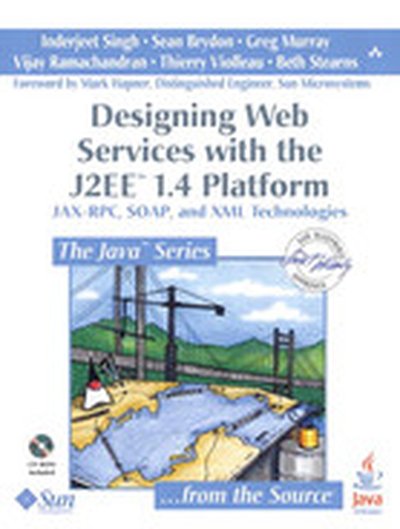
Designing Web Services with the J2EE™ 1.4 Platform JAX-RPC, SOAP, and XML Technologies

Written by Sun Microsystems' Java™ BluePrints team, is the authoritative guide to the best practices for designing and integrating enterprise-level Web services using the Java 2 Platform, Enterprise Edition (J2EE) 1.4. This book provides the guidelines, patterns, and real-world examples architects and developers need in order to shorten the learning curve and start building robust, scalable, and portable solutions. Designing Web Services with the J2EE™ 1.4 Platform The authors use the Java Adventure Builder application to bring the design process to life and help illustrate the use of Java APIs for XML Processing (JAXP), Java APIs for XML-Based RPC (JAX-RPC), and other Web service and Java-XML technologies. Key topic coverage includes: Web service requirements and design issues Support for Web services provided by the J2EE 1.4 platform Designing and implementing Web service end points Writing efficient Web service client applications Designing and developing XML-based applications Integrating applications and data using Web services The J2EE platform security model as it applies to Web services A coherent programming model for designing and developing Web service endpoints and clients provides the insight, advice, and detail that make it easier to create effective Web service applications using the J2EE 1.4 platform. Designing Web Services with the J2EE™ 1.4 Platform

XML Publishing with AxKit

Web developers rely on XML to separate data from presentation and create a consistent templating system for a web site. Although limited XML-to-HTML conversion is possible within some browsers, web developers creating dynamic or complex sites will find server-side XML transformation a necessity. Unfortunately, until recently, there have been few XML tools available for server-side XML transformation or authoring. AxKit, a mod_perl and Apache-based XML content delivery solution, was designed to meet that need with a cost-effective and efficient plugin architecture. AxKit allows the developer to quickly design modules to create faster web sites, and deliver them in a wide variety of media formats. AxKit also takes care of caching so the developer doesn't have to worry about it. AxKit meets the demands of the web developer nicely, but, as with any new toolkit, there is a learning curve. For developers who want to flatten that learning curve and get right to work with AxKit, XML Publishing with AxKit provides detailed information on how to install, configure, and deploy AxKit effectively. The first book solely devoted to AxKit, XML Publishing with AxKit also offers a concise and focused look at how to create XSLT and XPathScript-based pipelines for XML data transfer. This solidly useful new book presents web programmers with the hands-on knowledge they need to get really creative with AxKit. It features a thorough introduction to XSP (extensible Server Pages), which applies the concepts of Server Pages technologies (embedded code, tag libraries, etc) to the XML world, and covers integrating AxKit with other tools such as Template Toolkit, Apache:: Mason, Apache::ASP, and plain CGI. The book also includes invaluable reference sections on configuration directives, XPathScript, and XSP. With XML Publishing with AxKit, web developers will have all the tools they need to deliver complex XML-based systems quickly, the power to develop their own systems for style sheet negotiation, and the flexibility to design completely new style sheet languages. XML Publishing with AxKit gives those new to XML all the background and the courage they need to jump right in and deploy AxKit. And it gives XML-savvy professionals everything they need to hit the ground running.

Office 2003 XML

In Microsoft's Office 2003, users experience the merger of the power of the classic Office suite of applications with the fluidity of data exchange inherent in XML. With XML at its heart, the new version of Microsoft's desktop suite liberates the information stored in millions of documents created with Office software over the past fifteen years, making it available to a wide variety of programs. Office 2003 XML offers an in-depth exploration of the relationship between XML and Office 2003, examining how the various products in the Office suite both produce and consume XML. Developers will learn how they can connect Microsoft Office to others systems, while power users will learn to create and analyze XML documents using familiar Office tools. The book begins with an overview of the XML features included in the various Office 2003 components, and explores in detail how Word, Excel, and Access interact with XML. This book covers both the user interface side, creating interfaces so that users can comfortably (and even unknowingly) work with XML, and the back end, exposing Office information to other processes. It also looks at Microsoft's new InfoPath application and how it fits with the rest of Office. Finally, the book's appendices introduce various XML technologies that may be useful in working with Office, including XSLT, W3C XML Schema, RELAX NG, and SOAP. Office 2003 XML provides quick and clear guidance to a anyone who needs to import or export information from Office documents into other systems. Both XML programmers and Office power will learn how to get the most from this powerful new intersection between Office 2003 and XML.

Microsoft® Office InfoPath™ 2003 Kick Start

Microsoft InfoPath 2003 Kick Start builds upon the reader's knowledge of the Microsoft Office system to enable them to get right to work making productive use of InfoPath. It is targeted specifically at the early adopters - developers who will use their knowledge of XML and Web development to build sophisticated applications with InfoPath front ends. However it is also, carefully structured to enable "front line" InfoPath users to quickly glean the information they need to be productive when developing their own InfoPath forms - and when working with developers to create more involved InfoPath applications.

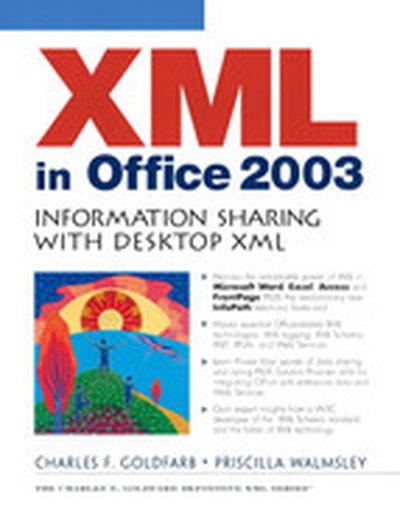
XML in Office 2003: Information Sharing with Desktop XML

Co-authors are the world-renowned inventor of markup languages and a developer of the W3C XML Schema specification Detailed coverage of Office 2003 Professional XML features, plus all the XML knowledge you need to use them Learn to edit your XML document with Word, analyze its data with Excel, store it with Access, and publish it to the Web with FrontPage® Build dynamic custom XML forms with the remarkable new InfoPath™ 2003—structured data collection with word processing flexibility From the Foreword by Jean Paoli, Microsoft XML Architect and co-editor of the W3C XML specification: “XML enabled the transfer of information from server to server and server to client, even in cross-platform environments. But the desktop, where documents are created and analyzed by millions of information workers, could not easily participate. Business-critical information was locked inside data storage systems or individual documents, forcing companies to adopt inefficient and duplicative business processes. “This is a book on re-inventing the way millions of people write and interact with documents. It succeeds in communicating the novel underlying vision of Office 2003 XML while focusing on task-oriented, hands-on skills for using the product.” Desktop XML affects every Office 2003 Professional Edition user! It transforms millions of desktop computers from mere word processors into rich clients for Web services, editing front-ends for XML content management systems, and portals for XML-based application integration. And this book shows you how to benefit from it. You’ll learn exactly what XML can do for you, and you’ll master its key concepts, all in the context of the Office products you already know and use. With 200 tested and working code and markup examples and over 150 screenshots and illustrations from the actual shipped product (not betas), you’ll see step by step how: Office users can share documents more easily, without error-prone rework, re-keying, or cut-and-paste. Office data from your documents can be captured for enterprise databases. Office documents can be kept up-to-date with live data from Web Services and enterprise data stores. Office solutions can overcome traditional limitations by using XML and Smart Documents. BONUS XML SKILLS SECTION! All the XML expertise you’ll need, adapted for Office 2003 users from the best-selling Charles F. Goldfarb’s XML Handbook, Fifth Edition: the XML language, XML Schema, XPath, XSLT, Web services … and more! CD-ROM INCLUDED: Provides a fully functional 60-day trial version of Microsoft InfoPath 2003.

XPath: Navigating XML with XPath 1.0 and 2.0 Kick Start

XPath is to XML as SQL is to databases: XML applications need XPath to locate specific data within an XML document for further processing with other XML applications such as XSLT, XQuery, XPointer, XLink and DOM level 3. With XPath, these applications offer developers a full toolkit for transforming, linking, and searching XML data. Developers need to understand XPath to fully exploit XML in their applications, and they have few resources beyond the W3C specification. XPath Kick Start will examine every aspect of XPath in detail, including its influence on and use with these other XML standards. With each technique illustrated with real-world examples, the book starts with coverage of the essentials of XPath, including nodes, expressions, functions and operators. The second half of the book details XPath in practice - from manipulating XML data to transforming, linking and querying XML documents.

RELAX NG

As developers know, the beauty of XML is that it is extensible, even to the point that you can invent new elements and attributes as you write XML documents. Then, however, you need to define your changes so that applications will be able to make sense of them and this is where XML schema languages come into play. RELAX NG (pronounced relaxing), the Regular Language Description for XML Core--New Generation is quickly gaining momentum as an alternative to other schema languages. Designed to solve a variety of common problems raised in the creation and sharing of XML vocabularies, RELAX NG is less complex than The W3C's XML Schema Recommendation and much more powerful and flexible than DTDs.RELAX NG is a grammar-based schema language that's both easy to learn for schema creators and easy to implement for software developers In RELAX NG, developers are introduced to this unique language and will learn a no-nonsense method for creating XML schemas. This book offers a clear-cut explanation of RELAX NG that enables intermediate and advanced XML developers to focus on XML document structures and content rather than battle the intricacies of yet another convoluted standard. RELAX NG covers the following topics in depth: and much more.If you're looking for a schema language that's easy to use and won't leave you in a labyrinth of obscure limitations, RELAX NG is the language you should be using. And only O'Reilly's Introduction to RELAX NG Building RELAX NG schemas using XML syntax Building RELAX NG schemas using compact syntax, an alternative non-XML syntax Flattening schemas to limit depth and provide reusability Using external datatype libraries with RELAX NG W3C XML Schema regular expressions Writing extensible schemas Annotating schemas Generating schemas form different sources Determinism and datatype assignment RELAX NG gives you the straightforward information and everything else you'll need to take advantage of this powerful and intelligible language.

.NET & XML

If you're seeking ways to build network-based applications or XML-based web services, Microsoft provides most of the tools you'll need. XML is integrated into the .NET Framework and Visual Studio .NET, but if you want to get a grasp on how .NET and XML actually work together, that's a different story. With .NET & XML, you can get under the hood to see how the .NET Framework implements XML, giving you the skills to write understandable XML-based code that interoperates with code written with other tools, and even other languages. .NET & XML starts by introducing XML and the .NET Framework, and then teaches you how to read and write XML before moving on to complex methods for manipulating, navigating, transforming, and constraining it. To demonstrate the power of XML in .NET, author Niel Bornstein builds a simple hardware store inventory system throughout the book. As you move from chapter to chapter, you'll absorb increasingly complex information until you have enough knowledge to successfully program your own XML-based applications. This tutorial also contains a quick reference to the API, plus appendices present additional .NET assemblies that you can use to work with XML, and how to work with the .NET XML configuration file format.One study puts the potential market for new software based on XML at or near $100 billion over the next five years. The .NET Framework gives you a way to become a part of it. But to use XML and .NET effectively, you need to understand how these two technologies work together. This book gives you the insight to take full advantage of the power the two provide.

Learning XSLT

XSLT is a powerful language for transforming XML documents into something else. That something else can be an HTML document, another XML document, a Portable Document Format (PDF) file, a Scalable Vector Graphics (SVG) file, a Virtual Reality Modeling Language (VRML) file, Java code, or a number of other things. You write an XSLT stylesheet to define the rules for transforming an XML document, and the XSLT processor does the work.As useful as XSLT is, its peculiar characteristics make it a difficult language in which to get started. In fact, newcomers are often a little dazed on first contact. Learning XSLT offers a hands-on introduction to help them get up to speed with XSLT quickly. The book will help web developers and designers understand this powerful but often mystifying template-driven and functional-styled language, getting them over the many differences between XSLT and the more conventional programming languages. Learning XSLT moves smoothly from the simple to complex, illustrating all aspects of XSLT 1.0 through step-by-step examples that you'll practice as you work through the book. Thorough in its coverage of the language, the book makes few assumptions about what you may already know. You'll learn about XSLT's template-based syntax, how XSLT templates work with each other, and gain an understanding of XSLT variables. Learning XSLT also explains how the XML Path Language (XPath) is used by XSLT and provides a glimpse of what the future holds for XSLT 2.0 and XPath 2.0.The ability to transform one XML vocabulary to another is fundamental to exploiting the power of XML. Learning XSLT is a carefully paced, example-rich introduction to XSLT that will have you understanding and using XSLT on your own in no time.

Sams Teach Yourself XML in 21 Days, Third Edition

Sams Teach Yourself XML in 21 Days, written by expert author Steve Holzner, offers hundreds of real-world examples demonstrating the uses of XML and the newest tools developers need to make the most of it. In Week One, he starts from basic syntax, and discusses XML document structure, document types, and the benefits of XML Schema. Week Two covers formatting using either CSS or the Extensible Sytlesheet Language, and working with XHTML and other tools for presenting XML data on the Web, or in multimedia applications. The final chapter of week two discusses XForms, the newest way to process forms in XML applications. Week Three applies XML to programming with Java, .NET or JavaScript, and building XML into database or Web Service applications with SOAP. Along the way, Steve shows readers the results of every lesson and provides both the "how" and "why" of the inner working of XML technologies.

XForms: XML Powered Web Forms

Praise for XForms: XML Powered Web Forms “XForms is an exciting new technology for designing Web forms in an elegant and accessible way. Raman’s book provides strong motivations for flexibility in the design of human-machine interactions, and explains how to use XForms to this end in crystal-clear prose.” — Eve Maler XML Standards Architect, Sun Microsystems “Interactive forms technology is the logical evolution of Web user interface design. XForms represents a significant leap forward in that evolution.” — Sean McGrath CTO, Propylon “The greatest strength of this book is the skill with which T. V. Raman links the XForms technology with the larger context of the Web. The limitations of HTML forms, the ways in which XForms provides a better foundation for Web and Web service user interfaces, and the opportunities for an XForms-powered Web that is accessible to all users and devices are outlined and brought together in a compelling way.” — Michael Champion Advisory Research and Development Specialist, Software AG “Raman’s book gives the reader an excellent explanation of the emerging W3C XForms recommendation. It’s a well-organized and well-written book that begins with a gentle introduction to the concepts that motivated the development of XForms and then provides a reasonable overview of the relevant XML technology related to XForms. Most of the book covers XForms components: user interface controls, model properties, functions, actions, and events. It concludes with XForms as a Web service, offering multi-modal access and accessibility. In light of the October 2003 deadline for U.S. federal agencies to comply with the mandate of the Government Paperwork Elimination Act (GPEA) to give citizens the opportunity to provide information online, this important technical work comes none too soon. As T. V. masterfully elucidates, XForms provides the ‘last mile’ in ‘connecting users to their data.’ Insightfully, he also observes ‘the document is the human interface’ to data—an understanding without which the challenge to make eGov services ‘citizen-centered’ simply cannot and will not be met.” — Owen Ambur Cofounder and Cochair, XML Working Group, U.S. CIO Council “I found the author’s straightforward style quite comfortable and informative. I heartily recommend this book, especially for government XML developers interested in the broader area of E-Forms. Understanding XForms is key to developing robust and flexible E-Forms solutions that separate content, logic, validation, and presentation. You’ll never look at (X)HTML forms the same way after reading Raman’s book.” — Kenneth Sall GSA eGov Technical Architect/XML Specialist, SiloSmashers “Reusable components such as E-Forms are at the heart of the U.S. Federal Enterprise Architecture and E-Government, and XML standards-based solutions are starting to appear for use across the government. T. V. Raman’s book meticulously explains how XForms leverage the power of using XML for E-Forms and have been designed to abstract much of XML’s functionality into a set of components referred to as MVC (Model, View, Controller), which separates the model from its final presentation. This XForms component architecture serves as an excellent roadmap for the reader. T. V. eloquently shows how XForms make the original promise of ‘the document is the interface’ a reality so the collected data can be directly submitted to a Web service—thus putting a human face on Web services!” —Brand Niemann, Ph.D., Chair, XML Web Services Working Group, U.S. CIO Council XForms—XML-powered Web forms—are set to replace HTML forms as the backbone of electronic commerce. XForms enable the creation and editing of structured XML content within a familiar Web browser environment, which is likely to play a key role in enabling simple browser-based access to Web services. XForms leverage the power of XML in modeling, collecting, and serializing user input. In this book, World Wide Web Consortium (W3C) XForms specification editor T. V. Raman explains how programmers can create durable and dependable feature-rich forms accessible from multiple platforms and devices and available in multiple languages and modes. XForms play a key role in connecting humans to information technologies, deployed as Web services. This book begins by providing an overview of the XForms technology and the set of XML standards on which it is built, including XML Path Language (XPath), Dom2 events, XML events, XML namespaces, and XML Schema. Part II profiles the XForms architecture and its components. An introduction to the available user interface controls leads into a guide to creating complex user interfaces. The following chapters describe XForms model properties, functions, actions, and events. Each chapter’s increasingly complex examples illustrate the concepts discussed. The final part of the book details how XForms will be used to create a new generation of human-centric, multimodal, accessible Web transactions. Readers will learn: Why XForms can deliver better user interaction at less cost How the XForms technology works What comprises the XForms architecture How to use XForms to connect users to Web services How XForms can accommodate spoken and visual interaction How to ensure universal accessibility to Web content with XForms XForms will transform the way companies and consumers handle Web transactions. provides Web developers, IT professionals, and Web server administrators with a firm grasp of this standard, how it will shape emerging solutions, and how it will change the nature of their day-to-day work. XForms: XML Powered Web Forms

Effective XML: 50 Specific Ways to Improve Your XML

Praise for Effective XML “This is an excellent collection of XML best practices: essential reading for any developer using XML. This book will help you avoid common pitfalls and ensure your XML applications remain practical and interoperable for as long as possible.” — Edd Dumbill, Managing Editor, XML.com and Program Chair, XML Europe “A collection of useful advice about XML and related technologies. Well worth reading both before, during, and after XML application development.” — Sean McGrath, CTO, Propylon “A book on many best practices for XML that we have been eagerly waiting for.” — Akmal B. Chaudhri, Editor, IBM developerWorks “The fifty easy-to-read items cover many aspects of XML, ranging from how to use markup effectively to what schema language is best for what task. Sometimes controversial, but always relevant, Elliotte Rusty Harold’s book provides best practices for working with XML that every user and implementer of XML should be aware of.” — Michael Rys, Ph.D., Program Manager, SQL Server XML Technologies, Microsoft Corporation “ Effective XML is an excellent book with perfect timing. Finally, an XML book everyone needs to read! Effective XML is a fount of XML best practices and solid advice. Whether you read Effective XML cover to cover or randomly one section at a time, its clear writing and insightful recommendations enlighten, entertain, educate, and ultimately improve the effectiveness of even the most expert XML developer. I’ll tell you what I tell all my coworkers and customers: You need this book.” — Michael Brundage, Technical Lead, XML Query Processing, Microsoft WebData XML Team “This book provides great insight for all developers who write XML software, regardless of whether the software is a trivial application-specific XML processor or a fullblown W3C XML Schema Language validator. Mr. Harold covers everything from a very important high-level terminology discussion to details about parsed XML nodes. The well-researched comparisons of currently available XML-related software products, as well as the key criteria for selecting between XML technologies, exemplify the thoroughness of this book.” — Cliff Binstock, Author, The XML Schema Complete Reference If you want to become a more effective XML developer, you need this book. You will learn which tools to use when in order to write legible, extensible, maintainable and robust XML code. Page 36: How do you write DTDs that are independent of namespace prefixes? Page 82: What do parsers reliably report and what don't they? Page 130: Which schema language is the right one for your job? Page 178: Which API should you choose for maximum speed and minimum size? Page 257: What can you do to ensure fast, reliable access to DTDs and schemas without making your document less portable? Page 283: Is XML too verbose for your application? Elliotte Rusty Harold provides you with 50 practical rules of thumb based on real-world examples and best practices. His engaging writing style is easy to understand and illustrates how you can save development time while improving your XML code. Learn to write XML that is easy to edit, simple to process, and is fully interoperable with other applications and code. Understand how to design and document XML vocabularies so they are both descriptive and extensible. After reading this book, you'll be ready to choose the best tools and APIs for both large-scale and small-scale processing jobs. Elliotte provides you with essential information on building services such as verification, compression, authentication, caching, and content management. If you want to design, deploy, or build better systems that utilize XML—then buy this book and get going!

Learning XML, 2nd Edition

This second edition of the bestselling Learning XML provides web developers with a concise but grounded understanding of XML (the Extensible Markup Language) and its potential-- not just a whirlwind tour of XML.The author explains the important and relevant XML technologies and their capabilities clearly and succinctly with plenty of real-life projects and useful examples. He outlines the elements of markup--demystifying concepts such as attributes, entities, and namespaces--and provides enough depth and examples to get started. Learning XML is a reliable source for anyone who needs to know XML, but doesn't want to waste time wading through hundreds of web sites or 800 pages of bloated text.For writers producing XML documents, this book clarifies files and the process of creating them with the appropriate structure and format. Designers will learn what parts of XML are most helpful to their team and will get started on creating Document Type Definitions. For programmers, the book makes syntax and structures clear. Learning XML also discusses the stylesheets needed for viewing documents in the next generation of browsers, databases, and other devices. Learning XML illustrates the core XML concepts and language syntax, in addition to important related tools such as the CSS and XSL styling languages and the XLink and XPointer specifications for creating rich link structures. It includes information about three schema languages for validation: W3C Schema, Schematron, and RELAX-NG, which are gaining widespread support from people who need to validate documents but aren't satisfied with DTDs. Also new in this edition is a chapter on XSL-FO, a powerful formatting language for XML. If you need to wade through the acronym soup of XML and start to really use this powerful tool, Learning XML, will give you the roadmap you need.

XForms Essentials

The use of forms on the web is so commonplace that most user interactions involve some type of form. XForms--a combination of XML and forms--offers a powerful alternative to HTML-based forms. By providing excellent XML integration, including XML Schema, XForms allows developers to create flexible, web-based user-input forms for a wide variety of platforms, including desktop computers, handhelds, information appliances, and more. XForms Essentials is an introduction and practical guide to the new XForms specification. Written by Micah Dubinko, a member of the W3C XForms working group and an editor of the specification, the book explains the how and why of XForms, showing readers how to take advantage of them without having to write their own code. You'll learn how to integrate XForms with both HTML and XML vocabularies, and how XForms can simplify the connection between client-based user input and server-based processing. XForms Essentials begins with a general introduction to web forms, including information on history and basic construction of forms. The second part of the book serves as a reference manual to the XForms specification. The third section offers additional hints, guidelines, and techniques for working with XForms. Topics covered in the book include: creating XForms files in a text or XML editor converting existing forms (electronic or paper) to XForms collecting XML data from users in a user-friendly way reducing the amount of JavaScript needed within browser interfaces increasing the security and reliability of your current forms system by combining client-side and server-side checks into a common code base creating interactive websites using the latest standard technology XForms Essentials focuses on the practical application of XForms technology. If you work with forms, HTML, or XML information, XForms Essentials will provide you with a much simpler route to more sophisticated interactions with users.