talk-data.com talk-data.com

Topic

VBA

Visual Basic for Applications (VBA)

programming_language microsoft office_automation

33

tagged

Activity Trend

1 peak/qtr
2020-Q1 2026-Q1

Activities

Showing filtered results

Filtering by: O'Reilly Data Engineering Books ×
Fixing Access Annoyances

When an application is part of the Microsoft Office suite, it's sure to be a leader in its field. In the realm of desktop database management, Access is top dog with millions of users. But this is one dog that can bite. Although Access is a powerful, relational tool with the fetching talents of a Labrador, it's not an easy beast to train. Still, millions of users count on Access for everything from managing parts databases to running Web catalogs to working as a front end to mondo SQL databases. But Access is chockablock with annoyances---report hassles, query conundrums, VBA bugs, arcane error messages, and more. O'Reilly's Annoyances series offer real-world help, right now, and Fixing Access Annoyances continues tradition. You'll not only squash bugs and workaround Access' limits, but you'll learn how to use Access to the max, whether you're a newbie or a seasoned pro. Coverage includes install/configuration annoyances, building better tables and queries, creating forms that work right, generating reliable and sophisticated reports, pulling in data from a variety of sources, crafting macros and VBA code to customize Access, and much more. You could grab those other books for help, but do they solve problems from page one? Meet a book of a different stripe. The authors come armed with knowledge of the program's quirks, design hurdles and interface snags. They provide you with battle plans in Fixing Access Annoyances to save you time and bouts of hair pulling. Stop information from spiraling out of control when working with Access and trying to make this #$@@#$ thing work! Don't let its quirks, bugs, and troublemaking features beat you. Who you gonna call for help? Instead of waiting on the line for tech support or searching for the answer on the Internet with its too many resources to find exactly what you need, take control of databases with Fixing Access Annoyances, your partner on database adventures.
Access 2003 Programming by Example with VBA, XML, and ASP

This book is designed to take Microsoft Access users to the next step in programming. Its five parts cover an intro-duction to VBA programming, manipulating databases with ADO, using DDL, event programming, and using ASP and XML. With more than 300 hands-on examples and 11 custom projects, users can quickly build the toolset required for developing their own database solutions. Learn how to write and debug your programming code with the Visual Basic Editor, and understand and use common VBA programming structures such as conditions, loops, arrays, and collections. Learn how to create and manage databases with ActiveX Data Objects (ADO), and perform database tasks with Jet/Access Structured Query Language (SQL) and its Data Definition Language (DDL) component. Learn how to query and manipulate your database from a web browser with Active Server Pages (ASP) and export and import Access data to and from XML both manually and programmatically.

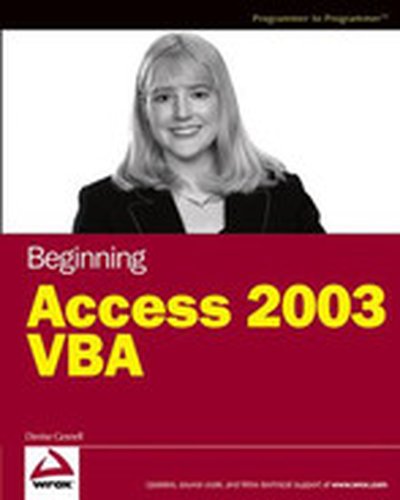
Beginning Access 2003 VBA

What is this book about? Written by an Access programmer with more than 10 years of VBA experience, this is the perfect guide for Access users who are ready to take their databases to the next level, or for programmers who are new to Access or VBA. Veteran Access developer Denise Gosnell shows readers the ins and outs of Access VBA and provides plenty of source code, and fully developed sample applications to guide you along the way. Not only do readers learn to build "stand-alone" desktop applications, but readers also learn how to integrate Access applications with Web Services, and SQL Server.

Business solutions Automating Microsoft® Access with VBA

If you use Microsoft Access in your every day business life but haven't learned to fully exploit the program, now's your chance. Automating Microsoft Access with VBA is a thorough introduction to programming Microsoft Accessing using Visual Basic for Applications (VBA). With this book, you will gain a working knowledge of VBA and be able to customize your Microsoft Access databases. You will cover topics that include: Operators and functions Debugging and error handling Menu commands Forms and reports Jet databases DAO object model Save money by learning to use VBA to customize your databases instead of paying someone else to do it for you!

Access 2003 VBA Programmer's Reference

Covers all features of VBA programming for Access database applications Begins with an overview of VBA and highlights what's new in Microsoft Access 2003, the most popular database system in the world Real-world code examples demonstrate each programming topic, including using the Access Object Model, VBA execution and error handling, creating database objects with VBA, writing secure VBA code, and much more Shows how Access 2003 provides enhanced XML support, making it easier for programmers to publish data to the Web and exchange it with other organizations

Access 2002 Programming by Example

This book addresses an unmet need in this topic area. It is a complete beginner's tutorial resource to tips, troubleshooting, techniques, and program development for Access 2002. The book covers fundamentals such as database normalization, query design, object manipulation, and optimization and custom programming for forms and reports. It makes the reader more efficient, productive, and knowledgeable in Access VBA. Speed techniques are mentioned. Shortcuts, tips, and techniques increase productivity. This book deals with getting data from outside sources and using VBA to ensure data integrity and consistency, which no other Access VBA book does. It also tackles problems in a variety of day-to-day situations that programmers often face. Bob Villareal is a contributor and a resident expert for the "Inside Microsoft Access" Web journal and an Access instructor at a Tulsa Community College. He also does freelance programming and instruction. Bob has been developing databases in a large insurance firm for more than 15 years. He has more than seven years' experience of VBA programming in both Access and Excel and has written many tracking and management applications.

Access Database Design & Programming, 3rd Edition

Access Database Design & Programming takes you behind the details of the Access interface, focusing on the general knowledge necessary for Access power users or developers to create effective database applications. When using software products with graphical interfaces, we frequently focus so much on the interface that we forget about the general concepts that allow us to understand and use the software effectively. In particular, this book focuses on three areas: Unlike other Access books that take the long, detailed approach to every topic of concern to Access programmers, Database design. The book provides an enjoyable, informative overview of database design that carefully shows you how to normalize tables to eliminate redundancy without losing data. Queries. The book examines multi-table queries (i.e.,various types of joins) and shows how to implement them indirectly by using the Access interface or directly by using Access SQL. Programming. The book examines the VBA integrated development environment (IDE). It then goes on to provide an excellent introduction to Data Access Objects (DAO), ActiveX Data Objects (ADO), and ADO Extensions for Data Definition and Security (ADOX). These sections serve as a handy introduction and primer for basic database operations,such as modifying a table under program control, dynamically adding and deleting a record, and repositioning a record pointer. The concluding chapter focuses on common programming problems, such as computing running sums and comparing two sets. Access Database Design &Programming instead focuses on the core concepts, enabling programmers to develop solid, effective database applications. This book also serves as a 'second course' in Access that provides a relatively experienced Access user who is new to programming with the frequently overlooked techniques necessary to develop successfully in the Microsoft Access environment.Anyone interested in learning Access in depth, rather than just scraping the surface, will enjoy and benefit immensely from reading this book.

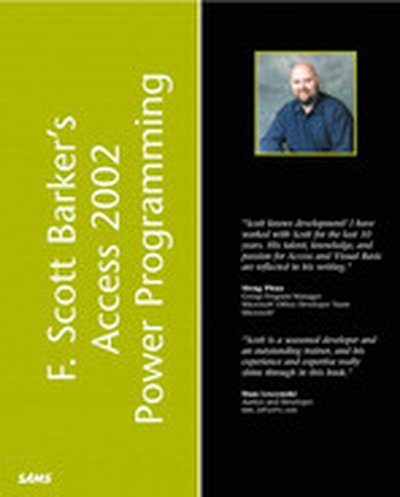
F. Scott Barker’s Microsoft Access 2002 Power Programming

F. Scott Barker's Access 2002 Power Programming gives many practical techniques for the corporate and independent developer. The main topics covered are: The Root of Power Programming; Manipulating and Presenting Data; Extending Access with Interoperability; Adding the Professional Look and Distributing Applications; Managing Databases; Adding Finishing Touches. New features of Access 2002 will be covered thoroughly, including: A whole new chapter devoted to Data Pages, which is Microsoft's way of bringing the Web interface into everyday office solutions. A new chapter clarifying the confusion over ADP/MDB and DAO/ADO. Including when and where to use each. There are a number of new additions to VBA which developers will need good exposure to in order to take advantage of them. A number of changes have been implemented in the form design with control features added.

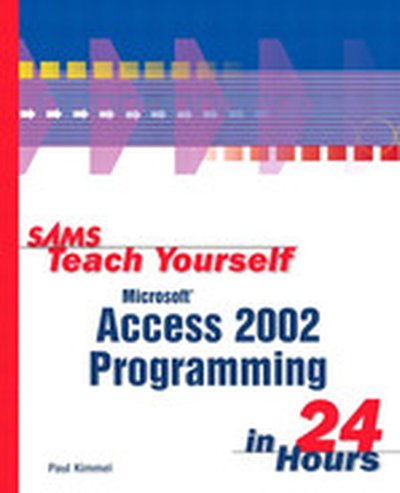
Sams Teach Yourself Microsoft® Access 2002 Programming in 24 Hours

Sams Teach Yourself Access 2002 Programming in 24 Hours will considerably improve the quality of the database applications that the reader can create with Microsoft Access. Concise tutorials that quickly bring the reader up to speed will be the goal of each chapter. Having completed this book, the readers will be able to understand any sample VBA code that they see, and will possess the skills to attack all of the most common Access programming tasks. Topics covered in the book will include: ¨ Creating data aware web pages ¨ Creating views to organize data ¨ Building reusable code modules ¨ Programming reports ¨ Communicating results with graphing ¨ Automating contact and task management with Outlook ¨ Access programming for Internet Explorer

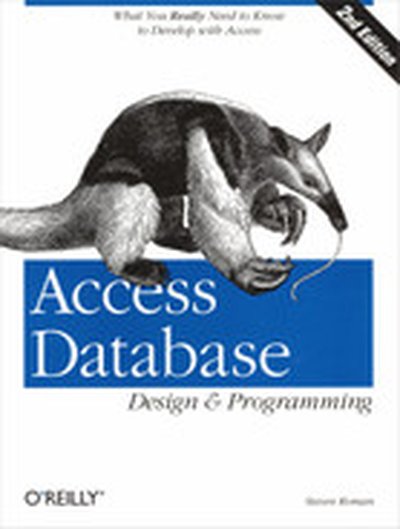
Access Database Design and Programming, Second Edition

When using software products with graphical interfaces, we frequently focus so much on the details of how to use the interface that we forget about the more general concepts that allow us to understand and put the software to effective use. This is particularly true of a powerful database product like Microsoft Access. Novice, and sometimes even experienced, programmers are so concerned with how something is done in Access that they often lose sight of the general principles that underlie their database applications. Access Database Design & Programming, 2nd Edition, an update to the bestselling first edition, features: A discussion of Access' new VBA Integrated Development Environment, which, for the first time, is the one used by Word, Excel, and PowerPoint An expansion of the discussion of the VBA language itself, in response to reader requests A discussion of Microsoft's latest data access technology, called Active Data Objects (or ADO), along with a discussion of Open Database Connectivity(ODBC), which is intimately connected with ADO Unlike other Access books that take the long, detailed approach to every topic of concern to Access programmers, this book focuses instead on the core concepts, enabling programmers to develop solid, effective database applications. As a result, important topics such as designing forms and reports, database security, database replication, and programming for multiuser applications are simply not discussed. This book is a kind of "second course" in Access that provides a relatively experienced Access user who is new to programming with the frequently overlooked techniques necessary to successfully develop in the Microsoft Access environment. Anyone interested in learning Access in-depth, rather than just scraping the surface, will enjoy and immensely benefit from reading this book. Although this book is really an introduction directed to intermediate Microsoft Access users who are novice programmers, it should appeal to all levels of Access developers. For novice programmers, it focuses on a key body of knowledge that is typically neglected, but is nevertheless essential for developing effective database applications. For intermediate and advanced developers, its treatment of database design and queries provides a handy treatment that otherwise has to be gleaned from relatively uninteresting textbooks, while its programming chapters constitute a handy reference to some basic operations that can be performed using DAO or the Access object model.

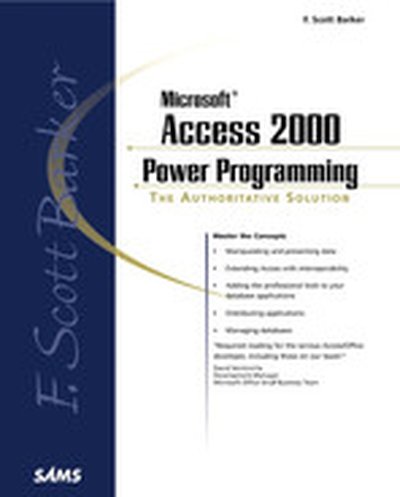
F. Scott Barker's Microsoft® Access 2000 Power Programming

Access 2000 Power Programming gives many practical techniques for the corporate and independent developer. New features of Access 2000 are covered thoroughly and useful examples which will be implemented by programmers in their everyday applications. New topics include a chapter devoted to Data Pages, Microsoft's way of bringing the Web interface into everyday office solutions. Also, a new chapter clarifies the confusion over ADP/MDB and DAO/ADO, including when and where to use each. The book covers a number of new additions to VBA which developers will need good exposure to in order to take advantage of them.

Special Edition Using Microsoft® Access 2000

Special Edition Using Access 2000 is your authoritative guide to mastering the essentials of this powerful 32-bit database development platform. Get started quickly by using the Database Wizard to create a working Access 2000 application in less than 30 minutes. Detailed, step-by-step instructions guide you through the process of designing and using Access tables, queries, forms, and reports. Chapters on VBA techniques pave your way to Access programming. Make the Access-Internet connection by exporting table, queries, and reports to static Web pages, then move into work with Data Access Pages and Active Server pages.

Special Edition Using Access 97, Second Edition

Special Edition Using Access 97, Second Edition, is your authoritative guide to mastering every facet of this powerful 32-bit database development platform. Get started quickly by using the Database Wizard to create a working Access 97 application in less than 30 minutes. Detailed, step-by-step instructions guide you through the process of designing and using Access tables, queries, forms, and reports. Newly added chapters on advanced VBA 5.0 techniques pave your way to Access programming expertise. Plus, you get full coverage of the latest updates to Access 97, including report Snapshot technology from Office Service Release 1 and the Upsizing Wizard for SQL Server 6.5+.