talk-data.com talk-data.com

Event

O'Reilly Business Intelligence Books

2001-05-23 – 2025-11-14 Oreilly Visit website ↗

Activities tracked

10

Collection of O'Reilly books on Business Intelligence.

Filtering by: IBM ×

Sessions & talks

Showing 1–10 of 10 · Newest first

Search within this event →
The Value of AI-Powered Business Intelligence

Artificial intelligence can yield powerful results when applied to business intelligence. Whether it’s pattern recognition in words, numbers, and big datasets or optimizing processes and expediting outcomes, AI is becoming a critical business component. In this report, Michael Norris from IBM explains how to drive AI adoption in your company. What does it mean to infuse AI into BI? It means business users can discover actionable, easy-to-understand insights on their own, independently from IT—even while remaining within the organization’s secure and governed IT architecture. Explore how AI in BI helps you to "get to the why" when analyzing and optimizing the insights you discover. Learn how AI-infused business intelligence: Enables line-of-business users to easily discover data-driven insights without requiring specialized data science expertise Allows users to ask questions in plain language with intuitive exploration tools to gain deeper insight into their data Provides recommended visualizations and dashboards to present compelling, concise, and explainable data Prepares datasets for analysis to free up IT analysts and line-of-business users
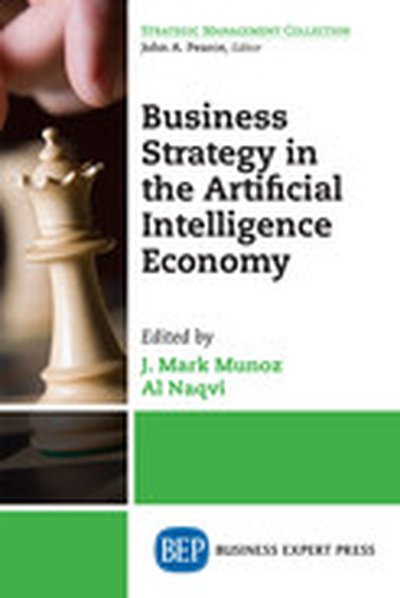
Business Strategy in the Artificial Intelligence Economy

Technological breakthroughs relating to artificial intelligence has redefined business operations worldwide. For example, the ways in which data is captured, processed, and utilized to optimize customer interactions has grown by leaps and bounds. The change is redefining the structural dynamics of business strategy, economic theory, and management concepts. Leading technology companies around the world have expanded their research in artificial intelligence. With IBM’s launch of Watson, a new cognitive era has started. Investment firms have backed numerous emerging artificial intelligence companies. Meanwhile, there is paucity of academic and business research on the subject. This book project is a pioneering examination of how artificial intelligence is transforming the contemporary business strategy.

IBM Cognos Business Intelligence

This comprehensive guide to IBM Cognos 10 Business Intelligence tools provides practical, hands-on learning to help you improve your business's data management and analysis capabilities. By mastering key features such as Report Studio, Analysis Studio, and Business Insight, you will be able to make smarter decisions, achieve better results, and gain a deeper understanding of your organization's data. What this Book will help me do Develop advanced reporting skills using IBM Cognos 10 Report Studio and Query Studio. Analyze data effectively with a thorough understanding of Analysis Studio features. Integrate statistical and real-time information into business reports for critical insights. Implement modern strategies to enhance business collaboration and decision-making. Master delivering high-impact business intelligence presentations to broader audiences. Author(s) The authors of this book are experienced IBM Cognos professionals who bring years of business intelligence development and consultancy expertise. They are committed to teaching in a practical and results-driven manner, providing readers with actionable skills. Their insight into IBM Cognos stems from years of real-world application, ensuring the book is rich with valuable advice. Who is it for? This book is ideal for IBM Cognos developers, business intelligence consultants, and analysts with foundational knowledge of Cognos 10 and some experience with Cognos 8. Readers who aim to deepen their understanding of reporting, administration, and analytics will find this guide valuable. It serves as both a learning resource for upgrading skills and a reference for optimizing IBM Cognos environments in professional settings.

IBM Cognos Business Intelligence v10: The Complete Guide

Maximize the Value of Business Intelligence with IBM Cognos v10 -- Hands-on, from Start to Finish This easy-to-use, hands-on guide brings together all the information and insight you need to drive maximum business value from IBM Cognos v10. Long-time IBM Cognos expert and product designer Sangeeta Gautam thoroughly illuminates Cognos BI v10’s key capabilities: analysis, query, reporting, and dashboards. Gautam shows how to take full advantage of each key IBM Cognos feature, including brand-new innovations such as Active Reports and the new IBM Cognos Workspace report consumption environment. She concludes by walking you through successfully planning and implementing an integrated business intelligence solution using IBM’s best-practice methodologies. The first and only guide of its kind, offers expert insights for BI designers, architects, developers, administrators, project managers, nontechnical end-users, and partners throughout all areas of the business—from sales and marketing to operations and lines of business. If you’re pursuing official IBM Cognos certification, you’ll also find Cognos certification sample questions and information to help you with the certification process. IBM Cognos Business Intelligence v10 Coverage Includes • Understanding IBM Cognos BI’s components and open, extensible architecture • Working with IBM Cognos key “studio” tools: Analysis Studio, Query Studio, Report Studio, and Event Studio • Developing and managing powerful reports that draw on the rich capabilities of IBM Cognos Workspace and Workspace Advanced • Designing Star Schema databases and metadata models to answer the questions your organization cares about most • Efficiently maintaining and systematically securing IBM Cognos BI environments and their objects • Using IBM Cognos Connection as your single point of entry to all corporate data • Building interactive, easy-to-manage Active Reports for casual business users • Using new IBM Cognos BI v10.1 Dynamic Query Mode (DQM) to improve performance with complex heterogeneous data • Identifying, exploring, and exploiting hidden data relationships • Creating quick ad hoc queries that deliver fast answers • Establishing user and administrator roles

Solving Operational Business Intelligence with InfoSphere Warehouse Advanced Edition

IBM® InfoSphere® Warehouse is the IBM flagship data warehouse platform for departmental data marts and enterprise data warehouses. It offers leading architecture, performance, backup, and recovery tools that help improve efficiency and reduce time to market through increased understanding of current data assets, while simplifying the daily operations of managing complex warehouse deployments. InfoSphere Warehouse Advanced Enterprise Edition delivers an enhanced set of database performance, management, and design tools. These tools assist companies in maintaining and increasing value from their warehouses, while helping to reduce the total cost of maintaining these complex environments. In this IBM Redbooks® publication we explain how you can build a business intelligence system with InfoSphere Warehouse Advanced Enterprise to manage and support daily business operations for an enterprise, to generate more income with lower cost. We describe the foundation of the business analytics, the Data Warehouse features and functions, and the solutions that can deliver immediate analytics solutions and help you drive better business outcomes. We show you how to use the advanced analytics of InfoSphere Warehouse Advanced Enterprise Edition and integrated tools for data modeling, mining, text analytics, and identifying and meeting the data latency requirements. We describe how the performance and storage optimization features can make building and managing a large data warehouse more affordable, and how they can help significantly reduce the cost of ownership. We also cover data lifecycle management and the key features of IBM Cognos® Business Intelligence. This book is intended for data warehouse professionals who are interested in gaining in-depth knowledge about the operational business intelligence solution for a data warehouse that the IBM InfoSphere Warehouse Advanced Enterprise Edition offers.

IBM Cognos Business Intelligence 10: The Official Guide

The only authorized guide to IBM Cognos Business Intelligence v10.1 Updated for the latest release of the software, IBM Cognos Business Intelligence 10: The Official Guide explains how to create, implement, and manage an enterprise BI solution. Maximize all of the new and enhanced features, including the powerful modeling, monitoring, and analytics capabilities. Build and deliver reports that foster informed business decisions and better results. Filled with real-world examples and expert advice, this practical resource is ideal for anyone working with IBM Cognos Business Intelligence v10.1--from administrators to end users. Monitor performance using dashboards and scorecards Assign user roles and privileges Provide a single access point to application-specific data via Cognos Connection Access content from Microsoft Office applications and mobile devices Collect and analyze BI data in an interactive dashboard with Cognos Business Insight Use Cognos Administration tools for system management Implement appropriate security measures Create BI reports with relational and dimensional data using Business Insight Advanced Use Report Studio to build dimensional reports and statistical analyses Identify and deliver mission-critical information using Event Studio Monitor business performance with Metric Studio Create, modify, organize, and publish a model in Framework Manager Ensure report integrity with Lifecycle Manager

Leveraging DB2 Data Warehouse Edition for Business Intelligence

In this IBM Redbooks publication we describe and discuss DB2 Data Warehouse Edition (DWE) Version 9.1, a comprehensive platform offering with functionality to build a business intelligence infrastructure for analytics and Web-based applications, and best practices for deployment. DB2 DWE integrates core components for data warehouse construction and administration, data mining, OLAP, and InLine Analytics and reporting. It extends the DB2 data warehouse with design-side tooling and runtime infrastructure for OLAP, data mining, InLine Analytics, and intra-warehouse data movement and transformation, on a common platform based on DB2 and WebSphere. The platform pillars are based on the technology of DB2, Rational Data Architect (for physical data modeling only), the SQL Warehousing Tool, Intelligent Miner, DB2 Cube Views, and Alphablox. DWE includes an Eclipse-based design environment, DWE Design Studio, that integrates the DWE products (with the exception of Alphablox and Query Patroller) with a common framework and user interface. The new SQL Warehousing Tool enables visual design of intra-warehouse, table-to-table data flows and control flows using generated SQL. DB2 Alphablox is the tool for developing custom applications with embedded analytics-based visual components. DWE enables faster time-to-value for enterprise analytics, while limiting the number of vendors, tools, skill sets and licenses required.

Improving Business Performance Insight . . . with Business Intelligence and Business Process Management

In this IBM Redbooks publication, we describe and demonstrate how to implement enterprise performance insight. This is an initiative that has a primary focus on the integration of Business Process Management and Business Intelligence. With this capability, management has an enterprise-wide view of their business that can enable proactive business management. We discuss the techniques, architectures, and processes used to define and implement such an environment. Among the specific techniques and technologies used are key performance indicators, process alerts, management dashboards, analytic applications, application integration, process modeling and monitoring, and real-time business intelligence. The products featured are DB2 UDB, DB2 Alphablox, WebSphere Information Integrator, WebSphere Portal, WebSphere Business Monitor, and WebSphere Business Modeler. Performance insight is an element of a more global initiative called business innovation and optimization (BIO). With this, we can enable business performance management, an initiative for the effective use of people, processes, assets, and technology to proactively achieve business goals and measurements. It enables strategic alignment of business and technology, resulting in real-time access to data and continuous process and data flow, for proactive business management, and business goal attainment.

Business Intelligence for the Enterprise

Making business intelligence work: Start-to-finish guidance for managers This book offers a true enterprise view of business intelligence. IBM expert Mike Biere shows managers how to create a coherent BI plan that reflects the needs of users throughout the organization-and then implement that plan successfully. Biere explains how to objectively assess the business case for BI, and identifies proven solutions for the obstacles that lead many BI projects to fail. Coverage includes: Setting appropriate expectations and goals for your BI project Understanding how the key components of a complete BI solution fit together Designing effective BI solutions-including content management, handling unstructured data, and end-user segmentation Providing effective support for BI end users Introducing Corporate Performance Management (CPM): an executive's view of BI Previewing tomorrow's "next wave" in BI solutions Comprehensive checklists for planning your BI project

DB2 UDB's High-Function Business Intelligence in e-business

This IBM Redbooks publication deals with exploiting DB2 UDB’s materialized views (also known as ASTs/MQTs), statistics, analytic, and OLAP functions in e-business applications to achieve superior performance and scalability. This book is aimed at a target audience of DB2 UDB application developers, database administrators (DBAs), and independent software vendors (ISVs). We provide an overview of DB2 UDB’s materialized views implementation, as well as guidelines for creating and tuning them for optimal performance. We introduce key statistics, analytic, and OLAP functions, and describe their corresponding implementation in DB2 UDB with usage examples. Finally, we describe typical business level queries that can be answered using DB2 UDB’s statistics, analytic, and OLAP functions. These business queries are categorized by industry, and describe the steps involved in resolving the query, with sample SQL and visualization of results.