
talk-data.com talk-data.com

J

Speaker

Jules J. Berman

3

talks

author

Filter by Event / Source

Talks & appearances

3 activities · Newest first

Search activities →
Principles and Practice of Big Data, 2nd Edition

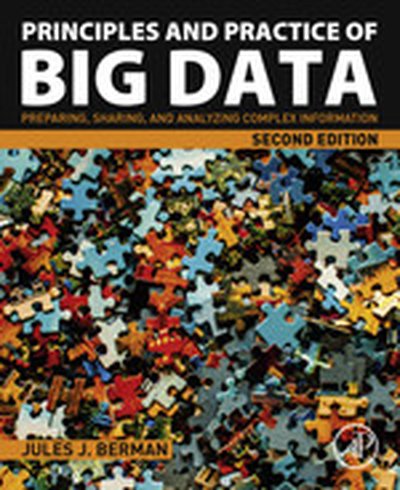
Principles and Practice of Big Data: Preparing, Sharing, and Analyzing Complex Information, Second Edition updates and expands on the first edition, bringing a set of techniques and algorithms that are tailored to Big Data projects. The book stresses the point that most data analyses conducted on large, complex data sets can be achieved without the use of specialized suites of software (e.g., Hadoop), and without expensive hardware (e.g., supercomputers). The core of every algorithm described in the book can be implemented in a few lines of code using just about any popular programming language (Python snippets are provided). Through the use of new multiple examples, this edition demonstrates that if we understand our data, and if we know how to ask the right questions, we can learn a great deal from large and complex data collections. The book will assist students and professionals from all scientific backgrounds who are interested in stepping outside the traditional boundaries of their chosen academic disciplines. Presents new methodologies that are widely applicable to just about any project involving large and complex datasets Offers readers informative new case studies across a range scientific and engineering disciplines Provides insights into semantics, identification, de-identification, vulnerabilities and regulatory/legal issues Utilizes a combination of pseudocode and very short snippets of Python code to show readers how they may develop their own projects without downloading or learning new software
Data Simplification

Data Simplification: Taming Information With Open Source Tools addresses the simple fact that modern data is too big and complex to analyze in its native form. Data simplification is the process whereby large and complex data is rendered usable. Complex data must be simplified before it can be analyzed, but the process of data simplification is anything but simple, requiring a specialized set of skills and tools. This book provides data scientists from every scientific discipline with the methods and tools to simplify their data for immediate analysis or long-term storage in a form that can be readily repurposed or integrated with other data. Drawing upon years of practical experience, and using numerous examples and use cases, Jules Berman discusses the principles, methods, and tools that must be studied and mastered to achieve data simplification, open source tools, free utilities and snippets of code that can be reused and repurposed to simplify data, natural language processing and machine translation as a tool to simplify data, and data summarization and visualization and the role they play in making data useful for the end user. Discusses data simplification principles, methods, and tools that must be studied and mastered Provides open source tools, free utilities, and snippets of code that can be reused and repurposed to simplify data Explains how to best utilize indexes to search, retrieve, and analyze textual data Shows the data scientist how to apply ontologies, classifications, classes, properties, and instances to data using tried and true methods

Principles of Big Data

Principles of Big Data helps readers avoid the common mistakes that endanger all Big Data projects. By stressing simple, fundamental concepts, this book teaches readers how to organize large volumes of complex data, and how to achieve data permanence when the content of the data is constantly changing. General methods for data verification and validation, as specifically applied to Big Data resources, are stressed throughout the book. The book demonstrates how adept analysts can find relationships among data objects held in disparate Big Data resources, when the data objects are endowed with semantic support (i.e., organized in classes of uniquely identified data objects). Readers will learn how their data can be integrated with data from other resources, and how the data extracted from Big Data resources can be used for purposes beyond those imagined by the data creators. Learn general methods for specifying Big Data in a way that is understandable to humans and to computers Avoid the pitfalls in Big Data design and analysis Understand how to create and use Big Data safely and responsibly with a set of laws, regulations and ethical standards that apply to the acquisition, distribution and integration of Big Data resources