
talk-data.com talk-data.com

M

Speaker

Martin Kleppmann

3

talks

author
Filtering by: O'Reilly Data Engineering Books ×

Filter by Event / Source

Talks & appearances

Showing 3 of 3 activities

Search activities →
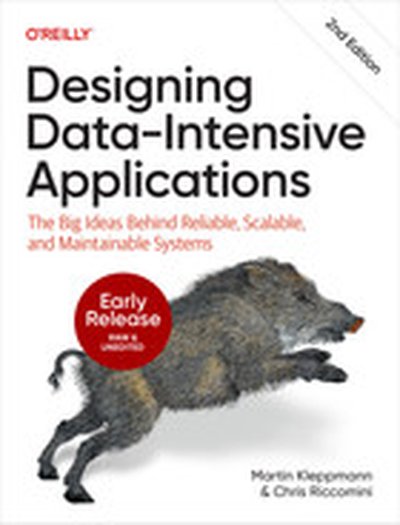
Designing Data-Intensive Applications, 2nd Edition

Data is at the center of many challenges in system design today. Difficult issues such as scalability, consistency, reliability, efficiency, and maintainability need to be resolved. In addition, there's an overwhelming variety of tools and analytical systems, including relational databases, NoSQL datastores, plus data warehouses and data lakes. What are the right choices for your application? How do you make sense of all these buzzwords? In this second edition, authors Martin Kleppmann and Chris Riccomini build on the foundation laid in the acclaimed first edition, integrating new technologies and emerging trends. You'll be guided through the maze of decisions and trade-offs involved in building a modern data system, from choosing the right tools like Spark and Flink to understanding the intricacies of data laws like the GDPR. Peer under the hood of the systems you already use, and learn to use them more effectively Make informed decisions by identifying the strengths and weaknesses of different tools Navigate the trade-offs around consistency, scalability, fault tolerance, and complexity Understand the distributed systems research upon which modern databases are built Peek behind the scenes of major online services, and learn from their architectures
Designing Data-Intensive Applications

Data is at the center of many challenges in system design today. Difficult issues need to be figured out, such as scalability, consistency, reliability, efficiency, and maintainability. In addition, we have an overwhelming variety of tools, including relational databases, NoSQL datastores, stream or batch processors, and message brokers. What are the right choices for your application? How do you make sense of all these buzzwords? In this practical and comprehensive guide, author Martin Kleppmann helps you navigate this diverse landscape by examining the pros and cons of various technologies for processing and storing data. Software keeps changing, but the fundamental principles remain the same. With this book, software engineers and architects will learn how to apply those ideas in practice, and how to make full use of data in modern applications. Peer under the hood of the systems you already use, and learn how to use and operate them more effectively Make informed decisions by identifying the strengths and weaknesses of different tools Navigate the trade-offs around consistency, scalability, fault tolerance, and complexity Understand the distributed systems research upon which modern databases are built Peek behind the scenes of major online services, and learn from their architectures

Making Sense of Stream Processing

How can event streams help make your application more scalable, reliable, and maintainable? In this report, O’Reilly author Martin Kleppmann shows you how stream processing can make your data storage and processing systems more flexible and less complex. Structuring data as a stream of events isn’t new, but with the advent of open source projects such as Apache Kafka and Apache Samza, stream processing is finally coming of age. Using several case studies, Kleppmann explains how these projects can help you reorient your database architecture around streams and materialized views. The benefits of this approach include better data quality, faster queries through precomputed caches, and real-time user interfaces. Learn how to open up your data for richer analysis and make your applications more scalable and robust in the face of failures. Understand stream processing fundamentals and their similarities to event sourcing, CQRS, and complex event processing Learn how logs can make search indexes and caches easier to maintain Explore the integration of databases with event streams, using the new Bottled Water open source tool Turn your database architecture inside out by orienting it around streams and materialized views