
talk-data.com talk-data.com

E

Speaker

EdD Ron Cody

4

talks

author
Filtering by: O'Reilly Data Science Books ×

Filter by Event / Source

Talks & appearances

Showing 4 of 4 activities

Search activities →
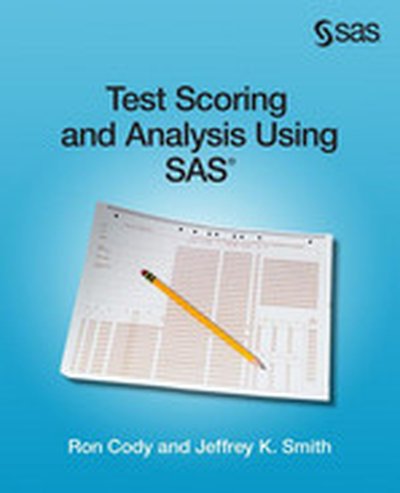
Test Scoring and Analysis Using SAS

Develop your own multiple-choice tests, score students, produce student rosters (in print form or Excel), and explore item response theory (IRT).

Aimed at nonstatisticians working in education or training, Test Scoring and Analysis Using SAS describes item analysis and test reliability in easy-to-understand terms, and teaches you SAS programming to score tests, perform item analysis, and estimate reliability. Maximizing flexibility, the scoring and analysis programs enable you to analyze tests with multiple versions, define alternate correct responses for selected items, and repeat the scoring with selected items deleted.

You will be guided step-by-step on how to design multiple-choice items, use analysis to improve your tests, and even detect cheating on students’ submitted multiple-choice tests. Other subjects addressed include reading in data from a variety of sources (text files and Excel workbooks, for example), detecting errors in the input data, and producing class rosters in printed form or Excel workbooks. Also included is a chapter on IRT—widely used in education to calibrate and evaluate items in tests in education such as the SAT and GRE—with instructions for running the new SAS procedure PROC IRT.

This book is part of the SAS Press program.
SAS Functions by Example, Second Edition, 2nd Edition

Fully updated for SAS 9.2, Ron Cody's SAS Functions by Example, Second Edition, is a must-have reference for anyone who programs in Base SAS. With the addition of functions new to SAS 9.2, this comprehensive reference manual now includes more than 200 functions, including new character, date and time, distance, probability, sort, and special functions. This new edition also contains more examples for existing functions and more details concerning optional arguments.

Like the first edition, the new edition also includes a list of SAS programs, an alphabetic list of all the functions in the book, and a comprehensive index of functions and tasks. Beginning and experienced SAS users will benefit from this useful reference guide to SAS functions.

This book is part of the SAS Press program.
Learning SAS by Example
Learn to program SAS by example!

If you like learning by example, then Learning SAS by Example: A Programmer's Guide makes it easy to learn SAS programming. In an instructive and conversational tone, author Ron Cody clearly explains each programming technique and then illustrates it with one or more real-life examples, followed by a detailed description of how the program works. The text is divided into four major sections: Getting Started; DATA Step Processing; Presenting and Summarizing Your Data; and Advanced Topics. Subjects addressed include: Reading data from external sources Learning details of DATA step programming Subsetting and combining SAS data sets Understanding SAS functions and working with arrays Creating reports with PROC REPORT and PROC TABULATE Learning to use the SAS Output Delivery System Getting started with the SAS macro language Introducing PROC SQL

You can test your knowledge and hone your skills by solving the problems at the end of each chapter. (Solutions to odd-numbered problems are located at the back of this book. Solutions to all problems are available to instructors by visiting Ron Cody's author page for details.) This book is intended for beginners and intermediate users. Readers should know how to enter and submit a SAS program from their operating system.

This book is part of the SAS Press program.
Longitudinal Data and SAS
Working with longitudinal data introduces a unique set of challenges. Once you've mastered the art of performing calculations within a single observation of a data set, you're faced with the task of performing calculations or making comparisons between observations. It's easy to look backward in data sets, but how do you look forward and across observations? Ron Cody provides straightforward answers to these and other questions. Longitudinal Data and SAS details useful techniques for conducting operations between observations in a SAS data set. For quick reference, the book is conveniently organized to cover tools, including an introduction to powerful SAS programming techniques for longitudinal data; case studies, including a variety of illuminating examples that use Ron's techniques; and macros, including detailed descriptions of helpful longitudinal data macros. Beginning to intermediate SAS users will appreciate this book's informative, easy-to-comprehend style. And users who frequently process longitudinal data will learn to make the most of their analyses by following Ron's methodologies.

This book is part of the SAS Press program.