talk-data.com talk-data.com

Topic

geographic information system (gis)

33

tagged

Activity Trend

1 peak/qtr
2020-Q1 2026-Q1

Activities

33 activities · Newest first

Learning QGIS, Third Edition - Third Edition

Learning QGIS, Third Edition, serves as a comprehensive guide for GIS users looking to enhance their skills using the QGIS platform. By following the structured, step-by-step instructions, you'll master data visualization, manipulation, and advanced mapping techniques. The book emphasizes practical knowledge, enabling you to efficiently handle both data processing and cartographic output. What this Book will help me do Install and effectively navigate the QGIS software interface to enable GIS tasks. Load, visualize, and manage vector and raster spatial data from various sources. Create, edit, and analyze spatial datasets with precision using QGIS tools. Perform and automate complex geoprocessing tasks using the Processing toolbox. Configure advanced cartographic outputs including printable maps tailored to your needs. Author(s) Anita Graser, a notable GIS expert, brings her extensive experience and knowledge in open-source geospatial technologies to this book. She is a core developer of QGIS and regularly publishes content on GIS applications and spatial analysis. Anita excels in presenting complex concepts in a user-friendly manner, making advanced GIS techniques accessible to learners of diverse backgrounds. Who is it for? This book is tailored for GIS professionals, consultants, or developers looking to expand their expertise in QGIS. Whether you're familiar with GIS principles or are an experienced user of other platforms, this book helps bridge the gap to using QGIS effectively. If you're aiming to enhance your mapping and geospatial analysis capabilities, this guide is greatly suited for your ambitions.
Learning Geospatial Analysis with Python-Second Edition

Dive into the world of geospatial analysis with Python in this comprehensive guide. This book will take you through the essentials of GIS, remote sensing, elevation data, and real-time data, all using Python. You will learn to analyze and visualize geospatial data effectively, building skills and understanding that are practical and relevant. What this Book will help me do Automate geospatial workflows using Python. Create thematic maps with Python tools for better spatial insights. Understand various forms of geospatial data and how to manage them. Develop GIS applications and elevation data models using minimal lines of Python code. Utilize Python for real-time data tracking and storm modeling. Author(s) Joel Lawhead is an experienced geospatial software developer and Python programmer with extensive expertise in GIS and geospatial data analysis. With a deep understanding of Python's applications in geography, Joel brings a practical focus to his writing. His engaging style ensures that technical concepts are accessible and thoroughly explained. Who is it for? This book is ideal for Python developers, researchers, and analysts who want to enhance their GIS and geospatial analysis capabilities. If you are familiar with Python or another scripting language and have a foundational understanding of digital mapping, this book will help you advance your knowledge and skills. Whether you're analyzing spatial data or building geospatial applications, this guide is made for you.

Python Geospatial Analysis Cookbook

Explore the fascinating world of geospatial analysis with "Python Geospatial Analysis Cookbook". This guide offers practical, recipe-based solutions for common spatial analysis tasks using Python, helping you tackle real-world spatial challenges effectively. From data preparation to topology checks and network analysis, the book ensures you're equipped to create powerful geospatial applications. What this Book will help me do Understand the projection and coordinate system details of geospatial data to ensure accurate analysis. Transform and manipulate spatial data formats for diverse analysis requirements and projects. Leverage the capabilities of PostGIS within Python for advanced geospatial operations. Apply vector and raster data analysis techniques to solve practical spatial problems. Develop a functional geospatial web application using GeoDjango to demonstrate analysis outputs. Author(s) None Diener is an accomplished professional in the field of geospatial analysis utilizing Python. With years of experience in coding and implementing geospatial systems, Diener bridges the gap between theoretical techniques and practical applications. Their writing is aimed at beginners and professionals alike, delivering clear and precise guidance for building geospatial solutions. Who is it for? This book is perfect for GIS analysts, programmers, data scientists, and researchers with a baseline understanding of geospatial concepts who are looking to enhance their skills. Beginners eager to explore Python's utility in geospatial analysis will also benefit. Whether you're solving intricate spatial problems or building web-based GIS applications, this guide has you covered.

GPS Satellite Surveying, 4th Edition

Employ the latest satellite positioning tech with this extensive guide GPS Satellite Surveying is the classic text on the subject, providing the most comprehensive coverage of global navigation satellite systems applications for surveying. Fully updated and expanded to reflect the field's latest developments, this new edition contains new information on GNSS antennas, Precise Point Positioning, Real-time Relative Positioning, Lattice Reduction, and much more. New contributors offer additional insight that greatly expands the book's reach, providing readers with complete, in-depth coverage of geodetic surveying using satellite technologies. The newest, most cutting-edge tools, technologies, and applications are explored in-depth to help readers stay up to date on best practices and preferred methods, giving them the understanding they need to consistently produce more reliable measurement. Global navigation satellite systems have an array of uses in military, civilian, and commercial applications. In surveying, GNSS receivers are used to position survey markers, buildings, and road construction as accurately as possible with less room for human error. GPS Satellite Surveying provides complete guidance toward the practical aspects of the field, helping readers to: Get up to speed on the latest GPS/GNSS developments Understand how satellite technology is applied to surveying Examine in-depth information on adjustments and geodesy Learn the fundamentals of positioning, lattice adjustment, antennas, and more The surveying field has seen quite an evolution of technology in the decade since the last edition's publication. This new edition covers it all, bringing the reader deep inside the latest tools and techniques being used on the job. Surveyors, engineers, geologists, and anyone looking to employ satellite positioning will find GPS Satellite Surveying to be of significant assistance.

Computing in Geographic Information Systems

Capable of acquiring large volumes of data through sensors deployed in air, land, and sea, and making this information readily available in a continuous time frame, the science of geographical information system (GIS) is rapidly evolving. This popular information system is emerging as a platform for scientific visualization, simulation, and computation of spatio-temporal data. New computing techniques are being researched and implemented to match the increasing capability of modern-day computing platforms and easy availability of spatio-temporal data. This has led to the need for the design, analysis, development, and optimization of new algorithms for extracting spatio-temporal patterns from a large volume of spatial data. considers the computational aspects, and helps students understand the mathematical principles of GIS. It provides a deeper understanding of the algorithms and mathematical methods inherent in the process of designing and developing GIS functions. It examines the associated scientific computations along with the applications of computational geometry, differential geometry, and affine geometry in processing spatial data. It also covers the mathematical aspects of geodesy, cartography, map projection, spatial interpolation, spatial statistics, and coordinate transformation. The book discusses the principles of bathymetry and generation of electronic navigation charts. Computing in Geographic Information Systems The book consists of 12 chapters. Chapters one through four delve into the modeling and preprocessing of spatial data and prepares the spatial data as input to the GIS system. Chapters five through eight describe the various techniques of computing the spatial data using different geometric and statically techniques. Chapters nine through eleven define the technique for image registration computation and measurements of spatial objects and phenomenon. Examines cartographic modeling and map projection Covers the mathematical aspects of different map projections Explores some of the spatial analysis techniques and applications of GIS Introduces the bathymetric principles and systems generated using bathymetric charts Explains concepts of differential geometry, affine geometry, and computational geometry Discusses popular analysis and measurement methods used in GIS This text outlines the key concepts encompassing GIS and spatio-temporal information, and is intended for students, researchers, and professionals engaged in analysis, visualization, and estimation of spatio-temporal events.

GeoComputation, Second Edition, 2nd Edition

A revision of Openshaw and Abrahart’s seminal work, GeoComputation, Second Edition retains influences of its originators while also providing updated, state-of-the-art information on changes in the computational environment. In keeping with the field’s development, this new edition takes a broader view and provides comprehensive coverage across the field of GeoComputation. See What’s New in the Second Edition: Coverage of ubiquitous computing, the GeoWeb, reproducible research, open access, and agent-based modelling Expanded chapter on Genetic Programming and a separate chapter developed on Evolutionary Algorithms Ten chapters updated by the same or new authors and eight new chapters added to reflect state of the art Each chapter is a stand-alone entity that covers a particular topic. You can simply dip in and out or read it from cover to cover. The opening chapter by Stan Openshaw has been preserved, with only a limited number of minor essential modifications having been enacted. This is not just a matter of respect. Openshaw’s work is eloquent, prophetic, and his overall message remains largely unchanged. In contrast to other books on this subject, GeoComputation: Second Edition supplies a state-of-the-art review of all major areas in GeoComputation with chapters written especially for this book by invited specialists. This approach helps develop and expand a computational culture, one that can exploit the ever-increasing richness of modern geographical and geospatial datasets. It also supplies an instructional guide to be kept within easy reach for regular access and when need arises.

Geographical Information Systems

Web services, cloud computing, location based services, NoSQLdatabases, and Semantic Web offer new ways of accessing, analyzing, and elaborating geo-spatial information in both real-world and virtual spaces. This book explores the how-to of the most promising recurrent technologies and trends in GIS, such as Semantic GIS, Web GIS, Mobile GIS, NoSQL Geographic Databases, Cloud GIS, Spatial Data Warehousing-OLAP, and Open GIS. The text discusses and emphasizes the methodological aspects of such technologies and their applications in GIS.

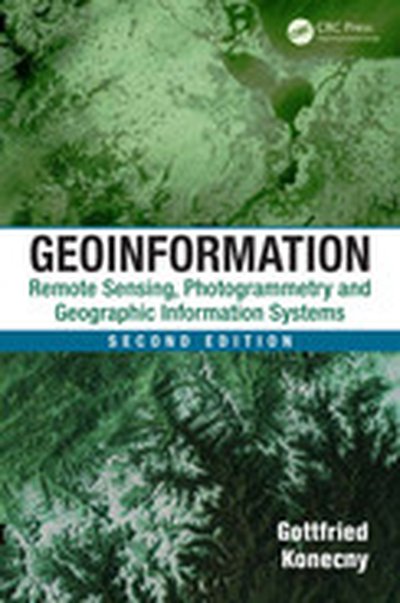
Geoinformation, 2nd Edition

Written by a renowned expert, Geoinformation: Remote Sensing, Photogrammetry and Geographic Information Systems, Second Edition gives you an overarching view of how remote sensing, photogrammetry, and geographic information systems work together in an interdisciplinary manner. The book presents the required basic background of the geoinformatics concept in which the different methodologies must be combined. It details the principal components of remote sensing, from theoretical principles to advanced image analysis and interpretation techniques, sensor components, and operating platforms. New and Updated in the Second Edition: Web-based image viewing with Google Earth Aerial platforms Existing digital photogrammetric software systems, including Intergraph image station, Autodesk, and Oracle Spatial Land management and cadaster Imaging sensors such as laser scanning, image spectrometry, radar imaging, and radar interferometry With the advent of high-resolution satellite systems in stereo, the theory of analytical photogrammetry restituting 2D image information into 3D is of increasing importance, merging the remote sensing approach with that of photogrammetry. This text describes the fundamentals of these approaches in detail, with an emphasis on global, regional, and local applications. It provides a short introduction to the GPS satellite positioning system in the context of data integration. An extensive overview of the basic elements of GIS technologies and data management approaches, as well as the widely employed positioning systems such as GPS and GSM networks, complete the presentation of the technological framework for geoinformation. Appropriate for GIS courses at all levels, the book proceeds beyond the science and technology to tackle cost considerations and practical implementation issues, giving you a starting point for multidisciplinary new activities and services in the future.

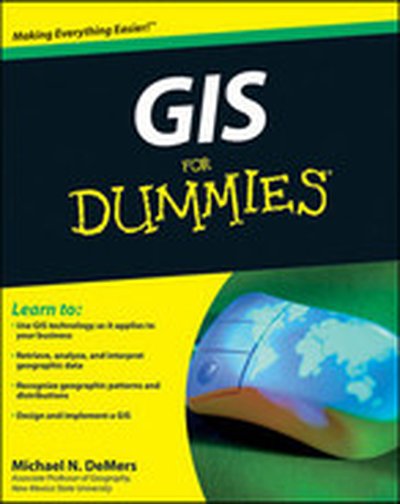
GIS For Dummies®

GIS (geographic information system) is a totally cool technology that has been called "geography on steroids." GIS is what lets you see the schools in your neighborhood or tells you where the nearest McDonald's is. GIS For Dummies tells you all about mapping terminology and digital mapping, how to locate geographic features and analyze patterns such as streets and waterways, and how to generate travel directions, customer location lists, and much more with GIS. Whether you're in charge of creating GIS applications for your business or you simply love maps, you'll find GIS For Dummies is packed with information. For example, you can: Learn all the hardware and software necessary to collect, analyze, and manipulate GIS data Explore the difference between 2D and 3D maps, create a map, or manage multiple maps Analyze patterns that appear in maps and interpret the results Measure distance in absolute, comparative, and functional ways Recognize how spatial factors relate to geographic data Discover how GIS is used in business, the military, city planning, emergency services, land management, and more Find out how GIS can help you find out where flooding may occur Determine what your organization needs, do appropriate analyses, and actually plan and design a GIS system You'll find dozens of applications for GIS queries and analyses, and even learn to create animated GIS output. Whether your goal is to implement a GIS or just have fun, GIS For Dummies will get you there! Note: CD-ROM/DVD and other supplementary materials are not included as part of eBook file.

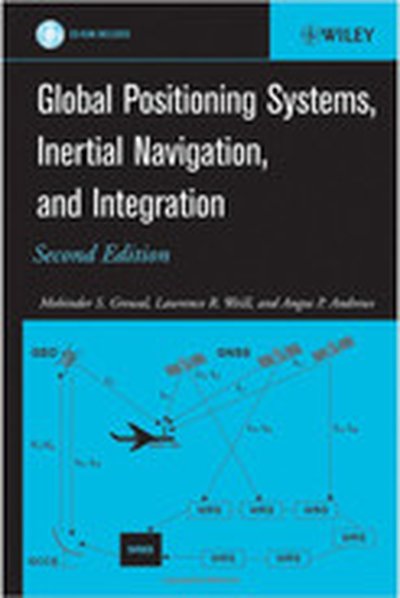
Global Positioning Systems, Inertial Navigation, and Integration, Second Edition

An updated guide to GNSS and INS, and solutions to real-world GPS/INS problems with Kalman filtering Written by recognized authorities in the field, this second edition of a landmark work provides engineers, computer scientists, and others with a working familiarity with the theory and contemporary applications of Global Navigation Satellite Systems (GNSS), Inertial Navigational Systems (INS), and Kalman filters. Throughout, the focus is on solving real-world problems, with an emphasis on the effective use of state-of-the-art integration techniques for those systems, especially the application of Kalman filtering. To that end, the authors explore the various subtleties, common failures, and inherent limitations of the theory as it applies to real-world situations, and provide numerous detailed application examples and practice problems, including GNSS-aided INS, modeling of gyros and accelerometers, and SBAS and GBAS. Drawing upon their many years of experience with GNSS, INS, and the Kalman filter, the authors present numerous design and implementation techniques not found in other professional references. This Second Edition has been updated to include: GNSS signal integrity with SBAS Mitigation of multipath, including results Ionospheric delay estimation with Kalman filters New MATLAB programs for satellite position determination using almanac and ephemeris data and ionospheric delay calculations from single and dual frequency data New algorithms for GEO with L1 /L5 frequencies and clock steering Implementation of mechanization equations in numerically stable algorithms To enhance comprehension of the subjects covered, the authors have included software in MATLAB, demonstrating the working of the GNSS, INS, and filter algorithms. In addition to showing the Kalman filter in action, the software also demonstrates various practical aspects of finite word length arithmetic and the need for alternative algorithms to preserve result accuracy.

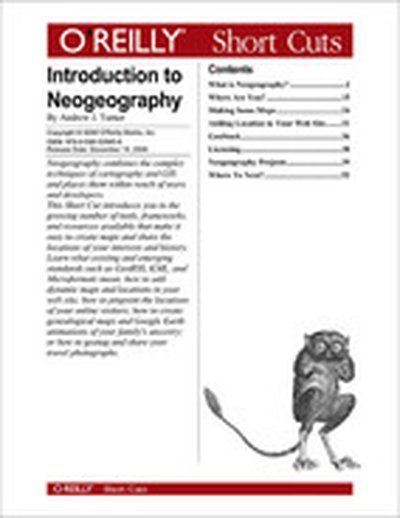
Introduction to Neogeography

Neogeography combines the complex techniques of cartography and GIS and places them within reach of users and developers. This Short Cut introduces you to the growing number of tools, frameworks, and resources available that make it easy to create maps and share the locations of your interests and history. Learn what existing and emerging standards such as GeoRSS, KML, and Microformats mean; how to add dynamic maps and locations to your web site; how to pinpoint the locations of your online visitors; how to create genealogical maps and Google Earth animations of your family's ancestry; or how to geotag and share your travel photographs.

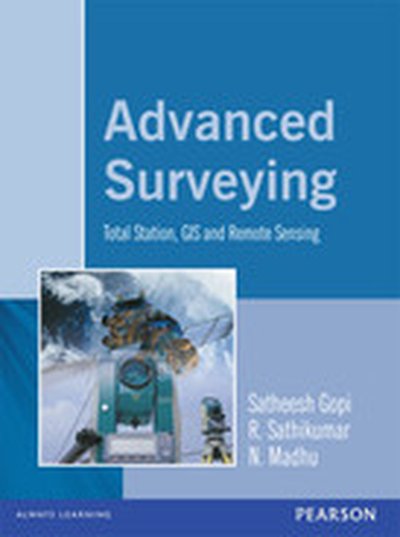
Advanced Surveying: Total Station, GIS and Remote Sensing

Modern Surveying is unimaginable without the use of electronic equipment and information technology. Surveying with conventional systems has been completely replaced with advanced automated systems. Total Station, Global Positioning System (GPS), Remote Sensing and Geographical Information System (GIS) have all become an inextricable part of surveying. Advanced Surveying: Total Station, GIS and Remote Sensing provides a thorough working knowledge of these technologies.

Geographic Information Systems: An Introduction, 3rd Edition

"If we are to solve many of the problems facing us-in the cities, in the wild areas of the earth, in the atmosphere, and the oceans-we shall need the help of skilled users of GIS technology. If readers can master what is in this volume, they will be well started on this enterprise." -From the Foreword by Jack Dangermond President of ESRI Praise for previous editions: "One of only a small number of texts devoted to the technology of GIS that are truly introductory in nature. . . . Very readable and of moderate length. Those who are real novices to GIS will find this one attractive." -Computers and Geosciences "Well-rendered and very clear line drawings . . . well written, with a well-balanced blend of technical/theoretical concepts and more applied facts of GIS." -Professional Geographer Geographic Information Systems provides a practical, theory-driven overview of GIS that is supported with clear coverage of basic techniques. This treatment enables readers to understand the broad aspects of GIS without focusing on a specific software or discipline, such as engineering or geography. New features of this Third Edition include: up-to-date information on standardization efforts aimed at facilitating the exchange of ideas and data; technical content that is up to date with current hardware, software, database design, and analytical techniques; and comprehensive cost/benefit guidelines for choosing and evaluating a GIS, including coverage of organizational and technical issues. Complete with extensive references and links to online resources, Geographic Information Systems, Third Edition, is an exceptional resource for students of GIS, planning, land use, natural resources, civil and environmental engineering, real estate, and wildlife biology.