In the rapidly evolving field of AI, most of the time is spent optimising. You are either maximising your accuracy, or minimising your latency. Join our live SurrealDB webinar where we'll be showing some LangChain components, testing some prompt engineering tricks, and identifying specific use-case challenges. We’ll walk through an experiment: a chatbot answering questions over chat-style conversations, showing when vector retrieval wins, when lightweight graphs help, and how to handle tricky bits like time awareness. In this session, you’ll learn how to: Set up SurrealDB as both a graph and vector store—one connection, one system; Use LangChain to ingest documents; Use LLMs to infer keywords; Tune retrieval (k, thresholds) and compare vector-only, graph-only, and intersected results
 talk-data.com
Topic
langchain
62
tagged
Activity Trend
Top Events
Agentic LLM adoption: LangChain/LlamaIndex in production, tools, evaluation and observability, safety and guardrails.
Découvrez comment des outils comme OpenAI, LangChain ou les agents IA sont utilisés dans des produits concrets et comment vous les utiliserez pendant le bootcamp.
Du développement backend aux intégrations d’IA, découvrez comment l’intelligence artificielle transforme la façon dont on crée des logiciels et pourquoi les développeurs capables de construire avec l’IA sont très recherchés
Agentic LLM adoption — LangChain and LlamaIndex in production, tools, evaluation and observability, safety and guardrails.
Hands-on bootcamp to build a working QA Agent from scratch. 8 live instructor-led sessions (weekends only) designed to help testers, QAs, and SDETs move beyond theory and actually build their own functional QA Agent from scratch. By the end you’ll know how to design and implement AI-driven QA workflows that assist with bug triage and prioritization, generate and organize test reports automatically, run and manage complex testing workflows, and take over repetitive tasks. Tools covered include LangChain, Streamlit, Postman, Playwright, Memory, Prompting, and Tool Use. Format: 8 live sessions, 3 hours each, instructor-led with real coding and projects.
L’IA, ce n’est pas que ChatGPT. Dans ce webinaire gratuit et en direct, découvrez comment les pros utilisent l’IA pour gagner en productivité, automatiser leurs tâches et prendre de meilleures décisions — sans aucun prérequis technique. Vous explorerez des cas d’usage concrets sur 3 niveaux : Débutant (ChatGPT + Make), Intermédiaire (Seek.ai, MindsDB), et Avancé (LangChain, CrewAI) — le tout en version pratique et adaptée au monde pro. Ce que vous allez apprendre : Aller plus loin que les prompts classiques avec des usages concrets; Des outils pour automatiser vos contenus, process et analyses; Comprendre ce qu’est l’IA agentique — et pourquoi c’est clé pour votre métier; Des ressources et templates pour appliquer ce que vous apprenez tout de suite.
Découvrez comment des outils comme OpenAI, LangChain ou les agents IA sont utilisés dans des produits concrets et comment vous les utiliserez pendant le bootcamp.
A session showing how to build smarter AI-powered apps by combining SurrealDB's graph and vector capabilities with LangChain. We'll walk through a complete example: a chatbot that analyses symptoms and recommends appointment scheduling based on semantic similarity and structured graph relationships. Learn how to set up SurrealDB as both a graph and vector store in a single system, use LangChain to query structured knowledge alongside embeddings, chain together document ingestion, graph construction, and AI-driven Q&A, and deploy an architecture that scales from prototype to production.
Learn how to combine graph and vector search to build smarter GenAI features using SurrealDB and LangChain, including how to analyse symptoms and suggest scheduling appointments based on semantic similarity and graph relationships.
Learn how to set up MLflow for LLM tracing and monitoring in this practical session. We’ll walk through the basics of capturing execution traces from language model applications and explore how MLflow can help you track and debug your LLM workflows. Using straightforward LangChain examples, you’ll see how to implement basic tracing functionality to gain better visibility into your model’s behavior and performance. An introduction for data scientists and ML engineers who want to add observability to their language model projects. We will also go into managing the lifecycle of experiments, runs and traces.
Unlock the power of AI agents—even if you’re just starting out. In this hands-on, beginner-friendly workshop, you'll go from understanding how Large Language Models (LLMs) work to building a real AI agent using Python, LangChain, and LangGraph. Live Demo: Your First AI Agent — follow along as we build an AI agent that retrieves, reasons, and responds using LangChain and LangGraph.
In this session, we present our experimental approach to creating DPK pipelines using agentic workflows. We will begin with a brief introduction to agentic workflows, followed by a walkthrough of two notebooks developed to support this work:
The first notebook shows a planner agent for Data-Prep-Kit tasks with code generation. The agent builds DPK pipeline that performs required tasks defined by a natural language.
The second notebook demonstrates how DPK transformers can be wrapped as tools within LangChain and LlamaIndex, along with examples of executing the transforms directly.
Overview: In this session, we present our experimental approach to creating DPK pipelines using agentic workflows. We will begin with a brief introduction to agentic workflows, followed by a walkthrough of two notebooks developed to support this work: the first notebook shows a planner agent for Data-Prep-Kit tasks with code generation, building DPK pipelines from natural language tasks; the second notebook demonstrates wrapping DPK transformers as tools within LangChain and LlamaIndex, with examples of executing the transforms directly.
In this session, we present our experimental approach to creating DPK pipelines using agentic workflows. We will begin with a brief introduction to agentic workflows, followed by a walkthrough of two notebooks developed to support this work: The first notebook shows a planner agent for Data-Prep-Kit tasks with code generation. The agent builds DPK pipeline that performs required tasks defined by a natural language. The second notebook demonstrates how DPK transformers can be wrapped as tools within LangChain and LlamaIndex, along with examples of executing the transforms directly.
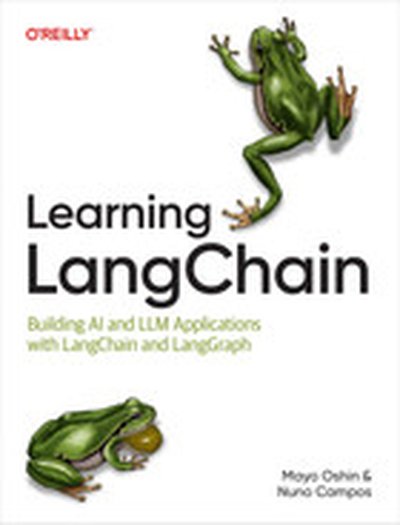
If you're looking to build production-ready AI applications that can reason and retrieve external data for context-awareness, you'll need to master--;a popular development framework and platform for building, running, and managing agentic applications. LangChain is used by several leading companies, including Zapier, Replit, Databricks, and many more. This guide is an indispensable resource for developers who understand Python or JavaScript but are beginners eager to harness the power of AI. Authors Mayo Oshin and Nuno Campos demystify the use of LangChain through practical insights and in-depth tutorials. Starting with basic concepts, this book shows you step-by-step how to build a production-ready AI agent that uses your data. Harness the power of retrieval-augmented generation (RAG) to enhance the accuracy of LLMs using external up-to-date data Develop and deploy AI applications that interact intelligently and contextually with users Make use of the powerful agent architecture with LangGraph Integrate and manage third-party APIs and tools to extend the functionality of your AI applications Monitor, test, and evaluate your AI applications to improve performance Understand the foundations of LLM app development and how they can be used with LangChain
The future of education lies in personalized and scalable solutions, especially in fields like computer engineering where complex concepts often challenge students. This talk introduces Lumina (AI Teaching Assistant), a cutting-edge agentic system designed to revolutionize programming education through its innovative architecture and teaching strategies. Built using OpenAI API, LangChain, RAG, and ChromaDB, Lumina employs an agentic, multi-modal framework that dynamically integrates course materials, technical documentation, and pedagogical strategies into an adaptive knowledge-driven system. Its unique "Knowledge Components" approach decomposes programming concepts into interconnected teachable units, enabling proficiency-based learning and dynamic problem-solving guidance.
The future of education lies in personalized and scalable solutions, especially in fields like computer engineering where complex concepts often challenge students. This talk introduces Lumina (AI Teaching Assistant), a cutting-edge agentic system designed to revolutionize programming education through its innovative architecture and teaching strategies. Built using OpenAI API, LangChain, RAG, and ChromaDB, Lumina employs an agentic, multi-modal framework that dynamically integrates course materials, technical documentation, and pedagogical strategies into an adaptive knowledge-driven system. Its unique “Knowledge Components” approach decomposes programming concepts into interconnected teachable units, enabling proficiency-based learning and dynamic problem-solving guidance. Attendees will discover how Lumina’s agentic architecture enhances engagement, fosters critical thinking, and improves concept mastery, paving the way for scalable AI-driven educational solutions.
The future of education lies in personalized and scalable solutions, especially in fields like computer engineering where complex concepts often challenge students. This talk introduces Lumina (AI Teaching Assistant), a cutting-edge agentic system designed to revolutionize programming education through its innovative architecture and teaching strategies. Built using OpenAI API, LangChain, RAG, and ChromaDB, Lumina employs an agentic, multi-modal framework that dynamically integrates course materials, technical documentation, and pedagogical strategies into an adaptive knowledge-driven system. Its unique “Knowledge Components” approach decomposes programming concepts into interconnected teachable units, enabling proficiency-based learning and dynamic problem-solving guidance. Attendees will discover how Lumina’s agentic architecture enhances engagement, fosters critical thinking, and improves concept mastery, paving the way for scalable AI-driven educational solutions.
Self-paced: Introduction to LangChain for LLM Applications.