talk-data.com talk-data.com

Topic

MATLAB

numerical_computing programming_language scientific_computing

134

tagged

Activity Trend

1 peak/qtr
2020-Q1 2026-Q1

Activities

Showing filtered results

Filtering by: O'Reilly Data Science Books ×
Matlab® in Bioscience and Biotechnology

MATLAB® in bioscience and biotechnology presents an introductory Matlab course oriented towards various collaborative areas of biotechnology and bioscience. It concentrates on Matlab fundamentals and gives examples of its application to a wide range of current bioengineering problems in computational biology, molecular biology, bio-kinetics, biomedicine, bioinformatics, and biotechnology. In the last decade Matlab has been presented to students as the first computer program they learn. Consequently, many non-programmer students, engineers and scientists have come to regard it as user-friendly and highly convenient in solving their specific problems. Numerous books are available on programming in Matlab for engineers in general, irrespective of their specialization, or for those specializing in some specific area, but none have been designed especially for such a wide, interdisciplinary, and topical area as bioengineering. Thus, in this book, Matlab is presented with examples and applications to various school-level and advanced bioengineering problems - from growing populations of microorganisms and population dynamics, reaction kinetics and reagent concentrations, predator-prey models, mass-transfer and flow problems, to sequence analysis and sequence statistics. This is the first book intended as a manual introducing biologists and other biotechnology engineers to work with Matlab It is suitable for beginners and inexperienced users; however, applications of Matlab to advanced problems such as the Monte Carlo method, curve fitting, and reliable machine diagnostics make the book relevant to university teachers as well The book is different in that it assumes a modest mathematical background for the reader and introduces the mathematical or technical concepts with a somewhat traditional approach; Matlab is then used as a tool for subsequent computer solution

Engineering Circuit Analysis: International Student Version, Tenth Edition

Maintaining its accessible approach to circuit analysis, the tenth edition includes even more features to engage and motivate engineers. Exciting chapter openers and accompanying photos are included to enhance visual learning. The book introduces figures with color-coding to significantly improve comprehension. New problems and expanded application examples in PSPICE, MATLAB, and LabView are included. New quizzes are also added to help engineers reinforce the key concepts.

MATLAB®: An Introduction with Applications, Fourth Edition

MATLAB: An Introduction with Applications 4th Edition walks readers through the ins and outs of this powerful software for technical computing. The first chapter describes basic features of the program and shows how to use it in simple arithmetic operations with scalars. The next two chapters focus on the topic of arrays (the basis of MATLAB), while the remaining text covers a wide range of other applications. MATLAB: An Introduction with Applications 4th Edition is presented gradually and in great detail, generously illustrated through computer screen shots and step-by-step tutorials, and applied in problems in mathematics, science, and engineering.

Signals and Systems using MATLAB

This new textbook in signals and systems provides a pedagogically rich approach to what can commonly be a mathematically dry subject. With features like historical notes, highlighted common mistakes, and applications in controls, communications, and signal processing, Chaparro helps students appreciate the usefulness of the techniques described in the book. Each chapter contains a section with MatLab applications. Pedagogically rich introduction to signals and systems using historical notes, pointing out "common mistakes", and relating concepts to realistic examples throughout to motivate learning the material Introduces both continuous and discrete systems early, then studies each (separately) in more depth later Extensive set of worked examples and homework assignments, with applications to controls, communications, and signal processing throughout Provides review of all the background math necessary to study the subject MatLab applications in every chapter

Essential MATLAB for Engineers and Scientists Fourth Edition

The essential guide to MATLAB as a problem solving tool This text presents MATLAB both as a mathematical tool and a programming language, giving a concise and easy to master introduction to its potential and power. The fundamentals of MATLAB are illustrated throughout with many examples from a wide range of familiar scientific and engineering areas, as well as from everyday life. The new edition has been updated to include coverage of Symbolic Math and SIMULINK. It also adds new examples and applications, and uses the most recent release of Matlab.

Environmental Data Analysis with MatLab

Environmental Data Analysis with MatLab is for students and researchers working to analyze real data sets in the environmental sciences. One only has to consider the global warming debate to realize how critically important it is to be able to derive clear conclusions from often-noisy data drawn from a broad range of sources. This book teaches the basics of the underlying theory of data analysis, and then reinforces that knowledge with carefully chosen, realistic scenarios. MatLab, a commercial data processing environment, is used in these scenarios; significant content is devoted to teaching how it can be effectively used in an environmental data analysis setting. The book, though written in a self-contained way, is supplemented with data sets and MatLab scripts that can be used as a data analysis tutorial. Well written and outlines a clear learning path for researchers and students Uses real world environmental examples and case studies MatLab software for application in a readily-available software environment Homework problems help user follow up upon case studies with homework that expands them

Programming for Chemical Engineers Using C, C++, and MATLAB®

Designed for chemical engineering students and industry professionals, Programming for Chemical Engineers Using C, C++, and MATLAB® shows how to write reusable computer programs by guiding the reader through the process of: establishing the theoretical concept; determining the applicable numerical methods; testing the algorithm through manual calculation; writing and debugging the computer program based on the algorithm; and validating the result, using statistical analysis. All programs in the book are written in the three most popular languages (C, C++, and MATLAB) currently used in the chemical engineering curriculum and in industry. Because the book is written by a chemical engineer, practitioners and students will learn to write programs for appropriate subject matter of interest to them.

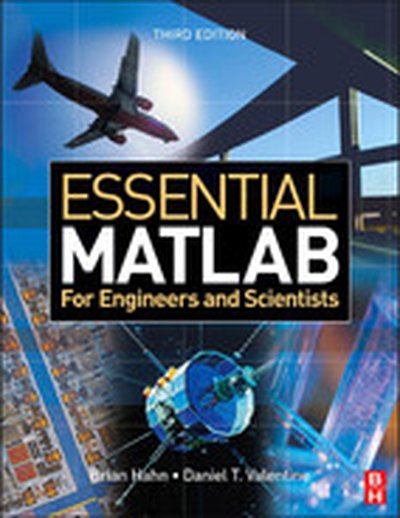
Essential MATLAB for Engineers and Scientists, 3rd Edition

Essential MATLAB for Engineers and Scientists, Third Edition, is an essential guide to MATLAB as a problem-solving tool. It presents MATLAB both as a mathematical tool and a programming language, giving a concise and easy-to-master introduction to its potential and power. Stressing the importance of a structured approach to problem solving, the text provides a step-by-step method for program design and algorithm development. It includes numerous simple exercises for hands-on learning, a chapter on algorithm development and program design, and a concise introduction to useful topics for solving problems in later engineering and science courses: vectors as arrays, arrays of characters, GUIs, advanced graphics, and simulation and numerical methods. The text is ideal for undergraduates in engineering and science taking a course on Matlab. Numerous simple exercises give hands-on learning A chapter on algorithm development and program design Common errors and pitfalls highlighted Concise introduction to useful topics for solving problems in later engineering and science courses: vectors as arrays, arrays of characters, GUIs, advanced graphics, simulation and numerical methods A new chapter on dynamical systems shows how a structured approach is used to solve more complex problems. Text and graphics in four colour

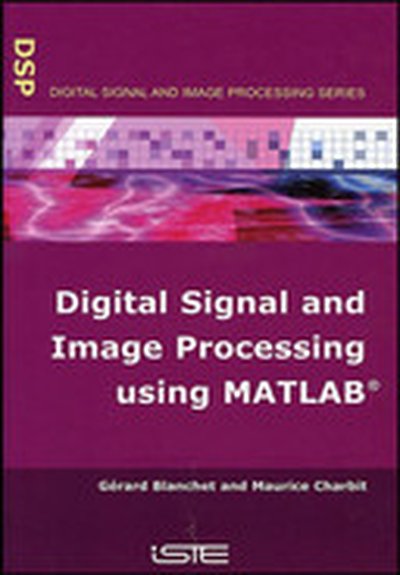
Digital Signal and Image Processing Using MATLAB

This title provides the most important theoretical aspects of Image and Signal Processing (ISP) for both deterministic and random signals. The theory is supported by exercises and computer simulations relating to real applications. More than 200 programs and functions are provided in the MATLAB® language, with useful comments and guidance, to enable numerical experiments to be carried out, thus allowing readers to develop a deeper understanding of both the theoretical and practical aspects of this subject.

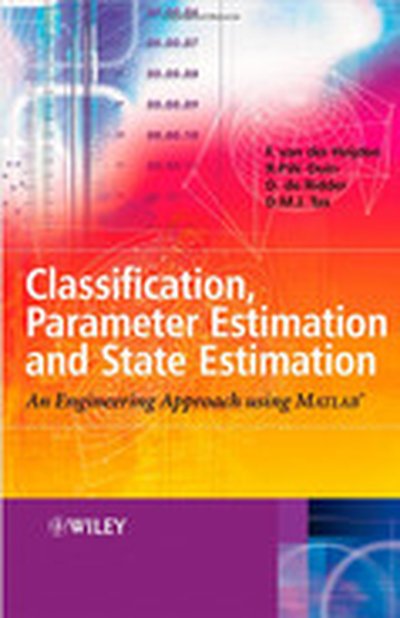
Classification, Parameter Estimation and State Estimation: An Engineering Approach Using MATLAB

Classification, Parameter Estimation and State Estimation is a practical guide for data analysts and designers of measurement systems and postgraduates students that are interested in advanced measurement systems using MATLAB. 'Prtools' is a powerful MATLAB toolbox for pattern recognition and is written and owned by one of the co-authors, B. Duin of the Delft University of Technology. After an introductory chapter, the book provides the theoretical construction for classification, estimation and state estimation. The book also deals with the skills required to bring the theoretical concepts to practical systems, and how to evaluate these systems. Together with the many examples in the chapters, the book is accompanied by a MATLAB toolbox for pattern recognition and classification. The appendix provides the necessary documentation for this toolbox as well as an overview of the most useful functions from these toolboxes. With its integrated and unified approach to classification, parameter estimation and state estimation, this book is a suitable practical supplement in existing university courses in pattern classification, optimal estimation and data analysis. Covers all contemporary main methods for classification and estimation. Integrated approach to classification, parameter estimation and state estimation Highlights the practical deployment of theoretical issues. Provides a concise and practical approach supported by MATLAB toolbox. Offers exercises at the end of each chapter and numerous worked out examples. PRtools toolbox (MATLAB) and code of worked out examples available from the internet Many examples showing implementations in MATLAB Enables students to practice their skills using a MATLAB environment

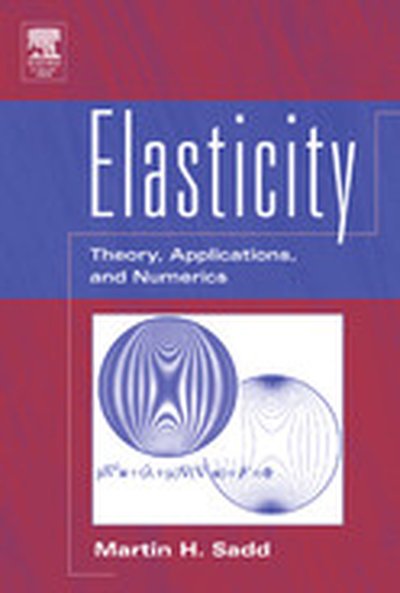
Elasticity

Although there are several books in print dealing with elasticity, many focus on specialized topics such as mathematical foundations, anisotropic materials, two-dimensional problems, thermoelasticity, non-linear theory, etc. As such they are not appropriate candidates for a general textbook. This book provides a concise and organized presentation and development of general theory of elasticity. Complemented by a Solutions Manual and including MatLab codes and coding, this text is an excellent book teaching guide. - Contains exercises for student engagement as well as the integration and use of MATLAB Software - Provides development of common solution methodologies and a systematic review of analytical solutions useful in applications of engineering interest - Presents applications of contemporary interest

Process Control: Modeling, Design, and Simulation

Master process control hands on, through practical examples and MATLAB® simulations This is the first complete introduction to process control that fully integrates software tools—enabling professionals and students to master critical techniques hands on, through computer simulations based on the popular MATLAB environment. Process Control: Modeling, Design, and Simulation teaches the field's most important techniques, behaviors, and control problems through practical examples, supplemented by extensive exercises—with detailed derivations, relevant software files, and additional techniques available on a companion Web site. Coverage includes: Fundamentals of process control and instrumentation, including objectives, variables, and block diagrams Methodologies for developing dynamic models of chemical processes Dynamic behavior of linear systems: state space models, transfer function-based models, and more Feedback control; proportional, integral, and derivative (PID) controllers; and closed-loop stability analysis Frequency response analysis techniques for evaluating the robustness of control systems Improving control loop performance: internal model control (IMC), automatic tuning, gain scheduling, and enhancements to improve disturbance rejection Split-range, selective, and override strategies for switching among inputs or outputs Control loop interactions and multivariable controllers An introduction to model predictive control (MPC) Bequette walks step by step through the development of control instrumentation diagrams for an entire chemical process, reviewing common control strategies for individual unit operations, then discussing strategies for integrated systems. The book also includes 16 learning modules demonstrating how to use MATLAB and SIMULINK to solve several key control problems, ranging from robustness analyses to biochemical reactors, biomedical problems to multivariable control.

System Identification: Theory for the User, 2nd Edition

65669-4 The field’s leading text, now completely updated. Modeling dynamical systems — theory, methodology, and applications. Lennart Ljung’s System Identification: Theory for the User is a complete, coherent description of the theory, methodology, and practice of System Identification. This completely revised Second Edition introduces subspace methods, methods that utilize frequency domain data, and general non-linear black box methods, including neural networks and neuro-fuzzy modeling. The book contains many new computer-based examples designed for Ljung’s market-leading software, System Identification Toolbox for MATLAB. Ljung combines careful mathematics, a practical understanding of real-world applications, and extensive exercises. He introduces both black-box and tailor-made models of linear as well as non-linear systems, and he describes principles, properties, and algorithms for a variety of identification techniques: Nonparametric time-domain and frequency-domain methods. Parameter estimation methods in a general prediction error setting. Frequency domain data and frequency domain interpretations. Asymptotic analysis of parameter estimates. Linear regressions, iterative search methods, and other ways to compute estimates. Recursive (adaptive) estimation techniques. Ljung also presents detailed coverage of the key issues that can make or break system identification projects, such as defining objectives, designing experiments, controlling the bias distribution of transfer-function estimates, and carefully validating the resulting models. The first edition of System Identification has been the field’s most widely cited reference for over a decade. This new edition will be the new text of choice for anyone concerned with system identification theory and practice.