talk-data.com talk-data.com

H

Speaker

Hadley Wickham

7

talks

guest

Frequent Collaborators

Filtering by: O'Reilly Data Science Books ×

Filter by Event / Source

Talks & appearances

Showing 7 of 10 activities

Search activities →
R Packages, 2nd Edition

Turn your R code into packages that others can easily install and use. With this fully updated edition, developers and data scientists will learn how to bundle reusable R functions, sample data, and documentation together by applying the package development philosophy used by the team that maintains the "tidyverse" suite of packages. In the process, you'll learn how to automate common development tasks using a set of R packages, including devtools, usethis, testthat, and roxygen2. Authors Hadley Wickham and Jennifer Bryan from Posit (formerly known as RStudio) help you create packages quickly, then teach you how to get better over time. You'll be able to focus on what you want your package to do as you progressively develop greater mastery of the structure of a package. With this book, you will: Learn the key components of an R package, including code, documentation, and tests Streamline your development process with devtools and the RStudio IDE Get tips on effective habits such as organizing functions into files Get caught up on important new features in the devtools ecosystem Learn about the art and science of unit testing, using features in the third edition of testthat Turn your existing documentation into a beautiful and user friendly website with pkgdown Gain an appreciation of the benefits of modern code hosting platforms, such as GitHub
R for Data Science, 2nd Edition

Use R to turn data into insight, knowledge, and understanding. With this practical book, aspiring data scientists will learn how to do data science with R and RStudio, along with the tidyverse—a collection of R packages designed to work together to make data science fast, fluent, and fun. Even if you have no programming experience, this updated edition will have you doing data science quickly. You'll learn how to import, transform, and visualize your data and communicate the results. And you'll get a complete, big-picture understanding of the data science cycle and the basic tools you need to manage the details. Updated for the latest tidyverse features and best practices, new chapters show you how to get data from spreadsheets, databases, and websites. Exercises help you practice what you've learned along the way. You'll understand how to: Visualize: Create plots for data exploration and communication of results Transform: Discover variable types and the tools to work with them Import: Get data into R and in a form convenient for analysis Program: Learn R tools for solving data problems with greater clarity and ease Communicate: Integrate prose, code, and results with Quarto

Mastering Shiny

Master the Shiny web framework—and take your R skills to a whole new level. By letting you move beyond static reports, Shiny helps you create fully interactive web apps for data analyses. Users will be able to jump between datasets, explore different subsets or facets of the data, run models with parameter values of their choosing, customize visualizations, and much more. Hadley Wickham from RStudio shows data scientists, data analysts, statisticians, and scientific researchers with no knowledge of HTML, CSS, or JavaScript how to create rich web apps from R. This in-depth guide provides a learning path that you can follow with confidence, as you go from a Shiny beginner to an expert developer who can write large, complex apps that are maintainable and performant. Get started: Discover how the major pieces of a Shiny app fit together Put Shiny in action: Explore Shiny functionality with a focus on code samples, example apps, and useful techniques Master reactivity: Go deep into the theory and practice of reactive programming and examine reactive graph components Apply best practices: Examine useful techniques for making your Shiny apps work well in production

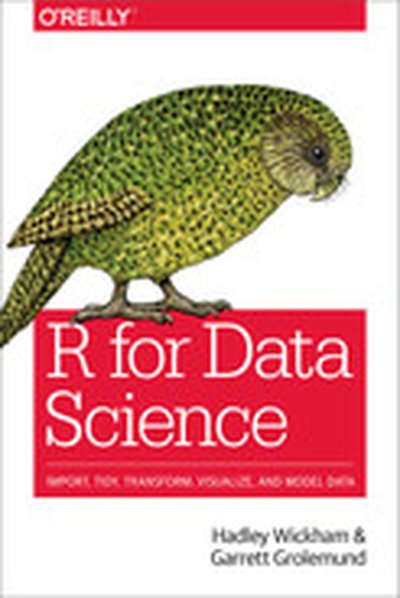
R for Data Science

Learn how to use R to turn raw data into insight, knowledge, and understanding. This book introduces you to R, RStudio, and the tidyverse, a collection of R packages designed to work together to make data science fast, fluent, and fun. Suitable for readers with no previous programming experience, R for Data Science is designed to get you doing data science as quickly as possible. Authors Hadley Wickham and Garrett Grolemund guide you through the steps of importing, wrangling, exploring, and modeling your data and communicating the results. You’ll get a complete, big-picture understanding of the data science cycle, along with basic tools you need to manage the details. Each section of the book is paired with exercises to help you practice what you’ve learned along the way. You’ll learn how to: Wrangle—transform your datasets into a form convenient for analysis Program—learn powerful R tools for solving data problems with greater clarity and ease Explore—examine your data, generate hypotheses, and quickly test them Model—provide a low-dimensional summary that captures true "signals" in your dataset Communicate—learn R Markdown for integrating prose, code, and results

Writing code for R packages

R packages are a great way to share and create code that you and others can use over and over again. Why is it important? Developing R code for inclusion in a package is different than simply writing R scripts. What you'll learn—and how you can apply it Learn best practices for writing R code for packages: organizing your functions, code style recommendations, understanding and planning for how code will be run. Plan for the "unknowns" once you release a package to the world. Also includes hints for submitting a package to CRAN. This lesson is for you because… You're an R developer and need to package code so that others can reuse it You want to prepare a package to submit to CRAN Prerequisites Some familiarity with the R language Materials or downloads needed in advance Install R Install RStudio This lesson is taken from by Hadley Wickham. R Packages

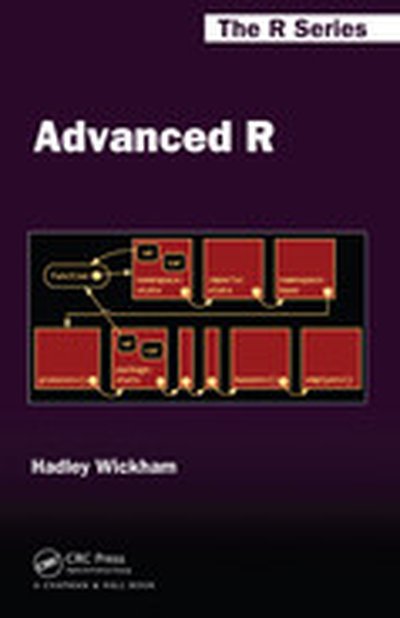
Advanced R

An Essential Reference for Intermediate and Advanced R Programmers Advanced R presents useful tools and techniques for attacking many types of R programming problems, helping you avoid mistakes and dead ends. With more than ten years of experience programming in R, the author illustrates the elegance, beauty, and flexibility at the heart of R. The book develops the necessary skills to produce quality code that can be used in a variety of circumstances. You will learn: The fundamentals of R, including standard data types and functions Functional programming as a useful framework for solving wide classes of problems The positives and negatives of metaprogramming How to write fast, memory-efficient code This book not only helps current R users become R programmers but also shows existing programmers what’s special about R. Intermediate R programmers can dive deeper into R and learn new strategies for solving diverse problems while programmers from other languages can learn the details of R and understand why R works the way it does.

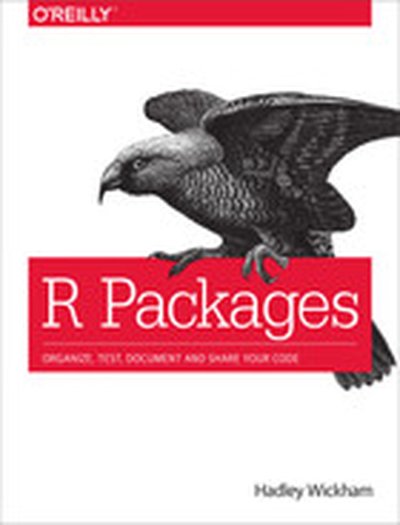
R Packages

Turn your R code into packages that others can easily download and use. This practical book shows you how to bundle reusable R functions, sample data, and documentation together by applying author Hadley Wickham’s package development philosophy. In the process, you’ll work with devtools, roxygen, and testthat, a set of R packages that automate common development tasks. Devtools encapsulates best practices that Hadley has learned from years of working with this programming language. Ideal for developers, data scientists, and programmers with various backgrounds, this book starts you with the basics and shows you how to improve your package writing over time. You’ll learn to focus on what you want your package to do, rather than think about package structure. Learn about the most useful components of an R package, including vignettes and unit tests Automate anything you can, taking advantage of the years of development experience embodied in devtools Get tips on good style, such as organizing functions into files Streamline your development process with devtools Learn the best way to submit your package to the Comprehensive R Archive Network (CRAN) Learn from a well-respected member of the R community who created 30 R packages, including ggplot2, dplyr, and tidyr