talk-data.com talk-data.com

C

Speaker

Charles Bell

7

talks

author

Frequent Collaborators

Filtering by: O'Reilly Data Engineering Books ×

Filter by Event / Source

Talks & appearances

Showing 7 of 7 activities

Search activities →
Introducing MySQL Shell: Administration Made Easy with Python

Use MySQL Shell, the first modern and advanced client for connecting to and interacting with MySQL. It supports SQL, Python, and JavaScript. That’s right! You can write Python scripts and execute them within the shell interactively, or in batch mode. The level of automation available from Python combined with batch mode is especially helpful to those practicing DevOps methods in their database environments. Introducing MySQL Shell covers everything you need to know about MySQL Shell. You will learn how to use the shell for SQL, as well as the new application programming interfaces for working with a document store and even automating your management of MySQL servers using Python. The book includes a look at the supporting technologies and concepts such as JSON, schema-less documents, NoSQL, MySQL Replication, Group Replication, InnoDB Cluster, and more. MySQL Shell is the client that developers and databaseadministrators have been waiting for. Far more powerful than the legacy client, MySQL Shell enables levels of automation that are useful not only for MySQL, but in the broader context of your career as well. Automate your work and build skills in one of the most in-demand languages. With MySQL Shell, you can do both! What You'll Learn Use MySQL Shell with the newest features in MySQL 8 Discover what a Document Store is and how to manage it with MySQL Shell Configure Group Replication and InnoDB Cluster from MySQL Shell Understand the new MySQL Python application programming interfaces Write Python scripts for managing your data and the MySQL high availability features Who This Book Is For Developers and database professionals who want to automate their work and remain on the cutting edge of what MySQLhas to offer. Anyone not happy with the limited automation capabilities of the legacy command-line client will find much to like in this book on the MySQL Shell that supports powerful automation through the Python scripting language.
Introducing InnoDB Cluster: Learning the MySQL High Availability Stack

Set up, manage, and configure the new InnoDB Cluster feature in MySQL from Oracle. If you are growing your MySQL installation and want to explore making your servers highly available, this book provides what you need to know about high availability and the new tools that are available in MySQL 8.0.11 and later. Introducing InnoDB Cluster teaches you about the building blocks that make up InnoDB Cluster such as MySQL Group Replication for storing data redundantly, MySQL Router for the routing of inbound connections, and MySQL Shell for simplified setup and configuration, status reporting, and even automatic failover. You will understand how it all works together to ensure that your data are available even when your primary database server goes down. Features described in this book are available in the Community Edition of MySQL, beginning with the version 8.0.11 GA release, making this book relevant for any MySQL users in need of redundancy against failure. Tutorials in the book show how to configure a test environment and plan a production deployment. Examples are provided in the form of a walk-through of a typical MySQL high-availability setup. What You'll Learn Discover the newest high-availability features in MySQL Set up and use InnoDB Cluster as an HA solution Migrate your existing servers to MySQL 8 Employ best practices for using InnoDB Cluster Configure servers for optimal automatic failover to ensure that applications continue when a server fails Configure MySQL Router to load-balance inbound connections to the cluster Who This Book Is For Systems engineers, developers, and database professionals wanting to learn about the powerful high availability (HA) features, beginning with MySQL 8.0.11: MySQL Shell, MySQL Router, and MySQL Group Replication. The book is useful for those designing high-availability systems backed by a database, and for those interested in open source HA solutions.

Introducing the MySQL 8 Document Store

Learn the new Document Store feature of MySQL 8 and build applications around a mix of the best features from SQL and NoSQL database paradigms. Don’t allow yourself to be forced into one paradigm or the other, but combine both approaches by using the Document Store. MySQL 8 was designed from the beginning to bridge the gap between NoSQL and SQL. Oracle recognizes that many solutions need the capabilities of both. More specifically, developers need to store objects as loose collections of schema-less documents, but those same developers also need the ability to run structured queries on their data. With MySQL 8, you can do both! Introducing the MySQL 8 Document Store presents new tools and features that make creating a hybrid database solution far easier than ever before. This book covers the vitally important MySQL Document Store, the new X Protocol for developing applications, and a new client shell called the MySQL Shell. Also covered are supporting technologies and concepts such as JSON, schema-less documents, and more. The book gives insight into how features work and how to apply them to get the most out of your MySQL experience. The book covers topics such as: The headline feature in MySQL 8 MySQL's answer to NoSQL New APIs and client protocols What You'll Learn Create NoSQL-style applications by using the Document Store Mix the NoSQL and SQL approaches by using each to its best advantage in a hybrid solution Work with the new X Protocol for application connectivity in MySQL 8 Master the new X Developer Application Programming Interfaces Combine SQL and JSON in the same database and application Migrate existing applications to MySQL Document Store Who This Book Is For Developers and database professionals wanting to learn about the most profound paradigm-changing features of the MySQL 8 Document Store

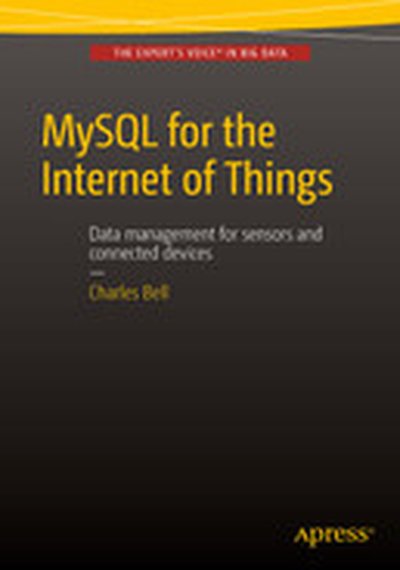
MySQL for the Internet of Things

This book introduces the problems facing Internet of Things developers and explores current technologies and techniques to help you manage, mine, and make sense of the data being collected through the use of the world’s most popular database on the Internet - MySQL. The IoT is poised to change how we interact with and perceive the world around us, and the possibilities are nearly boundless. As more and more connected devices generate data, we will need to solve the problem of how to collect, store, and make sense of IoT data by leveraging the power of database systems. The book begins with an introduction of the MySQL database system and storage of sensor data. Detailed instructions and examples are provided to show how to add database nodes to IoT solutions including how to leverage MySQL high availability, including examples of how to protect data from node outages using advanced features of MySQL. The book closes with a comparison of raw and transformed data showing how transformed data can improve understandability and help you cut through a clutter of superfluous data toward the goal of mining nuggets of useful knowledge.

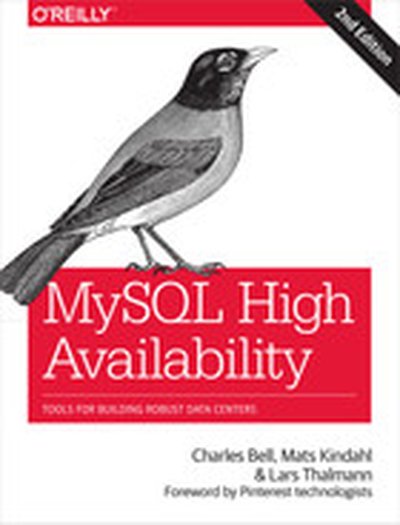
MySQL High Availability, 2nd Edition

Server bottlenecks and failures are a fact of life in any database deployment, but they don’t have to bring everything to a halt. This practical book explains replication, cluster, and monitoring features that can help protect your MySQL system from outages, whether it’s running on hardware, virtual machines, or in the cloud.

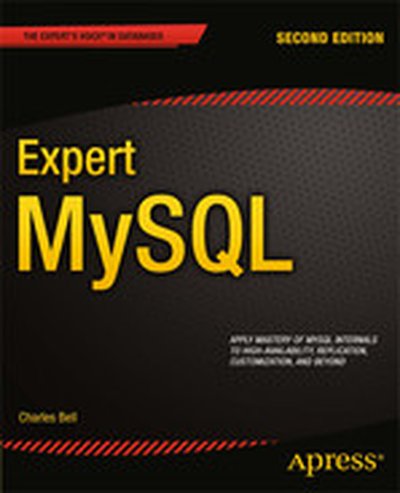
Expert MySQL, Second Edition

Expert MySQL is the leading reference for learning, understanding, and extending the MySQL server. It unlocks the full promise of open source by showing how to modify the code, create your own storage engine, build your own authentication plugins, and even add your own functions and commands to the SQL language. No other book provides the level of detail or the extensive examples of the inner workings of MySQL that have taken engineers years to master. Expert MySQL is a must have book for all systems integrators, engineers, and software developers working with the MySQL server code. Expert MySQL is also a wealth of information on key aspects of MySQL internals. You'll learn about internal query representation, how the optimizer creates execution plans, and how to exert control over those plans for optimal performance in your environment. You'll even learn to build your own query optimizer, giving insight that can help you understand and resolve tough performance problems. High-availability and replication are also covered, making Expert MySQL a must-have book for anyone doing high-end work involving MySQL. Shows how to customize MySQL and its storage and authentication engines Provides in-depth knowledge of internals for use in query tuning and performance troubleshooting Covers high-end features such as high-availability and replication What you'll learn Learn the inner workings of MySQL Diagnose and improve poorly performing queries Implement high-availablity solutions and replication Modify and debug the server code Build your own pluggable storage engines and authentication modules Implement new SQL functions and syntax Build your own query optimizer Who this book is for Expert MySQL is written for systems integrators, software developers, and database administrators who are using MySQL and desire a deeper knowledge of MySQL internals in support of high-end work such as performance troubleshooting, customization of the engine and its plugins, query optimizaion, building of high-availability environments, replication of data, and so forth.

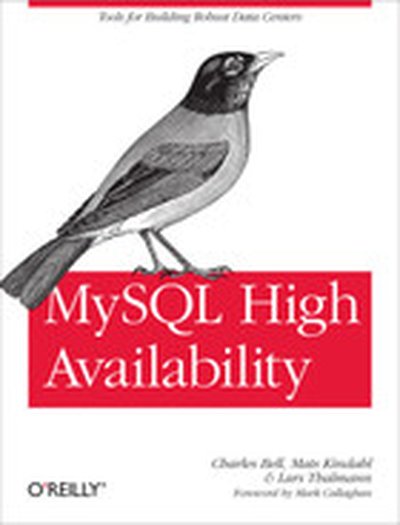
MySQL High Availability

Server bottlenecks and failures are a fact of life in any database deployment, but they don't have to bring everything to a halt. MySQL has several features that can help you protect your system from outages, whether it's running on hardware, virtual machines, or in the cloud. MySQL High Availability explains how to use these replication, cluster, and monitoring features in a wide range of real-life situations. Written by engineers who designed many of the tools covered inside, this book reveals undocumented or hard-to-find aspects of MySQL reliability and high availability -- knowledge that’s essential for any organization using this database system. "MySQL replication is widely deployed but has never been adequately explained. This book changes that."-- Mark Callaghan, MySQL contributor and leader of MySQL engineering efforts at a few of the world's largest Internet companies Explore the binary log, a file for replication that helps in disaster recovery and troubleshooting Get techniques for improving response time and handling large data sets Monitor database activity and performance, as well as major operating system parameters Keep track of what masters and slaves are doing, and deal with failures and restarts, corruption, and other incidents Automate key tasks with code from an open source library written by the authors Learn techniques for using MySQL in virtualized environments, such as Amazon Web Services Use MySQL Cluster to achieve high availability