
talk-data.com talk-data.com

T

Speaker

Thomas Hill

2

talks

author
Filtering by: O'Reilly Data Science Books ×

Filter by Event / Source

Talks & appearances

Showing 2 of 3 activities

Search activities →
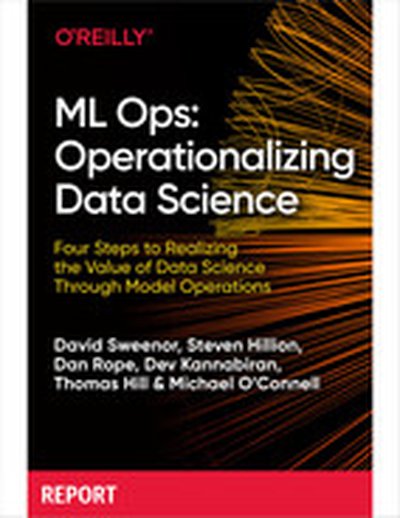
ML Ops: Operationalizing Data Science

More than half of the analytics and machine learning (ML) models created by organizations today never make it into production. Instead, many of these ML models do nothing more than provide static insights in a slideshow. If they aren’t truly operational, these models can’t possibly do what you’ve trained them to do. This report introduces practical concepts to help data scientists and application engineers operationalize ML models to drive real business change. Through lessons based on numerous projects around the world, six experts in data analytics provide an applied four-step approach—Build, Manage, Deploy and Integrate, and Monitor—for creating ML-infused applications within your organization. You’ll learn how to: Fulfill data science value by reducing friction throughout ML pipelines and workflows Constantly refine ML models through retraining, periodic tuning, and even complete remodeling to ensure long-term accuracy Design the ML Ops lifecycle to ensure that people-facing models are unbiased, fair, and explainable Operationalize ML models not only for pipeline deployment but also for external business systems that are more complex and less standardized Put the four-step Build, Manage, Deploy and Integrate, and Monitor approach into action
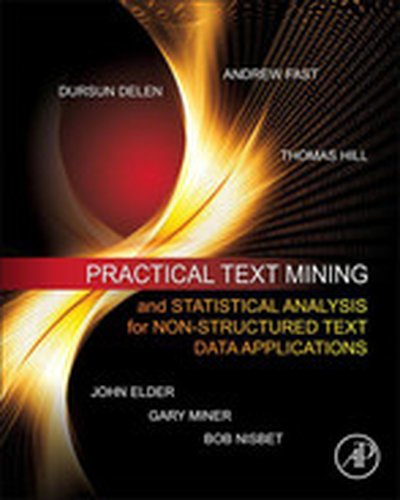
Practical Text Mining and Statistical Analysis for Non-structured Text Data Applications

Practical Text Mining and Statistical Analysis for Non-structured Text Data Applications brings together all the information, tools and methods a professional will need to efficiently use text mining applications and statistical analysis. Winner of a 2012 PROSE Award in Computing and Information Sciences from the Association of American Publishers, this book presents a comprehensive how-to reference that shows the user how to conduct text mining and statistically analyze results. In addition to providing an in-depth examination of core text mining and link detection tools, methods and operations, the book examines advanced preprocessing techniques, knowledge representation considerations, and visualization approaches. Finally, the book explores current real-world, mission-critical applications of text mining and link detection using real world example tutorials in such varied fields as corporate, finance, business intelligence, genomics research, and counterterrorism activities. The world contains an unimaginably vast amount of digital information which is getting ever vaster ever more rapidly. This makes it possible to do many things that previously could not be done: spot business trends, prevent diseases, combat crime and so on. Managed well, the textual data can be used to unlock new sources of economic value, provide fresh insights into science and hold governments to account. As the Internet expands and our natural capacity to process the unstructured text that it contains diminishes, the value of text mining for information retrieval and search will increase dramatically. Extensive case studies, most in a tutorial format, allow the reader to 'click through' the example using a software program, thus learning to conduct text mining analyses in the most rapid manner of learning possible Numerous examples, tutorials, power points and datasets available via companion website on Elsevierdirect.com Glossary of text mining terms provided in the appendix