
talk-data.com talk-data.com

J

Speaker

James D. Miller

3

talks

author
Filtering by: O'Reilly Data Science Books ×

Filter by Event / Source

Talks & appearances

Showing 3 of 4 activities

Search activities →
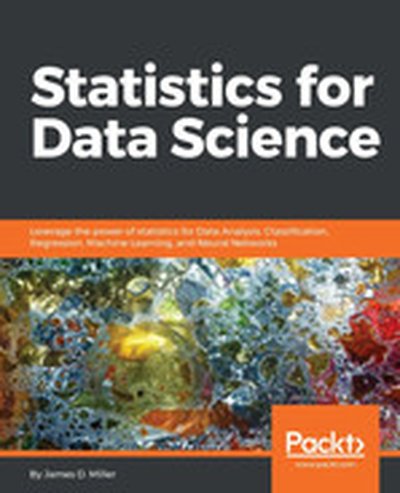
Statistics for Data Science

Dive into the world of statistics specifically tailored for the needs of data science with 'Statistics for Data Science'. This book guides you from the fundamentals of statistical concepts to their practical application in data analysis, machine learning, and neural networks. Learn with clear explanations and practical R examples to fully grasp statistical methods for data-driven challenges. What this Book will help me do Understand foundational statistical concepts such as variance, standard deviation, and probability. Gain proficiency in using R for programmatically performing statistical computations for data science. Learn techniques for applying statistics in data cleaning, mining, and analysis tasks. Master methods for executing linear regression, regularization, and model assessment. Explore advanced techniques like boosting, SVMs, and neural network applications. Author(s) James D. Miller brings years of experience as a data scientist and educator. He has a deep understanding of how statistics foundationally supports data science and has worked across multiple industries applying these principles. Dedicated to teaching, James simplifies complex statistical concepts into approachable and actionable knowledge for developers aspiring to master data science applications. Who is it for? This book is intended for developers aiming to transition into the field of data science. If you have some basic programming knowledge and a desire to understand statistics essentials for data science applications, this book is designed for you. It's perfect for those who wish to apply statistical methods to practical tasks like data mining and analysis. A prior hands-on experience with R is helpful but not mandatory, as the book explains R methodologies comprehensively.
Mastering Predictive Analytics with R, Second Edition - Second Edition

This comprehensive guide dives into predictive analytics with R, exploring the powerful functionality and vast ecosystem of packages available in this programming language. By studying this book, you will gain mastery over predictive modeling techniques and learn how to apply machine learning to real-world problems efficiently and effectively. What this Book will help me do Develop proficiency in predictive modeling processes, from data preparation to model evaluation. Gain hands-on experience with R's diverse packages for machine learning. Understand the theoretical foundations and practical applications of various predictive models. Learn advanced techniques such as deep learning implementations of word embeddings and recurrent neural networks. Acquire the ability to handle large datasets using R for scalable predictive analytics workflows. Author(s) James D. Miller and Rui Miguel Forte are experts in data science and predictive analytics with decades of combined experience in the field. They bring practical insights from their work in both academia and industry. Their clear and engaging writing style aims at making complex concepts accessible to readers by integrating theoretical knowledge with real-world applications. Who is it for? This book is ideal for budding data scientists, predictive modelers, or quantitative analysts with some basic knowledge of R and statistics. Advanced learners aiming to refine their expertise in predictive analytics and those wishing to explore the functionality of R for applied machine learning will also greatly benefit from this resource. The book is suitable for professionals and enthusiasts keen to expand their understanding of predictive modeling and learn advanced techniques.

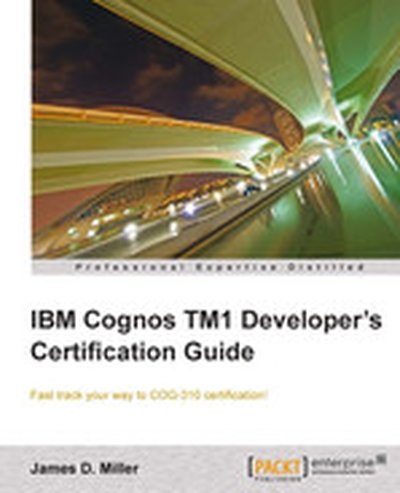
IBM Cognos TM1 Developer's Certification guide

The IBM Cognos TM1 Developer's Certification Guide is your hands-on resource to preparing for and passing the COG-310 certification exam. This book offers a practical, example-driven approach to mastering the core concepts and tools within IBM Cognos TM1, including dimension construction, scripting with Turbo Integrator, rules writing, and cube design. What this Book will help me do Master the key components and architecture of Cognos TM1 to build efficient financial models. Gain proficiency in Turbo Integrator scripting to automate data integration and transformations. Learn to create and use dimensions, cubes, and rules effectively within the TM1 environment. Understand advanced concepts like drill-through functionality, virtual cubes, and lookup cubes. Enhance your data presentation and reporting skills tailored to TM1 solutions. Author(s) James D. Miller is an experienced educator and IBM Cognos TM1 professional, with a strong background in financial and enterprise planning systems. With years of experience in the field, James brings his practical knowledge into his writing, making complex technical topics approachable and clear. He is committed to helping learners achieve their professional certifications and enhance their skill sets. Who is it for? This book is ideal for beginner to intermediate IBM Cognos TM1 developers who are looking to gain expertise in the field and obtain the COG-310 certification. If you are someone interested in enhancing your financial modeling skills and advancing your career, this guide is designed to meet your needs. It suits individuals wishing for structured, hands-on learning with practical exercises to build actual project-ready competence. Anyone aiming to independently prepare for the COG-310 certification exam will greatly benefit from this content.