talk-data.com talk-data.com

Topic

API

Application Programming Interface (API)

integration software_development data_exchange

4

tagged

Activity Trend

65 peak/qtr
2020-Q1 2026-Q1

Activities

Showing filtered results

Filtering by: Paul DuBois ×
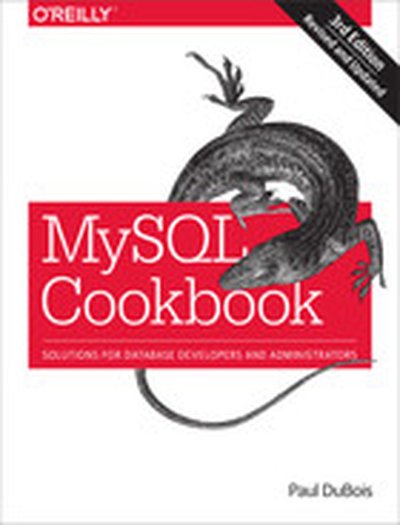
MySQL Cookbook, 3rd Edition

MySQLâ??s popularity has brought a flood of questions about how to solve specific problems, and thatâ??s where this cookbook is essential. When you need quick solutions or techniques, this handy resource provides scores of short, focused pieces of code, hundreds of worked-out examples, and clear, concise explanations for programmers who donâ??t have the time (or expertise) to solve MySQL problems from scratch. Ideal for beginners and professional database and web developers, this updated third edition covers powerful features in MySQL 5.6 (and some in 5.7). The book focuses on programming APIs in Python, PHP, Java, Perl, and Ruby. With more than 200+ recipes, youâ??ll learn how to: Use the mysql client and write MySQL-based programs Create, populate, and select data from tables Store, retrieve, and manipulate strings Work with dates and times Sort query results and generate summaries Use stored routines, triggers, and scheduled events Import, export, validate, and reformat data Perform transactions and work with statistics Process web input, and generate web content from query results Use MySQL-based web session management Provide security and server administration
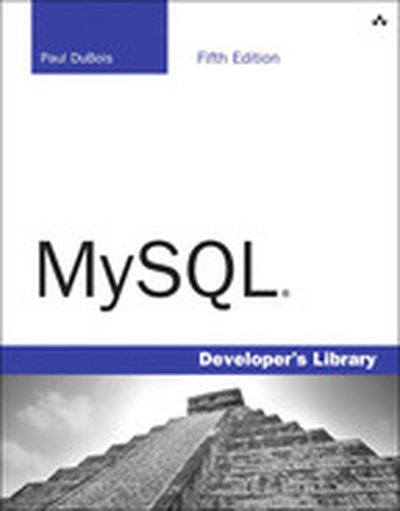
MySQL, 5th Edition

MySQL, Fifth Edition by Paul DuBois The definitive guide to using, programming and administering MySQL 5.5 and MySQL 5.6 MySQL provides a comprehensive guide to effectively using and administering the MySQL database management system (DBMS). Author Paul DuBois describes everything from the basics of getting information into a database and formulating queries, to using MySQL with PHP or Perl to generate dynamic web pages, to writing your own programs that access MySQL databases, to administering MySQL servers. The book also includes a comprehensive reference section providing detailed information on MySQL’s structure, language, syntax, and APIs. The fifth edition of this bestselling book has been meticulously revised and updated to thoroughly cover the latest features and capabilities of MySQL 5.5, as well as to add new coverage of features introduced with MySQL 5.6. MySQL is an open source relational database management system (DBMS) that has experienced a phenomenal growth in popularity and use. Known for its speed and ease of use, MySQL has proven itself to be particularly well-suited for developing database-backed websites and applications. MySQL runs on anything from modest hardware all the way up to enterprise servers, and its performance rivals any database system put up against it. Paul DuBois’ MySQL, Fifth Edition, is the definitive guide to fully exploiting all the power and versatility of MySQL 5.5 and MySQL 5.6 Contents at a Glance Part I: General MySQL Use Chapter 1 Getting Started with MySQL Chapter 2 Using SQL to Manage Data Chapter 3 Data Types Chapter 4 Views and Stored Programs Chapter 5 Query Optimization Part II: Using MySQL Programming Interfaces Chapter 6 Introduction to MySQL Programming Chapter 7 Writing MySQL Programs Using C Chapter 8 Writing MySQL Programs Using Perl DBI Chapter 9 Writing MySQL Programs Using PHP Part III: MySQL Administration Chapter 10 Introduction to MySQL Administration Chapter 11 The MySQL Data Directory Chapter 12 General MySQL Administration Chapter 13 Security and Access Control Chapter 14 Database Maintenance, Backups, and Replication Part IV: Appendixes Appendix A Software Required to Use This Book Appendix B Data Type Reference Appendix C Operator and Function Reference Appendix D System, Status, and User Variable Reference Appendix E SQL Syntax Reference Appendix F MySQL Program Reference Online Appendixes: Appendix G C API Reference Appendix H Perl DBI API Reference Appendix I PHP API Reference .

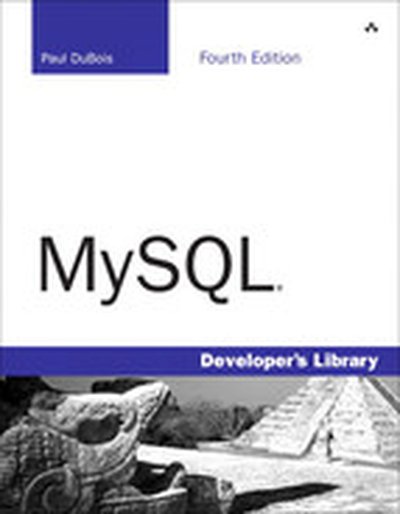
MySQL®

The Definitive Guide to Using, Programming, and Administering MySQL 5.0 and 5.1 MySQL is an open source relational database management system that has experienced a phenomenal growth in popularity and use. Known for its speed and ease of use, MySQL has proven itself to be particularly well-suited for developing database-backed websites and applications. In MySQL, Paul DuBois provides a comprehensive guide to using and administering MySQL effectively and productively. He describes everything from the basics of getting information into a database and formulating queries, to using MySQL with PHP or Perl to generate dynamic web pages, to writing your own programs that access MySQL databases, to administering MySQL servers. The fourth edition of this bestselling book has been meticulously revised and updated to thoroughly cover the latest features and capabilities of MySQL 5.0, as well as to add new coverage of features introduced with MySQL 5.1. “One of the best technical books I have read on any subject.” –Gregory Haley, C Vu, The Association of C & C++ Users “A top-notch user’s guide and reference manual, and in my opinion, the only book you’ll need for the daily operation and maintenance of MySQL databases.” –Eugene Kim, Web Techniques Introduction 1 Part I: General MySQL Use Chapter 1: Getting Started with MySQL 13 Chapter 2: Using SQL to Manage Data 101 Chapter 3: Data Types 201 Chapter 4: Stored Programs 289 Chapter 5: Query Optimization 303 Part II: Using MySQL Programming Interfaces Chapter 6: Introduction to MySQL Programming 341 Chapter 7: Writing MySQL Programs Using C 359 Chapter 8: Writing MySQL Programs Using Perl DBI 435 Chapter 9: Writing MySQL Programs Using PHP 527 Part III: MySQL Administration Chapter 10: Introduction to MySQL Administration 579 Chapter 11: The MySQL Data Directory 585 Chapter 12: General MySQL Administration 609 Chapter 13: Access Control and Security 699 Chapter 14: Database Maintenance, Backups, and Replication 737 Part IV: Appendixes Appendix A: Obtaining and Installing Software 777 Appendix B: Data Type Reference 797 Appendix C: Operator and Function Reference 813 Appendix D: System, Status, and User Variable Reference 889 Appendix E: SQL Syntax Reference 937 Appendix F: MySQL Program Reference 1037 Note: Appendixes G, H, and I are located online and are accessible either by registering this book at informit.com/register or by visiting www.kitebird.com/mysql-book. Appendix G: C API Reference 1121 Appendix H: Perl DBI API Reference 1177 Appendix I: PHP API Reference 1207 Index 1225

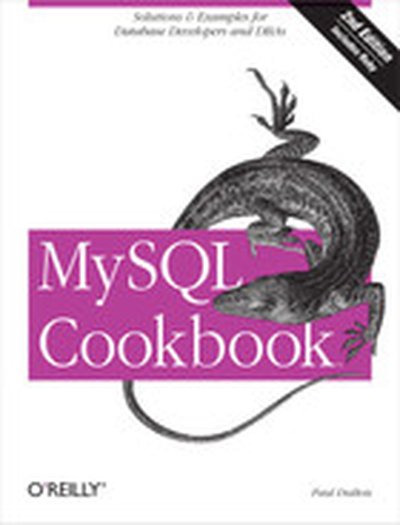
MySQL Cookbook, 2nd Edition

Along with MySQL's popularity has come a flood of questions about solving specific problems, and that's where this Cookbook is essential. Designed as a handy resource when you need quick solutions or techniques, the book offers dozens of short, focused pieces of code and hundreds of worked-out examples for programmers of all levels who don't have the time (or expertise) to solve MySQL problems from scratch. The new edition covers MySQL 5.0 and its powerful new features, as well as the older but still widespread MySQL 4.1. One major emphasis of this book is how to use SQL to formulate queries for particular kinds of questions, using the mysql client program included in MySQL distributions. The other major emphasis is how to write programs that interact with the MySQL server through an API. You'll find plenty of examples using several language APIs in multiple scenarios and situations, including the use of Ruby to retrieve and format data. There are also many new examples for using Perl, PHP, Python, and Java as well. Other recipes in the book teach you to: Access data from multiple tables at the same time Use SQL to select, sort, and summarize rows Find matches or mismatches between rows in two tables Determine intervals between dates or times, including age calculations Store images into MySQL and retrieve them for display in web pages Get LOAD DATA to read your data files properly or find which values in the file are invalid Use strict mode to prevent entry of bad data into your database Copy a table or a database to another server Generate sequence numbers to use as unique row identifiers Create database events that execute according to a schedule And a lot more MySQL Cookbook doesn't attempt to develop full-fledged, complex applications. Instead, it's intended to assist you in developing applications yourself by helping you get past problems that have you stumped.