talk-data.com talk-data.com

Topic

data-science-tools

333

tagged

Activity Trend

1 peak/qtr
2020-Q1 2026-Q1

Activities

333 activities · Newest first

Mathematica DeMYSTiFied

Need to learn MATHEMATICA? Problem SOLVED! Take full advantage of all the powerful capabilities of Mathematica with help from this hands-on guide. Filled with examples and step-by-step explanations, Mathematica Demystified takes you from your very first calculation all the way to plotting complex fractals. Using an intuitive format, this book explains the fundamentals of Mathematica up front. Learn how to define functions, create 2-D graphs of functions, write basic programs, and use modules. You'll move on to 3-D graphics, calculus, polynomial, linear, and differential equations, dynamical systems, and fractals. Hundreds of examples with concise explanations make it easy to understand the material, and end-of-chapter quizzes and a final exam help reinforce learning. This self-teaching guide offers: A quick way to get up and running on Mathematica Coverage of Mathematica 6 and 7 Tips for avoiding and correcting syntax errors Details on creating slideshow presentations of your work No unnecessary technical jargon A time-saving approach to performing better on an exam or at work! Simple enough for a beginner, but challenging enough for an advanced user, Mathematica Demystified is your shortcut to mastering this fully integrated technical computing software.

R Programming for Bioinformatics

Due to its data handling and modeling capabilities as well as its flexibility, R is becoming the most widely used software in bioinformatics. R Programming for Bioinformatics explores the programming skills needed to use this software tool for the solution of bioinformatics and computational biology problems. Drawing on the author’s first-hand experiences as an expert in R, the book begins with coverage on the general properties of the R language, several unique programming aspects of R, and object-oriented programming in R. It presents methods for data input and output as well as database interactions. The author also examines different facets of string handling and manipulations, discusses the interfacing of R with other languages, and describes how to write software packages. He concludes with a discussion on the debugging and profiling of R code. With numerous examples and exercises, this practical guide focuses on developing R programming skills in order to tackle problems encountered in bioinformatics and computational biology.

Programming for Chemical Engineers Using C, C++, and MATLAB®

Designed for chemical engineering students and industry professionals, Programming for Chemical Engineers Using C, C++, and MATLAB® shows how to write reusable computer programs by guiding the reader through the process of: establishing the theoretical concept; determining the applicable numerical methods; testing the algorithm through manual calculation; writing and debugging the computer program based on the algorithm; and validating the result, using statistical analysis. All programs in the book are written in the three most popular languages (C, C++, and MATLAB) currently used in the chemical engineering curriculum and in industry. Because the book is written by a chemical engineer, practitioners and students will learn to write programs for appropriate subject matter of interest to them.

Mastering Technical Mathematics, Third Edition, 3rd Edition

A thorough revision of the classic tutorial of scientific and engineering mathematics For more than fifteen years, Mastering Technical Mathematics has been the definitive self-teaching guide for those wishing to boost their career by learning the principles of mathematics as they apply to science and engineering. Featuring the same user-friendly pedagogy, practical examples, and detailed illustrations that have made this resource a favorite of the scientific and technical communities, the new third edition delivers four entirely new chapters and expanded treatment of cutting-edge topics.

The R Book

The high-level language of R is recognized as one of the most powerful and flexible statistical software environments, and is rapidly becoming the standard setting for quantitative analysis, statistics and graphics. R provides free access to unrivalled coverage and cutting-edge applications, enabling the user to apply numerous statistical methods ranging from simple regression to time series or multivariate analysis. Building on the success of the author's bestselling Statistics: An Introduction using R, The R Book is packed with worked examples, providing an all inclusive guide to R, ideal for novice and more accomplished users alike. The book assumes no background in statistics or computing and introduces the advantages of the R environment, detailing its applications in a wide range of disciplines. Provides the first comprehensive reference manual for the R language, including practical guidance and full coverage of the graphics facilities. Introduces all the statistical models covered by R, beginning with simple classical tests such as chi-square and t-test. Proceeds to examine more advance methods, from regression and analysis of variance, through to generalized linear models, generalized mixed models, time series, spatial statistics, multivariate statistics and much more. The R Book is aimed at undergraduates, postgraduates and professionals in science, engineering and medicine. It is also ideal for students and professionals in statistics, economics, geography and the social sciences.

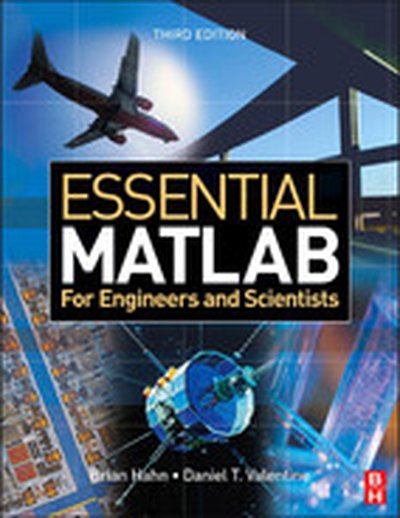
Essential MATLAB for Engineers and Scientists, 3rd Edition

Essential MATLAB for Engineers and Scientists, Third Edition, is an essential guide to MATLAB as a problem-solving tool. It presents MATLAB both as a mathematical tool and a programming language, giving a concise and easy-to-master introduction to its potential and power. Stressing the importance of a structured approach to problem solving, the text provides a step-by-step method for program design and algorithm development. It includes numerous simple exercises for hands-on learning, a chapter on algorithm development and program design, and a concise introduction to useful topics for solving problems in later engineering and science courses: vectors as arrays, arrays of characters, GUIs, advanced graphics, and simulation and numerical methods. The text is ideal for undergraduates in engineering and science taking a course on Matlab. Numerous simple exercises give hands-on learning A chapter on algorithm development and program design Common errors and pitfalls highlighted Concise introduction to useful topics for solving problems in later engineering and science courses: vectors as arrays, arrays of characters, GUIs, advanced graphics, simulation and numerical methods A new chapter on dynamical systems shows how a structured approach is used to solve more complex problems. Text and graphics in four colour

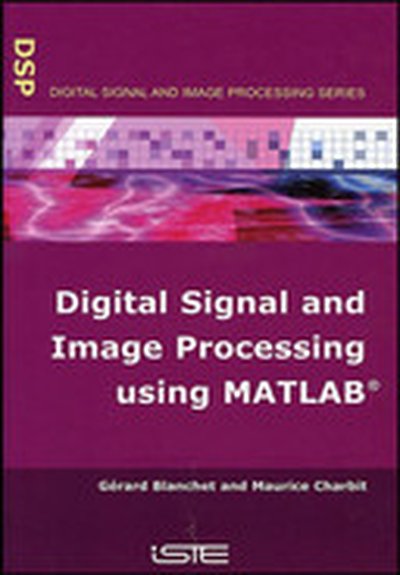
Digital Signal and Image Processing Using MATLAB

This title provides the most important theoretical aspects of Image and Signal Processing (ISP) for both deterministic and random signals. The theory is supported by exercises and computer simulations relating to real applications. More than 200 programs and functions are provided in the MATLAB® language, with useful comments and guidance, to enable numerical experiments to be carried out, thus allowing readers to develop a deeper understanding of both the theoretical and practical aspects of this subject.

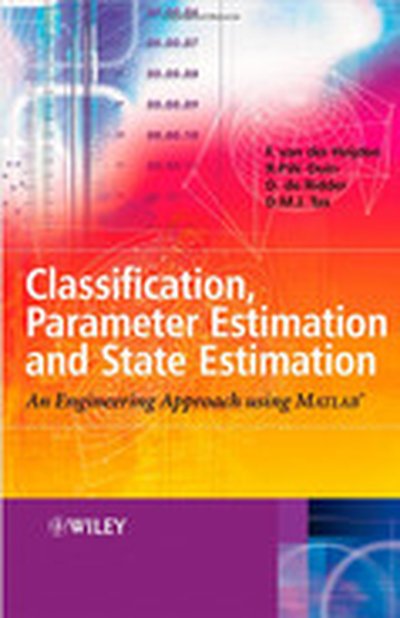
Classification, Parameter Estimation and State Estimation: An Engineering Approach Using MATLAB

Classification, Parameter Estimation and State Estimation is a practical guide for data analysts and designers of measurement systems and postgraduates students that are interested in advanced measurement systems using MATLAB. 'Prtools' is a powerful MATLAB toolbox for pattern recognition and is written and owned by one of the co-authors, B. Duin of the Delft University of Technology. After an introductory chapter, the book provides the theoretical construction for classification, estimation and state estimation. The book also deals with the skills required to bring the theoretical concepts to practical systems, and how to evaluate these systems. Together with the many examples in the chapters, the book is accompanied by a MATLAB toolbox for pattern recognition and classification. The appendix provides the necessary documentation for this toolbox as well as an overview of the most useful functions from these toolboxes. With its integrated and unified approach to classification, parameter estimation and state estimation, this book is a suitable practical supplement in existing university courses in pattern classification, optimal estimation and data analysis. Covers all contemporary main methods for classification and estimation. Integrated approach to classification, parameter estimation and state estimation Highlights the practical deployment of theoretical issues. Provides a concise and practical approach supported by MATLAB toolbox. Offers exercises at the end of each chapter and numerous worked out examples. PRtools toolbox (MATLAB) and code of worked out examples available from the internet Many examples showing implementations in MATLAB Enables students to practice their skills using a MATLAB environment

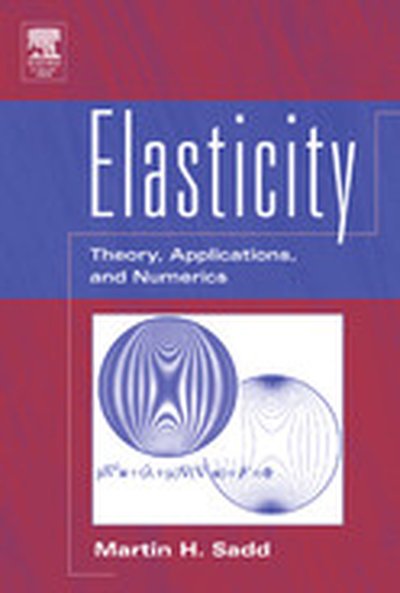
Elasticity

Although there are several books in print dealing with elasticity, many focus on specialized topics such as mathematical foundations, anisotropic materials, two-dimensional problems, thermoelasticity, non-linear theory, etc. As such they are not appropriate candidates for a general textbook. This book provides a concise and organized presentation and development of general theory of elasticity. Complemented by a Solutions Manual and including MatLab codes and coding, this text is an excellent book teaching guide. - Contains exercises for student engagement as well as the integration and use of MATLAB Software - Provides development of common solution methodologies and a systematic review of analytical solutions useful in applications of engineering interest - Presents applications of contemporary interest

Practical RDF

The Resource Description Framework (RDF) is a structure for describing and interchanging metadata on the Web--anything from library catalogs and worldwide directories to bioinformatics, Mozilla internal data structures, and knowledge bases for artificial intelligence projects. RDF provides a consistent framework and syntax for describing and querying data, making it possible to share website descriptions more easily. RDF's capabilities, however, have long been shrouded by its reputation for complexity and a difficult family of specifications. Practical RDF breaks through this reputation with immediate and solvable problems to help you understand, master, and implement RDF solutions. Practical RDF explains RDF from the ground up, providing real-world examples and descriptions of how the technology is being used in applications like Mozilla, FOAF, and Chandler, as well as infrastructure you can use to build your own applications. This book cuts to the heart of the W3C's often obscure specifications, giving you tools to apply RDF successfully in your own projects.The first part of the book focuses on the RDF specifications. After an introduction to RDF, the book covers the RDF specification documents themselves, including RDF Semantics and Concepts and Abstract Model specifications, RDF constructs, and the RDF Schema. The second section focuses on programming language support, and the tools and utilities that allow developers to review, edit, parse, store, and manipulate RDF/XML. Subsequent sections focus on RDF's data roots, programming and framework support, and practical implementation and use of RDF and RDF/XML.If you want to know how to apply RDF to information processing, Practical RDF is for you. Whether your interests lie in large-scale information aggregation and analysis or in smaller-scale projects like weblog syndication, this book will provide you with a solid foundation for working with RDF.

Real R & D Options

Real R&D options are among the earliest modelled real options, with now ten primary practical uses: general R&D planning, planning R&D in stages, evaluating test information, new product development timing, operations, abandonment, risk sharing, market funding, industry strategy and regulation. This book was partly motivated by requests to identify and develop real option models for R&D in telecommunications, petroleum technology and biotechnology. Nine new models cover information and implementation costs, analytical solutions for mean reverting, or fat tailed revenues, endogenous learning and exogenous and experiential shocks, American sequential options, and innovator advantages. Four new applications include forward start development options, exploration options, innovation with information costs, and innovator's real values with changing market share. R&D directors and researchers will find several uses for these models: · general R&D planning · evaluating test information · new product development timing · risk sharing · industry strategy and regulation A practical guide to how organizations can use Real Option techniques to effectively value research and development by companies Provides a rigorous theoretical underpinning of the use of Real Option techniques *Real Options applications are orientated around the economies of North America, Europe and Asia, for an international perspective

Process Control: Modeling, Design, and Simulation

Master process control hands on, through practical examples and MATLAB® simulations This is the first complete introduction to process control that fully integrates software tools—enabling professionals and students to master critical techniques hands on, through computer simulations based on the popular MATLAB environment. Process Control: Modeling, Design, and Simulation teaches the field's most important techniques, behaviors, and control problems through practical examples, supplemented by extensive exercises—with detailed derivations, relevant software files, and additional techniques available on a companion Web site. Coverage includes: Fundamentals of process control and instrumentation, including objectives, variables, and block diagrams Methodologies for developing dynamic models of chemical processes Dynamic behavior of linear systems: state space models, transfer function-based models, and more Feedback control; proportional, integral, and derivative (PID) controllers; and closed-loop stability analysis Frequency response analysis techniques for evaluating the robustness of control systems Improving control loop performance: internal model control (IMC), automatic tuning, gain scheduling, and enhancements to improve disturbance rejection Split-range, selective, and override strategies for switching among inputs or outputs Control loop interactions and multivariable controllers An introduction to model predictive control (MPC) Bequette walks step by step through the development of control instrumentation diagrams for an entire chemical process, reviewing common control strategies for individual unit operations, then discussing strategies for integrated systems. The book also includes 16 learning modules demonstrating how to use MATLAB and SIMULINK to solve several key control problems, ranging from robustness analyses to biochemical reactors, biomedical problems to multivariable control.