talk-data.com talk-data.com

Topic

data-science-tools

333

tagged

Activity Trend

1 peak/qtr
2020-Q1 2026-Q1

Activities

333 activities · Newest first

MATLAB® by Example

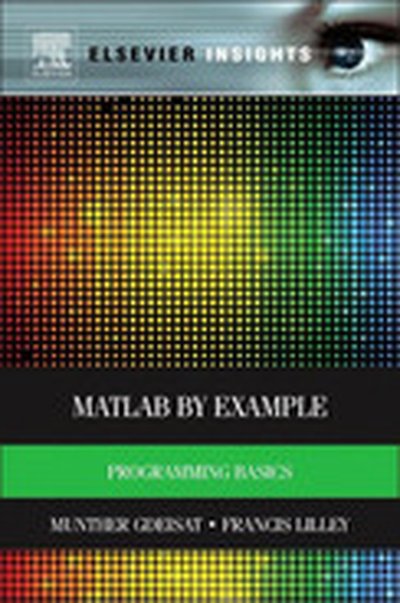
MATLAB By Example guides the reader through each step of writing MATLAB programs. The book assumes no previous programming experience on the part of the reader, and uses multiple examples in clear language to introduce concepts and practical tools. Straightforward and detailed instructions allow beginners to learn and develop their MATLAB skills quickly. The book consists of ten chapters, discussing in detail the integrated development environment (IDE), scalars, vectors, arrays, adopting structured programming style using functions and recursive functions, control flow, debugging, profiling, and structures. A chapter also describes Symbolic Math Toolbox, teaching readers how to solve algebraic equations, differentiation, integration, differential equations, and Laplace and Fourier transforms. Containing hundreds of examples illustrated using screen shots, hundreds of exercises, and three projects, this book can be used to complement coursework or as a self-study book, and can be used as a textbook in universities, colleges and high schools. No programming experience necessary to learn MATLAB Examples with screenshots and plentiful exercises throughout help make MATLAB easy to understand Projects enable readers to write long MATLAB programs, and take the first step toward being a professional MATLAB programmer
R Graphics Cookbook

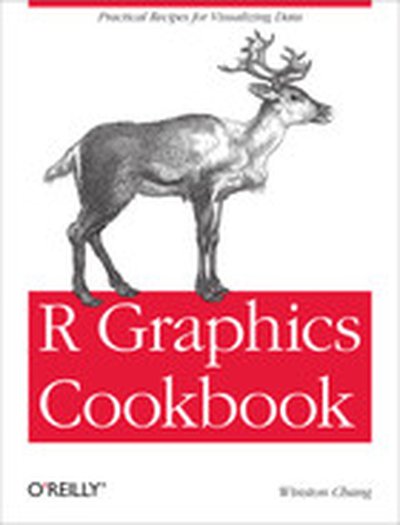
This practical guide provides more than 150 recipes to help you generate high-quality graphs quickly, without having to comb through all the details of R’s graphing systems. Each recipe tackles a specific problem with a solution you can apply to your own project, and includes a discussion of how and why the recipe works. Most of the recipes use the ggplot2 package, a powerful and flexible way to make graphs in R. If you have a basic understanding of the R language, you’re ready to get started. Use R’s default graphics for quick exploration of data Create a variety of bar graphs, line graphs, and scatter plots Summarize data distributions with histograms, density curves, box plots, and other examples Provide annotations to help viewers interpret data Control the overall appearance of graphics Render data groups alongside each other for easy comparison Use colors in plots Create network graphs, heat maps, and 3D scatter plots Structure data for graphing

The R Book, 2nd Edition

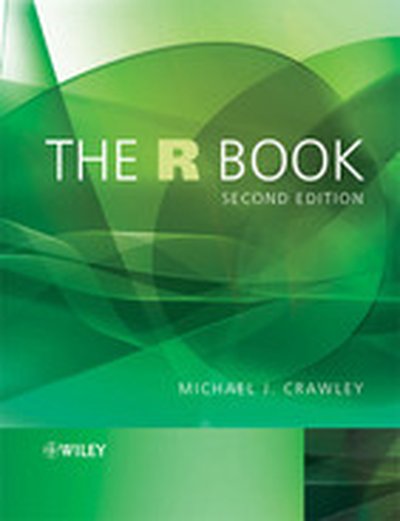
Hugely successful and popular text presenting an extensive and comprehensive guide for all R users The R language is recognized as one of the most powerful and flexible statistical software packages, enabling users to apply many statistical techniques that would be impossible without such software to help implement such large data sets. R has become an essential tool for understanding and carrying out research. This edition: Features full colour text and extensive graphics throughout. Introduces a clear structure with numbered section headings to help readers locate information more efficiently. Looks at the evolution of R over the past five years. Features a new chapter on Bayesian Analysis and Meta-Analysis. Presents a fully revised and updated bibliography and reference section. Is supported by an accompanying website allowing examples from the text to be run by the user. Praise for the first edition: '...if you are an R user or wannabe R user, this text is the one that should be on your shelf. The breadth of topics covered is unsurpassed when it comes to texts on data analysis in R.' (The American Statistician, August 2008) 'The High-level software language of R is setting standards in quantitative analysis. And now anybody can get to grips with it thanks to The R Book...' ( Professional Pensions, July 2007)

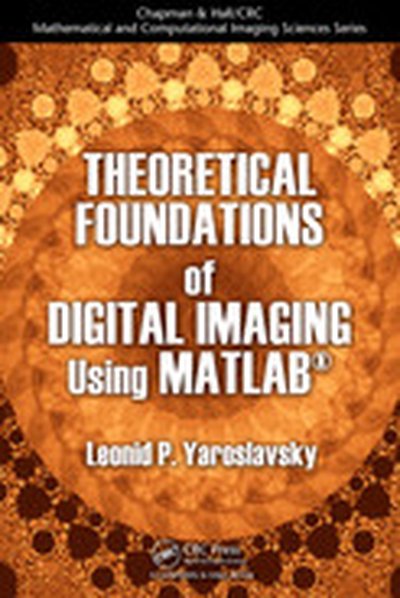
Theoretical Foundations of Digital Imaging Using MATLAB

Helping readers master digital imaging, this text presents a unified theoretical basis for understanding and designing methods of imaging and image processing. Designed for newcomers to imaging science and engineering, the book covers the subject in its entirety, from image formation to image perfecting. The author avoids using heavy mathematics and derives all formulas in full detail. To facilitate a deeper understanding of the major results, the book includes a number of exercises supported by MATLAB programs, with the code available at www.crcpress.com.

The Essential R Reference

An essential library of basic commands you can copy and paste into R The powerful and open-source statistical programming language R is rapidly growing in popularity, but it requires that you type in commands at the keyboard rather than use a mouse, so you have to learn the language of R. But there is a shortcut, and that's where this unique book comes in. A companion book to Visualize This: The FlowingData Guide to Design, Visualization, and Statistics, this practical reference is a library of basic R commands that you can copy and paste into R to perform many types of statistical analyses. Whether you're in technology, science, medicine, business, or engineering, you can quickly turn to your topic in this handy book and find the commands you need. Comprehensive command reference for the R programming language and a companion book to Visualize This: The FlowingData Guide to Design, Visualization, and Statistics Combines elements of a dictionary, glossary, and thesaurus for the R language Provides easy accessibility to the commands you need, by topic, which you can cut and paste into R as needed Covers getting, saving, examining, and manipulating data; statistical test and math; and all the things you can do with graphs Also includes a collection of utilities that you'll find useful Simplify the complex statistical R programming language with The Essential R Reference.

SciPy and NumPy

Are you new to SciPy and NumPy? Do you want to learn it quickly and easily through examples and a concise introduction? Then this is the book for you. You’ll cut through the complexity of online documentation and discover how easily you can get up to speed with these Python libraries. Ideal for data analysts and scientists in any field, this overview shows you how to use NumPy for numerical processing, including array indexing, math operations, and loading and saving data. You’ll learn how SciPy helps you work with advanced mathematical functions such as optimization, interpolation, integration, clustering, statistics, and other tools that take scientific programming to a whole new level. The new edition is now available, fully revised and updated in June 2013. Learn the capabilities of NumPy arrays, element-by-element operations, and core mathematical operations Solve minimization problems quickly with SciPy’s optimization package Use SciPy functions for interpolation, from simple univariate to complex multivariate cases Apply a variety of SciPy statistical tools such as distributions and functions Learn SciPy’s spatial and cluster analysis classes Save operation time and memory usage with sparse matrices

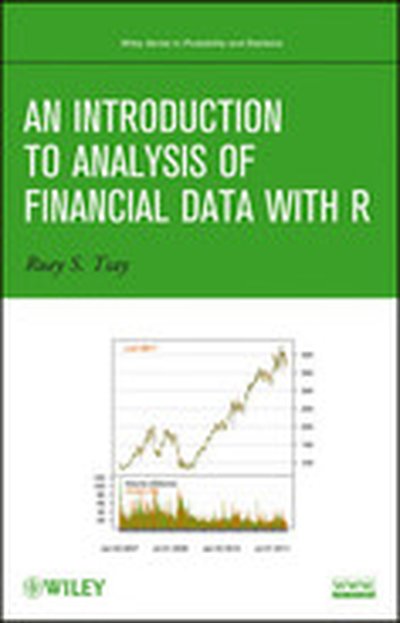
An Introduction to Analysis of Financial Data with R

A complete set of statistical tools for beginning financial analysts from a leading authority Written by one of the leading experts on the topic, An Introduction to Analysis of Financial Data with R explores basic concepts of visualization of financial data. Through a fundamental balance between theory and applications, the book supplies readers with an accessible approach to financial econometric models and their applications to real-world empirical research. The author supplies a hands-on introduction to the analysis of financial data using the freely available R software package and case studies to illustrate actual implementations of the discussed methods. The book begins with the basics of financial data, discussing their summary statistics and related visualization methods. Subsequent chapters explore basic time series analysis and simple econometric models for business, finance, and economics as well as related topics including: Linear time series analysis, with coverage of exponential smoothing for forecasting and methods for model comparison Different approaches to calculating asset volatility and various volatility models High-frequency financial data and simple models for price changes, trading intensity, and realized volatility Quantitative methods for risk management, including value at risk and conditional value at risk Econometric and statistical methods for risk assessment based on extreme value theory and quantile regression Throughout the book, the visual nature of the topic is showcased through graphical representations in R, and two detailed case studies demonstrate the relevance of statistics in finance. A related website features additional data sets and R scripts so readers can create their own simulations and test their comprehension of the presented techniques. An Introduction to Analysis of Financial Data with R is an excellent book for introductory courses on time series and business statistics at the upper-undergraduate and graduate level. The book is also an excellent resource for researchers and practitioners in the fields of business, finance, and economics who would like to enhance their understanding of financial data and today's financial markets.

R in a Nutshell, 2nd Edition

If you’re considering R for statistical computing and data visualization, this book provides a quick and practical guide to just about everything you can do with the open source R language and software environment. You’ll learn how to write R functions and use R packages to help you prepare, visualize, and analyze data. Author Joseph Adler illustrates each process with a wealth of examples from medicine, business, and sports. Updated for R 2.14 and 2.15, this second edition includes new and expanded chapters on R performance, the ggplot2 data visualization package, and parallel R computing with Hadoop. Get started quickly with an R tutorial and hundreds of examples Explore R syntax, objects, and other language details Find thousands of user-contributed R packages online, including Bioconductor Learn how to use R to prepare data for analysis Visualize your data with R’s graphics, lattice, and ggplot2 packages Use R to calculate statistical fests, fit models, and compute probability distributions Speed up intensive computations by writing parallel R programs for Hadoop Get a complete desktop reference to R

Computational Colour Science Using MATLAB, 2nd Edition

Computational Colour Science Using MATLAB 2nd Edition offers a practical, problem-based approach to colour physics. The book focuses on the key issues encountered in modern colour engineering, including efficient representation of colour information, Fourier analysis of reflectance spectra and advanced colorimetric computation. Emphasis is placed on the practical applications rather than the techniques themselves, with material structured around key topics. These topics include colour calibration of visual displays, computer recipe prediction and models for colour-appearance prediction. Each topic is carefully introduced at three levels to aid student understanding. First, theoretical ideas and background information are discussed, then explanations of mathematical solutions follow and finally practical solutions are presented using MATLAB. The content includes: A compendium of equations and numerical data required by the modern colour and imaging scientist. Numerous examples of solutions and algorithms for a wide-range of computational problems in colour science. Example scripts using the MATLAB programming language. This 2nd edition contains substantial new and revised material, including three innovative chapters on colour imaging, psychophysical methods, and physiological colour spaces; the MATLAB toolbox has been extended with a professional, optimized, toolbox to go alongside the current teaching toolbox; and a java toolbox has been added which will interest users who are writing web applications and/or applets or mobile phone applications. Computational Colour Science Using MATLAB 2nd Edition is an invaluable resource for students taking courses in colour science, colour chemistry and colour physics as well as technicians and researchers working in the area. In addition, it acts a useful reference for professionals and researchers working in colour dependent industries such as textiles, paints, print & electronic imaging. Review from First Edition: "...highly recommended as a concise introduction to the practicalities of colour science..." (Color Technology, 2004)

R For Dummies

Still trying to wrap your head around R? With more than two million users, R is the open-source programming language standard for data analysis and statistical modeling. R is packed with powerful programming capabilities, but learning to use R in the real world can be overwhelming for even the most seasoned statisticians. This easy-to-follow guide explains how to use R for data processing and statistical analysis, and then, shows you how to present your data using compelling and informative graphics. You'll gain practical experience using R in a variety of settings and delve deeper into R's feature-rich toolset. Includes tips for the initial installation of R Demonstrates how to easily perform calculations on vectors, arrays, and lists of data Shows how to effectively visualize data using R's powerful graphics packages Gives pointers on how to find, install, and use add-on packages created by the R community Provides tips on getting additional help from R mailing lists and websites Whether you're just starting out with statistical analysis or are a procedural programming pro, R For Dummies is the book you need to get the most out of R.

Event History Analysis with R

With an emphasis on social science applications, Event History Analysis with R presents an introduction to survival and event history analysis using real-life examples. Keeping mathematical details to a minimum, the book covers key topics, including both discrete and continuous time data, parametric proportional hazards, and accelerated failure times. Features Introduces parametric proportional hazards models with baseline distributions like the Weibull, Gompertz, Lognormal, and Piecewise constant hazard distributions, in addition to traditional Cox regression Presents mathematical details as well as technical material in an appendix Includes real examples with applications in demography, econometrics, and epidemiology Provides a dedicated R package, eha, containing special treatments, including making cuts in the Lexis diagram, creating communal covariates, and creating period statistics A much-needed primer, Event History Analysis with R is a didactically excellent resource for students and practitioners of applied event history and survival analysis.

Adaptive Tests of Significance Using Permutations of Residuals with R and SAS

Provides the tools needed to successfully perform adaptive tests across a broad range of datasets Adaptive Tests of Significance Using Permutations of Residuals with R and SAS® illustrates the power of adaptive tests and showcases their ability to adjust the testing method to suit a particular set of data. The book utilizes state-of-the-art software to demonstrate the practicality and benefits for data analysis in various fields of study. Beginning with an introduction, the book moves on to explore the underlying concepts of adaptive tests, including: Smoothing methods and normalizing transformations Permutation tests with linear methods Applications of adaptive tests Multicenter and cross-over trials Analysis of repeated measures data Adaptive confidence intervals and estimates Throughout the book, numerous figures illustrate the key differences among traditional tests, nonparametric tests, and adaptive tests. R and SAS® software packages are used to perform the discussed techniques, and the accompanying datasets are available on the book's related website. In addition, exercises at the end of most chapters enable readers to analyze the presented datasets by putting new concepts into practice. Adaptive Tests of Significance Using Permutations of Residuals with R and SAS® is an insightful reference for professionals and researchers working with statistical methods across a variety of fields including the biosciences, pharmacology, and business. The book also serves as a valuable supplement for courses on regression analysis and adaptive analysis at the upper-undergraduate and graduate levels.

Introduction to Random Signals and Applied Kalman Filtering with Matlab Exercises, 4th Edition

The Fourth Edition to the Introduction of Random Signals and Applied Kalman Filtering is updated to cover innovations in the Kalman filter algorithm and the proliferation of Kalman filtering applications from the past decade. The text updates both the research advances in variations on the Kalman filter algorithm and adds a wide range of new application examples. Several chapters include a significant amount of new material on applications such as simultaneous localization and mapping for autonomous vehicles, inertial navigation systems and global satellite navigation systems.

Undocumented Secrets of MATLAB-Java Programming

Many people know that a major part of the functionality of the MATLAB software package is based on Java. But fewer people know how to manipulate Java to achieve improved appearance and functionality and thus heighten MATLAB software's applicability to real world, modern situations. Organized by related functionality/usage and ordered from facile to complex, this book presents examples, instruction, and code snippets in stand-alone, self-contained chapters. Requiring no prior Java knowledge, this book provides numerous online references and resources to show readers how to use and discover new components and functionalities using nothing but MATLAB itself as the discovery tool.

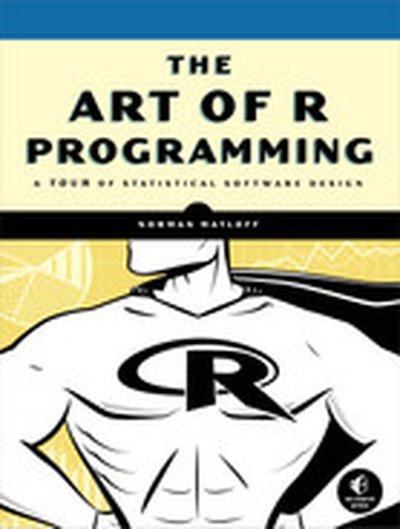
The Art of R Programming

R is the world's most popular language for developing statistical software: Archaeologists use it to track the spread of ancient civilizations, drug companies use it to discover which medications are safe and effective, and actuaries use it to assess financial risks and keep economies running smoothly. The Art of R Programming takes you on a guided tour of software development with R, from basic types and data structures to advanced topics like closures, recursion, and anonymous functions. No statistical knowledge is required, and your programming skills can range from hobbyist to pro. Along the way, you'll learn about functional and object-oriented programming, running mathematical simulations, and rearranging complex data into simpler, more useful formats. You'll also learn to: •Create artful graphs to visualize complex data sets and functions •Write more efficient code using parallel R and vectorization •Interface R with C/C++ and Python for increased speed or functionality •Find new R packages for text analysis, image manipulation, and more •Squash annoying bugs with advanced debugging techniques Whether you're designing aircraft, forecasting the weather, or you just need to tame your data, The Art of R Programming is your guide to harnessing the power of statistical computing.

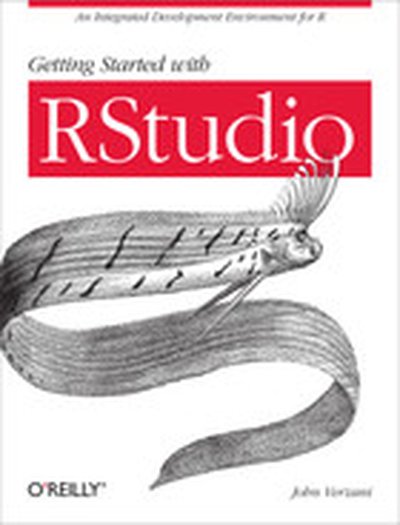
Getting Started with RStudio

Dive into the RStudio Integrated Development Environment (IDE) for using and programming R, the popular open source software for statistical computing and graphics. This concise book provides new and experienced users with an overview of RStudio, as well as hands-on instructions for analyzing data, generating reports, and developing R software packages. The open source RStudio IDE brings many powerful coding tools together into an intuitive, easy-to-learn interface. With this guide, you’ll learn how to use its main components—including the console, source code editor, and data viewer—through descriptions and case studies. Getting Started with RStudio serves as both a reference and introduction to this unique IDE. Use RStudio to provide enhanced support for interactive R sessions Clean and format raw data quickly with several RStudio components Edit R commands with RStudio’s code editor, and combine them into functions Easily locate and use more than 3,000 add-on packages in R’s CRAN service Develop and document your own R packages with the code editor and related components Create one-click PDF reports in RStudio with a mix of text and R output

Practical Image and Video Processing Using MATLAB®

Up-to-date, technically accurate coverage of essential topics in image and video processing This is the first book to combine image and video processing with a practical MATLAB®-oriented approach in order to demonstrate the most important image and video techniques and algorithms. Utilizing minimal math, the contents are presented in a clear, objective manner, emphasizing and encouraging experimentation. The book has been organized into two parts. Part I: Image Processing begins with an overview of the field, then introduces the fundamental concepts, notation, and terminology associated with image representation and basic image processing operations. Next, it discusses MATLAB® and its Image Processing Toolbox with the start of a series of chapters with hands-on activities and step-by-step tutorials. These chapters cover image acquisition and digitization; arithmetic, logic, and geometric operations; point-based, histogram-based, and neighborhood-based image enhancement techniques; the Fourier Transform and relevant frequency-domain image filtering techniques; image restoration; mathematical morphology; edge detection techniques; image segmentation; image compression and coding; and feature extraction and representation. Part II: Video Processing presents the main concepts and terminology associated with analog video signals and systems, as well as digital video formats and standards. It then describes the technically involved problem of standards conversion, discusses motion estimation and compensation techniques, shows how video sequences can be filtered, and concludes with an example of a solution to object detection and tracking in video sequences using MATLAB®. Extra features of this book include: More than 30 MATLAB® tutorials, which consist of step-by-step guides to exploring image and video processing techniques using MATLAB® Chapters supported by figures, examples, illustrative problems, and exercises Useful websites and an extensive list of bibliographical references This accessible text is ideal for upper-level undergraduate and graduate students in digital image and video processing courses, as well as for engineers, researchers, software developers, practitioners, and anyone who wishes to learn about these increasingly popular topics on their own.

Practical Biomedical Signal Analysis Using MATLAB

Practical Biomedical Signal Analysis Using MATLAB presents a coherent treatment of various signal processing methods and applications. The book not only covers the current techniques of biomedical signal processing, but it also offers guidance on which methods are appropriate for a given task and different types of data.The first several chapters o

Digital Signal Processing Using MATLAB for Students and Researchers

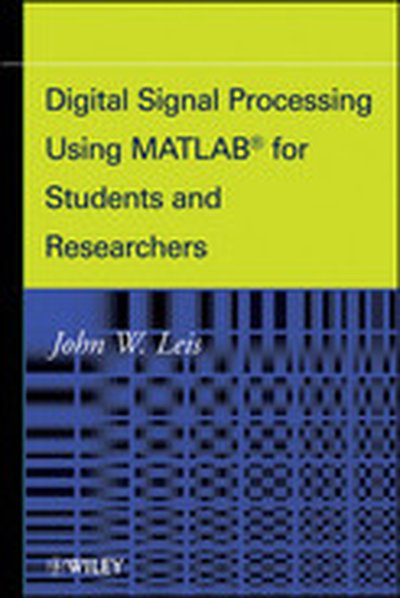
Quickly Engages in Applying Algorithmic Techniques to Solve Practical Signal Processing Problems With its active, hands-on learning approach, this text enables readers to master the underlying principles of digital signal processing and its many applications in industries such as digital television, mobile and broadband communications, and medical/scientific devices. Carefully developed MATLAB® examples throughout the text illustrate the mathematical concepts and use of digital signal processing algorithms. Readers will develop a deeper understanding of how to apply the algorithms by manipulating the codes in the examples to see their effect. Moreover, plenty of exercises help to put knowledge into practice solving real-world signal processing challenges. Following an introductory chapter, the text explores: Sampled signals and digital processing Random signals Representing signals and systems Temporal and spatial signal processing Frequency analysis of signals Discrete-time filters and recursive filters Each chapter begins with chapter objectives and an introduction. A summary at the end of each chapter ensures that one has mastered all the key concepts and techniques before progressing in the text. Lastly, appendices listing selected web resources, research papers, and related textbooks enable the investigation of individual topics in greater depth. Upon completion of this text, readers will understand how to apply key algorithmic techniques to address practical signal processing problems as well as develop their own signal processing algorithms. Moreover, the text provides a solid foundation for evaluating and applying new digital processing signal techniques as they are developed.