talk-data.com talk-data.com

Topic

data

3406

tagged

Activity Trend

3 peak/qtr
2020-Q1 2026-Q1

Activities

Showing filtered results

Filtering by: O'Reilly Data Engineering Books ×
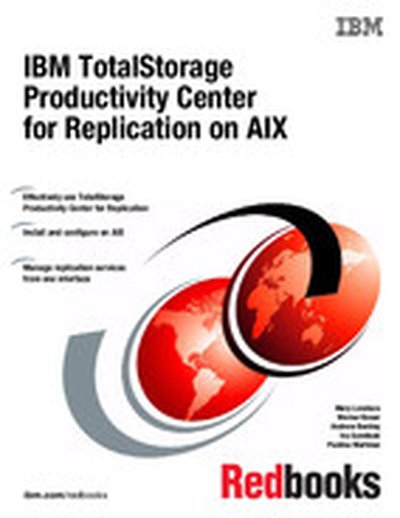
IBM TotalStorage Productivity Center for Replication on AIX

IBM TotalStorage Productivity Center for Replication Version 3, Release 1 brings support for the advanced copy services capabilities on the DS8000 and DS6000, in addition to the support for ESS model 800 and SVC. This support focuses on automating administration and configuration of these services, operational control (starting, suspending, resuming) copy services tasks and monitoring and managing the copy services sessions. In addition to the support for FlashCopy and Metro Mirror, TotalStorage Productivity Center for Replication V3R1 supports Global Mirror on the ESS800, DS8000, and DS6000 hardware platforms. Advanced disaster recovery functions are also supported with failover/failback (planned and unplanned) from a primary site to a disaster recovery site. TotalStorage Productivity Center for Replication also can monitor the performance of the copy services that provide a measurement of the amount of replication and the amount of time that is required to complete the replication operations. This IBM Redbooks publication provides the information you need to install TotalStorage Productivity Center for Replication, and create and manage replication sessions on AIX. Scenarios are provided that document the work performed in our laboratory setting, using the GUI and CLI.

IBM TotalStorage Productivity Center for Replication on Linux

IBM TotalStorage Productivity Center for Replication Version 3,Release 1 brings support for the advanced copy services capabilities on the DS8000 and DS6000, in addition to the support for ESS model 800 and SVC. This support focuses on automating administration and configuration of these services, operational control (starting, suspending, resuming) copy services tasks and monitoring and managing the copy services sessions. In addition to the support for FlashCopy and Metro Mirror, TotalStorage Productivity Center for Replication V3R1 supports Global Mirror on the ESS800, DS8000, and DS6000 hardware platforms. Advanced disaster recovery functions are also supported with failover/failback (planned and unplanned) from a primary site to a disaster recovery site. TotalStorage Productivity Center for Replication also can monitor the performance of the copy services that provide a measurement of the amount of replication and the amount of time that is required to complete the replication operations. This IBM Redbooks publication provides the information you need to install TotalStorage Productivity Center for Replication and create and manage replication sessions on Linux. Scenarios are provided that document our work in the laboratory setting, using the GUI and CLI.

IBM TotalStorage Productivity Center for Replication on Windows 2003

IBM TotalStorage Productivity Center for Replication Version 3, Release 1 brings support for the advanced copy services capabilities on the DS8000 and DS6000, in addition to the support for ESS model 800 and SVC. This support focuses on automating administration and configuration of these services, operational control (starting, suspending, resuming) copy services tasks and monitoring and managing the copy services sessions. In addition to the support for FlashCopy and Metro Mirror, TotalStorage Productivity Center for Replication V3R1 supports Global Mirror on the ESS800, DS8000, and DS6000 hardware platforms. Advanced disaster recovery functions are also supported with failover/failback (planned and unplanned) from a primary site to a disaster recovery site. TotalStorage Productivity Center for Replication also can monitor the performance of the copy services that provide a measurement of the amount of replication and the amount of time that is required to complete the replication operations. This IBM Redbooks publication provides the information you need to install TotalStorage Productivity Center for Replication, and create and manage replication sessions on a Windows 2003 platform. Scenarios are provided that document the work performed in our laboratory setting, using the GUI and CLI.

Using the Linux NFS Client with IBM System Storage N series

This book will help you get the best from your Linux NFS clients when used in an environment that includes IBM System Storage N series products. It begins with a general discussion of Linux distributions and kernels, and includes a comparison of some of the features of the 2.4 and 2.6 kernels. A detailed discussion of mount options and network protocols is presented to guide you through configuration tasks. Procedures for tuning your Linux clients and steps to diagnose performance and reliability problems are presented, along with information about additional resources you can consult if necessary. Finally, steps for configuring and using utilities that support advanced NSF features are provided.

First Steps: Developing BizTalk Applications

First Steps: Developing BizTalk Applications is a primer to most other introductory BizTalk books. If you feel like traditional beginning books are too abstract, and that you are mired in detail and missing the "big picture," check out this book. It's not a reference—it's a jumpstart to learning BizTalk. You'll learn about the product in a phased approach. This way, you only learn what you need to know, when you need to know it. And the entire book is example-based: you'll learn by doing. Each phase provides detailed instructions for creating, deploying, and testing a BizTalk project. Through the books projects, you will be exposed to orchestrations, pipelines, maps, schemas, messages, ports, shapes, the BizTalk Server Administration console, and the Health and Activity Tracking (HAT) tool. To quickly get ahead and quick-start your BizTalk learning process, this book is for you.

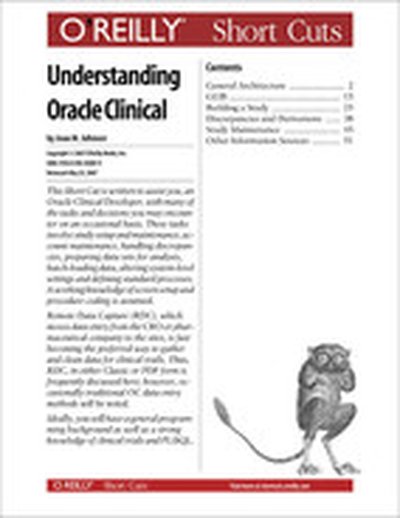
Understanding Oracle Clinical

This Short Cut is written to assist you, an Oracle Clinical Developer, with many of the tasks and decisions you may encounter on an occasional basis. These tasks involve study setup and maintenance, account maintenance, handling discrepancies, preparing data sets for analysis, batch-loading data, altering system-level settings and defining standard processes. A working knowledge of screen setup and procedure coding is assumed. Remote Data Capture (RDC), which moves data entry from the CRO or pharmaceutical company to the sites, is fast becoming the preferred way to gather and clean data for clinical trails. Thus, RDC, in either Classic or PDF form is frequently discussed here; however, occasionally traditional OC data entry methods will be noted. Ideally, you will have a general programming background as well as a strong knowledge of clinical trials and PL/SQL.

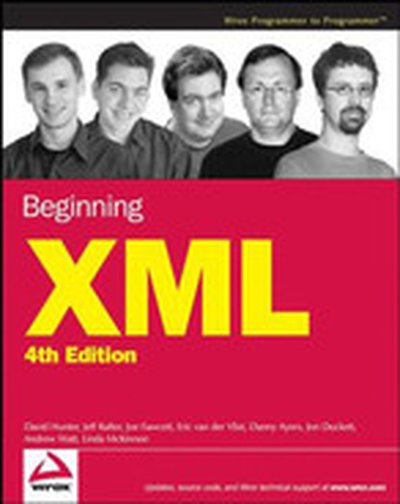
Beginning XML, 4th Edition

When the first edition of this book was written, XML was a relatively new language but already gaining ground fast and becoming more and more widely used in a vast range of applications. By the time of the second edition, XML had already proven itself to be more than a passing fad, and was in fact being used throughout the industry for an incredibly wide range of uses. With the third edition, it was clear that XML was a mature technology, but more important, it became evident that the XML landscape was dividing into several areas of expertise. Now in this edition, we needed to categorize the increasing number of specifications surrounding XML, which either use XML or provide functionality in addition to the XML core specification. So what is XML? It's a markup language, used to describe the structure of data in meaningful ways. Anywhere that data is input/output, stored, or transmitted from one place to another, is a potential fit for XML's capabilities. Perhaps the most well-known applications are web-related (especially with the latest developments in handheld web access—for which some of the technology is XML-based). However, there are many other non-web-based applications for which XML is useful—for example, as a replacement for (or to complement) traditional databases, or for the transfer of financial information between businesses. News organizations, along with individuals, have also been using XML to distribute syndicated news stories and blog entries. This book aims to teach you all you need to know about XML—what it is, how it works, what technologies surround it, and how it can best be used in a variety of situations, from simple data transfer to using XML in your web pages. It answers the fundamental questions: What is XML? How do you use XML? How does it work? * What can you use it for, anyway? This book is for people who know that it would be a pretty good idea to learn XML but aren't 100 percent sure why. You've heard the hype but haven't seen enough substance to figure out what XML is and what it can do. You may be using development tools that try to hide the XML behind user interfaces and scripts, but you want to know what is really happening behind the scenes. You may already be somehow involved in web development and probably even know the basics of HTML, although neither of these qualifications is absolutely necessary for this book. What you don't need is knowledge of markup languages in general. This book assumes that you're new to the concept of markup languages, and we have structured it in a way that should make sense to the beginner and yet quickly bring you to XML expert status. The word "Beginning" in the title refers to the style of the book, rather than the reader's experience level. There are two types of beginner for whom this book is ideal: Programmers who are already familiar with some web programming or data exchange techniques. Programmers in this category will already understand some of the concepts discussed here, but you will learn how you can incorporate XML technologies to enhance those solutions you currently develop. Those working in a programming environment but with no substantial knowledge or experience of web development or data exchange applications. In addition to learning how XML technologies can be applied to such applications, you will be introduced to some new concepts to help you understand how such systems work. The subjects covered in this book are arranged to take you from novice to expert in as logical a manner as we could. This Fourth Edition is structured in sections based on various areas of XML expertise. Unless you are already using XML, you should start by reading the introduction to XML in Part I. From there, you can quickly jump into specific areas of expertise, or, if you prefer, you can read through the book in order. Keep in mind that there is quite a lot of overlap in XML, and that some of the sections make use of techniques described elsewhere in the book. The book begins by explaining what exactly XML is and why the industry felt that a language like this was needed. After covering the why, the next logical step is the how, so it shows you how to create well-formed XML. Once you understand the whys and hows of XML, you'll go on to some more advanced things you can do when creating your XML documents, to make them not only well formed, but valid. (And you'll learn what "valid" really means.) After you're comfortable with XML and have seen it in action, the book unleashes the programmer within and looks at an XML-based programming language that you can use to transform XML documents from one format to another. Eventually, you will need to store and retrieve XML information from databases. At this point, you will learn not only the state of the art for XML and databases, but also how to query XML information using an SQL-like syntax called XQuery. XML wouldn't really be useful unless you could write programs to read the data in XML documents and create new XML documents, so we'll get back to programming and look at a couple of ways that you can do that. Understanding how to program and use XML within your own business is one thing, but sending that information to a business partner or publishing it to the Internet is another. You'll learn about technologies that use XML that enable you to send messages across the Internet, publish information, and discover services that provide information. Since you have all of this data in XML format, it would be great if you could easily display it to people, and it turns out you can. You'll see an XML version of HTML called XHTML. You'll also look at a technology you may already be using in conjunction with HTML documents called CSS. CSS enables you to add visual styles to your XML documents. In addition, you'll learn how to design stunning graphics and make interactive forms using XML. Finally, the book ends with a case study, which should help to give you ideas about how XML can be used in real-life situations, and which could be used in your own applications. This book builds on the strengths of the earlier editions, and provides new material to reflect the changes in the XML landscape—notably XQuery, RSS and Atom, and AJAX. Updates have been made to reflect the most recent versions of specifications and best practices throughout the book. In addition to the many changes, each chapter has a set of exercise questions to test your understanding of the material. Possible solutions to these questions appear in Appendix A. Part I: Introduction: The introduction is where most readers should begin. The first three chapters introduce some of the goals of XML as well as the specific rules for constructing XML. Once you have read this part you should be able to read and create your own XML documents. Chapter 1: What Is XML?: This chapter cover some basic concepts, introducing the fact that XML is a markup language (a bit like HTML) whereby you can define your own elements, tags, and attributes (known as a vocabulary). You'll see that tags have no presentation meaning—they're just a way to describe the structure of the data. Chapter 2: Well-Formed XML: In addition to explaining what well-formed XML is, we offer a look at the rules that exist (the XML 1.0 and 1.1 Recommendations) for naming and structuring elements—you need to comply with these rules in order to produce well-formed XML. Chapter 3: XML Namespaces: Because tags can be made up, you need to avoid name conflicts when sharing documents. Namespaces provide a way to uniquely identify a group of tags, using a URI. This chapter explains how to use namespaces. Part II: Validation: In addition to the well-formedness rules you learn in Part I, you will most likely want to learn how to create and use different XML vocabularies. This Part introduces you to DTDs, XML Schemas, and RELAX NG: three languages that define custom XML vocabularies. It also shows you how to utilize these definitions to validate your XML documents. Chapter 4: Document Type Definitions: You can specify how an XML document should be structured, and even provide default values, using Document Type Definitions (DTDs). If XML conforms to the associated DTD, it is known as valid XML. This chapter covers the basics of using DTDs. Chapter 5: XML Schemas: XML Schemas, like DTDs, enable you to define how a document should be structured. In addition to defining document structure, they enable you to specify the individual datatypes of attribute values and element content. They are a more powerful alternative to DTDs. Chapter 6: RELAX NG: RELAX NG is a third technology used to define the structure of documents. In addition to a new syntax and new features, it takes the best from XML Schemas and DTDs, and is therefore very simple and very powerful. RELAX NG has two syntaxes; both the full syntax and compact syntax are discussed. Part III: Processing: In addition to defining and creating XML documents, you need to know how to work with documents to extract information and convert it to other formats. In fact, easily extracting information and converting it to other formats is what makes XML so powerful. Chapter 7: XPath: The XPath language is used to locate sections and data in the XML document, and it's important in many other XML technologies. Chapter 8: XSLT: XML can be transformed into other XML documents, HTML, and other formats using XSLT stylesheets, which are introduced in this chapter. Part IV: Databases: Creating and processing XML documents is good, but eventually you will want to store those documents. This section describes strategies for storing and retrieving XML documents and document fragments from different databases. Chapter 9: XQuery, the XML Query Language: Very often, you will need to retrieve information from within a database. XQuery, which is built on XPath and XPath2, enables you to do this in an elegant way. Chapter 10: XML and Databases: XML is perfect for structuring data, and some traditional databases are beginning to offer support for XML. This chapter discusses these, and provides a general overview of how XML can be used in an n-tier architecture. In addition, new databases based on XML are introduced. Part V: Programming: At some point in your XML career, you will need to work with an XML document from within a custom application. The two most popular methodologies, the Document Object Model (DOM) and the Simple API for XML (SAX), are explained in this part. Chapter 11: The Document Object Model (DOM): Programmers can use a variety of programming languages to manipulate XML using the Document Object Model's objects, interfaces, methods, and properties, which are described in this chapter. Chapter 12: Simple API for XML (SAX): An alternative to the DOM for programmatically manipulating XML data is to use the Simple API for XML (SAX) as an interface. This chapter shows how to use SAX and utilizes examples from the Java SAX API. Part VI: Communication: Sending and receiving data from one computer to another is often difficult, but several technologies have been created to make communication with XML much easier. This part discusses RSS and content syndication, as well as web services and SOAP. This edition includes a new chapter on Ajax techniques. Chapter 13: RSS, Atom, and Content Syndication: RSS is an actively evolving technology that is used to publish syndicated news stories and website summaries on the Internet. This chapter not only discusses how to use the different versions of RSS and Atom, it also covers the future direction of the technology. In addition, it demonstrates how to create a simple newsreader application that works with any of the currently published versions. Chapter 14: Web Services: Web services enable you to perform cross-computer communications. This chapter describes web services and introduces you to using remote procedure calls in XML (using XML-RPC and REST), as well as giving you a brief look at major topics such as SOAP. Finally, it breaks down the assortment of specifications designed to work in conjunction with web services. Chapter 15: SOAP and WSDL: Fundamental to XML web services, the Simple Object Access Protocol (SOAP) is one of the most popular specifications for allowing cross-computer communications. Using SOAP, you can package up XML documents and send them across the Internet to be processed. This chapter explains SOAP and the Web Services Description Language (WSDL) that is used to publish your service. Chapter 16: Ajax: Ajax enables you to utilize JavaScript with web services and SOAP, or REST communications. Additionally, Ajax patterns can be used within web pages to communicate with the web server without refreshing. This chapter is new to the Fourth Edition. Part VII: Display: Several XML technologies are devoted to displaying the data stored inside of an XML document. Some of these technologies are web-based, and some are designed for applications and mobile devices. This part discusses the primary display strategies and formats used today. Chapter 17: Cascading Style Sheets (CSS): Website designers have long been using Cascading Style Sheets (CSS) with their HTML to easily make changes to a website's presentation without having to touch the underlying HTML documents. This power is also available for XML, enabling you to display XML documents right in the browser. Or, if you need a bit more flexibility with your presentation, you can use XSLT to transform your XML to HTML or XHTML and then use CSS to style these documents. Chapter 18: XHTML: XHTML is a new version of HTML that follows the rules of XML. This chapter discusses the differences between HTML and XHTML, and shows you how XHTML can help make your sites available to a wider variety of browsers, from legacy browsers to the latest browsers on mobile phones. Chapter 19: Scalable Vector Graphics (SVG): Do you want to produce a custom graphic using XML? SVG enables you to describe a graphic using XML-based vector commands. This chapter teaches you the basics of SVG and then dives into a more complex SVG-based application that can be published to the Internet. Chapter 20: XForms: XForms are XML-based forms that can be used to design desktop applications, paper-based forms, and of course XHTML-based forms. This chapter demonstrates both the basics and some of the more interesting uses of XForms. Part VIII: Case Study: Throughout the book you'll gain an understanding of how XML is used in web, business-to-business (B2B), data storage, and many other applications. The case study covers an example application and shows how the theory can be put into practice in real-life situations. The case study is new to this edition. Chapter 21: Case Study: Payment Calculator: This case study explores some of the possibilities and strategies for using XML in your website. It includes an example that demonstrates a loan payment calculator by creating a web page using XHTML and CSS, communicating with a local web service using AJAX, utilizing an XML Schema to build data structures in .NET, and ultimately using the Document Object Model to display the results in SVG. An online version of this case study on the book's website covers the same material using Ruby on Rails instead of .NET. Appendixes: Appendix A provides answers to the exercise questions that appear throughout the book. The remaining appendixes provide reference material that you may find useful as you begin to apply the knowledge gained throughout the book in your own applications. These are: Appendix B: XPath Reference; Appendix C: XSLT Reference; Appendix D: The XML Document Object Model; Appendix E: XML Schema Element and Attribute Reference; Appendix F: XML Schema Datatypes Reference; Appendix G: SAX 2.0.2 Reference. Appendixes A, B, and C are included within the book; Appendixes D-G are available on the book's website.

Expert SQL Server 2005 Development

While building on the skills you already have, Expert SQL Server 2005 Development will help you become an even better developer by focusing on best practices and demonstrating how to design high-performance, maintainable database applications. This book starts by reintroducing the database as a integral part of the software development ecosystem. You'll learn how to think about SQL Server development as you would any other software development. For example, there's no reason you can't architect and test database routines just as you would architect and test application code. And nothing should stop you from implementing the types of exception handling and security rules that are considered so important in other tiers, even if they are usually ignored in the database. You'll learn how to apply development methodologies like these to produce high-quality encryption and SQLCLR solutions. Furthermore, you'll discover how to exploit a variety of tools that SQL Server offers in order to properly use dynamic SQL and to improve concurrency in your applications. Finally, you'll become well versed in implementing spatial and temporal database designs, as well as approaching graph and hierarchy problems.

Access Data Analysis Cookbook

If you have large quantities of data in a Microsoft Access database, and need to study that data in depth, this book is a data cruncher's dream. Access Data Analysis Cookbook offers practical recipes to solve a variety of common problems that users have with extracting Access data and performing calculations on it. Each recipe includes a discussion on how and why the solution works. Whether you use Access 2007 or an earlier version, this book will teach you new methods to query data, different ways to move data in and out of Access, how to calculate answers to financial and investment issues, and more. Learn how to apply statistics to summarize business information, how to jump beyond SQL by manipulating data with VBA, how to process dates and times, and even how to reach into the Excel data analysis toolkit. Recipes demonstrate ways to: Develop basic and sophisticated queries Apply aggregate functions, custom functions, regular expressions, and crosstabs Apply queries to perform non-passive activities such as inserting, updating, and deleting data Create and manipulate tables and queries programmatically Manage text-based data, including methods to isolate parts of a string and ways to work with numbers that are stored as text Use arrays, read and write to the Windows registry, encrypt data, and use transaction processing Use the FileSystemObject, use XML with XSLT, communicate with SQL Server, and exchange data with other Office products Find answers from time-based data, such as how to add time, count elapsed time, work with leap years, and how to manage time zones in your calculations Deal with business and finance problems, including methods for calculating depreciation, loan paybacks, and Return on Investment (ROI) Explore statistical techniques, such as frequency, variance, kurtosis, linear regression, combinations and permutations Access Data Analysis Cookbook is a one-stop-shop for extracting nuggets of valuable information from your database, and anyone with Access experience will benefit from these tips and techniques, including seasoned developers. If you want to use your data, and not just store it, you'll find this guide indispensable.

Access™ 2007 VBA Programmer's Reference

This resource provides the tools you need to leverage Access 2007's built-in functionality and VBA in order to build more dynamic applications. The author team explores all aspects of VBA programming for Access, describes the latest innovations, and explains how to take advantage of key new objects, enhanced macros, and the Office Ribbon. Plus, you'll find several commonly used techniques and sample code to help you get started, as well as expert tips to make your code easier to maintain.

Getting Started with Commerce Module for OmniFind Discovery Edition Customization 101

IBM Commerce Module for OmniFind Discovery Edition integrates IBM OmniFind Discovery Edition with IBM WebSphere Commerce. The integration helps online retail and catalog companies convert shoppers into buyers by making it easier for people to find the right products and services that match their specific requirements from the Web. This IBM Redbooks publication provides an introduction to customizing the Commerce Module for OmniFind Discovery Edition using OmniFind Discovery Edition APIs. We introduce some of the basic APIs and show examples of using them to run simple searches, refine search results, and navigate within the search results. Using a sample start store as the case study, we explain how to use the APIs to add or modify existing menus and navigation options and change the appearance and behavior of the existing sample store Web site. We show you how to work with OmniFind Discovery Edition search engine and pass multiple constraints to narrow searches for the online store. This book is intended to be used by system integrators and solution developers who will be working with the Commerce Module for OmniFind Discovery Edition and performing customization for the online stores powered by OmniFind Discovery Edition. Information center for OmniFind Discovery Edition Version 8.4: Primary product support resource for OmniFind Discovery Edition:

IBM OmniFind Enterprise Edition Version 8.4 Configuration and Implementation Scenarios

This IBM Redbooks publication documents the procedures for implementing IBM OmniFind Enterprise Edition Version 8.4 technology in a single-server Windows environment, two-server Linux environment, and a four-server AIX environment. Supported data sources include DB2, Windows file system, DB2 Content Manager, Lotus Domino, Lotus Quickplace, WebSphere Portal Server, Web Content Management (WCM), and Portal Document Manager (PDM). Tivoli Directory Server (TDS) is the LDAP repository used in the scenarios. It is aimed at IT architects and search administrators who are responsible for managing IBM OmniFind Enterprise Edition on Windows 2003, Red Hat Enterprise Linux, and AIX platforms. The book offers a step-by-step approach to implementing a single-server, two-server, and four-server IBM OmniFind Enterprise Edition environment using typical customer scenarios. Please note that the additional material referenced in the text is not available from IBM.

Access™ 2007 VBA Bible: For Data-Centric Microsoft® Office Applications

Learn how to tap the full potential of Access 2007 Transfer Access data seamlessly between Microsoft Office applications—and that's just for starters. In this all-new, comprehensive guide by well-known Access expert Helen Feddema, you’ll learn to write Visual Basic code that automates Access database tasks, creates standalone scripts, extracts and merges data, and allows you to put together powerful solutions. Whether you’re a beginner or a power user, this is the book you need to succeed with Access 2007.

IBM System Storage N series Reporting With Operations Manager

This IBM Redbooks publication provides an introduction to custom reporting, a feature in Operations Manager. The book describes in detail the commands used to implement and manage custom reports, examples of reports, and reference information for the creation of custom reports within the Operations Manager environment. In any IT environment today there is a frequent and heavy need for reporting capability. These reports may be for managers or for administrative documentation. As the number of reports increases, so does the complexity of the reporting process. For some time Operations Manager has provided an extensive library of standard reports giving administrators the information they need. However, since no two IT organizations are alike, there are always different reporting needs. An organization may require a report that must have data that in the Operations Manager environment is on multiple reports. Rather than submit multiple reports, it would be more efficient to create a report that has just the data objects desired. the custom reporting feature of Operations Manager 3.4.1 provides such functionality. This functionality is discussed further in this book.

Professional BizTalk® Server 2006

This book provides insight into how industry experts have successfully architected, developed, and maintained Microsoft BizTalk Server in mission-critical environments. Authored by highly-regarded consultants with a wealth of knowledge on designing, building, and operating enterprise applications using BizTalk, this comprehensive guide gives you the techniques and best practices you'll need to develop effective projects. Darren Jefford is a Principal Consultant with the Microsoft UK Application Development Consulting (ADC) team who has extensive real-world experience with BizTalk Server and the broader Microsoft platform. Kevin B. Smith formerly worked as a Technical Lead Software Design Engineer for the BizTalk Server Product Team and helped ship three versions of BizTalk Server. Ewan Fairweather works as a Premier Field Engineer for Microsoft, providing onsite support to enterprise customers, including maintaining and optimizing their BizTalk Server solutions. Achitects, developers, testers, and administrators will achieve instant success when they apply the deep technical information covered in this book. They will better appreciate the internal workings of BizTalk Server and will understand detailed solutions for challenges often experienced with BizTalk-based systems.

IBM System Storage N series Best Practice Guidelines for Oracle

This IBM Redbooks publication describes best practice guidelines for running Oracle databases on IBM System Storage N series products with system platforms such as Solaris, HP/UX, AIX, Linux, and Microsoft Windows. It provides tips and recommendations on how to best configure Oracle and the N series products for optimum operation. The book presents an introductory view of the current N series models and features. It also explains basic network setup. For those who are unfamiliar with the N series portfolio of products, this book also provides an introduction to aggregates, volumes, and setup. This document reflects work done by NetApp and Oracle, as well as by NetApp engineers at various joint customer sites. It is intended for storage administrators, database administrators, business partners, IBM personnel, or anyone who intends to use Oracle with the N series portfolio of products. It contains the bare minimum requirements for deployment of Oracle on the N series products. Therefore, you should use this document as a starting point for reference.

Business Solutions Microsoft® Office Access 2007 Forms, Reports, and Queries

“Everything you need to master Access 2007 forms, reports, and queries.” –Charles Carr, Reviews Editor, ComputorEdge Magazine Create Forms for Business Ensure Data Entry Accuracy Build Elegant Form Interfaces Collect Data Via Email Design Effective Business Reports Make an Invoice Report Create Mailing Labels Extract Data Work with Multiple Tables Calculate Discounts Analyze Data Develop your Microsoft Access expertise instantly with proven techniques Let’s face it: Microsoft Access is a large, intimidating program. Most people never progress beyond creating simple tables and using wizards to build basic forms and reports. At the same time, you need information and you know that what you seek is embedded somewhere in your Access database. Without a more sophisticated knowledge of how to extract and present that data, you’re forced to rely on office gurus and overworked IT people to provide canned reports or one-size-fits-all solutions. This book changes all that by giving you the skills to build efficient front-ends for data (forms), publish the results in an attractive and easy-to-read format (reports), and extract the data you need (queries). This book shuns the big Access picture and instead focuses intently on forms, reports, and queries. This in-depth approach will give you the knowledge and understanding you need to get at the data and prove the old saw that knowledge is power. · Focuses on the three technologies that you must master to get the most out of Access: forms, reports, and queries. · Avoids database theory in favor of practical know-how that you can put to use right away. · Packed full of real-world examples and techniques to help you learn and understand the importance of each section. · Covers what’s new and changed in Microsoft Access 2007. Introduction Part I: Creating Forms Chapter 1 Creating and Using a Form Chapter 2 Working with Form Controls Chapter 3 Designing Forms for Efficient and Accurate Data Entry Chapter 4 Designing Forms for Business Use Chapter 5 Creating Specialized Forms Part II: Designing and Customizing Reports Chapter 6 Creating and Publishing a Report Chapter 7 Designing Effective Business Reports Chapter 8 Designing Advanced Reports Chapter 9 Creating Specialized Reports Part III: Creating Powerful Queries Chapter 10 Creating a Basic Query Chapter 11 Building Criteria Expressions Chapter 12 Working with Multiple-Table Queries Chapter 13 Creating Advanced Queries Chapter 14 Creating PivotTable Queries Chapter 15 Querying with SQL Statements Index

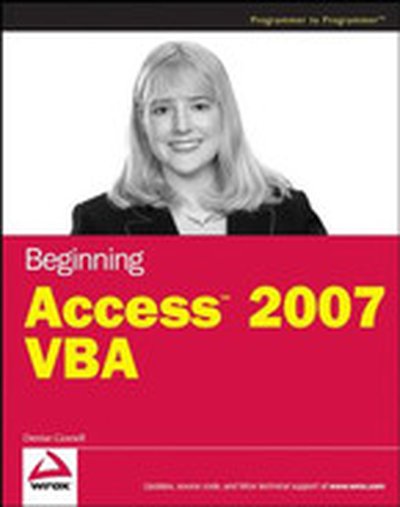
Beginning Access™ 2007 VBA

This book provides you with the tools and techniques you'll need in order to build more sophisticated solutions. After walking through the features of Access 2007 VBA, you'll learn all about object-oriented programming and ADO. You'll then progress to advanced VBA concepts such as working with external DLLs and using automation to control external programs. Plus, two comprehensive case studies presents you with the hands-on experience in building real-world solutions using the concepts covered in the book.

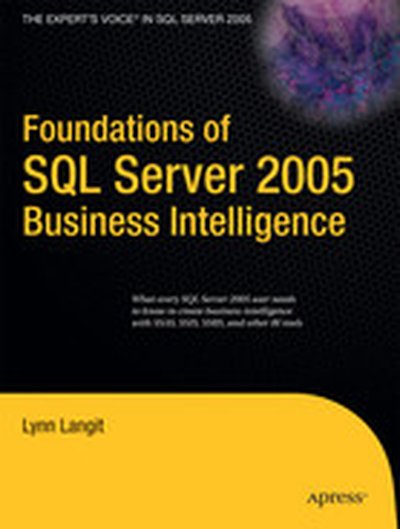
Foundations of SQL Server 2005 Business Intelligence

Just as every business needs to effectively employ business intelligence (BI) to stay competitive, every IT professional needs to master BI to stay employed in this fastest-growing segment of information technology. Foundations of SQL Server 2005 Business Intelligence is the quickest path to understanding BI, and it is essential reading for all who work with SQL Server 2005. It is written from a practical perspective, perfect for anyone who uses the tools in SQL Server 2005s extraordinarily rich BI product suite. This book explains how best to use Analysis Services, SQL Server Integration Services, SQL Server Reporting Services, and SQL Server Data Mining. It also describes best practices for implementing end-to-end BI solutions in small, medium, and large business environments. And it provides important information about integrating BI with various client tools, including Excel, Business Scorecards, Proclarity, and SharePoint Portal Server. Developers, end users, and even managers will find this an enlightening guide to the power and promise of SQL Server 2005 BI.

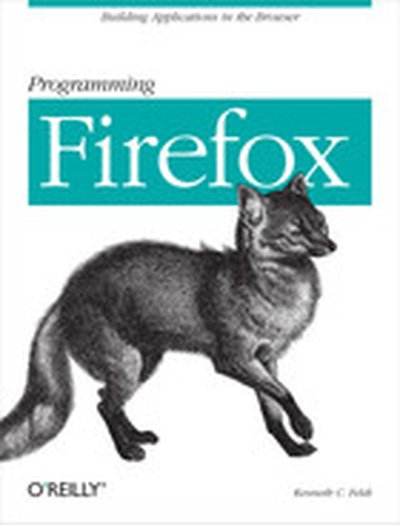
Programming Firefox

This is your guide to building Internet applications and user interfaces with the Mozilla component framework, which is best known for the Firefox web browser and Thunderbird email client. Programming Firefox demonstrates how to use the XML User Interface Language (XUL) with open source tools in the framework's Cross-Platform Component (XPCOM) library to develop a variety of projects, such as commercial web applications and Firefox extensions. This book serves as both a programmer's reference and an in-depth tutorial, so not only do you get a comprehensive look at XUL's capabilities--from simple interface design to complex, multitier applications with real-time operations--but you also learn how to build a complete working application with XUL. If you're coming from a Java or .NET environment, you'll be amazed at how quickly large-scale applications can be constructed with XPCOM and XUL. Topics in Programming Firefox include: An overview of Firefox technology An introduction to the graphical elements that compose a XUL application Firefox development tools and the process used to design and build applications Managing an application with multiple content areas Introduction to Resource Description Files, and how the Firefox interface renders RDF Manipulating XHTML with JavaScript Displaying documents using the Scalable Vector Graphics standard and HTML Canvas The XML Binding Language and interface overlays to extend Firefox Implementing the next-generation forms interface through XForms Programming Firefox is ideal for the designer or developer charged with delivering innovative standards-based Internet applications, whether they're web server applications or Internet-enabled desktop applications. It's not just a how-to book, but a what-if exploration that encourages you to push the envelope of the Internet experience.