talk-data.com talk-data.com

Topic

GIS

Geographic Information System (GIS)

mapping spatial_data geospatial location

69

tagged

Activity Trend

1 peak/qtr
2020-Q1 2026-Q1

Activities

69 activities · Newest first

PostGIS in Action

PostGIS in Action teaches readers of all levels to write spatial queries that solve real-world problems. It first gives you a background in vector-based GIS and then quickly moves into analyzing, viewing, and mapping data. You'll learn how to optimize queries for maximum speed, simplify geometries for greater efficiency, and create custom functions for your own applications. The book covers PostgreSQL 8.4, 9.0, and 9.1 features and shows you how to integrate with other GIS tools. About the Technology PostGIS is an open source spatial database extender for PostgreSQL. It equals or surpasses proprietary alternatives, allowing you to create location-aware queries with just a few lines of SQL code, and provides a back-end for mapping applications with minimal effort. About the Book What's Inside An introduction to spatial databases Geometry types, functions, and queries Applying PostGIS to real-world problems Extending PostGIS to web and desktop applications About the Reader Familiarity with relational database concepts is helpful but not required. About the Authors Regina Obe and Leo Hsu are database consultants. Regina is a member of the PostGIS core development team and the Project Steering Committee. They are hosts of BostonGIS.com and PostgresOnLine.com. Quotes From the forward: A concise guide that's truly one of a kind. - Paul Ramsey, Chair, PostGIS Steering Committee An elegant introduction to a difficult domain. - Mark Leslie, LISAsoft Pty Ltd The ultimate PostGIS tour guide. - Brent Wood, NIWA Will give you the Aha! moment you've been waiting for. - Jeff Addison, Southgate Software Ltd Want to get the most out of PostGIS? This is required reading for you. - James Fee, WeoGeo.com

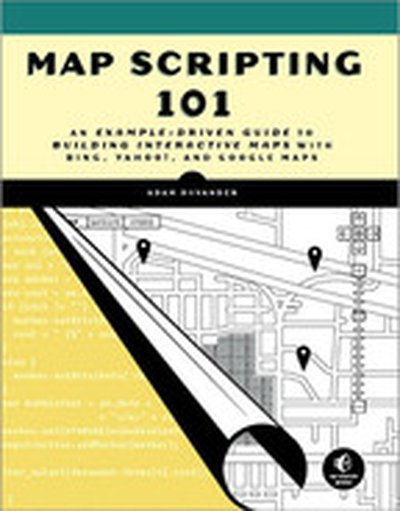
Map Scripting 101

Map Scripting 101 uses a project-based approach to teach you how to create useful and fun online map mashups like weather maps and local concert trackers. Author Adam DuVander shows you how to use Mapstraction, an open source JavaScript library, to create and manipulate basic maps by setting zoom levels, showing and hiding markers, geocoding addresses, customizing maps for visitors based on their locales, and so on. You'll also learn to handle complex GIS (geographic information system) data and formats like KML and GeoRSS, and to create graphical overlays to make sense of data and trends. This is a perfect book for any web developer, whether their goal is to build a map to track earthquakes around the world, or to simply mark the best coffee shops in town.

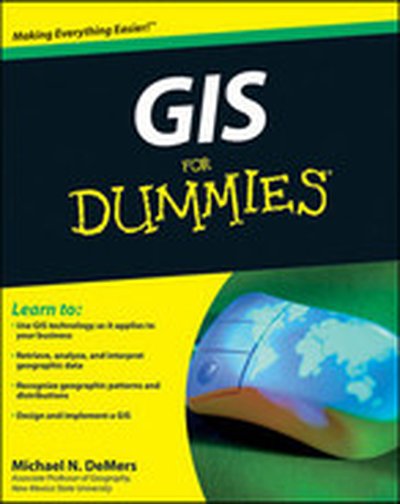
GIS For Dummies®

GIS (geographic information system) is a totally cool technology that has been called "geography on steroids." GIS is what lets you see the schools in your neighborhood or tells you where the nearest McDonald's is. GIS For Dummies tells you all about mapping terminology and digital mapping, how to locate geographic features and analyze patterns such as streets and waterways, and how to generate travel directions, customer location lists, and much more with GIS. Whether you're in charge of creating GIS applications for your business or you simply love maps, you'll find GIS For Dummies is packed with information. For example, you can: Learn all the hardware and software necessary to collect, analyze, and manipulate GIS data Explore the difference between 2D and 3D maps, create a map, or manage multiple maps Analyze patterns that appear in maps and interpret the results Measure distance in absolute, comparative, and functional ways Recognize how spatial factors relate to geographic data Discover how GIS is used in business, the military, city planning, emergency services, land management, and more Find out how GIS can help you find out where flooding may occur Determine what your organization needs, do appropriate analyses, and actually plan and design a GIS system You'll find dozens of applications for GIS queries and analyses, and even learn to create animated GIS output. Whether your goal is to implement a GIS or just have fun, GIS For Dummies will get you there! Note: CD-ROM/DVD and other supplementary materials are not included as part of eBook file.

Introduction to Neogeography

Neogeography combines the complex techniques of cartography and GIS and places them within reach of users and developers. This Short Cut introduces you to the growing number of tools, frameworks, and resources available that make it easy to create maps and share the locations of your interests and history. Learn what existing and emerging standards such as GeoRSS, KML, and Microformats mean; how to add dynamic maps and locations to your web site; how to pinpoint the locations of your online visitors; how to create genealogical maps and Google Earth animations of your family's ancestry; or how to geotag and share your travel photographs.

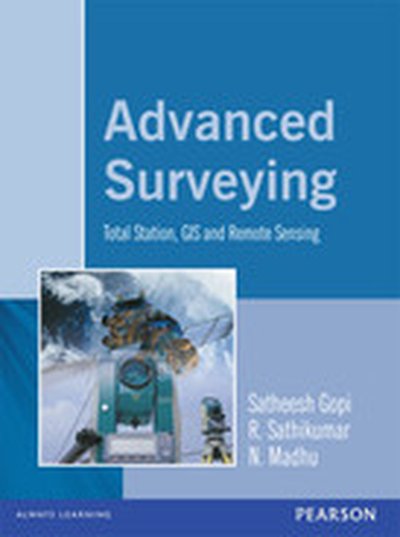
Advanced Surveying: Total Station, GIS and Remote Sensing

Modern Surveying is unimaginable without the use of electronic equipment and information technology. Surveying with conventional systems has been completely replaced with advanced automated systems. Total Station, Global Positioning System (GPS), Remote Sensing and Geographical Information System (GIS) have all become an inextricable part of surveying. Advanced Surveying: Total Station, GIS and Remote Sensing provides a thorough working knowledge of these technologies.

Ambient Findability

How do you find your way in an age of information overload? How can you filter streams of complex information to pull out only what you want? Why does it matter how information is structured when Google seems to magically bring up the right answer to your questions? What does it mean to be "findable" in this day and age? This eye-opening new book examines the convergence of information and connectivity. Written by Peter Morville, author of the groundbreaking Information Architecture for the World Wide Web, the book defines our current age as a state of unlimited findability. In other words, anyone can find anything at any time. Complete navigability. Morville discusses the Internet, GIS, and other network technologies that are coming together to make unlimited findability possible. He explores how the melding of these innovations impacts society, since Web access is now a standard requirement for successful people and businesses. But before he does that, Morville looks back at the history of wayfinding and human evolution, suggesting that our fear of being lost has driven us to create maps, charts, and now, the mobile Internet. The book's central thesis is that information literacy, information architecture, and usability are all critical components of this new world order. Hand in hand with that is the contention that only by planning and designing the best possible software, devices, and Internet, will we be able to maintain this connectivity in the future. Morville's book is highlighted with full color illustrations and rich examples that bring his prose to life. Ambient Findability doesn't preach or pretend to know all the answers. Instead, it presents research, stories, and examples in support of its novel ideas. Are we truly at a critical point in our evolution where the quality of our digital networks will dictate how we behave as a species? Is findability indeed the primary key to a successful global marketplace in the 21st century and beyond. Peter Morville takes you on a thought-provoking tour of these memes and more -- ideas that will not only fascinate but will stir your creativity in practical ways that you can apply to your work immediately. "A lively, enjoyable and informative tour of a topic that's only going to become more important." --David Weinberger, Author, Small Pieces Loosely Joined and The Cluetrain Manifesto "I envy the young scholar who finds this inventive book, by whatever strange means are necessary. The future isn't just unwritten--it's unsearched." --Bruce Sterling, Writer, Futurist, and Co-Founder, The Electronic Frontier Foundation "Search engine marketing is the hottest thing in Internet business, and deservedly so. Ambient Findability puts SEM into a broader context and provides deeper insights into human behavior. This book will help you grow your online business in a world where being found is not at all certain." --Jakob Nielsen, Ph.D., Author, Designing Web Usability: The Practice of Simplicity "Information that's hard to find will remain information that's hardly found--from one of the fathers of the discipline of information architecture, and one of its most experienced practitioners, come penetrating observations on why findability is elusive and how the act of seeking changes us." --Steve Papa, Founder and Chairman, Endeca "Whether it's a fact or a figure, a person or a place, Peter Morville knows how to make it findable. Morville explores the possibilities of a world where everything can always be found--and the challenges in getting there--in this wide-ranging, thought-provoking book." --Jesse James Garrett, Author, The Elements of User Experience "It is easy to assume that current searching of the World Wide Web is the last word in finding and using information. Peter Morville shows us that search engines are just the beginning. Skillfully weaving together information science research with his own extensive experience, he develops for the reader a feeling for the near future when information is truly findable all around us. There are immense implications, and Morville's lively and humorous writing brings them home." --Marcia J. Bates, Ph.D., University of California Los Angeles "I've always known that Peter Morville was smart. After reading Ambient Findability, I now know he's (as we say in Boston) wicked smart. This is a timely book that will have lasting effects on how we create our future. --Jared Spool, Founding Principal, User Interface Engineering "In Ambient Findability, Peter Morville has put his mind and keyboard on the pulse of the electronic noosphere. With tangible examples and lively writing, he lays out the challenges and wonders of finding our way in cyberspace, and explains the mutually dependent evolution of our changing world and selves. This is a must read for everyone and a practical guide for designers." --Gary Marchionini, Ph.D., University of North Carolina "Find this book! Anyone interested in making information easier to find, or understanding how finding and being found is changing, will find this thoroughly researched, engagingly written, literate, insightful and very, very cool book well worth their time. Myriad examples from rich and varied domains and a valuable idea on nearly every page. Fun to read, too! --Joseph Janes, Ph.D., Founder, Internet Public Library

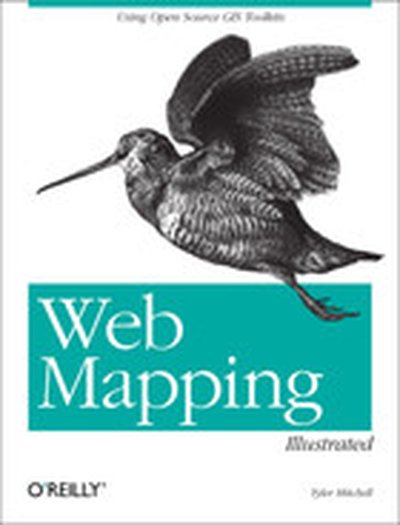
Web Mapping Illustrated

With the help of the Internet and accompanying tools, creating and publishing online maps has become easier and rich with options. A city guide web site can use maps to show the location of restaurants, museums, and art venues. A business can post a map for reaching its offices. The state government can present a map showing average income by area.Developers who want to publish maps on the web often discover that commercial tools cost too much and hunting down the free tools scattered across Internet can use up too much of your time and resources. Web Mapping Illustrated shows you how to create maps, even interactive maps, with free tools, including MapServer, OpenEV, GDAL/OGR, and PostGIS. It also explains how to find, collect, understand, use, and share mapping data, both over the traditional Web and using OGC-standard services like WFS and WMS.Mapping is a growing field that goes beyond collecting and analyzing GIS data. Web Mapping Illustrated shows how to combine free geographic data, GPS, and data management tools into one resource for your mapping information needs so you don't have to lose your way while searching for it.Remember the fun you had exploring the world with maps? Experience the fun again with Web Mapping Illustrated. This book will take you on a direct route to creating valuable maps.

Geographic Information Systems: An Introduction, 3rd Edition

"If we are to solve many of the problems facing us-in the cities, in the wild areas of the earth, in the atmosphere, and the oceans-we shall need the help of skilled users of GIS technology. If readers can master what is in this volume, they will be well started on this enterprise." -From the Foreword by Jack Dangermond President of ESRI Praise for previous editions: "One of only a small number of texts devoted to the technology of GIS that are truly introductory in nature. . . . Very readable and of moderate length. Those who are real novices to GIS will find this one attractive." -Computers and Geosciences "Well-rendered and very clear line drawings . . . well written, with a well-balanced blend of technical/theoretical concepts and more applied facts of GIS." -Professional Geographer Geographic Information Systems provides a practical, theory-driven overview of GIS that is supported with clear coverage of basic techniques. This treatment enables readers to understand the broad aspects of GIS without focusing on a specific software or discipline, such as engineering or geography. New features of this Third Edition include: up-to-date information on standardization efforts aimed at facilitating the exchange of ideas and data; technical content that is up to date with current hardware, software, database design, and analytical techniques; and comprehensive cost/benefit guidelines for choosing and evaluating a GIS, including coverage of organizational and technical issues. Complete with extensive references and links to online resources, Geographic Information Systems, Third Edition, is an exceptional resource for students of GIS, planning, land use, natural resources, civil and environmental engineering, real estate, and wildlife biology.

Spatial Databases

Spatial Databases is the first unified, in-depth treatment of special techniques for dealing with spatial data, particularly in the field of geographic information systems (GIS). This book surveys various techniques, such as spatial data models, algorithms, and indexing methods, developed to address specific features of spatial data that are not adequately handled by mainstream DBMS technology. The book also reviews commercial solutions to geographic data handling: ArcInfo, ArcView, and Smallworld GISs; and two extensions to the relational model, PostgreSQL and Oracle Spatial. The authors examine these underlying GIS technologies, assess their strengths and weaknesses, and consider specific uses for which each product is best suited. * Examines the strengths of various query languages and approaches to query processing. * Explains the use of computational geometry in spatial databases GISs, providing necessary background and an in-depth look at key algorithms. * Covers spatial access methods, including the R-tree and several space-driven structures, and is filled with dozens of helpful illustrations.