talk-data.com talk-data.com

Topic

GIS

Geographic Information System (GIS)

mapping spatial_data geospatial location

5

tagged

Activity Trend

1 peak/qtr
2020-Q1 2026-Q1

Activities

5 activities · Newest first

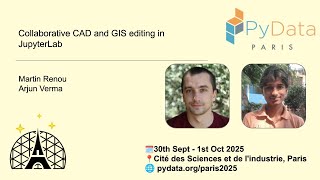
Collaborative GIS editing in JupyterLab

JupyterGIS facilitates collaborative editing of GIS files, including the QGIS format, through a web-based interface built on JupyterLab. It also provides a programmatic interface tailored for Jupyter notebooks, making use of the advanced capabilities of the Jupyter rich display system.

In this presentation, we will first provide a high-level overview of the project’s main features.

We will then explore the latest developments, including the integration with the xarray stack and the Pangeo ecosystem, and the support for STAC geographical asset catalogs.

We conclude the talk with a forward-looking presentation of the ongoing development, such as the story maps feature, and the integration with the R programming language.

Sponsored by: Deloitte | Analyzing Geospatial Data at Scale in Databricks for Environment & Agriculture

Analyzing geospatial data has become a cornerstone of tackling many of today’s pressing challenges from climate change to resource management. However, storing and processing such data can be complex and hard to scale using common GIS packages. This talk explores how Deloitte and Databricks enable horizontally scalable geospatial analysis using delta lake, H3 integration and support for geospatial vector and raster data. We demonstrate how we have leveraged these capabilities for real-world applications in environmental monitoring and agriculture. In doing so, we cover end-to-end processing from ingestion, transformation and analysis to production of geospatial data products accessible by scientists and decision makers through standard GIS tools.

US Army Corp of Engineers Enhanced Commerce & National Sec Through Data-Driven Geospatial Insight

The US Army Corps of Engineers (USACE) is responsible for maintaining and improving nearly 12,000 miles of shallow-draft (9'-14') inland and intracoastal waterways, 13,000 miles of deep-draft (14' and greater) coastal channels, and 400 ports, harbors, and turning basins throughout the United States. Because these components of the national waterway network are considered assets to both US commerce and national security, they must be carefully managed to keep marine traffic operating safely and efficiently.

The National DQM Program is tasked with providing USACE a nationally standardized remote monitoring and documentation system across multiple vessel types with timely data access, reporting, dredge certifications, data quality control, and data management. Government systems have often lagged commercial systems in modernization efforts, and the emergence of the cloud and Data Lakehouse Architectures have empowered USACE to successfully move into the modern data era.

This session incorporates aspects of these topics: Data Lakehouse Architecture: Delta Lake, platform security and privacy, serverless, administration, data warehouse, Data Lake, Apache Iceberg, Data Mesh GIS: H3, MOSAIC, spatial analysis data engineering: data pipelines, orchestration, CDC, medallion architecture, Databricks Workflows, data munging, ETL/ELT, lakehouses, data lakes, Parquet, Data Mesh, Apache Spark™ internals. Data Streaming: Apache Spark Structured Streaming, real-time ingestion, real-time ETL, real-time ML, real-time analytics, and real-time applications, Delta Live Tables. ML: PyTorch, TensorFlow, Keras, scikit-learn, Python and R ecosystems data governance: security, compliance, RMF, NIST data sharing: sharing and collaboration, delta sharing, data cleanliness, APIs.

Talk by: Jeff Mroz

Connect with us: Website: https://databricks.com Twitter: https://twitter.com/databricks LinkedIn: https://www.linkedin.com/company/databricks Instagram: https://www.instagram.com/databricksinc Facebook: https://www.facebook.com/databricksinc

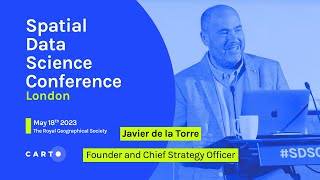
Geo at the time of AI | Javier de la Torre | Founder & CSO of CARTO

Javier de la Torre, Founder and CSO of CARTO, kicks off the Spatial Data Science Conference 2023 highlighting the nuances in geospatial current era of artificial intelligence. He demonstrates several uses such as using GPT4 to generate OpenStreetMap SQL queries to grab data and perform analysis, creating GIS systems based on prompts and more.

For more information, check out our website: https://carto.com/

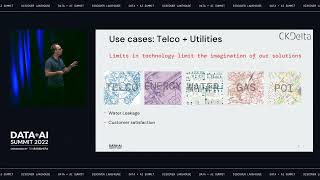
GIS Pipeline Acceleration with Apache Sedona

In CKDelta, we ingest and process a massive amount of geospatial data. Using Apache Sedona together with Databricks have accelerated our data pipelines many times.

In this talk, we'll talk about migrating the existing pipelines to Sedona + PySpark and the pitfalls we encountered along the way.

Connect with us: Website: https://databricks.com Facebook: https://www.facebook.com/databricksinc Twitter: https://twitter.com/databricks LinkedIn: https://www.linkedin.com/company/data... Instagram: https://www.instagram.com/databricksinc/