talk-data.com talk-data.com

Topic

MMM

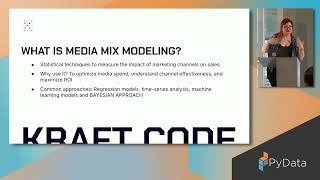
Marketing Mix Modeling (MMM)

marketing analytics attribution modeling

5

tagged

Activity Trend

3 peak/qtr
2020-Q1 2026-Q1

Activities

5 activities · Newest first

MMM Open- Source Showdown: A Practitioner's Benchmark of PyMC-Marketing vs. Google Meridian

Your Marketing Mix Model is only as good as the library you build it on. But how do you choose between PyMC-Marketing and Google Meridian when the feature lists look so similar? You need hard evidence, not marketing claims. Which library is actually faster on multi-geo data? Do their different statistical approaches (splines vs. Fourier series) lead to different budget decisions?

This talk delivers that evidence. We present a rigorous, open-source benchmark that stress-tests both libraries on the metrics that matter in production. Using a synthetic dataset that replicates real-world ad spend patterns, we measure:

  • Speed: Effective sample size per second (ESS/s) across different data scales.
  • Accuracy: How well each model recovers both sales figures and true channel contributions.
  • Reliability: A deep dive into convergence diagnostics and residual analysis.
  • Resources: The real memory cost of fitting these models.

You'll walk away from this session with a clear, data-driven verdict, ready to choose the right tool and defend that choice to your team.

Redefining Marketing Measurement in the Era of Open-Source Innovation with Koel Ghosh

In a rapidly evolving advertising landscape where data, technology, and methodology converge, the pursuit of rigorous yet actionable marketing measurement is more critical—and complex—than ever. This talk will showcase how modern marketers and applied data scientists employ advanced measurement approaches—such as Marketing Mix Modeling (frequentist and Bayesian) and robust experimental designs, including randomized control trials and synthetic control-based counterfactuals—to drive causal inference in advertising effectiveness for meaningful business impact.

The talk will also address emergent aspects of applied marketing science- namely open-source methodologies, digital commerce platforms and artificial intelligence usage. Innovations from industry giants like Google and Meta, as well as open-source communities exemplified by PyMC-Marketing, have democratized access to advancement in methodologies. The emergence of digital commerce platforms such as Amazon and Walmart and the rich data they bring forward is transforming how customer journeys and campaign effectiveness are measured across channels. Artificial Intelligence is accelerating every facet of the data science workflow, streamlining processes like coding, modeling, and rapid prototyping (“vibe coding”) to enabling the integration of neural networks and deep learning techniques into traditional MMM toolkits. Collectively, these provide new and easy ways of quick experimentation and learning of complex nonlinear dynamics and hidden patterns in marketing data

Bringing these threads together, the talk will show how Ovative Group—a media and marketing technology firm—integrates domain expertise, open-source solutions, strategic partnerships, and AI automation into comprehensive measurement solutions. Attendees will gain practical insights on bridging academic rigor with business relevance, empowering careers in applied data science, and helping organizations turn marketing analytics into clear, actionable strategies.

Data Intelligence for Marketing Breakout: Agentic Systems for Bayesian MMM and Consumer Testing

This talk dives into leveraging GenAI to scale sophisticated decision intelligence. Learn how an AI copilot interface simplifies running complex Bayesian probabilistic models, accelerating insight generation, and accurate decision making at the enterprise level. We talk through techniques for deploying AI agents at scale to simulate market dynamics or product feature impacts, providing robust, data-driven foresight for high-stakes innovation and strategy directly within your Databricks environment. For marketing teams, this approach will help you leverage autonomous AI agents to dynamically manage media channel allocation while simulating real-world consumer behavior through synthetic testing environments.

MULTI-TOUCH ATTRIBUTION: FOUR DISTINCT APPROACHES AND THE TRADEOFFS (AND FALLACIES) THEREIN

Every marketer wants to accurately measure the impact of their advertising spend. And “digital” was supposed to make that really easy (especially for digital advertising). But, that promise has rarely been realized---it’s becoming increasingly difficult to track users across touchpoints, thanks to privacy regulations (GDPR, CCPA, etc.) and browser updates that block or aggressively expire cookies. In this session, we will review four different approaches to marketing attribution: heuristic modeling (first touch, last touch, linear, time decay, etc.), algorithmic modeling, media mix modeling (MMM), and randomized controlled trials (RCTs). As part of the review, we will venture lightly, but profoundly, into some foundational statistical concepts: we WILL use the terms 'counterfactual' and 'potential outcome,' and probably even 'unobserved heterogeneity!'