talk-data.com talk-data.com

Topic

metadata

10

tagged

Activity Trend

1 peak/qtr
2020-Q1 2026-Q1

Activities

10 activities · Newest first

Metaverse for Sustainable Development

Unlock the future of technology and sustainable development by purchasing Metaverse for Sustainable Development: Trends and Applications, a comprehensive guide that delves into immersive application building, groundbreaking innovations, and the transformative potential of the metaverse across various industries. Metaverse for Sustainable Development: Trends and Applications explains the fine details of metaverse application building, demonstrating how integrated platforms in association with a suite of tools come in handy for enabling application construction. The metaverse is the next big thing influenced by virtual and augmented reality paradigms. This user experience will be more immersive and mesmerizing, empowering innovative, disruptive, and transformative technologies to create a spectacular platform for visualizing and realizing business-critical and people-centric metaverse systems. This book explores various metaverse models for healthcare information systems, including the latest technologies, such as the Brain-Computer Interface. Through real-world data and case studies, readers will gain a comprehensive understanding of the metaverse’s potential for the Internet of Things, blockchain, artificial intelligence, 5G, and 3D modelling for creating and sustaining immersive virtual worlds. Metaverse for Sustainable Development: Trends and Applications is a vital resource for understanding the end-to-end implementation of metaverse technologies.

Fundamentals of Metadata Management

Whether it's to adhere to regulations, access markets by meeting specific standards, or devise data analytics and AI strategies, companies today are busy implementing metadata repositories—metadata tools about the IT, data, information, and knowledge in your company. Until now, most of these repositories have been implemented in isolation from one another, but that practice lies at the core of problems with data management in many companies today. Author Ole Olesen-Bagneux, chief evangelist at Actian, shows you how to masterfully manage your metadata repositories by properly coordinating them. That requires a data discovery team to increase insights for all key players in enterprise data management, from the CIO and CDO to enterprise and data architects. Coordinating these repositories will help you and your organization democratize data and excel at data management. This book shows you how. Learn what metadata repositories are and what they do Explore which data to represent in these repositories Set up a data discovery team to make data searchable Learn how to manage and coordinate repositories in a meta grid Increase innovation by setting up a functional data marketplace Make information security and data protection more robust Gain a deeper understanding of your company IT landscape Activate real enterprise architecture based on evidence

Forms and Functions of Meta-Discourse

This book constitutes the first systematic analysis of meta-discourse in the spoken domain, addressing the question of how, why, and when speakers switch from discourse to meta-discourse by means of comment clauses (e.g., ‘I think’). The case of Present-day Italian is considered, exploring the internal properties of comment clauses (e.g., morphosyntax and semantics of the verb), their relations with the surrounding discourse (e.g., position of comment clause), and their prosodic profiles. This study shows that speakers recur to meta-discourse to convey a non-random set of functions, having mainly to do with the online process of reference construction (e.g., approximation and reformulation) and with the degree of speaker’s commitment (e.g., epistemicity and emphasis). Comment clauses are also used as attention-getting or topic-resuming devices, though less frequently. One of the most interesting results of this study is the identification of a close relation between meta-discourse and stance-taking in spoken domain, with speakers recurring to comment clauses to convey their attitude. Finally, meta-discourse turns out to be highly influenced, if not constrained, by universal properties of the spoken domain (i.e., non-linearity).

Microarray Image and Data Analysis

This book is a compilation of the latest microarray image and data analysis methods from the multidisciplinary international research community. Delivering a detailed discussion of the biological aspects and applications of different types of microarrays, it examines the current state of microarray technology and describes the key stages of image processing, gridding, segmentation, compression, quantification, and normalization. Featuring cutting-edge approaches to clustering and the reconstruction of regulatory networks, the book explains how data generated by microarray experiments are analyzed to obtain meaningful biological conclusions.

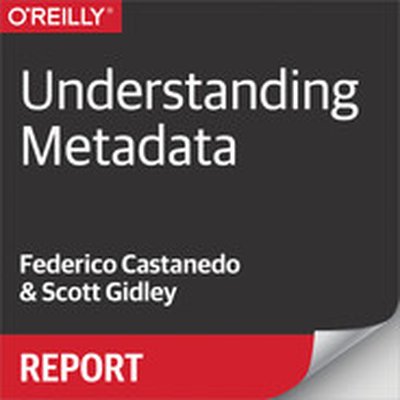
Understanding Metadata

One viable option for organizations looking to harness massive amounts of data is the data lake, a single repository for storing all the raw data, both structured and unstructured, that floods into the company. But that isn’t the end of the story. The key to making a data lake work is data governance, using metadata to provide valuable context through tagging and cataloging. This practical report examines why metadata is essential for managing, migrating, accessing, and deploying any big data solution. Authors Federico Castanedo and Scott Gidley dive into the specifics of analyzing metadata for keeping track of your data—where it comes from, where it’s located, and how it’s being used—so you can provide safeguards and reduce risk. In the process, you’ll learn about methods for automating metadata capture. This report also explains the main features of a data lake architecture, and discusses the pros and cons of several data lake management solutions that support metadata. These solutions include: Traditional data integration/management vendors such as the IBM Research Accelerated Discovery Lab Tooling from open source projects, including Teradata Kylo and Informatica Startups such as Trifacta and Zaloni that provide best of breed technology

The Metadata Manual

Cultural heritage professionals have high levels of training in metadata. However, the institutions in which they practice often depend on support staff, volunteers, and students in order to function. With limited time and funding for training in metadata creation for digital collections, there are often many questions about metadata without a reliable, direct source for answers. The Metadata Manual provides such a resource, answering basic metadata questions that may appear, and exploring metadata from a beginner’s perspective. This title covers metadata basics, XML basics, Dublin Core, VRA Core, and CDWA schemes and provides exercise in the creation of metadata. Finally, the book gives an overview of metadata, including mapping and sharing. Outlines the most popular metadata schema written by practicing metadata librarians Focuses on what you “need to know” Does not require coding experience to use and understand

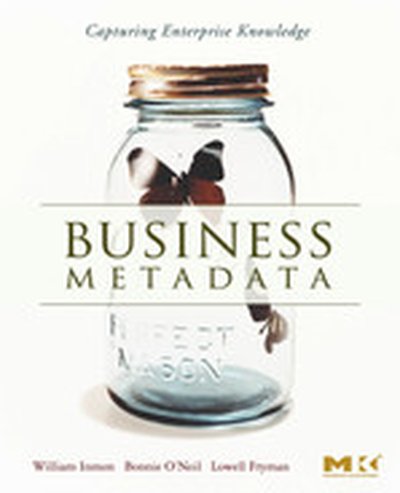
Business Metadata: Capturing Enterprise Knowledge

Business Metadata: Capturing Enterprise Knowledge is the first book that helps businesses capture corporate (human) knowledge and unstructured data, and offer solutions for codifying it for use in IT and management. Written by Bill Inmon, one of the fathers of the data warehouse and well-known author, the book is filled with war stories, examples, and cases from current projects. It includes a complete metadata acquisition methodology and project plan to guide readers every step of the way, and sample unstructured metadata for use in self-testing and developing skills. This book is recommended for IT professionals, including those in consulting, working on systems that will deliver better knowledge management capability. This includes people in these positions: data architects, data analysts, SOA architects, metadata analysts, repository (metadata data warehouse) managers as well as vendors that have a metadata component as part of their systems or tools. First book that helps businesses capture corporate (human) knowledge and unstructured data, and offer solutions for codifying it for use in IT and management Written by Bill Inmon, one of the fathers of the data warehouse and well-known author, and filled with war stories, examples, and cases from current projects Very practical, includes a complete metadata acquisition methodology and project plan to guide readers every step of the way Includes sample unstructured metadata for use in self-testing and developing skills

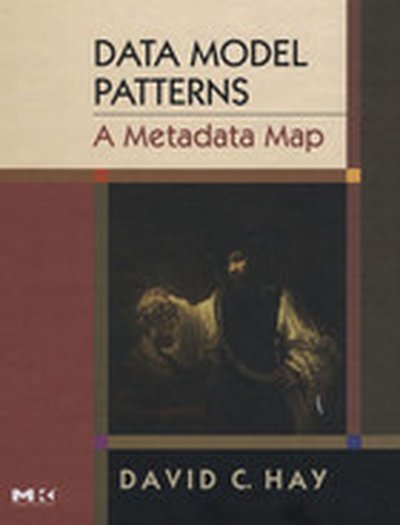
Data Model Patterns: A Metadata Map

Data Model Patterns: A Metadata Map not only presents a conceptual model of a metadata repository but also demonstrates a true enterprise data model of the information technology industry itself. It provides a step-by-step description of the model and is organized so that different readers can benefit from different parts. It offers a view of the world being addressed by all the techniques, methods, and tools of the information processing industry (for example, object-oriented design, CASE, business process re-engineering, etc.) and presents several concepts that need to be addressed by such tools. This book is pertinent, with companies and government agencies realizing that the data they use represent a significant corporate resource recognize the need to integrate data that has traditionally only been available from disparate sources. An important component of this integration is management of the "metadata" that describe, catalogue, and provide access to the various forms of underlying business data. The "metadata repository" is essential to keep track of the various physical components of these systems and their semantics. The book is ideal for data management professionals, data modeling and design professionals, and data warehouse and database repository designers. A comprehensive work based on the Zachman Framework for information architecture—encompassing the Business Owner's, Architect's, and Designer's views, for all columns (data, activities, locations, people, timing, and motivation) Provides a step-by-step description of model and is organized so that different readers can benefit from different parts Provides a view of the world being addressed by all the techniques, methods and tools of the information processing industry (for example, object-oriented design, CASE, business process re-engineering, etc.) Presents many concepts that are not currently being addressed by such tools — and should be

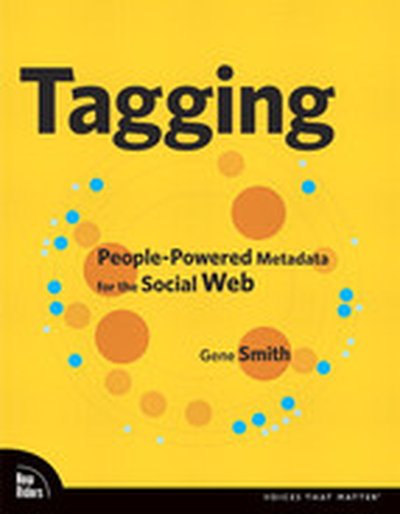
Tagging: People-powered Metadata for the Social Web

Tagging is fast becoming one of the primary ways people organize and manage digital information. Tagging complements traditional organizational tools like folders and search on users desktops as well as on the web. These developments mean that tagging has broad implications for information management, information architecture and interface design. And its reach extends beyond these technical domains to our culture at large. We can imagine, for example, the scrapbookers of the future curating their digital photos, emails, ticket stubs and other mementos with tags. This book explains the value of tagging, explores why people tag, how tagging works and when it can be used to improve the user experience. It exposes tagging's superficial simplicity to reveal interesting issues related to usability, information architecture, online community and collective intelligence.