talk-data.com talk-data.com

Topic

Microsoft

technology software cloud

407

tagged

Activity Trend

556 peak/qtr
2020-Q1 2026-Q1

Activities

Showing filtered results

Filtering by: O'Reilly Data Engineering Books ×
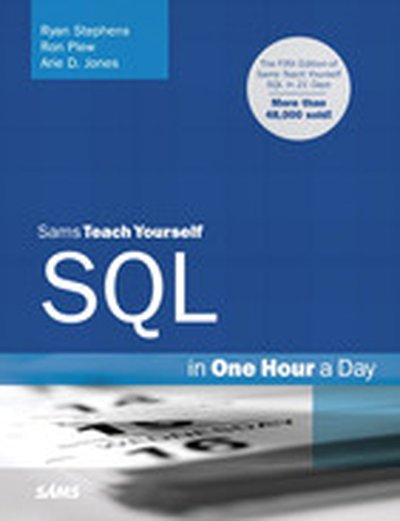
Sams Teach Yourself SQL in One Hour a Day, Fifth Edition

The Fifth Edition of Sams Teach Yourself SQL in 21 Days More than 48,000 sold! In just one hour a day, you’ll have all the skills you need to begin creating effective SQL queries, reports, and database applications. With this complete tutorial, you’ll quickly master the basics and then move on to more advanced features and concepts: Quickly apply essential SQL techniques in useful, real-world queries Design trustworthy, high-performance databases Manipulate your data with views and transactions Leverage powerful features including stored procedures, triggers, and cursors Work with new objects introduced with the latest SQL standards Get practical, expert tips on implementing SQL in your business environment Learn on your own time, at your own pace No previous SQL or database experience required Learn techniques that work with any current version of SQL Discover how to write faster, more efficient queries Secure your data using best practices from experienced database administrators Build more powerful databases with features exclusive to Oracle SQL*Plus, Oracle PL/SQL, and Microsoft Transact-SQL Write queries for the free, open source MySQL database Embed your SQL code in other applications Ryan Stephens and Ron Plew are President and VP of Perpetual Technologies, Inc. (PTI) in Indianapolis, IN, providing managed services and consulting for top database implementations running Oracle, SQL Server, and other leading technologies. They taught for 5+ years as adjunct professors at Indiana University-Purdue University. Their books include Sams Teach Yourself SQL in 24 Hours, First through Fourth Editions, Sams Teach Yourself SQL in 21 Days, Second through Fourth Editions, and Database Design. Table of Contents Introduction 1 PART I: Introducing SQL LESSON 1: Getting Started with SQL 5 A Brief History of SQL 5 A Brief History of Databases 6 Today’s Database Landscape 11 A Cross-Product Language 12 Early Implementations 12 SQL and Client/Server Application Development 13 An Overview of SQL 13 Popular SQL Implementations 14 MySQL 14 Oracle 14 Microsoft SQL Server and Sybase 15 IBM DB2 16 Open Database Connectivity 16 Embedding SQL in Application Programming 17 LESSON 2: Introducing the Query 21 Exploring SQL’s Background 21 Learning Basic Query Syntax 22 The Building Blocks of Data Retrieval: SELECT and FROM 23 Applying Query Concepts 25 Writing Your First Query 26 Terminating a SQL Statement 28 Selecting Individual Columns 28 Changing the Order of the Columns 29 Selecting Different Tables 31 Selecting Distinct Values 31 Exercises 37 LESSON 3: Expressions, Conditions, and Operators 39 Working with Query Expressions 40 Placing Conditions on Queries 40 Learning How to Use Operators 42 Arithmetic Operators 42 Comparison Operators 55 Character Operators 63 Logical Operators 70 Set Operators 75 Miscellaneous Operators: IN and BETWEEN 78 LESSON 4: Clauses in SQL Queries 85 Specifying Criteria with the WHERE Clause 87 Order from Chaos: The ORDER BY Clause 89 The GROUP BY Clause 98 The HAVING Clause 105 Combining Clauses 112 Example 4.1 112 Example 4.2 113 Example 4.3 113 Example 4.4 115 LESSON 5: Joining Tables 121 Joining Multiple Tables in a Single SELECT Statement 121 Cross Joining Tables &
The Real MCTS SQL Server 2008 Exam 70-433 Prep Kit

SQL Server 2008 is the latest update to Microsoft's flagship database management system. This is the largest update since SQL Server 2005, and it brings increased ability to deliver data across more platforms, and thus many different types of devices. New functionality also allows for easy storage and retrieval of digitized images and video. These attributes address the recent explosion in the popularity of web-based video and server and desktop virtualization. The Real MCTS SQL Server 2008 Exam 70-433 Prep Kit prepares readers for the Microsoft Certified Technology Specialist exam: SQL Server 2008, Database Development. This is a new exam in the SQL Server product family, and is comprised of some objectives from exam 70-431 from SQL Server 2005, and covers new, expanded query capabilities in SQL Server 2008. According to Microsoft: Exam 70-431 for SQL Server 2005 was passed by over 35,000 people. ~ 150,000 people passed a similar exam for SQL Server 2000. Additionally, this exam is a pre-requisite for those going on to obtain the MCITP: Database Developer 2008: Successful candidates for the SQL Server 2005 MCITP ~ 2,500. This is The 'Real' Microsoft Exam Prep Kit, and provides the reader with independent and unbiased exam tips and warnings everything they need to know to ensure certification success. Authored by Mark Horninger, a nationally recognized leader in SQL Server with over 50 Microsoft certifications to his credit; Mark knows what it takes to successfully navigate Microsoft exams.

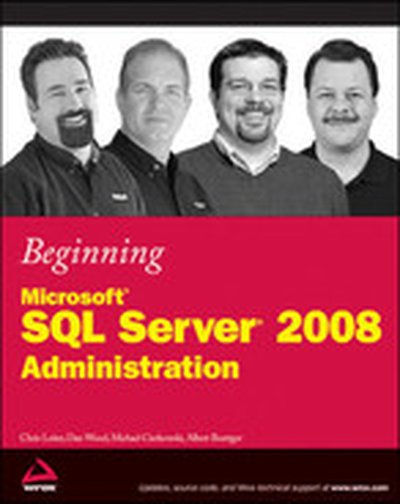
Beginning, Microsoft® SQL Server® 2008 Administration

SQL Server 2008 introduces many new features that will change database administration procedures; many DBAs will be forced to migrate to SQL Server 2008. This book teaches you how to develop the skills required to successfully administer a SQL Server 2008 database; no prior experience is required. The material covers system installation and configuration/architecting, implementing and monitoring security controls, configuring and managing network communications, automating administration tasks, disaster prevention and recovery, performance monitoring, optimizing and ensuring high availability, as well as major SQL Server 2008 components including Integration Services, Reporting Services, Analysis Services, and Service Broker.

Professional Microsoft® SQL Server® 2008 Programming

Master the increasingly complex feature set of the latest release of Microsoft SQL Server with the information in Professional Microsoft SQL Server 2008 Programming. Review the new features of SQL Server that will be of interest to you as an experienced developer and move on to more detailed, practical code examples. Learn how to write complex queries, build different types of data structures, improve application speed and performance, manage advanced scripting and errors, and design advanced databases the latest edition of this valuable programming guide.

Microsoft® SQL Server® 2008 Analysis Services Step by Step

Teach yourself to use SQL Server 2008 Analysis Services for business intelligence one step at a time. You'll start by building your understanding of the business intelligence platform enabled by SQL Server and the Microsoft Office System, highlighting the role of Analysis Services. Then, you'll create a simple multidimensional OLAP cube and progressively add features to help improve, secure, deploy, and maintain an Analysis Services database. You'll explore core Analysis Services 2008 features and capabilities, including dimension, cube, and aggregation design wizards; a new attribute relationship designer; designer AMO warnings; and using dynamic management views to monitor resources. And as you complete each lesson, you can hone your skills using the practice exercises from the companion CD. Plus, you can review and download code samples illustrating the author's own, professional techniques direct from the companion Web site.

The Real MCTS SQL Server 2008 Exam 70-432 Prep Kit

SQL Server 2008 is the latest update to Microsoft's flagship database management system. This is the largest update since SQL Server 2005. SQL Server 2008 is a much more significant update than SQL Server 2005, because it brings increased ability to deliver data across more platforms, and thus many different types of devices. New functionality also allows for easy storage and retrieval of digitized images and video. These attributes address the recent explosion in the popularity of web-based video and server and desktop virtualization. The Real MCTS SQL Server 2008 Exam 70-432 Prep Kit prepares readers for the Microsoft Certified Technology Specialist exam: SQL Server 2008, Implementation and Maintenance. This is The 'Real' Microsoft Exam Prep Kit, and provides the reader with independent and unbiased exam tips and warnings everything they need to know to ensure certification success. Authored by Mark Horninger, a nationally recognized leader in SQL Server with over 50 Microsoft certifications to his credit; Mark knows what it takes to successfully navigate Microsoft exams.

Inside Microsoft® SQL Server® 2008: T-SQL Querying

Tackle the toughest set-based querying and query tuning problems—guided by an author team with in-depth, inside knowledge of T-SQL. Deepen your understanding of architecture and internals—and gain practical approaches and advanced techniques to optimize your code’s performance. Discover how to: Move from procedural programming to the language of sets and logic Optimize query tuning with a top-down methodology Assess algorithmic complexity to predict performance Compare data-aggregation techniques, including new grouping sets Manage data modification—insert, delete, update, merge—for performance Write more efficient queries against partitioned tables Work with graphs, trees, hierarchies, and recursive queries Plus—Use pure-logic puzzles to sharpen your problem-solving skills

Professional Microsoft® SQL Server® Analysis Services 2008 with MDX

When used with the MDX query language, SQL Server Analysis Services allows developers to build full-scale database applications to support such business functions as budgeting, forecasting, and market analysis. Shows readers how to build data warehouses and multi-dimensional databases, query databases, and use Analysis Services and other components of SQL Server to provide end-to-end solutions Revised, updated, and enhanced, the book discusses new features such as improved integration with Office and Excel 2007; query performance enhancements; improvements to aggregation designer, dimension designer, cube and dimension wizards, and cell writeback; extensibility and personalization; data mining; and more

Microsoft® SQL Server® 2008 Internals

Delve inside the core SQL Server engine—and put that knowledge to work—with guidance from a team of well-known internals experts. Whether database developer, architect, or administrator, you’ll gain the deep knowledge you need to exploit key architectural changes—and capture the product’s full potential. Discover how SQL Server works behind the scenes, including: What happens internally when SQL Server builds, expands, shrinks, and moves databases How to use event tracking—from triggers to the Extended Events Engine Why the right indexes can drastically reduce your query execution time How to transcend normal row-size limits with new storage capabilities How the Query Optimizer operates Multiple techniques for troubleshooting problematic query plans When to force SQL Server to reuse a cached query plan—or create a new one What SQL Server checks internally when running DBCC How to choose among five isolation levels and two concurrency models when working with multiple concurrent users

Microsoft® SQL Server® 2008 MDX Step by Step

Teach yourself the Multidimensional Expressions (MDX) query language—one step at a time. With this practical, learn-by-doing tutorial, you’ll build the core techniques for using MDX with Analysis Services to deliver high-performance business intelligence solutions. Discover how to: Construct and execute MDX queries Work with tuples, sets, and expressions Build complex sets to retrieve the exact data users need Perform aggregation functions and navigate data hierarchies Assemble time-based business metrics Customize an Analysis Services cube through the MDX script Implement dynamic security to control data access Develop MDX-driven reports in SQL Server Reporting Services CD features: Practice exercises Database and code samples Fully searchable eBook

Microsoft® SQL Server® 2008 Reporting Services Step by Step

Teach yourself how to build, manage, and access SQL Server 2008 reports one step at a time. Whether you re a report developer, IT administrator, or business user, this sequential, learn-by-doing tutorial shows you how to deliver the business intelligence information your organization needs. Discover how to: Install and configure Reporting Services Put Report Builder and Report Designer tools to work Create interactive, online reports that enable users to sort and filter data Add charts and gauges to present data visually Deploy reports to Microsoft Office SharePoint Server Monitor server performance and help secure content Use subscriptions to distribute reports via e-mail Build ad hoc reports and extend them with custom code CD features: Practice exercises and code samples Fully searchable eBook.

Pro RFID in BizTalk Server 2009

The market for Radio Frequency Identification (RFID) technology is expanding rapidly, constituting billions of dollars annually. As more organizations adopt RFID solutions and related equipment, the need to route, map, and execute workflows based on RFID data grows exponentially. Microsoft's solution to this demand is BizTalk RFID, an application built to distribute, track, analyze, and provide visibility into enterprise data collected using RFID technologies. To aid in the rapid understanding and adoption of BizTalk RFID, this book's authors have joined together to present Pro RFID in BizTalk Server 2009, the definitive resource for unlocking the potential of the application. With extensive code and configuration examples and multiple case studies illustrating how this application is being used in various industries, authors Ram Venkatesh, the lead developer of the BizTalk RFID platform, Mark Simms, a leading architect and developer of BizTalk RFID solutions, and Mark Beckner, a BizTalk Server and enterprise architecture specialist, ensure that you will gain the insight and master the tools necessary to be able to confidently and efficiently implement a BizTalk RFID solution. What you'll learn Understand RFID BizTalk application design and architecture. Build and develop an RFID BizTalk solution. Explore in-depth analysis and examples for event and command processing. Utilize and implement Mobile RFID solutions. Instantiate workflows with the core BizTalk engine's adapters and orchestrations. Validate and route data using the Business Rules Engine. Integrate with MSMQ, WCF, web services, and external applications to ensure enterprise adoption. Understand guidelines around testing, deploying, and managing RFID BizTalk solutions. Store and access RFID-related metrics. Learn how the technology is being applied across numerous industries through extensive real-world case studies. Who this book is for This book is for solution architects, application developers, and IT administrators involved in the development and deployment of Microsoft BizTalk RFID solutions. The essential reference for covering the vital aspects of building solutions with Microsoft BizTalk RFID, adding crucial real-world context and experience to the standard product documentation, this book will cover the end-to-end BizTalk RFID experience: learning, developing, deploying, and managing. Readers at any level of experience should expect to walk away with concrete, tangible actions that can be taken to achieve success with any BizTalk RFID implementation.

Microsoft® SQL Server™ 2008 Integration Services Unleashed

Microsoft SQL Server Integration Services is Microsoft’s powerful platform for building enterprise-level data integration and data transformation solutions. It’s a powerful product, but it’s also complex and can be confusing if you don’t have a clear map for the journey. Microsoft SQL Server 2008 Integration Services Unleashed will be the only book you’ll need to harness the power that Integration Services provides. Through clear, concise explanations and samples, you’ll grasp a clear understanding of working in the Integration Services environment, including how to set up stock components, how to use the various designer features, and how to gain practical knowledge on configuring, deploying, securing, and managing packages. Sample packages are provided to reinforce the discussion and quickly help you gain hands-on experience, and more complex topics such as Data Flow Task internals and tuning, advanced transformations, and writing custom components are all illustrated in easy-to-understand graphics. In addition, there are several custom tasks and transformations and two useful utilities with full source code available for you to use and study, including an ADO.NET destination, a text file encryption task, and a data profiling transform. Detailed information on: Using the powerful Integration Services tools to create solutions without the need to write lines of code Creating packages programmatically or developing custom tasks via the Integration Services object Building robust packages to solve common requirements Securing packages for different environments Using often overlooked or unknown platform features Setting up all the stock components, including data flow components, tasks, Foreach enumerators, connection managers, and log providers Writing robust and useful custom tasks Building packages that seamlessly deploy to other environments Writing custom data flow adapters and transforms Using script tasks and components Easily modifying configurations for multiple packages simultaneously Writing a Task UI that looks just like the stock tasks Tapping into the power of Integration Services for accessing heterogeneous data sources Using expressions to make packages more responsive to the environment Migrating your DTS packages with no stress Kirk Haselden is the Group Program Manager for the Microsoft Master Data Management product forthcoming in the next wave of Office SharePoint Services and owns the long term strategy, vision, planning, and development of that product. Kirk has been with Microsoft for 12 years in various groups including Hardware, eHome, Connected Home, SQL Server, and Office Business Platform. He was the development manager for Integration Services and the primary designer for the runtime, as well as many of the tasks. He has written a number of articles for SQL Server Magazine, speaks regularly at industry events, writes profusely on his personal and MSDN blog, and holds 35 patents or patents pending. Category: Microsoft SQL Server Covers: Microsoft SQL Server 2008 Integration Services User Level: Intermediate—Advanced $59.99 US / $71.99 CAN / £38.99 Net UK

Mastering SQL Server® 2008

As Microsoft's bestselling database manager, SQL Server is highly flexible and customizable, and has excellent support—the 2008 version offers several significant new capabilities. This book offers accurate and expert coverage on the updates to SQL Server 2008 such as its enhanced security; the ability to encrypt an entire database, data files, and log files without the need for application changes; a scalable infrastructure that can manage reports and analysis of any size and complexity; and its extensive performance data collection.

Beginning Microsoft® SQL Server® 2008 Programming

This comprehensive introduction to SQL Server begins with an overview of database design basics and the SQL query language along with an in-depth look at SQL Server itself Progresses on to a clear explanation of how to implement fundamental concepts with the new 2008 version of SQL Server Discusses creating and changing tables, managing keys, writing scripts, working with stored procedures, programming with XML, using SQL Server Reporting and Integration Services, and more Features updated and new material, including new examples using Microsoft's AdventureWorks sample database

Microsoft® SQL Server 2008 Management and Administration

If you need to deploy, manage, or secure Microsoft SQL Server 2008, this is the complete, fast-paced, task-based reference you’ve been searching for. Authored by a world-class expert on SQL Server in the enterprise, this book goes far beyond the basics, taking on the complex tasks that DBAs need to make the most of Microsoft’s flagship database platform. SQL Server MVP, Ross Mistry presents proven techniques for SQL Server 2008 installation, upgrades, backup/restore, data transfer, indexing, high availability, security, and much more. He draws on extensive testing in high-profile production environments to offer step-by-step solutions and powerful tips you won’t find anywhere else. Every chapter begins with a section identifying SQL Server 2008’s most significant new improvements, and concludes with a convenient summary of best practices. Each chapter also outlines the benefits of leveraging Windows Server 2008. Understand how to: Master DBA tips, tricks, and best practices proven in actual enterprise environments Install, upgrade or transition to SQL Server 2008. Harden and Secure an implementation. Encrypt SQL Server from an end-to-end perspective. Implement high availability–and leverage SQL Server 2008’s major improvements to failover clustering and database mirroring Save time with SQL Server 2008’s new policy-based management tools Performance tune and troubleshoot a SQL Server 2008 environment. Optimize application performance and manage workloads with the powerful new Resource Governor Implement Performance Studio, maintenance plans, Transparent Data Encryption and much more… Bonus Content: The book is based on Windows Server 2008 Step by step instructions of how to implement a failover cluster on Windows Server 2008 SQL Server PoweShell Administration Tasks Consolidate and virtualize SQL Server with Hyper-V Step by step instructions on how to install Hyper-V Proactively Monitor SQL Server with Operations Manager Install Windows Server 2008 certificates to encrypt SQL Server data Contributing Writers include: Hilary Cotter — SQL Server MVP John Welch — SQL Server MVP Marco Shaw — PowerShell MVP Maciej Pilecki — SQL Server MVP Shirmattie Seenarine — Technical Writer

Beginning Oracle® Application Express

Oracle Application Express is an easy-to-use application development environment built on the Oracle technology stack. There are two aspects of that previous sentence that you may find jarring—that Oracle, a company widely known for its database technology, has an application development environment, and that Oracle, a company thought of as delivering high-end, enterprise-ready technology, has anything that is easy to use. But, as this book will show, the introductory statement is completely accurate. Oracle Application Express, commonly known as Oracle APEX or simply APEX, does benefit from the long-established enterprise-class robustness that is the hallmark of Oracle technology. The applications you build will be able to support hundreds of users and many terabytes of data, scalability far beyond even the imagination of most other development environments. And Oracle APEX, with its declarative, wizard-driven methodology, is truly easy to use. In the course of the few hundred pages of this book, you will not only learn about how to use APEX, you will create a usable order entry system. The fast learning curve presented in these pages is a consequence of many years of development and refinement of the APEX product, which began life almost a decade ago within Oracle. By the end of this volume, you will know enough to create your own applications, as well as having the knowledge and understanding of Oracle APEX and the world of Oracle technology to explore further refinements on your own. Best of all, you can use APEX with absolutely no cost—either in a hosted environment, as suggested in Chapter 1, or with a free version of the Oracle database. Welcome to the world of Oracle Application Express! This book is aimed at a particular group of users—those who are not familiar with Oracle Application Express. The book assumes that you have a basic knowledge of application development, the type you could get from playing around with a personal database such as Access. In fact, this book was written with an Access developer in mind—an Access developer looking to step up to a more scalable and reliable environment, with reduced maintenance overhead and greater integration between application systems. This book covers the use of Oracle Application Express. Although the book is based on the 3.5 version, you can use the book with older versions as well. However, since the book will use a hosted version of Oracle Application Express, and since both the Oracle database that support the product and the product itself are available as free downloads from http://otn.oracle.com, you should be able to use the latest version easily. This book is structured to give the reader a gradual introduction to the essentials of development with Oracle Application Express. The book contains the following: Welcome to Oracle!—This contains an overview of Oracle Application Express, as well as instructions on how to set up a hosted development environment for performing the exercises used in the book. Jumpstart Oracle Application Express—You will leap into creating applications with Oracle Application Express and finish a simple application by the end of this. Extending Your Oracle APEX Application—This will introduce you to the options in Oracle APEX that let you ensure that your users will enter correct data while using your application. Validation, Calculation, Navigation, and Lists—This continues the exploration of the aspects of APEX that help you to ensure that data used in your application is correct. Additionally, this covers basic navigation options for your application. Reporting and Charting—This covers the powerful and flexible reports you can create with Oracle APEX, and introduces you to the graphical capabilities of APEX reporting. Components Working Together—This extends your work with charts, showing how you can create charts that link to a more detailed view of the data they represent. You will also learn how to create a calendar page with links to the data shown as part of the calendar, and how to add images taken from the underlying database to an Oracle APEX report. Customizing User Interfaces—This explores advanced options for customizing user interfaces, on individual pages as well as across your entire APEX application. PL/SQL—This introduces you to PL/SQL, the underlying language used to implement your APEX application, and demonstrates how to use the power of PL/SQL to extend the logic in your application. Security—This covers how security is implemented for your APEX environment. Deployment and Administration—This covers the options you have for deploying an APEX application to another environment and walks you through one of those options. Additionally, this introduces you to the administrative functionality you can use to monitor and manage your APEX applications. Packaged Applications—This gives an overview of packaged applications available for Oracle Application Express, with a more detailed look at a select few. Migration—This describes how to migrate applications from Microsoft Access to Oracle Application Express.

Professional Microsoft® SQL Server® 2008 Reporting Services

Teaches solution architects, designers, and developers how to use Microsoft's reporting platform to create reporting and business intelligence (BI) solutions Updated with new information about holistic BI solutions, comprehensive OLAP/Analysis Services reporting, and complete production deployment scenarios Includes programming examples focused on specific, scenario-based solutions Explains reporting services architecture and business intelligence, teaches the fundamentals of designing reports through the use of careful planning considerations, and covers advanced report design and filtering techniques

Microsoft® SQL Server™ 2008 Analysis Services Unleashed

As the foundation of the Microsoft Business Intelligence Strategy, Microsoft SQL Server 2008 Analysis Services provides users with faster access to data and even more tools for managing and analyzing data across multidimensional objects (databases, dimensions, cubes). Microsoft SQL Server 2008 Analysis Services Unleashed is the ultimate guide for anyone who is planning to use the latest version of Analysis Services. It gives readers insight into the way Analysis Services functions, and explains practical methods for designing and creating multidimensional objects. It also provides valuable insight into the reasons behind the design decisions taken by the product development team. The authors have been involved with Analysis Services from its earliest days. They have documented in detail the internal features of Analysis Services 2008, explaining server architecture, main data structures, data processing, and query resolution algorithms. Discover the new functionality introduced in Analysis Services 2008 including MDX enhancements and new DMV (dynamic memory views) Work with the Business Intelligence Development Studio, the new Dimension Editor, and Aggregation Designer interfaces Enjoy complete coverage of new Shared Scalable Databases scale-out infrastructure Learn the key concepts of multidimensional modeling Explore the multidimensional object model and its definition language Integrate multidimensional and relational databases Build client applications to access data in Analysis Services Unravel the inner workings of the server architecture, including main data structures, data processing, and query resolution algorithms Learn the main concepts of the MDX language and gain an in-depth understanding of advanced MDX concepts Gain a deeper understanding of the internal and external protocols for data transfer, including the XML/A protocol Discover how Analysis Services manages memory Explore the security model, including role-based security, code-access security, and data security Category: Microsoft SQL Server Covers: Microsoft SQL Server 2008 Analysis Services User Level: Intermediate-Advanced $59.99 USA / $65.99 CAN / £38.99 Net UK±

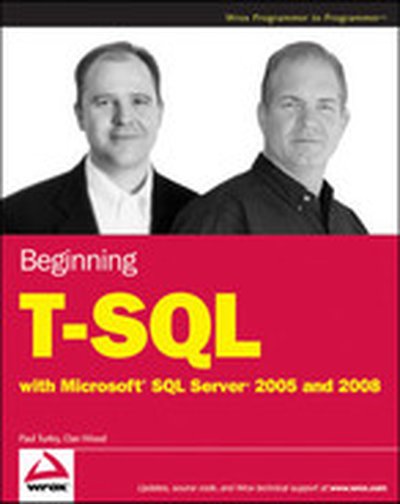
Beginning T-SQL with Microsoft® SQL Server® 2005 and 2008

If you have never programmed with T-SQL but have some background programming knowledge and experience, Beginning T-SQL with Microsoft SQL Server 2005 and 2006 will provide you with an overview of SQL Server query operations and tools used with T-SQL, Microsoft's implementation of the SQL database query language. Review basic query language commands and syntax, learn how to design and build applications, and understand how to optimize query performance. Improve your skills with the most up-to-date T-SQL guide, which provides hands-on examples and instructions to guide you through the process.