talk-data.com talk-data.com

Topic

SAS

statistical_software analytics data_management

245

tagged

Activity Trend

8 peak/qtr
2020-Q1 2026-Q1

Activities

Showing filtered results

Filtering by: O'Reilly Data Science Books ×
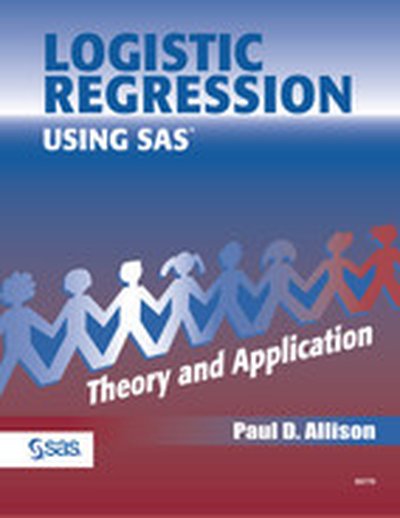
Logistic Regression Using SAS®: Theory and Application

If you are a researcher or student with experience in multiple linear regression and want to learn about logistic regression, this book is for you! Informal and nontechnical, this book both explains the theory behind logistic regression and looks at all the practical details involved in its implementation using the SAS System. Several social science real-world examples are included in full detail. This book also explains the differences and similarities among the many generalizations of the logistic regression model. The following topics are covered: binary logit analysis, logit analysis of contingency tables, multinomial logit analysis, ordered logit analysis, discrete-choice analysis with the PHREG procedure, and Poisson regression. Other highlights include discussions on how to use the GENMOD procedure to do loglinear analysis and GEE estimation for longitudinal binary data. Only basic knowledge of the SAS DATA step is assumed. Supports releases 6.12 and higher of SAS software.
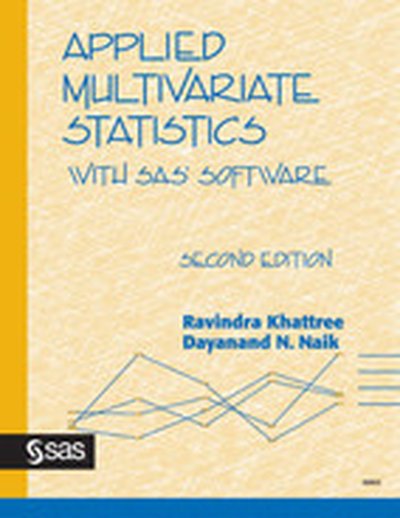
APPLIED MULTIVARIATE STATISTICS: WITH SAS® SOFTWARE

Real-world problems and data sets are the backbone of Ravindra Khattree and Dayanand Naik's Applied Multivariate Statistics with SAS Software, Second Edition, which provides a unique approach to the topic, integrating statistical methods, data analysis, and applications. Now extensively revised, the book includes new information about mixed effects models, applications of the MIXED procedure, regression diagnostics with the corresponding IML procedure code, and covariance structures. The authors' approach to the information will aid professors, researchers, and students in a variety of disciplines and industries. Extensive SAS code and the corresponding high-resolution output accompany sample problems, and clear explanations of SAS procedures are included. Emphasis is on correct interpretation of the output to draw meaningful conclusions. Featuring both the theoretical and the practical, topics covered include multivariate analysis of experimental data and repeated measures data, graphical representation of data including biplots, and multivariate regression. In addition, a quick introduction to the IML procedure with special reference to multivariate data is available in an appendix. SAS programs and output integrated with the text make it easy to read and follow the examples.

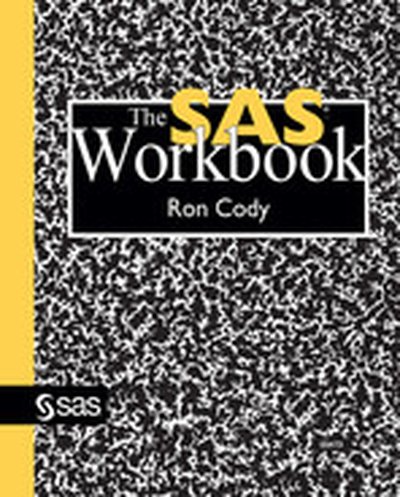
The SAS Workbook

Learn by doing as you work through the programming problems offered in this unique book! Beginning with problems related to the DATA step, moving to elementary and then advanced exercises on frequently used SAS procedures, and also covering problems in statistical analysis, the book offers challenges for beginning, intermediate, and advanced programmers. Students, teachers, and trainers will be able to work with Base SAS procedures such as FORMAT, PRINT, TABULATE, and PLOT; solve simple descriptive statistics problems as well as those using the FREQ, TTEST, GLM, ANOVA, and NPAR1WAY procedures; and have fun with some SAS brainteasers in the book's last section. Each chapter gives readers a good start on solving the problem by providing directions and hints about useful programming tools. As a service to our educational market, look for The SAS Workbook Solutions sold separately. This book is part of the SAS Press program.

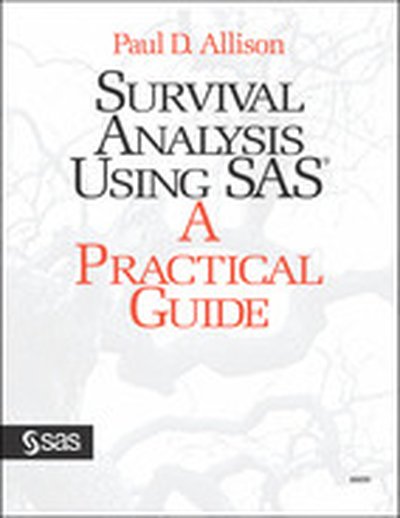
Survival Analysis Using SAS®: A Practical Guide

Biomedical and social science researchers who want to analyze survival data with SAS will find just what they need with this easy-to-read and comprehensive guide. Written for the reader with a modest statistical background and minimal knowledge of SAS software, this book teaches many aspects of data input and manipulation. Numerous examples of SAS code and output make this an eminently practical resource, ensuring that even the uninitiated becomes a sophisticated user of survival analysis. The main topics presented include censoring, survival curves, Kaplan-Meier estimation, accelerated failure time models, Cox regression models, and discrete-time analysis. Also included are topics not usually covered, such as time-dependent covariates, competing risks, and repeated events.