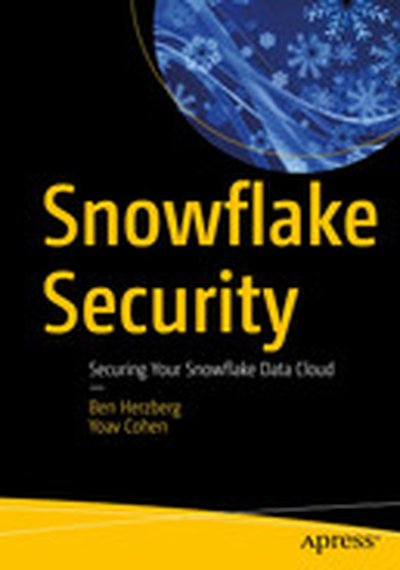
Summary
As with all aspects of technology, security is a critical element of data applications, and the different controls can be at cross purposes with productivity. In this episode Yoav Cohen from Satori shares his experiences as a practitioner in the space of data security and how to align with the needs of engineers and business users. He also explains why data security is distinct from application security and some methods for reducing the challenge of working across different data systems.
Announcements
Hello and welcome to the Data Engineering Podcast, the show about modern data management Join in with the event for the global data community, Data Council Austin. From March 28-30th 2023, they'll play host to hundreds of attendees, 100 top speakers, and dozens of startups that are advancing data science, engineering and AI. Data Council attendees are amazing founders, data scientists, lead engineers, CTOs, heads of data, investors and community organizers who are all working together to build the future of data. As a listener to the Data Engineering Podcast you can get a special discount of 20% off your ticket by using the promo code dataengpod20. Don't miss out on their only event this year! Visit: dataengineeringpodcast.com/data-council today RudderStack makes it easy for data teams to build a customer data platform on their own warehouse. Use their state of the art pipelines to collect all of your data, build a complete view of your customer and sync it to every downstream tool. Sign up for free at dataengineeringpodcast.com/rudder Hey there podcast listener, are you tired of dealing with the headache that is the 'Modern Data Stack'? We feel your pain. It's supposed to make building smarter, faster, and more flexible data infrastructures a breeze. It ends up being anything but that. Setting it up, integrating it, maintaining it—it’s all kind of a nightmare. And let's not even get started on all the extra tools you have to buy to get it to do its thing. But don't worry, there is a better way. TimeXtender takes a holistic approach to data integration that focuses on agility rather than fragmentation. By bringing all the layers of the data stack together, TimeXtender helps you build data solutions up to 10 times faster and saves you 70-80% on costs. If you're fed up with the 'Modern Data Stack', give TimeXtender a try. Head over to dataengineeringpodcast.com/timextender where you can do two things: watch us build a data estate in 15 minutes and start for free today. Your host is Tobias Macey and today I'm interviewing Yoav Cohen about the challenges that data teams face in securing their data platforms and how that impacts the productivity and adoption of data in the organization
Interview
Introduction How did you get involved in the area of data management? Data security is a very broad term. Can you start by enumerating some of the different concerns that are involved? How has the scope and complexity of implementing security controls on data systems changed in recent years?
In your experience, what is a typical number of data locations that an organization is trying to manage access/permissions within?
What are some of the main challenges that data/compliance teams face in establishing and maintaining security controls?
How much of the problem is technical vs. procedural/organizational?
As a vendor in the space, how do you think about the broad categories/boundary lines for the different elements of data security? (e.g. masking vs. RBAC, etc.)
What are the different layers that are best suited to managing each of those categories? (e.g. masking and encryption in storage layer, RBAC in warehouse, etc.)
What are some of the ways that data security and organizational productivity are at odds with each other?
What are some of the shortcuts that you see teams and individuals taking to address the productivity hit from security controls?
What are some of the methods that you have found to be most effective at mitigating or even improving productivity impacts through security controls?
How does up-front design of the security layers improve the final outcome vs. trying to bolt on security after the platform is already in use? How can education about the motivations for different security practices improve compliance and user experience?
What are the most interesting, innovative, or unexpected ways that you have seen data teams align data security and productivity? What are the most interesting, unexpected, or challenging lessons that you have learned while working on data security technology? What are the areas of data security that still need improvements?
Contact Info
Yoav Cohen
Parting Question
From your perspective, what is the biggest gap in the tooling or technology for data management today?
Closing Announcements
Thank you for listening! Don't forget to check out our other shows. Podcast.init covers the Python language, its community, and the innovative ways it is being used. The Machine Learning Podcast helps you go from idea to production with machine learning. Visit the site to subscribe to the show, sign up for the mailing list, and read the show notes. If you've learned something or tried out a project from the show then tell us about it! Email [email protected]) with your story. To help other people find the show please leave a review on Apple Podcasts and tell your friends and co-workers
Links
Satori
Podcast Episode
Data Masking RBAC == Role Based Access Control ABAC == Attribute Based Access Control Gartner Data Security Platform Report
The intro and outro music is from The Hug by The Freak Fandango Orchestra / CC BY-SA
Sponsored By:
Rudderstack:  Businesses that adapt well to change grow 3 times faster than the industry average. As your business adapts, so should your data. RudderStack Transformations lets you customize your event data in real-time with your own JavaScript or Python code. Join The RudderStack Transformation Challenge today for a chance to win a $1,000 cash prize just by submitting a Transformation to the open-source RudderStack Transformation library. Visit RudderStack.com/DEP to learn moreData Council:
  Join us at the event for the global data community, Data Council Austin. From March 28-30th 2023, we'll play host to hundreds of attendees, 100 top speakers, and dozens of startups that are advancing data science, engineering and AI. Data Council attendees are amazing founders, data scientists, lead engineers, CTOs, heads of data, investors and community organizers who are all working together to build the future of data. As a listener to the Data Engineering Podcast you can get a special discount off tickets by using the promo code dataengpod20. Don't miss out on our only event this year! Visit: dataengineeringpodcast.com/data-council Promo Code: dataengpod20TimeXtender:
  TimeXtender is a holistic, metadata-driven solution for data integration, optimized for agility. TimeXtender provides all the features you need to build a future-proof infrastructure for ingesting, transforming, modelling, and delivering clean, reliable data in the fastest, most efficient way possible.
You can't optimize for everything all at once. That's why we take a holistic approach to data integration that optimises for agility instead of fragmentation. By unifying each layer of the data stack, TimeXtender empowers you to build data solutions 10x faster while reducing costs by 70%-80%. We do this for one simple reason: because time matters.
Go to dataengineeringpodcast.com/timextender today to get started for free!Support Data Engineering Podcast