 talk-data.com
P
Speaker
Paul Dix
4
talks
Founder/CEO
InfluxData
Frequent Collaborators
Filter by Event / Source
Talks & appearances
4 activities · Newest first
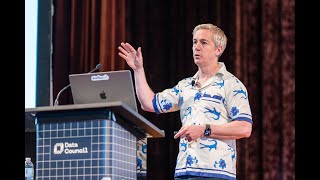
Summary
Building a database engine requires a substantial amount of engineering effort and time investment. Over the decades of research and development into building these software systems there are a number of common components that are shared across implementations. When Paul Dix decided to re-write the InfluxDB engine he found the Apache Arrow ecosystem ready and waiting with useful building blocks to accelerate the process. In this episode he explains how he used the combination of Apache Arrow, Flight, Datafusion, and Parquet to lay the foundation of the newest version of his time-series database.
Announcements
Hello and welcome to the Data Engineering Podcast, the show about modern data management Dagster offers a new approach to building and running data platforms and data pipelines. It is an open-source, cloud-native orchestrator for the whole development lifecycle, with integrated lineage and observability, a declarative programming model, and best-in-class testability. Your team can get up and running in minutes thanks to Dagster Cloud, an enterprise-class hosted solution that offers serverless and hybrid deployments, enhanced security, and on-demand ephemeral test deployments. Go to dataengineeringpodcast.com/dagster today to get started. Your first 30 days are free! Data lakes are notoriously complex. For data engineers who battle to build and scale high quality data workflows on the data lake, Starburst powers petabyte-scale SQL analytics fast, at a fraction of the cost of traditional methods, so that you can meet all your data needs ranging from AI to data applications to complete analytics. Trusted by teams of all sizes, including Comcast and Doordash, Starburst is a data lake analytics platform that delivers the adaptability and flexibility a lakehouse ecosystem promises. And Starburst does all of this on an open architecture with first-class support for Apache Iceberg, Delta Lake and Hudi, so you always maintain ownership of your data. Want to see Starburst in action? Go to dataengineeringpodcast.com/starburst and get $500 in credits to try Starburst Galaxy today, the easiest and fastest way to get started using Trino. Join us at the top event for the global data community, Data Council Austin. From March 26-28th 2024, we'll play host to hundreds of attendees, 100 top speakers and dozens of startups that are advancing data science, engineering and AI. Data Council attendees are amazing founders, data scientists, lead engineers, CTOs, heads of data, investors and community organizers who are all working together to build the future of data and sharing their insights and learnings through deeply technical talks. As a listener to the Data Engineering Podcast you can get a special discount off regular priced and late bird tickets by using the promo code dataengpod20. Don't miss out on our only event this year! Visit dataengineeringpodcast.com/data-council and use code dataengpod20 to register today! Your host is Tobias Macey and today I'm interviewing Paul Dix about his investment in the Apache Arrow ecosystem and how it led him to create the latest PFAD in database design
Interview
Introduction How did you get involved in the area of data management? Can you start by describing the FDAP stack and how the components combine to provide a foundational architecture for database engines?
This was the core of your recent re-write of the InfluxDB engine. What were the design goals and constraints that led you to this architecture?
Each of the architectural components are well engineered for their particular scope. What is the engineering work that is involved in building a cohesive platform from those components? One of the major benefits of using open source components is the network effect of ecosystem integrations. That can also be a risk when the community vision for the project doesn't align with your own goals. How have you worked to mitigate that risk in your specific platform? Can you describe the
Summary While the overall concept of timeseries data is uniform, its usage and applications are far from it. One of the most demanding applications of timeseries data is for application and server monitoring due to the problem of high cardinality. In his quest to build a generalized platform for managing timeseries Paul Dix keeps getting pulled back into the monitoring arena. In this episode he shares the history of the InfluxDB project, the business that he has helped to build around it, and the architectural aspects of the engine that allow for its flexibility in managing various forms of timeseries data. This is a fascinating exploration of the technical and organizational evolution of the Influx Data platform, with some promising glimpses of where they are headed in the near future.
Announcements
Hello and welcome to the Data Engineering Podcast, the show about modern data management When you’re ready to build your next pipeline, or want to test out the projects you hear about on the show, you’ll need somewhere to deploy it, so check out our friends at Linode. With their managed Kubernetes platform it’s now even easier to deploy and scale your workflows, or try out the latest Helm charts from tools like Pulsar and Pachyderm. With simple pricing, fast networking, object storage, and worldwide data centers, you’ve got everything you need to run a bulletproof data platform. Go to dataengineeringpodcast.com/linode today and get a $100 credit to try out a Kubernetes cluster of your own. And don’t forget to thank them for their continued support of this show! RudderStack’s smart customer data pipeline is warehouse-first. It builds your customer data warehouse and your identity graph on your data warehouse, with support for Snowflake, Google BigQuery, Amazon Redshift, and more. Their SDKs and plugins make event streaming easy, and their integrations with cloud applications like Salesforce and ZenDesk help you go beyond event streaming. With RudderStack you can use all of your customer data to answer more difficult questions and then send those insights to your whole customer data stack. Sign up free at dataengineeringpodcast.com/rudder today. We’ve all been asked to help with an ad-hoc request for data by the sales and marketing team. Then it becomes a critical report that they need updated every week or every day. Then what do you do? Send a CSV via email? Write some Python scripts to automate it? But what about incremental sync, API quotas, error handling, and all of the other details that eat up your time? Today, there is a better way. With Census, just write SQL or plug in your dbt models and start syncing your cloud warehouse to SaaS applications like Salesforce, Marketo, Hubspot, and many more. Go to dataengineeringpodcast.com/census today to get a free 14-day trial. Your host is Tobias Macey and today I’m interviewing Paul Dix about Influx Data and the different facets of the market for timeseries databases
Interview
Introduction How did you get involved in the area of data management? Can you describe what you are building at Influx Data and the story behind it? Timeseries data is a fairly broad category with many variations in terms of storage volume, frequency, processing requirements, etc. This has led to an explosion of database engines and related tools to address these different needs. How do you think about your position and role in the ecosystem?
Who are your target customers and how does that focus inform your product and feature priorities? What are the use cases that Influx is best suited for?
Can you give an overview of the different projects, tools, and services that comprise your platform? How is InfluxDB architected?
How have the design and implementation of the DB engine changed or evolved since you first began working on it? What are you optimizing for on the consistency vs. availability spectrum of CAP? What is your approach to clustering/data distribution beyond a single node?