talk-data.com talk-data.com

S

Speaker

Sam Lightstone

6

talks

CTO for Data, IBM Fellow & Master Inventor IBM

Frequent Collaborators

Filter by Event / Source

Talks & appearances

6 activities · Newest first

Search activities →

Send us a text Host Al Martin, IBM VP of Hybrid Data Management & Client Success, and Sam Lightstone, CTO for Data, IBM Fellow & Master Inventor, present their Kansas City Techweek keynote. They go over what it means to make data ready for AI, become data driven and acquire growth. They deliver key industry insights to drive performance in a way that is easily understandable, avoiding the jargon. Be sure to follow along with presentation slides attached below.


00:00 - Download and follow along with the presentation slides here. 00:00 - Check us out on YouTube and SoundCloud. 00:10 - Connect with Producer Steve Moore on LinkedIn and Twitter. 00:15 - Connect with Producer Liam Seston on LinkedIn and Twitter. 00:20 - Connect with Producer Rachit Sharma on LinkedIn. 00:25 - Connect with Host Al Martin on LinkedIn and Twitter. Want to be featured as a guest on Making Data Simple? Reach out to us at [email protected] and tell us why you should be next. The Making Data Simple Podcast is hosted by Al Martin, WW VP Technical Sales, IBM, where we explore trending technologies, business innovation, and leadership ... while keeping it simple & fun.
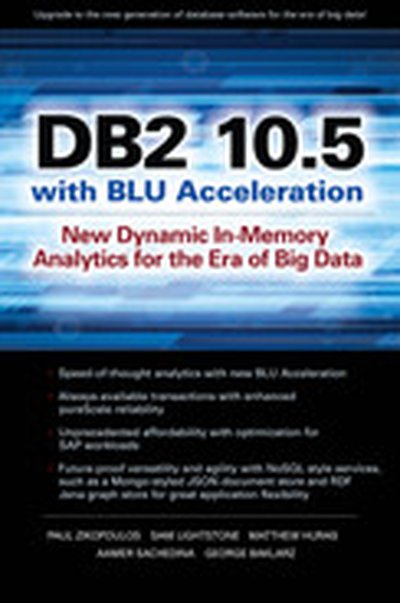
DB2 10.5 with BLU Acceleration

UPGRADE TO THE NEW GENERATION OF DATABASE SOFTWARE FOR THE ERA OF BIG DATA! If big data is an untapped natural resource, how do you find the gold hidden within? Leaders realize that big data means all data, and are moving quickly to extract more value from both structured and unstructured application data. However, analyzing this data can prove costly and complex, especially while protecting the availability, performance and reliability of essential business applications. In the new era of big data, businesses require data systems that can blend always-available transactions with speed-of-thought analytics. DB2 10.5 with BLU Acceleration provides this speed, simplicity, and affordability while making it easier to build next-generation applications with NoSQL features, such as a mongo-styled JSON document store, a graph store, and more. Dynamic in-memory columnar processing and other innovations deliver faster insights from more data, and enhanced pureScale clustering technology delivers high-availability transactions with application-transparent scalability for business continuity. With this book, you'll learn about the power and flexibility of multiworkload, multi-platform database software. Use the comprehensive knowledge from a team of DB2 developers and experts to get started with the latest DB2 trial version you can download at ibm.com/developerworks/downloads/im/db2/. Stay up to date on DB2 by visiting ibm.com/db2/.

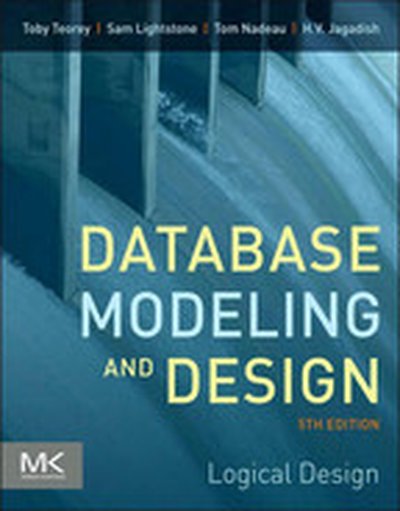
Database Modeling and Design, 5th Edition

Database Modeling and Design, Fifth Edition, focuses on techniques for database design in relational database systems. This extensively revised fifth edition features clear explanations, lots of terrific examples and an illustrative case, and practical advice, with design rules that are applicable to any SQL-based system. The common examples are based on real-life experiences and have been thoroughly class-tested. This book is immediately useful to anyone tasked with the creation of data models for the integration of large-scale enterprise data. It is ideal for a stand-alone data management course focused on logical database design, or a supplement to an introductory text for introductory database management. In-depth detail and plenty of real-world, practical examples throughout Loaded with design rules and illustrative case studies that are applicable to any SQL, UML, or XML-based system Immediately useful to anyone tasked with the creation of data models for the integration of large-scale enterprise data

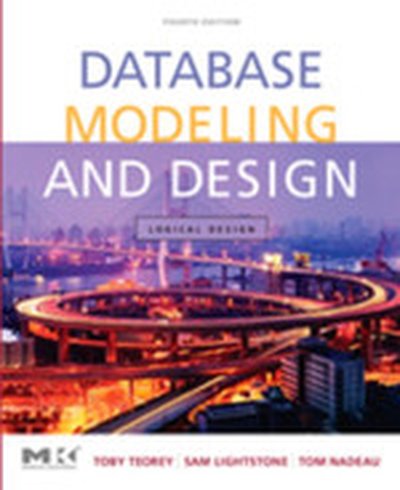
Database Modeling and Design, 4th Edition

Database Modeling and Design, Fourth Edition, the extensively revised edition of the classic logical database design reference, explains how you can model and design your database application in consideration of new technology or new business needs. It is an ideal text for a stand-alone data management course focused on logical database design, or a supplement to an introductory text for introductory database management. This book features clear explanations, lots of terrific examples and an illustrative case, and practical advice, with design rules that are applicable to any SQL-based system. The common examples are based on real-life experiences and have been thoroughly class-tested. The text takes a detailed look at the Unified Modeling Language (UML-2) as well as the entity-relationship (ER) approach for data requirements specification and conceptual modeling - complemented with examples for both approaches. It also discusses the use of data modeling concepts in logical database design; the transformation of the conceptual model to the relational model and to SQL syntax; the fundamentals of database normalization through the fifth normal form; and the major issues in business intelligence such as data warehousing, OLAP for decision support systems, and data mining. There are examples for how to use the most popular CASE tools to handle complex data modeling problems, along with exercises that test understanding of all material, plus solutions for many exercises. Lecture notes and a solutions manual are also available. This edition will appeal to professional data modelers and database design professionals, including database application designers, and database administrators (DBAs); new/novice data management professionals, such as those working on object oriented database design; and students in second courses in database focusing on design.+ a detailed look at the Unified Modeling Language (UML-2) as well as the entity-relationship (ER) approach for data requirements specification and conceptual modeling--with examples throughout the book in both approaches! + the details and examples of how to use data modeling concepts in logical database design, and the transformation of the conceptual model to the relational model and to SQL syntax; + the fundamentals of database normalization through the fifth normal form; + practical coverage of the major issues in business intelligence--data warehousing, OLAP for decision support systems, and data mining; + examples for how to use the most popular CASE tools to handle complex data modeling problems. + Exercises that test understanding of all material, plus solutions for many exercises.

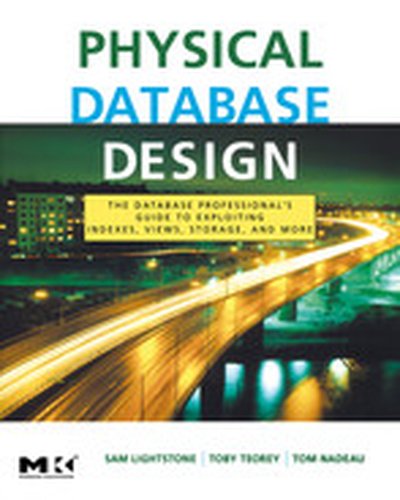
Physical Database Design

The rapidly increasing volume of information contained in relational databases places a strain on databases, performance, and maintainability: DBAs are under greater pressure than ever to optimize database structure for system performance and administration. Physical Database Design discusses the concept of how physical structures of databases affect performance, including specific examples, guidelines, and best and worst practices for a variety of DBMSs and configurations. Something as simple as improving the table index design has a profound impact on performance. Every form of relational database, such as Online Transaction Processing (OLTP), Enterprise Resource Management (ERP), Data Mining (DM), or Management Resource Planning (MRP), can be improved using the methods provided in the book. The first complete treatment on physical database design, written by the authors of the seminal, Database Modeling and Design: Logical Design, Fourth Edition Includes an introduction to the major concepts of physical database design as well as detailed examples, using methodologies and tools most popular for relational databases today: Oracle, DB2 (IBM), and SQL Server (Microsoft) Focuses on physical database design for exploiting B+tree indexing, clustered indexes, multidimensional clustering (MDC), range partitioning, shared nothing partitioning, shared disk data placement, materialized views, bitmap indexes, automated design tools, and more!

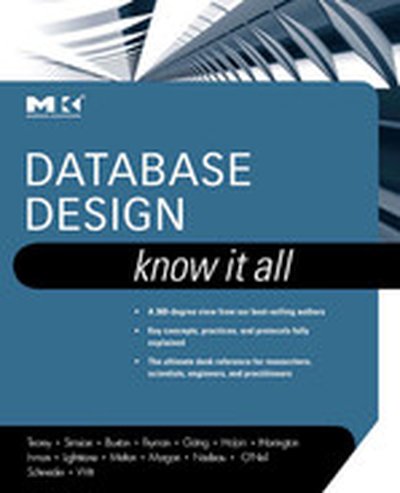
Database Design: Know It All

This book brings all of the elements of database design together in a single volume, saving the reader the time and expense of making multiple purchases. It consolidates both introductory and advanced topics, thereby covering the gamut of database design methodology ? from ER and UML techniques, to conceptual data modeling and table transformation, to storing XML and querying moving objects databases. The proposed book expertly combines the finest database design material from the Morgan Kaufmann portfolio. Individual chapters are derived from a select group of MK books authored by the best and brightest in the field. These chapters are combined into one comprehensive volume in a way that allows it to be used as a reference work for those interested in new and developing aspects of database design. This book represents a quick and efficient way to unite valuable content from leading database design experts, thereby creating a definitive, one-stop-shopping opportunity for customers to receive the information they would otherwise need to round up from separate sources. Chapters contributed by various recognized experts in the field let the reader remain up to date and fully informed from multiple viewpoints. Details multiple relational models and modeling languages, enhancing the reader’s technical expertise and familiarity with design-related requirements specification. Coverage of both theory and practice brings all of the elements of database design together in a single volume, saving the reader the time and expense of making multiple purchases.